
Mexican grass tree
Mexican grass tree (Dasylirion longissimum)
Dasylirion longissimum is the Mexican grass tree — a dense spherical fountain of long, thin, smooth quill-like leaves on a short trunk — the fine-textured dasylirion for modern xeric and Mediterranean palettes, distinct from *D. wheeleri*'s toothed blue spoon rosette.
Spec
At a glance
- Botanical name
- Dasylirion longissimum
- Family
- Asparagaceae (Ruscaceae)
- Common names
- Mexican grass tree, desert spoon (longissimum)
- Origin
- Mexico (Chihuahuan region)
- Plant type
- Trunked rosette succulent
- Mature height
- Often 2–4 m with trunk; leaf sphere dominates
- Trunk / form
- Short trunk; dense spherical fountain of smooth quill leaves
- Crown spread
- Perfect sphere of fine linear leaves — architectural texture
- Growth rate
- Slow trunk development — buy sphere diameter
- Light
- Full sun
- Water needs
- Very low; drainage essential
- India climate suitability
- Hot dry India and gravel courts; weak in waterlogged monsoon
- Cold/heat & salt/wind tolerance
- Heat-hardy; moderate frost when dry; leaf tips can scorch in reflected heat
- Typical supply size
- Leaf sphere diameter classes [Unverified]
- Lead time (sourcing)
- [Unverified] Mexico/India dasylirion nursery stock
- Install considerations
- Gravel mound; protect leaf sphere in handling
- Maintenance level
- Low — remove spent flower spike; dry AMC
- Cautions
- Drainage; slow; full sun; distinguish from toothed *D. wheeleri*
Gallery
Specimen visual guide
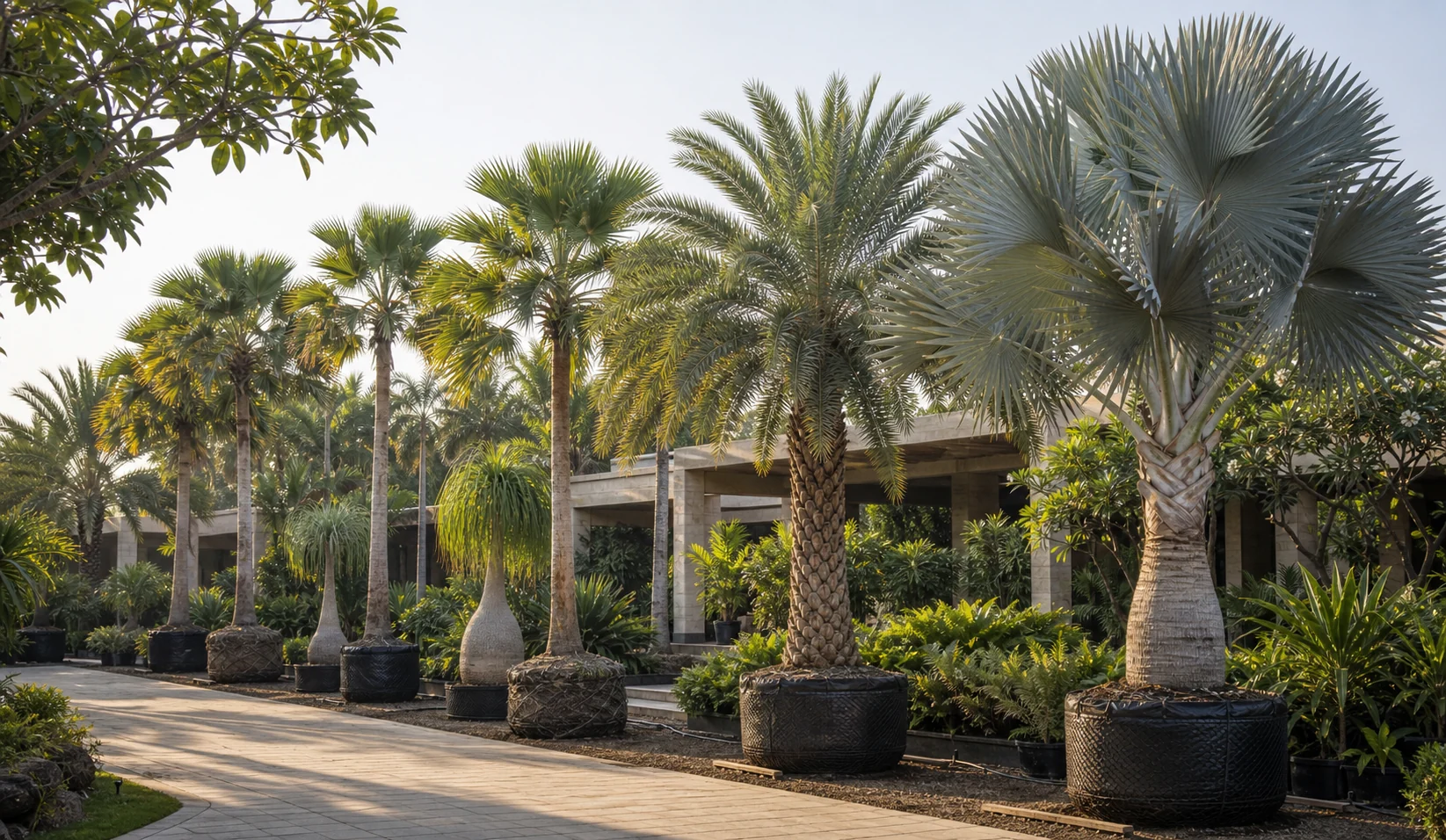
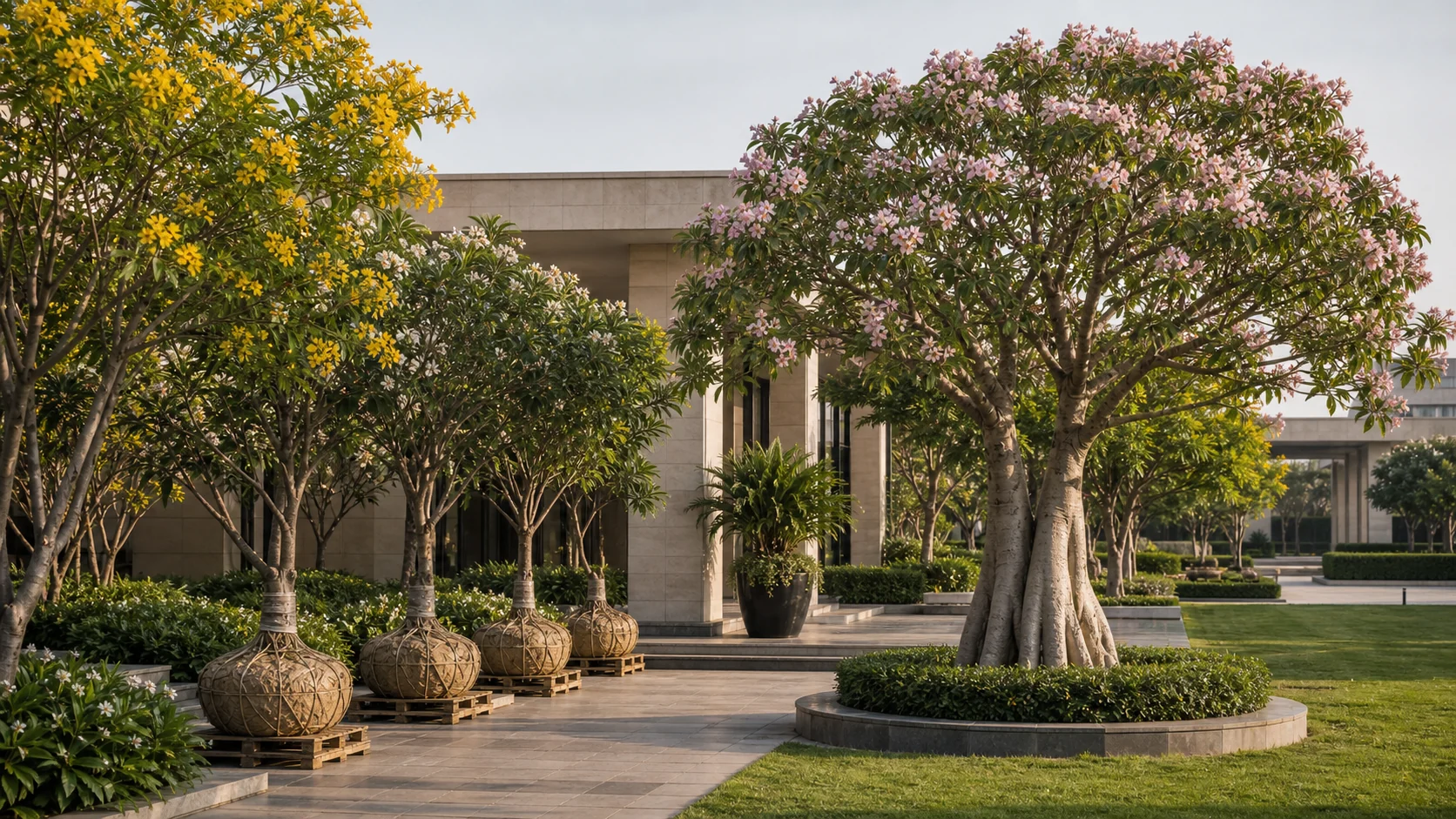
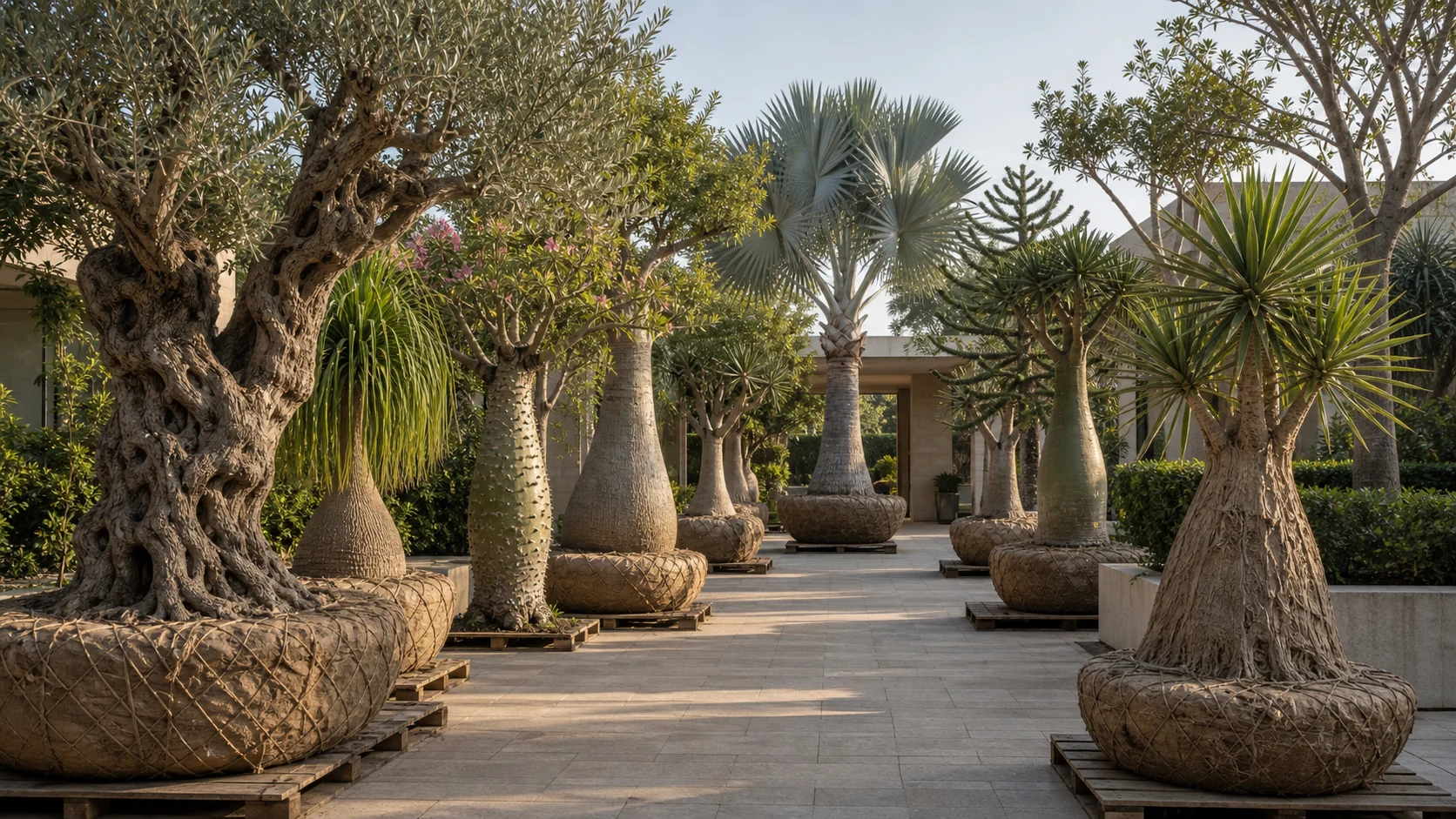
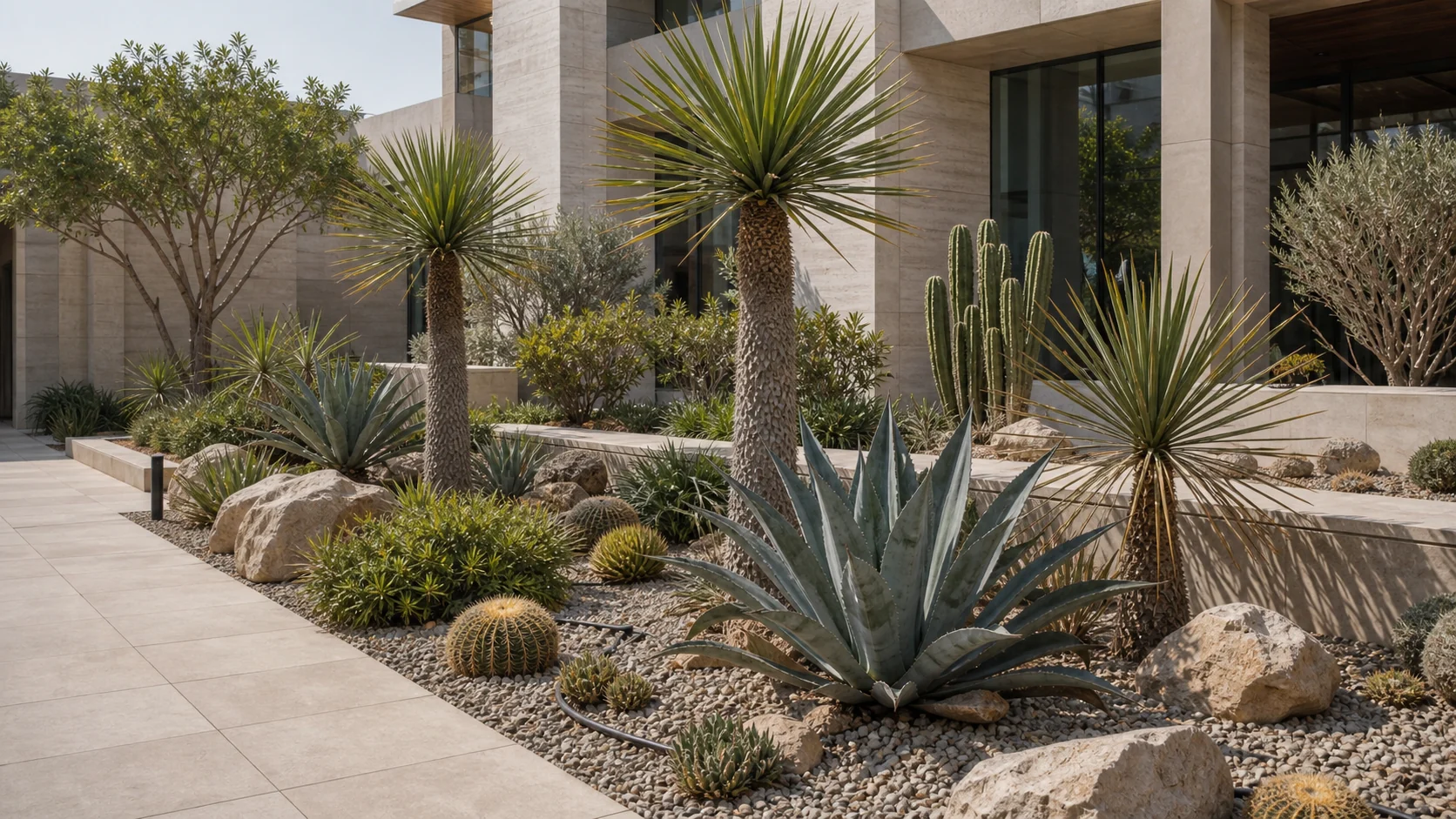
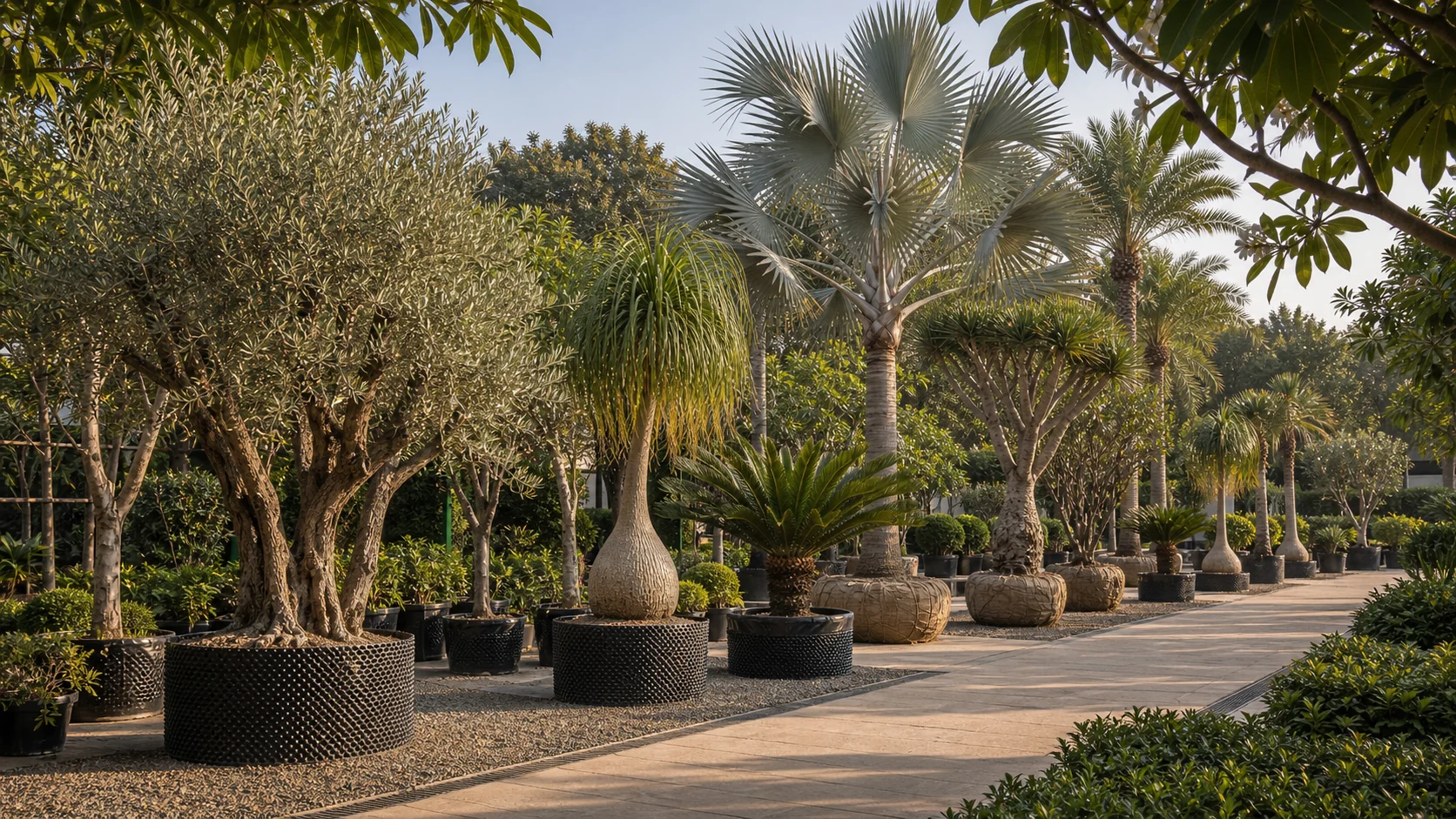
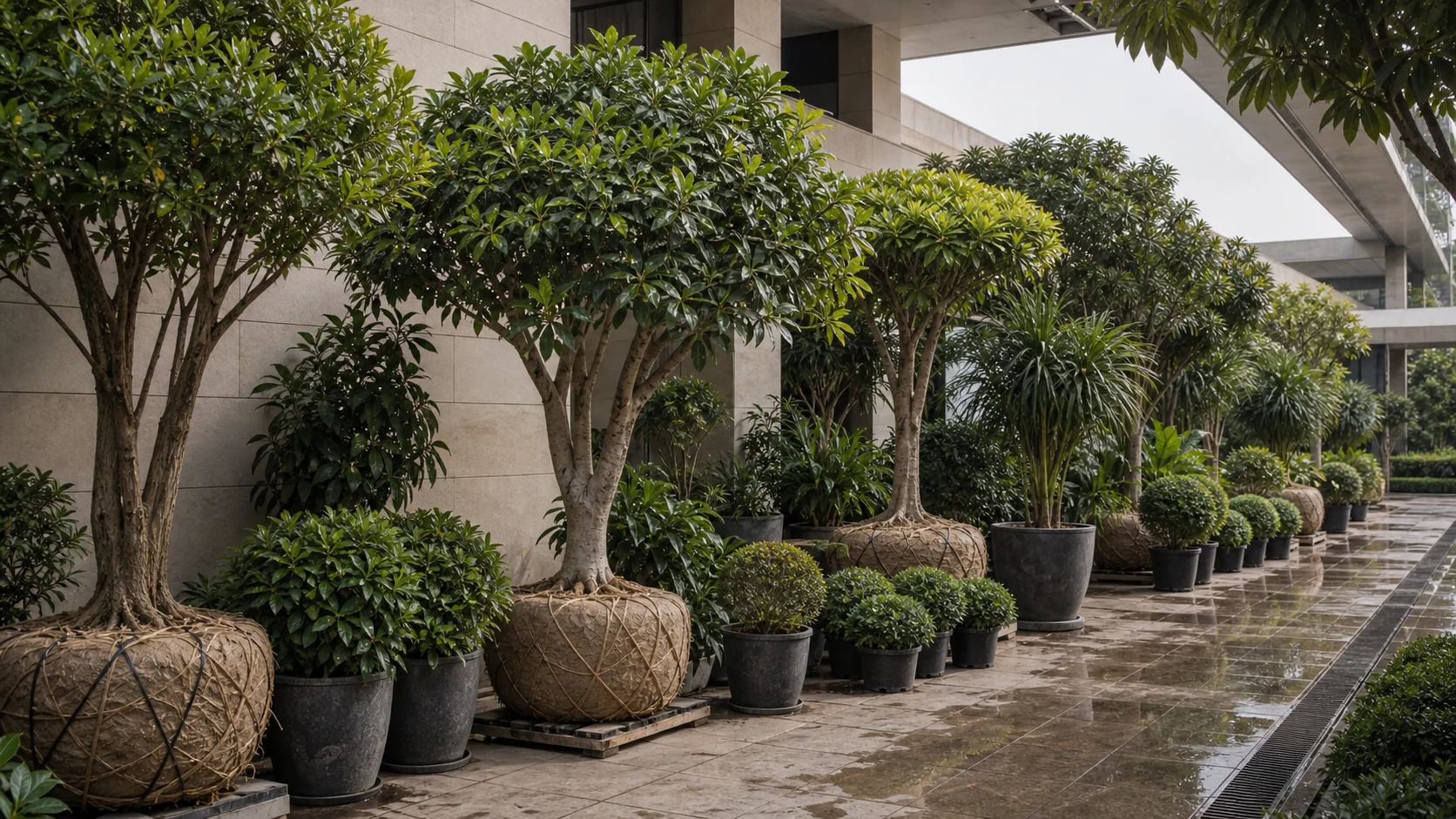
Visual context for placement, scale, handling, and landscape integration.
Section
Where it's used in premium projects
Longissimum is the spherical fine-textured dasylirion — modern xeric plazas, Mediterranean gravel gardens, and resort dry beds needing a crisp globe silhouette without blue toothed spoon foliage.
Section
Climate & site suitability in India
Full sun and drainage separate success from rot — monsoon clay pits without mounds fail. Reflected heat on terraces can scorch leaf tips; plan sphere placement away from glass oven walls unless acclimated.
Section
Sourcing & acclimatisation
Specify smooth quill leaves versus toothed *D. wheeleri* on BOQ — photos must show sphere texture. [Unverified: typical India longissimum vs wheeleri mix-ups in supply.]
Section
Installation (pit, soil, drainage, bracing)
Handle leaf spheres as fragile architecture — tie gently for transport. Mound on coarse drainage; flower spikes may appear — plan vertical clearance.
Section
Establishment & AMC
Overwatering is the primary killer in year one — AMC keeps dasylirion on dry rotation, not palm schedules. Do not confuse with sotol wheeleri when ordering replacements.
Section
Cost drivers
Explore
Related
Related
Related links
Services, segments, cost, and proof.
- Softscape & horticulture
- Irrigation & water management
- Landscape maintenance (AMC)
- Hotel & resort landscaping
- Luxury resort & spa landscaping
- Mall & retail landscaping
- Corporate campus landscaping
- Projects
- Commercial landscaping cost guide
- Pricing drivers (imported trees)
- Import compliance workflow
- Request a site assessment
- What shape defines Dasylirion longissimum?
- A dense spherical fountain of long smooth quill-like leaves on a short trunk — fine texture, not blue toothed spoons.
- How is longissimum different from wheeleri?
- Wheeleri has blue-grey toothed spoon-based leaves and harder cold tolerance; longissimum is the smooth green quill sphere — verify photos on BOQ.
- Does it need full sun in India?
- Yes — shade holding loosens the sphere; full sun keeps tight architectural form.
- What monsoon failure mode is common?
- Root and crown rot in perched water — mound drainage before specimen price discussions.
- Is the flower spike an issue?
- Tall inflorescence can appear — programme vertical clearance and one-season litter, not permanent crown size.
- What import checks apply to Dasylirion?
- Rosette succulents need species-level paperwork for quarantine — longissimum vs wheeleri mix-ups should be caught at inspection (informational, not legal advice).
- How should longissimum quotes compare?
- Sphere diameter, trunk height, leaf condition, and gravel mound scope — not generic grass-tree labels.