
Sea grape (rugose)
Sea grape — rugose leaf (Coccoloba rugosa)
Coccoloba rugosa is specified for bold, large, rounded leathery leaves with a corrugated surface — a sculptural coastal foliage statement at seaside resorts where salt and wind tolerance matter and the brief is texture at arrival scale, not fine cloud pruning.
Spec
At a glance
- Botanical name
- Coccoloba rugosa
- Family
- Polygonaceae
- Common names
- Sea grape (rugose-leaf form)
- Origin
- Caribbean, Puerto Rico
- Plant type
- Evergreen broadleaf foliage tree
- Mature height
- Often 4–8 m in landscape use
- Trunk / form
- Bold rounded corrugated leaves; open sculptural habit
- Crown spread
- Moderate to wide
- Growth rate
- Moderate in warm humid sites
- Light
- Full sun on coast; some shelter from desiccating wind inland
- Water needs
- Moderate establishment; coastal humidity helps
- India climate suitability
- Frost-free tropical and warm coastal India; poor in cool dry interiors without irrigation
- Cold/heat & salt/wind tolerance
- Coastal salt and wind tolerant; cold-sensitive away from tropics
- Typical supply size
- Container and field specimens 2–4 m [Unverified]
- Lead time (sourcing)
- [Unverified] confirm true C. rugosa versus C. uvifera on tags
- Install considerations
- Wind shelter on exposed quays; coarse leaf-drop planning on paving
- Maintenance level
- Moderate — periodic leaf sweep; species ID audit at delivery
- Cautions
- Tropical/cold-sensitive; confirm ID vs common sea grape (C. uvifera); coarse leaf litter
Gallery
Specimen visual guide
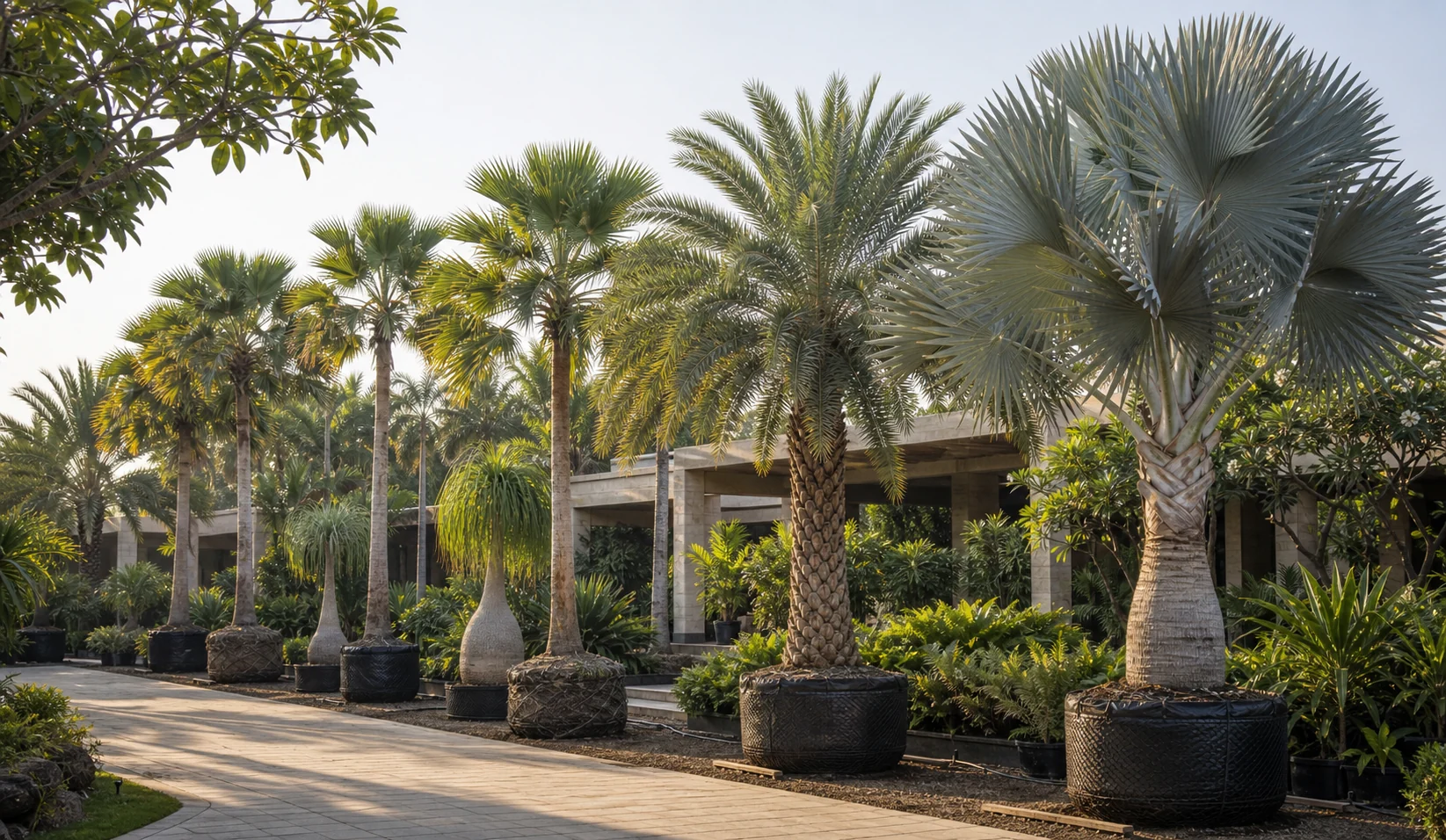
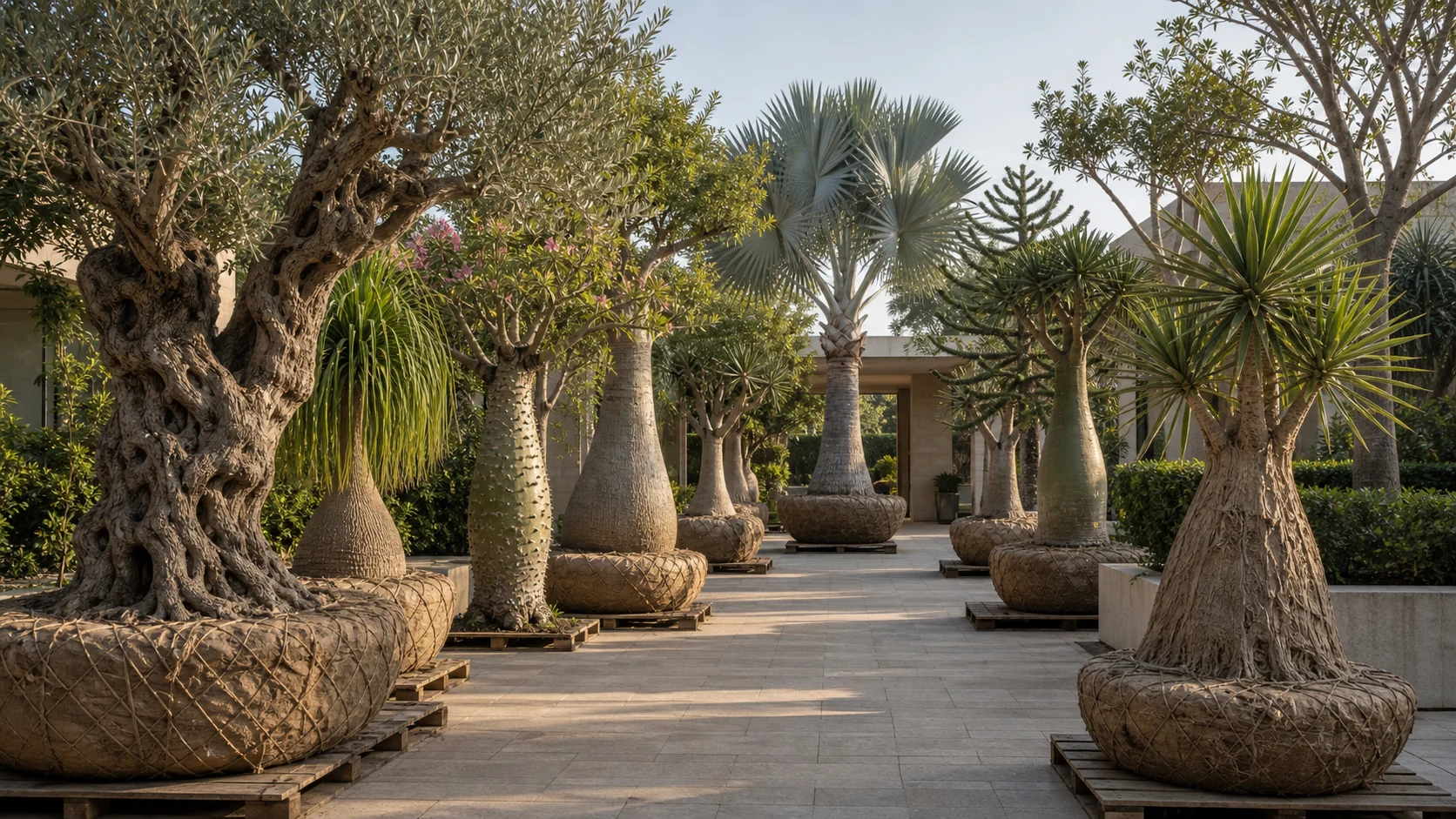
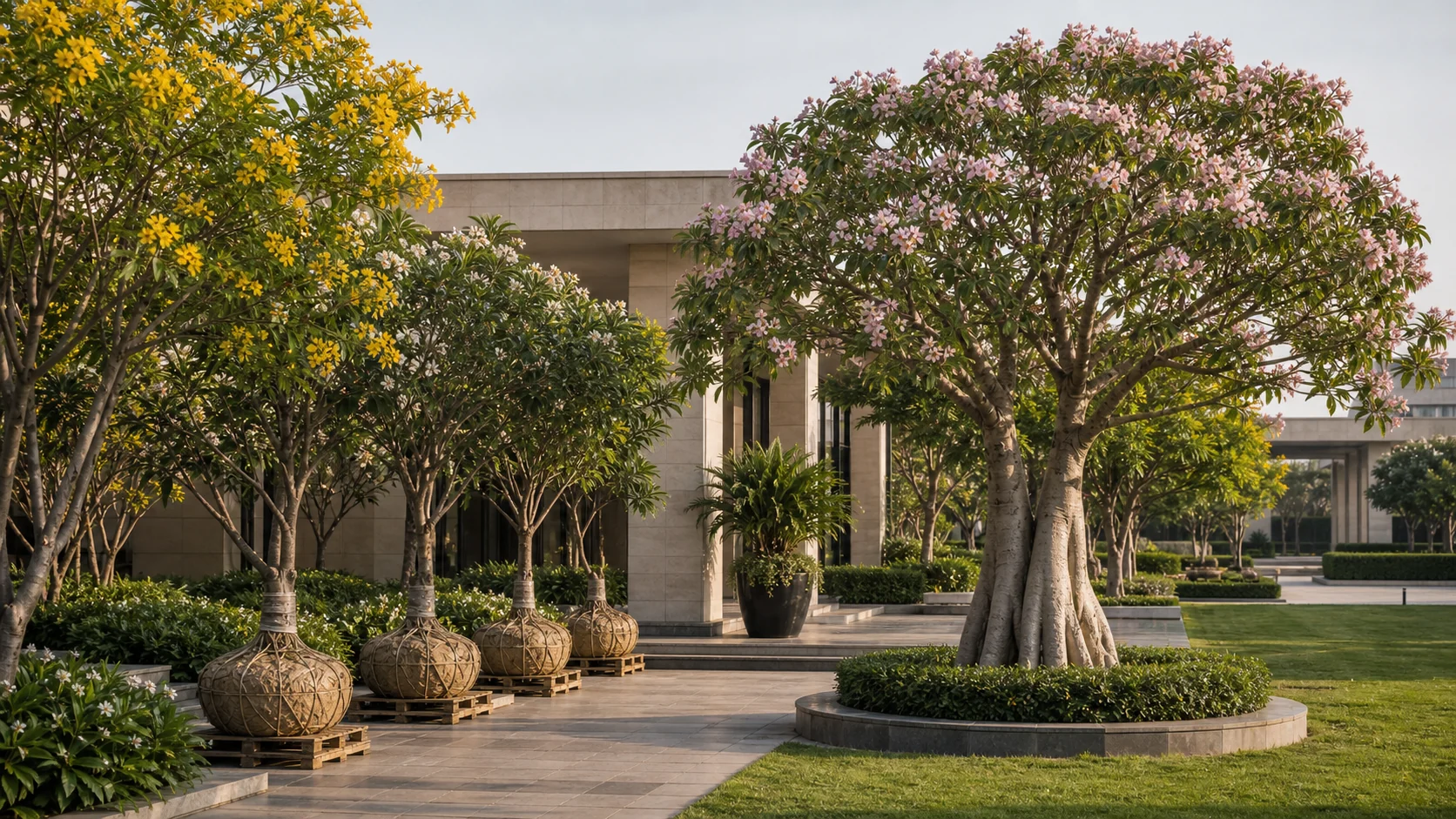
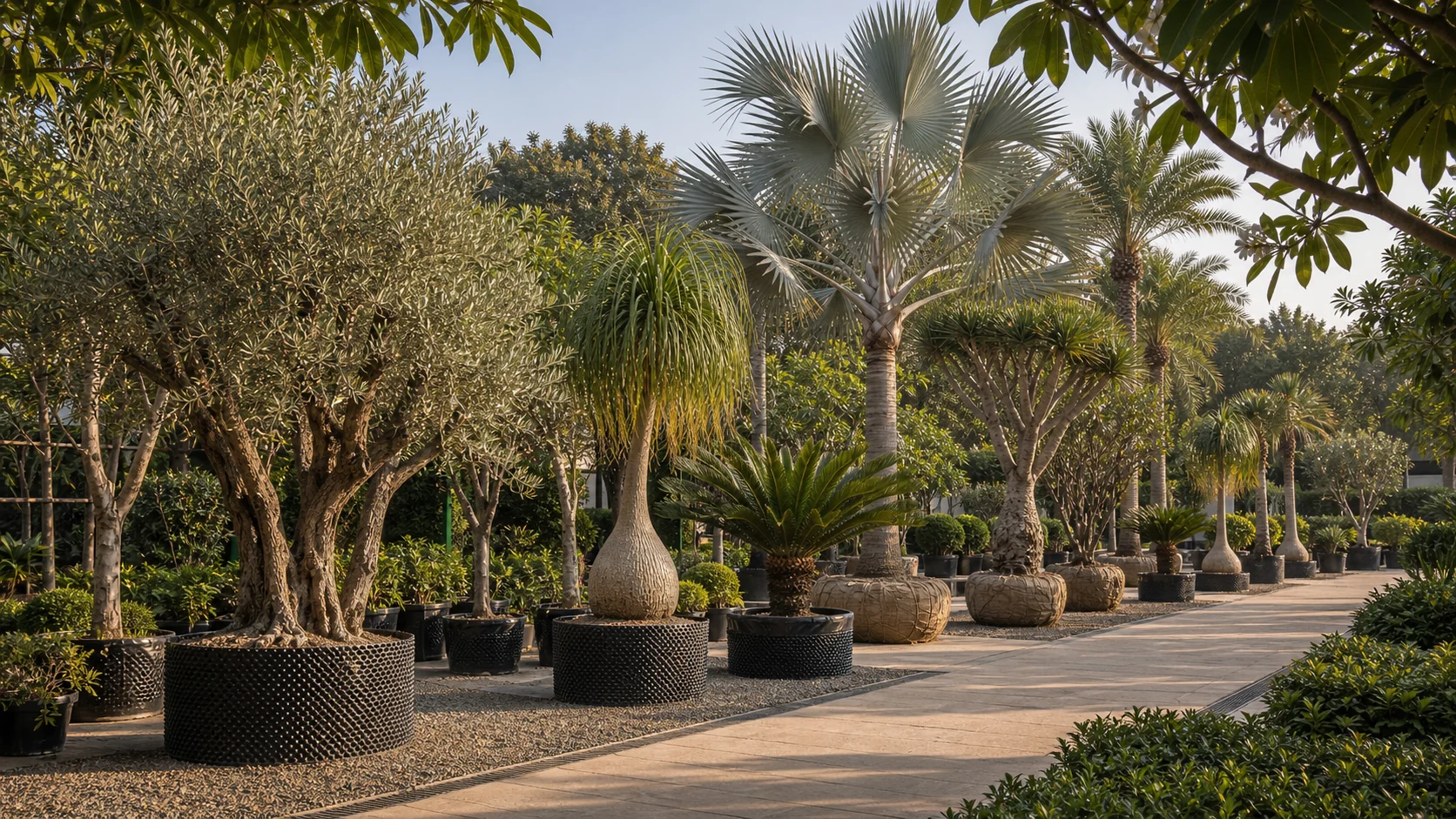
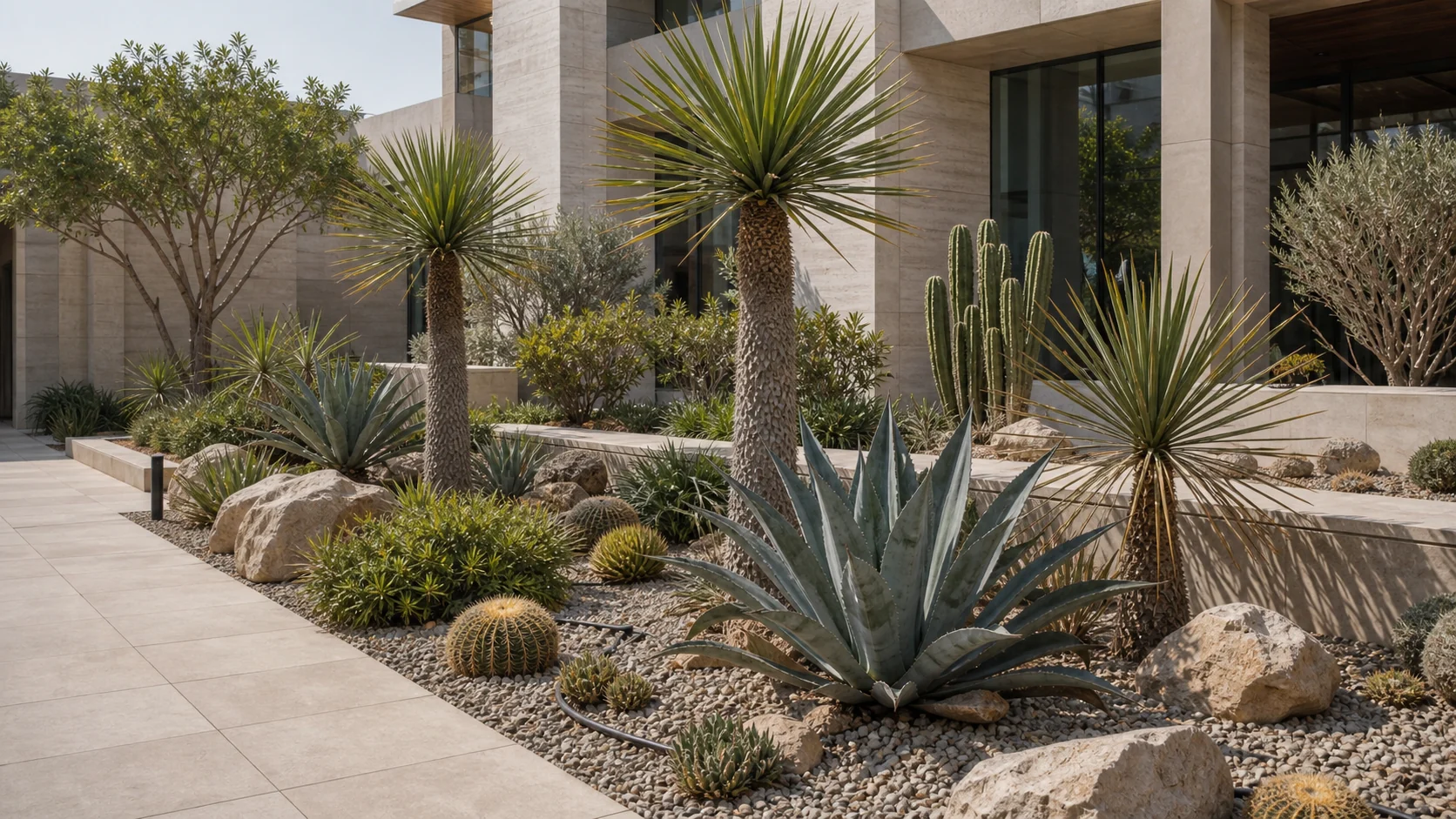
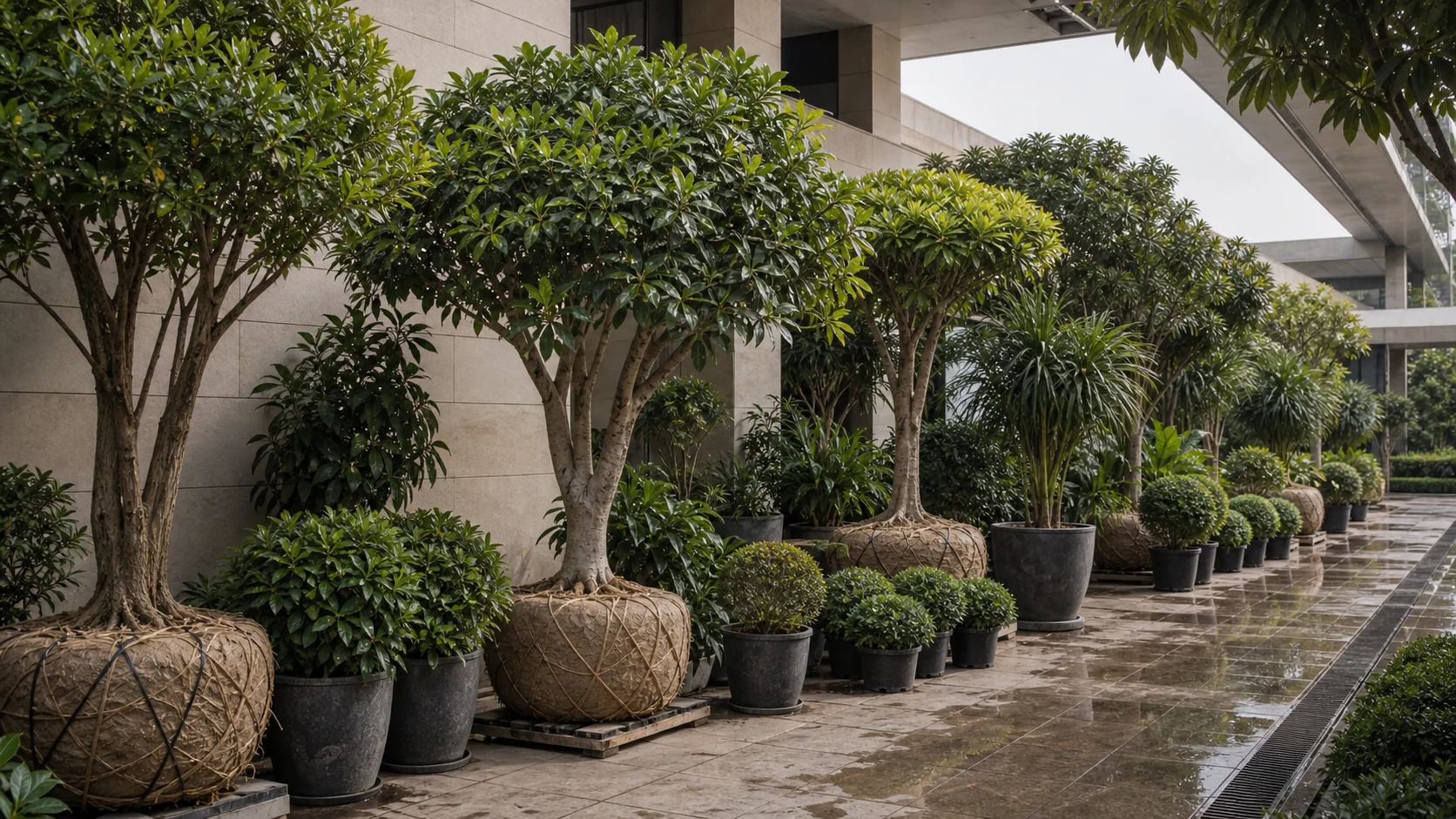
Visual context for placement, scale, handling, and landscape integration.
Section
Where it's used in premium projects
Designers place Coccoloba rugosa as a bold-foliage coastal feature — beachfront resort entries, marina clubs, and pool terraces where large leathery corrugated leaves read against glass and pale stone. It is not a fine-textured courtyard tree; procurement should photograph leaf texture at nursery gate before BOQ lock.
Section
Climate & site suitability in India
Humid coastal tropics (Goa, Kerala coast, Andaman-adjacent climates) outperform Delhi NCR without frost protection and humidity engineering. Cold nights defoliate or stall growth. Inland dry heat needs irrigation and some wind shelter — leaves desiccate on exposed ridge plantings.
Section
Sourcing & acclimatisation
Critical step: verify botanical identity on nursery submittals — trade lists often label common sea grape (Coccoloba uvifera) interchangeably. Rugose leaf texture is the KPI. [Unverified: import share versus domestic coastal nursery stock.] Hold with consistent moisture before full coastal sun exposure.
Section
Installation (pit, soil, drainage, bracing)
Free-draining pits with organic mulch; avoid anaerobic monsoon pits despite coastal origin. Plan coarse leaf-drop sweeps on light paving near pools. Light bracing on exposed headlands until roots anchor.
Section
Establishment & AMC
AMC includes seasonal litter management on guest routes and periodic leaf washing on dusty coastal sites. Reconfirm species ID at first maintenance visit — misplanted uvifera changes texture expectations for designers.
Section
Cost drivers
Explore
Related
Related
Related links
Services, segments, cost, and proof.
- Softscape & horticulture
- Irrigation & water management
- Landscape maintenance (AMC)
- Hotel & resort landscaping
- Luxury resort & spa landscaping
- Mall & retail landscaping
- Corporate campus landscaping
- Projects
- Commercial landscaping cost guide
- Pricing drivers (imported trees)
- Import compliance workflow
- Request a site assessment
- How is Coccoloba rugosa different from common sea grape (C. uvifera)?
- Rugosa carries larger, more prominently corrugated leathery leaves — demand nursery photos and botanical tags on submittals; do not accept generic “sea grape” lines.
- Is Coccoloba rugosa salt-tolerant for beachfront hotels?
- Yes relative to inland broadleaf trees — still engineer drainage and wind exposure; salt tolerance is not a substitute for pit design on raised decks.
- What leaf texture should designers expect?
- Bold rounded leaves with a rugose, sculptural surface — specify this texture in landscape sections so substitutes fail visibly at handover.
- Will leaf drop affect pool decks?
- Coarse evergreen leaves shed on stress and seasonally — route planting or budget sweep frequency on light stone and pool surrounds.
- Can it live in a Bangalore tech-campus court?
- Only with frost-free microclimate and irrigation — default to true coastal tropics unless a horticultural review approves inland humidity engineering.
- What import compliance applies?
- Live material follows India plant quarantine workflow — coordinate with compliance checklist before shipping (informational, not legal advice).
- How should procurement compare quotes?
- Match verified species ID, leaf size class, establishment irrigation weeks, and litter AMC — not generic sea-grape headlines.