
Camphor tree
Camphor tree (Cinnamomum camphora)
Camphor tree brings large, dense glossy evergreen foliage and a broad domed crown with a distinctive aromatic camphor scent when leaves are crushed — specified for large evergreen shade and avenue presence on campuses and estates where root spread and paving setbacks can be engineered generously.
Spec
At a glance
- Botanical name
- Cinnamomum camphora
- Family
- Lauraceae
- Common names
- Camphor tree, camphor laurel
- Origin
- East Asia (China, Japan, Taiwan)
- Plant type
- Large evergreen broadleaf tree
- Mature height
- Often 15–25 m+ in favourable climates
- Trunk / form
- Broad domed crown; large glossy leaves
- Crown spread
- Wide — plan generous setbacks
- Growth rate
- Moderate to moderately fast when young
- Light
- Full sun to partial shade
- Water needs
- Moderate establishment; tolerates some drought when mature
- India climate suitability
- Warm subtropical and tropical India; weaker in prolonged cool dry winters
- Cold/heat & salt/wind tolerance
- Heat-tolerant; moderate frost sensitivity when young; not a primary coastal salt choice
- Typical supply size
- Large field-grown specimens 4–8 m+ [Unverified]
- Lead time (sourcing)
- [Unverified] avenue-grade holding at nursery
- Install considerations
- Aggressive surface roots — wide root barrier and paving setbacks
- Maintenance level
- Moderate — leaf litter, root zone monitoring, formative pruning
- Cautions
- Surface roots lift paving; weedy potential; aromatic leaf litter on drains
Gallery
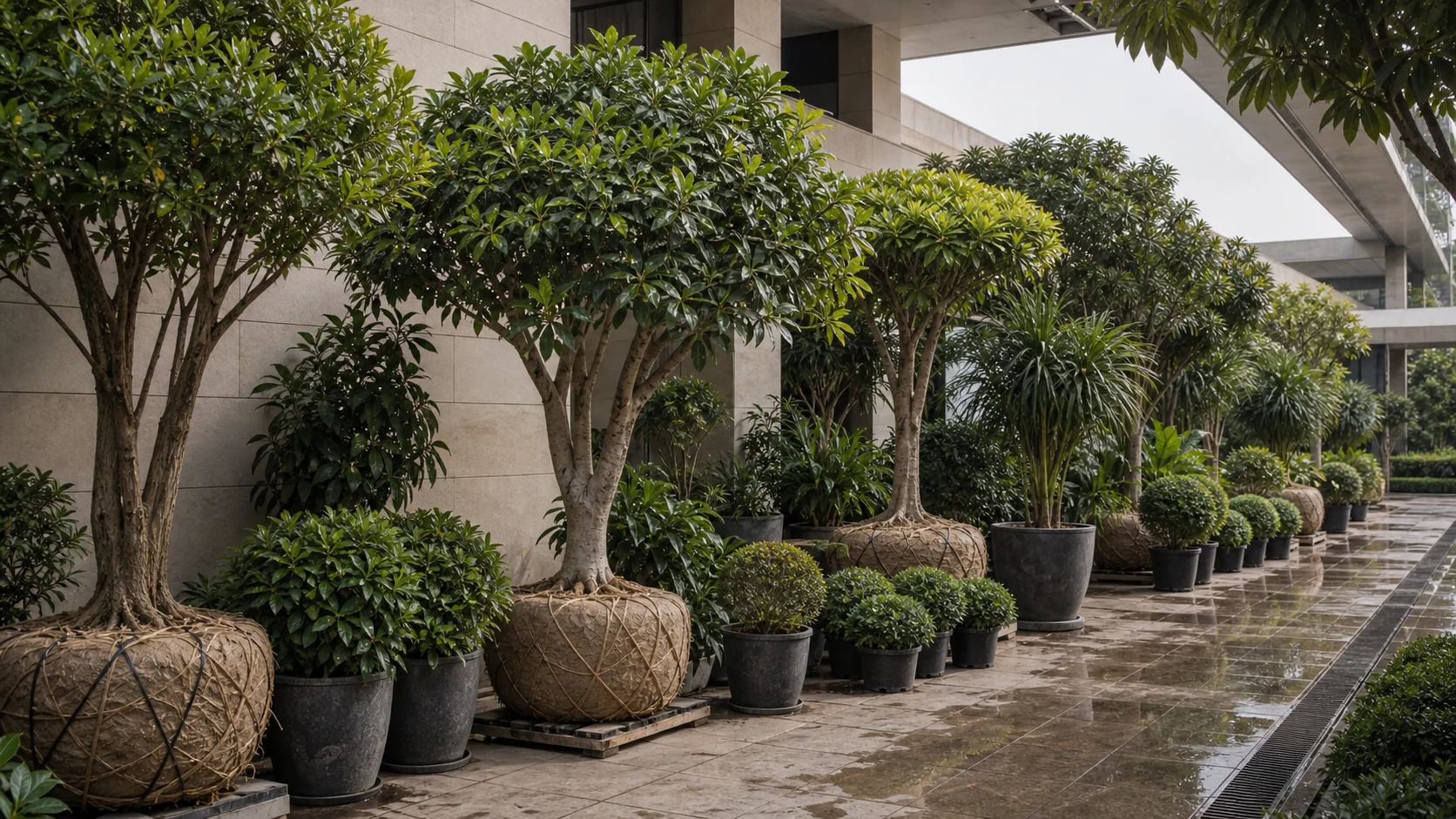
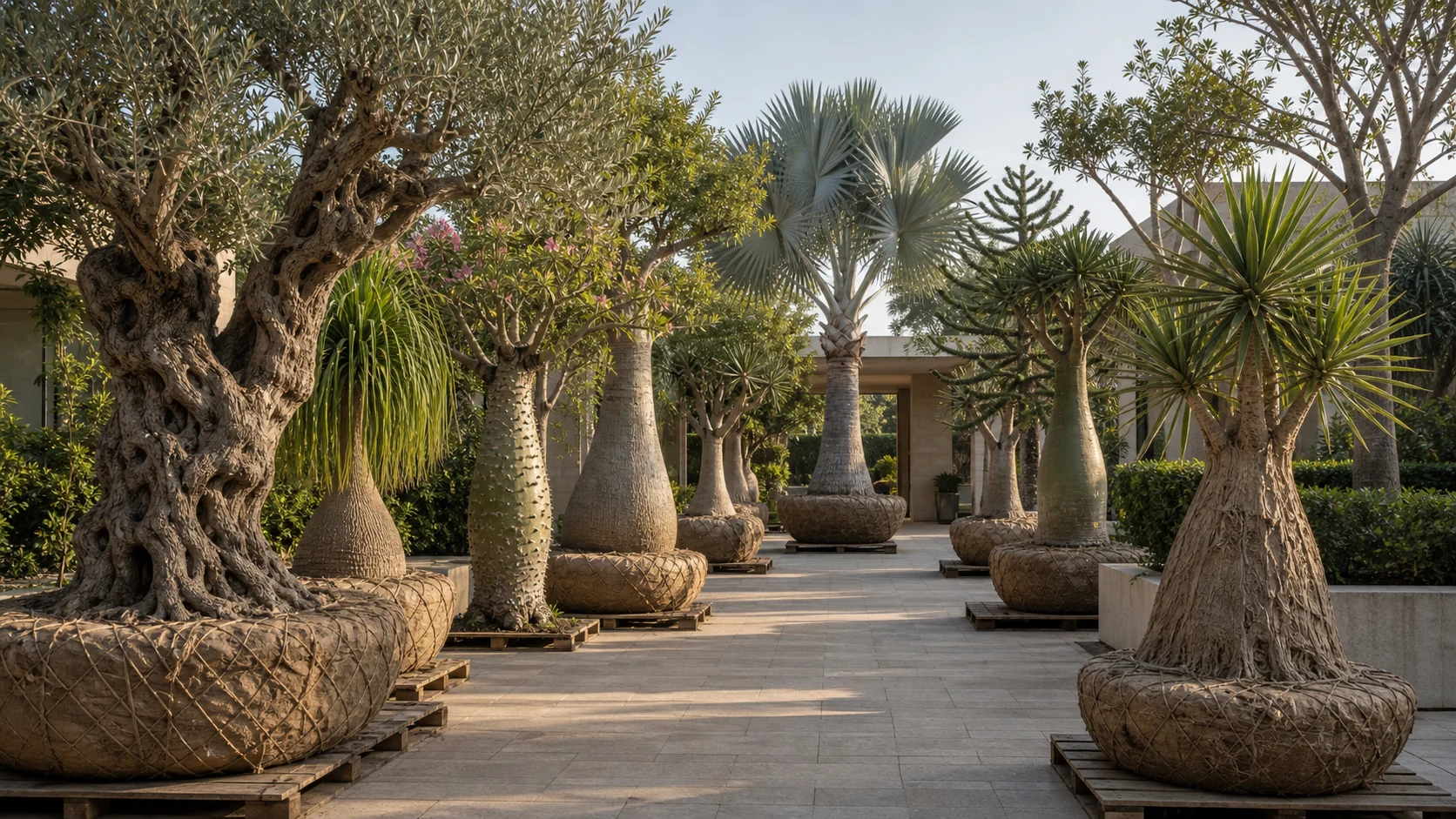
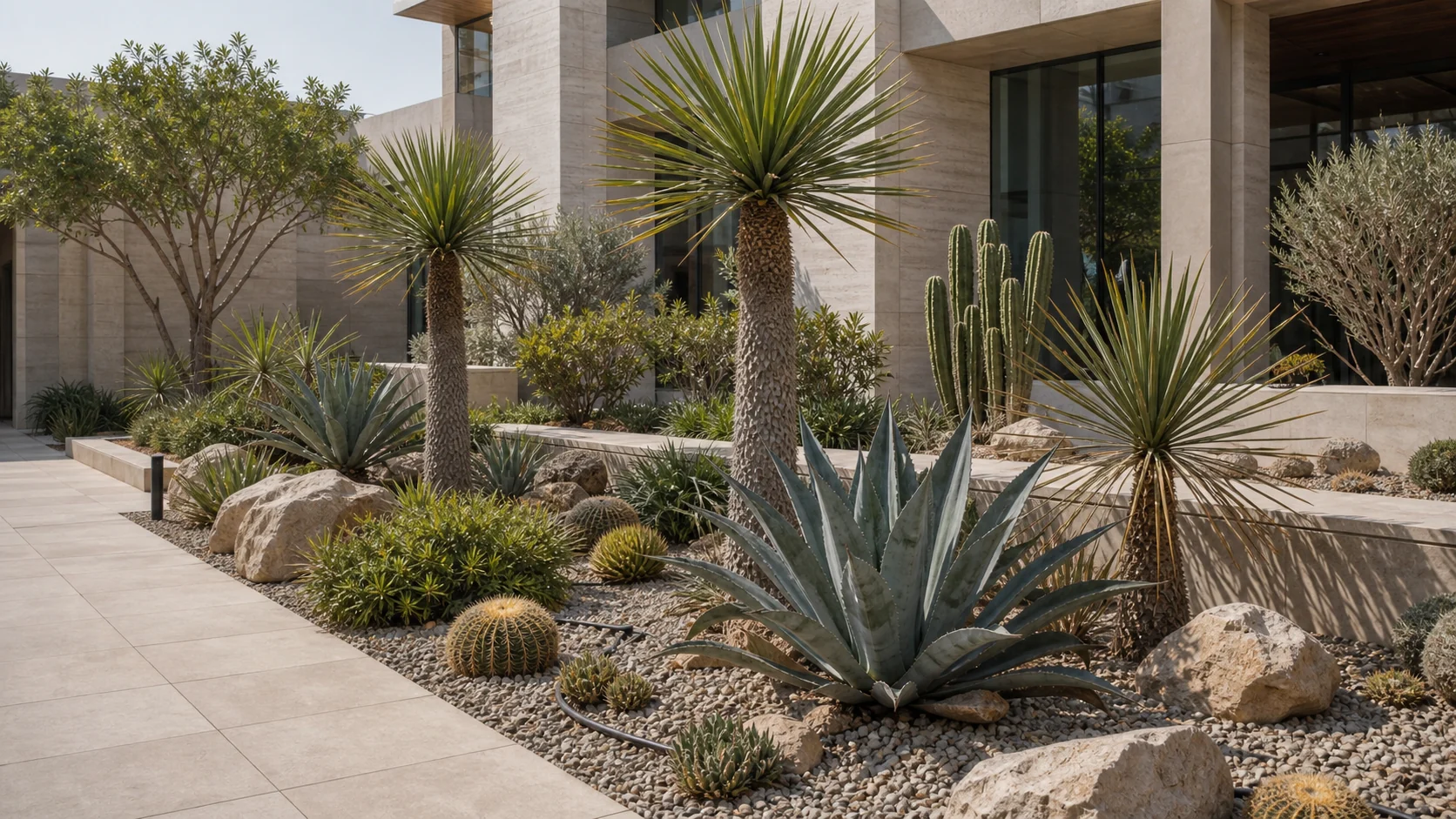
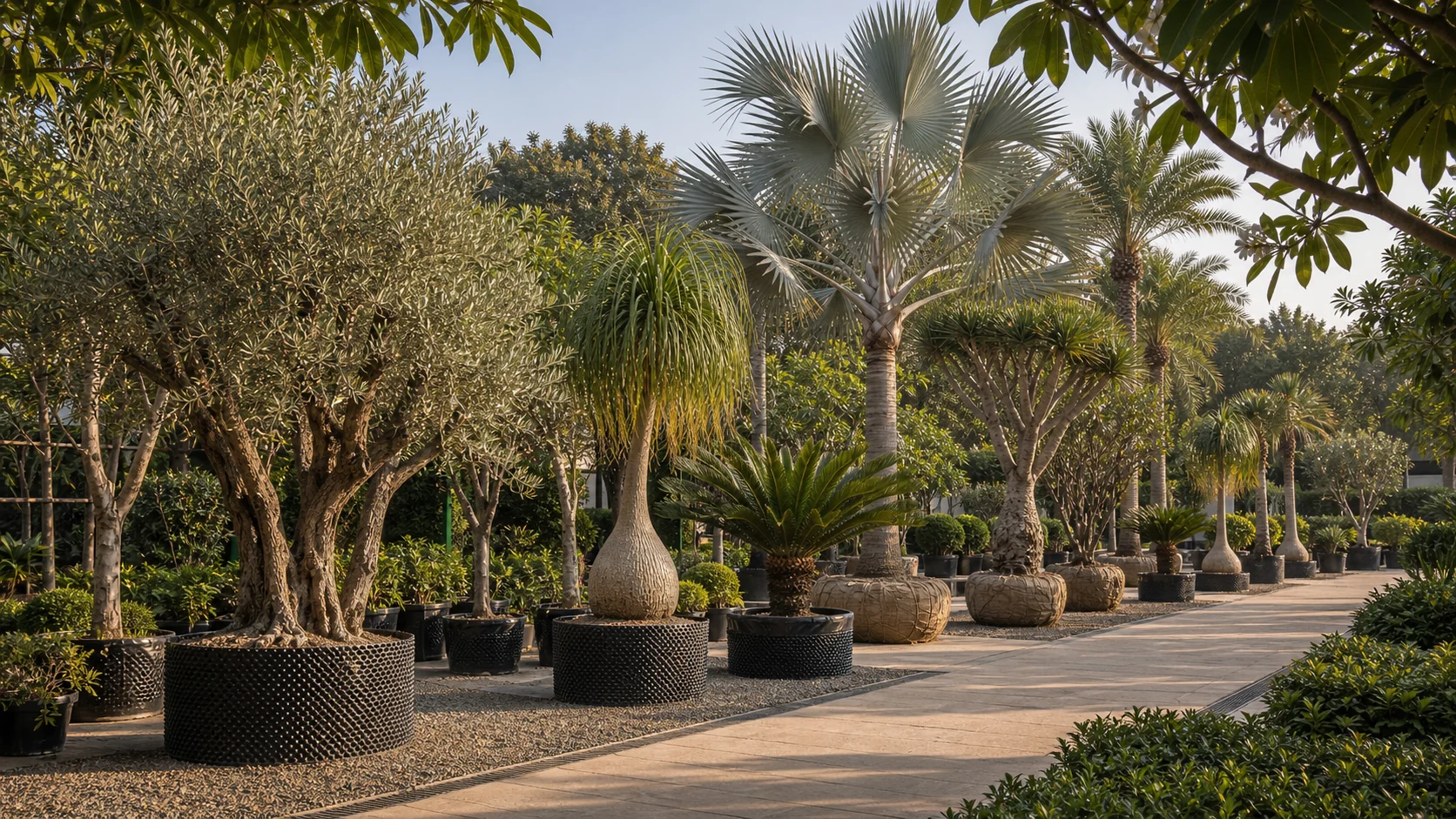
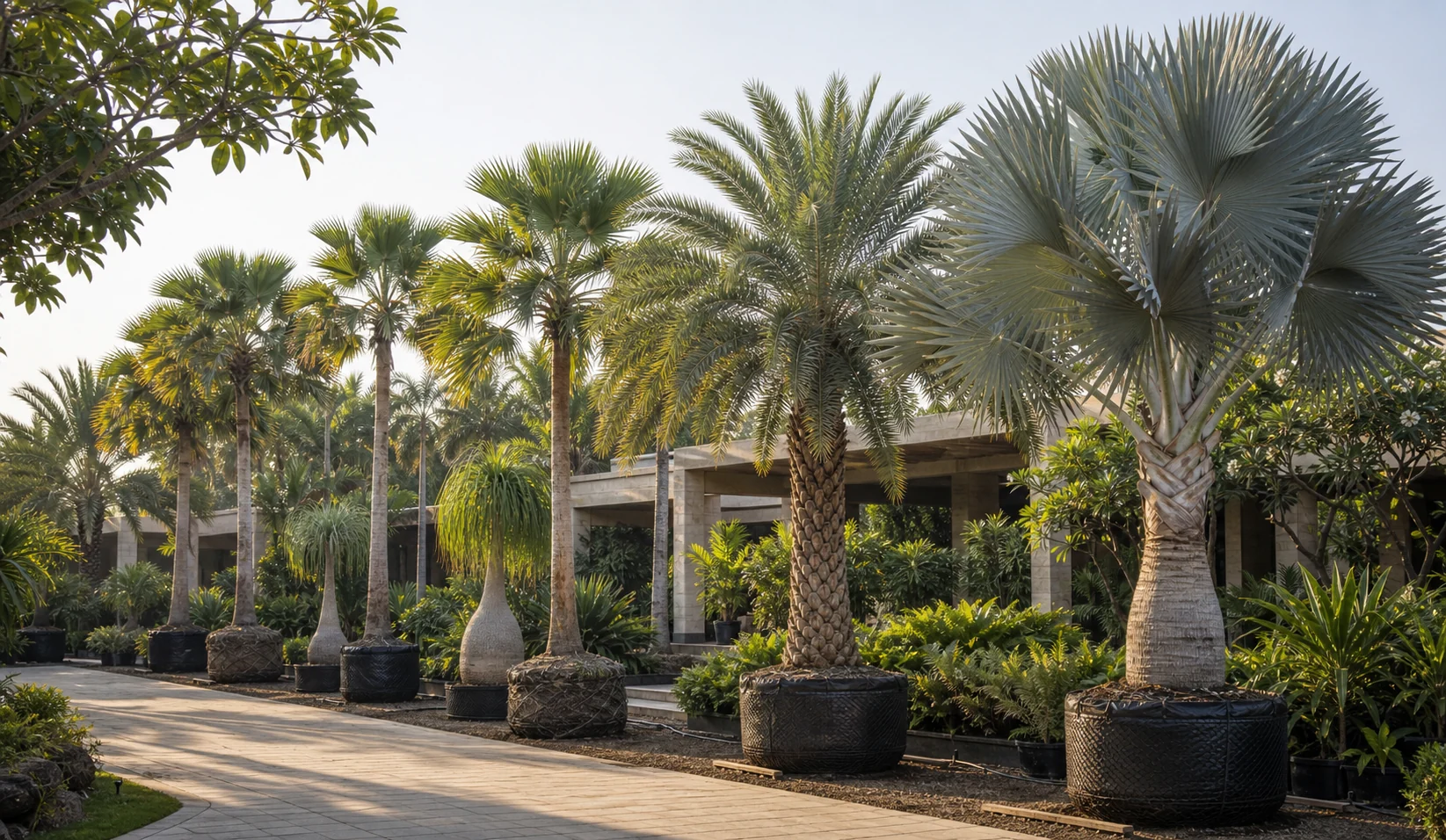
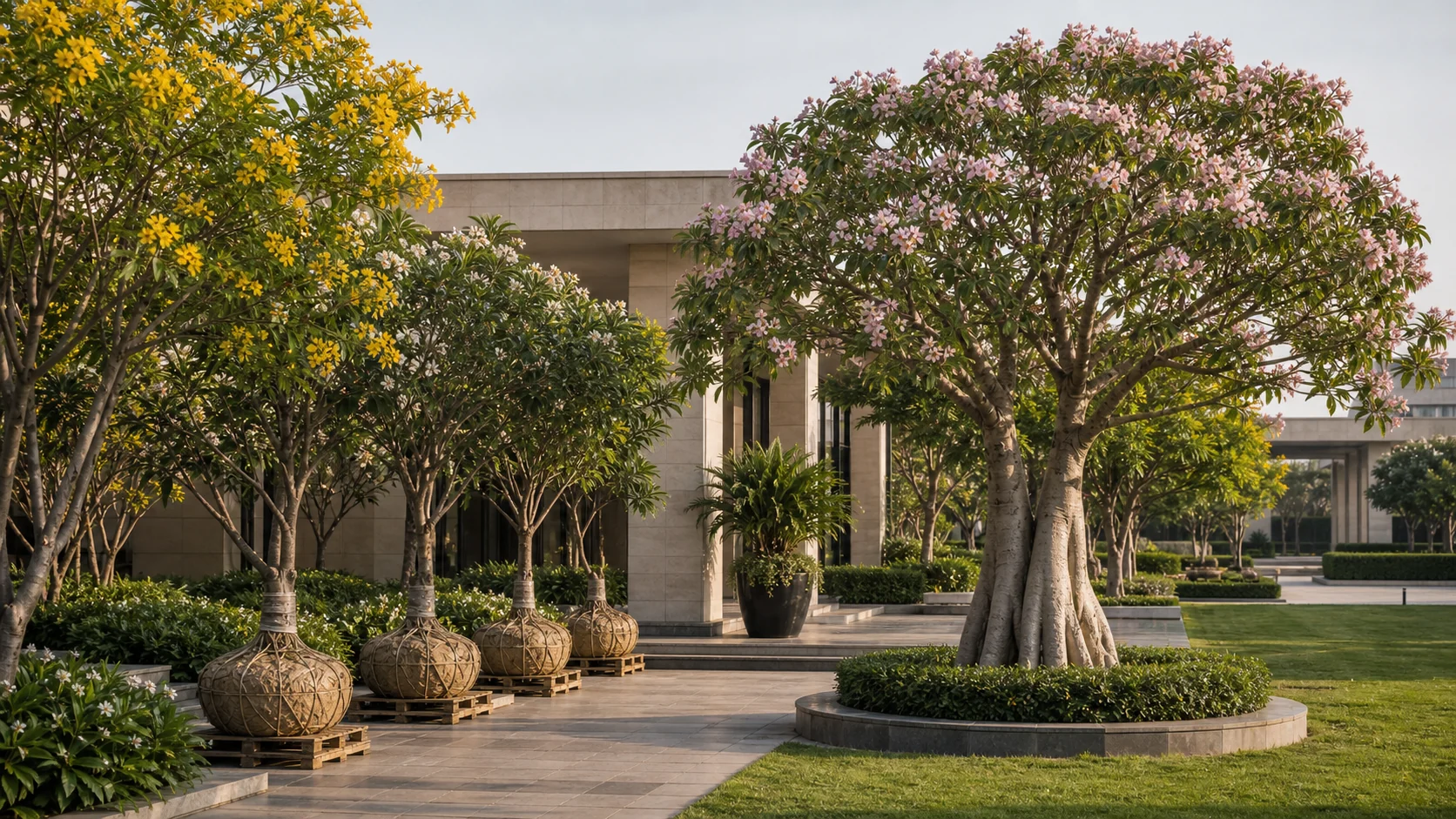
Specimen visual guide
Visual context for placement, scale, handling, and landscape integration.
Section
Where it's used in premium projects
Design teams specify camphor for large evergreen shade domes along campus drives, estate avenues, and institutional forecourts where the brief is year-round glossy mass — not a deciduous seasonal canopy. The aromatic leaf character is a sensory cue on arrival walks when planting sits near guest routes.
Section
Climate & site suitability in India
Warm metros and humid coasts suit established trees; north-India cold snaps can stress young stock. It is a poor fit tight to paving without root engineering — aggressive surface roots are a documented failure mode on Indian commercial hardscape. Alkaline soils are less problematic than for magnolia, but compaction still thins crowns.
Section
Sourcing & acclimatisation
BOQ by height class, caliper, and crown fullness — avenue lines need consistent dome shape. Verify nursery identity versus Cinnamomum tamala (Indian bay leaf), which buyers sometimes confuse in trade lists. [Unverified: typical domestic field-dig lead times for 6 m classes.] Acclimatise with irrigation through the first dry season after transplant.
Section
Installation (pit, soil, drainage, bracing)
Oversize pits and root barriers where paving exists within the mature spread envelope — treat surface root lift as likely, not hypothetical. Drainage layers prevent monsoon anaerobic conditions during establishment. Tall specimens may need bracing until root plate stability is demonstrated on windy sites.
Section
Establishment & AMC
AMC should monitor paving heave annually, schedule crown thinning for clearance, and manage aromatic leaf litter on drains and light-coloured stone. Document weedy seedling removal policy on irrigated campuses — camphor can appear in understory if neglected.
Section
Cost drivers
Explore
Related
Related
Related links
Services, segments, cost, and proof.
- Softscape & horticulture
- Irrigation & water management
- Landscape maintenance (AMC)
- Hotel & resort landscaping
- Luxury resort & spa landscaping
- Mall & retail landscaping
- Corporate campus landscaping
- Projects
- Commercial landscaping cost guide
- Pricing drivers (imported trees)
- Import compliance workflow
- Request a site assessment
- How far should paving sit from a mature camphor tree?
- Plan setbacks from the trunk based on mature spread plus surface-root lift — engineer root barriers where paving must stay inside the drip line; do not assume a narrow strip planting.
- What is the camphor aroma from crushed leaves?
- Cinnamomum camphora releases a sharp camphor scent from bruised foliage — site teams sometimes use it as a sensory cue; budget litter sweep where guests walk through fallen leaves.
- Camphor dome versus deciduous shade — when is camphor the right call?
- Specify camphor when year-round glossy evergreen mass is required; deciduous avenues trade seasonal change for lower evergreen litter — match the brief, not nursery availability alone.
- Can camphor work on a tight mall porte-cochère?
- Only with aggressive root engineering and future crown reduction — default to tighter evergreen cultivars if spread cannot be guaranteed for 20 years.
- Is camphor the same as Indian bay leaf (C. tamala)?
- No — verify botanical name on nursery tags before locking BOQ; trade mislabelling happens on Lauraceae stock lists.
- What import paperwork applies to live camphor?
- Follow India plant quarantine requirements for live trees — see compliance workflow (informational, not legal advice).
- How do we benchmark cost between suppliers?
- Match height class, caliper, crown fullness, lifting, root-barrier scope, and AMC — not catalogue per-tree pricing.