
Odollam tree
Odollam / Pong-pong (Cerbera odollam)
Cerbera odollam is a glossy coastal evergreen with fragrant white frangipani-like flowers — and all parts are highly poisonous (cerberin), especially seeds: the suicide tree. Specify only with explicit toxicity planning and no placement where children or the public face ingestion risk.
Spec
At a glance
- Botanical name
- Cerbera odollam
- Family
- Apocynaceae
- Common names
- Odollam, pong-pong, suicide tree
- Origin
- Coastal India and South-east Asia
- Plant type
- Evergreen toxic flowering tree
- Mature height
- Often 8–15 m
- Trunk / form
- Glossy evergreen; milky sap; fragrant white flowers
- Crown spread
- Dense glossy crown; apple-like toxic fruit
- Growth rate
- Moderate
- Light
- Full sun to partial coastal exposure
- Water needs
- Moderate; salt-tolerant coastal
- India climate suitability
- Coastal and humid tropical India — salt tolerant
- Cold/heat & salt/wind tolerance
- Coastal salt and wind tolerant; frost-sensitive inland
- Typical supply size
- Coastal specimen classes [Unverified]
- Lead time (sourcing)
- [Unverified] coastal nursery cerbera stock
- Install considerations
- Toxicity signage plan; exclude play zones; fruit/seed handling PPE
- Maintenance level
- High caution AMC — fruit removal; no public seed handling
- Cautions
- All parts highly poisonous (cerberin); seeds especially — suicide tree; do not place near children/public ingestion risk; PPE for fruit/seed work
Gallery
Specimen visual guide
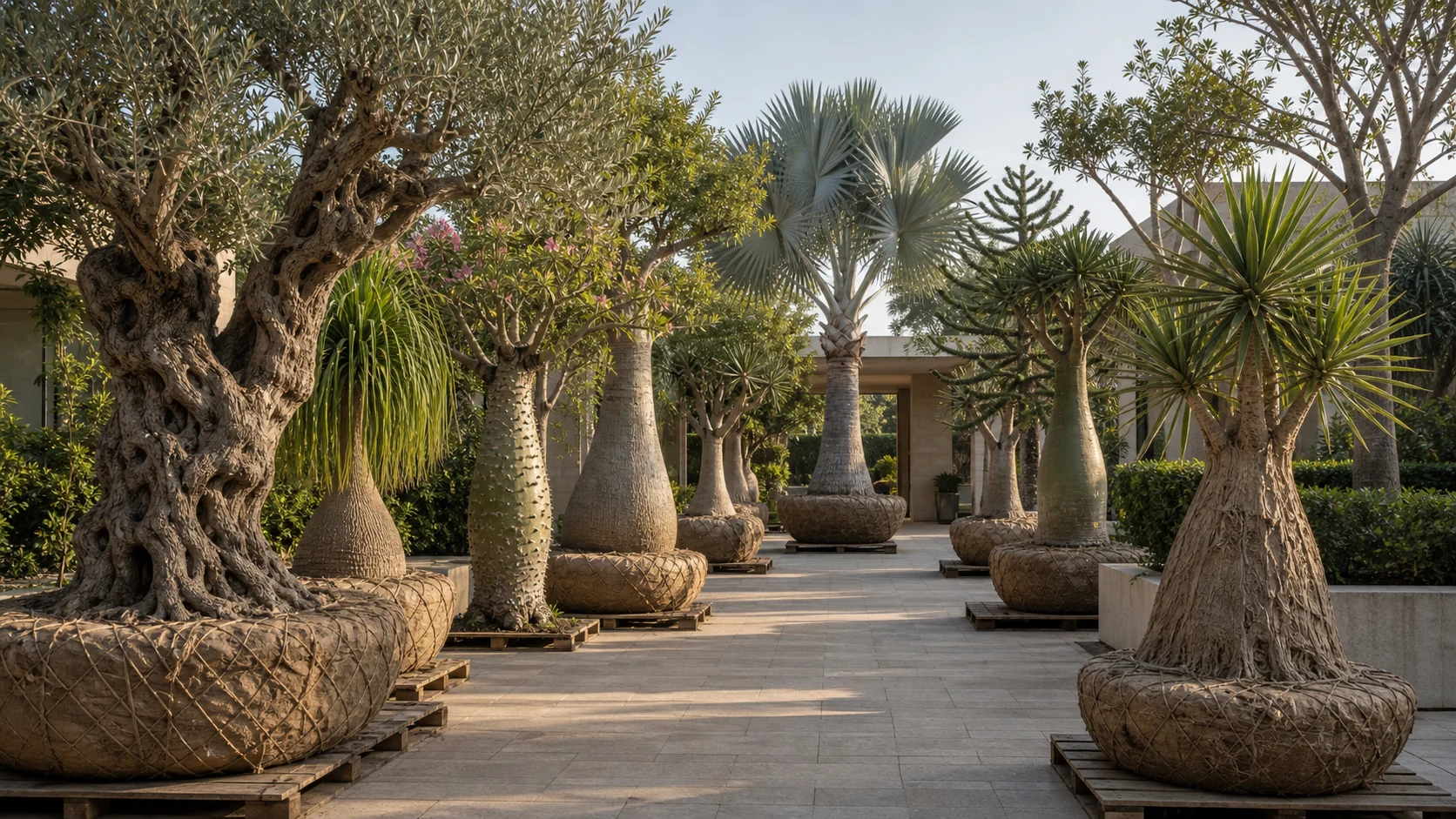
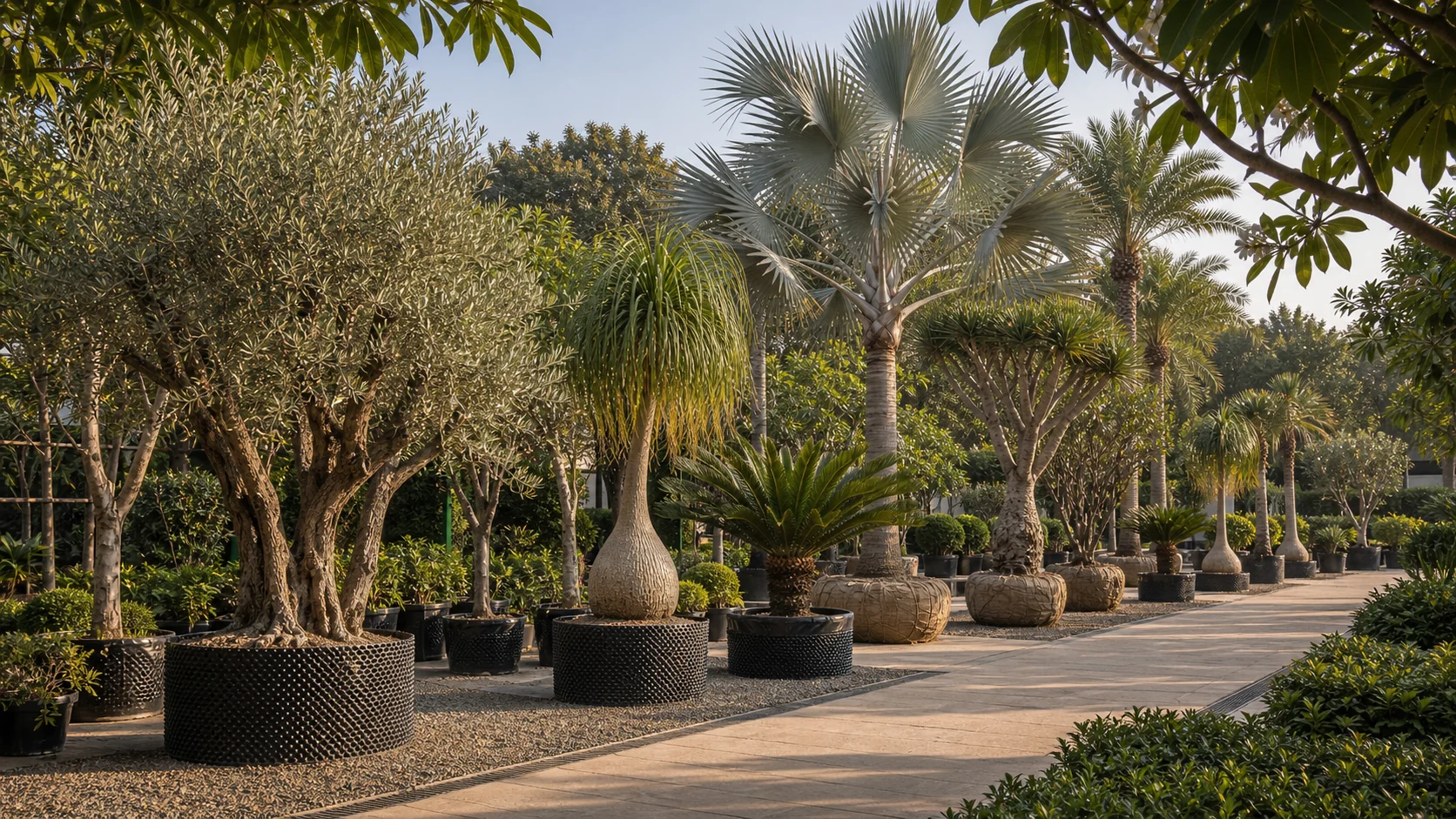
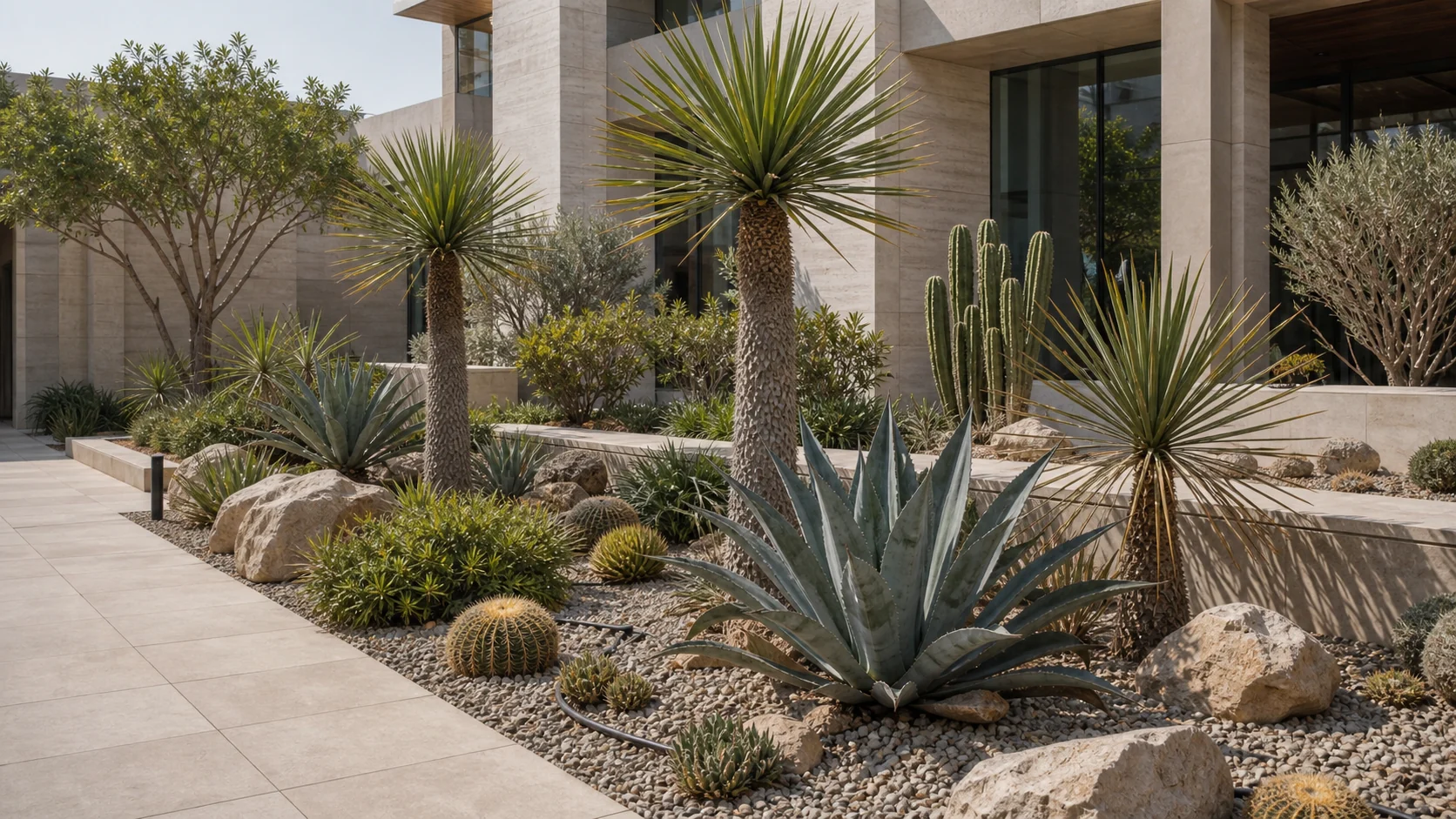
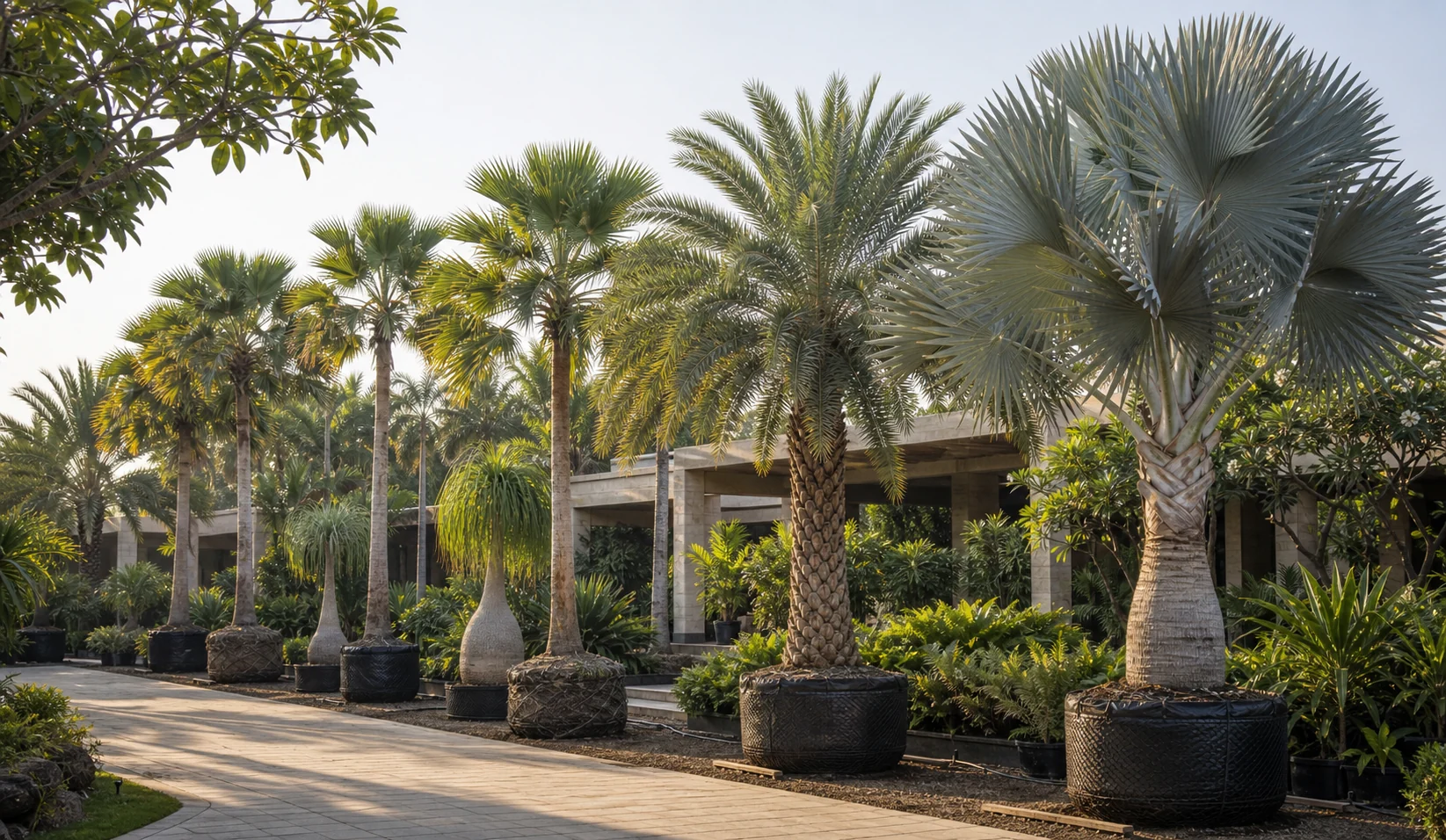
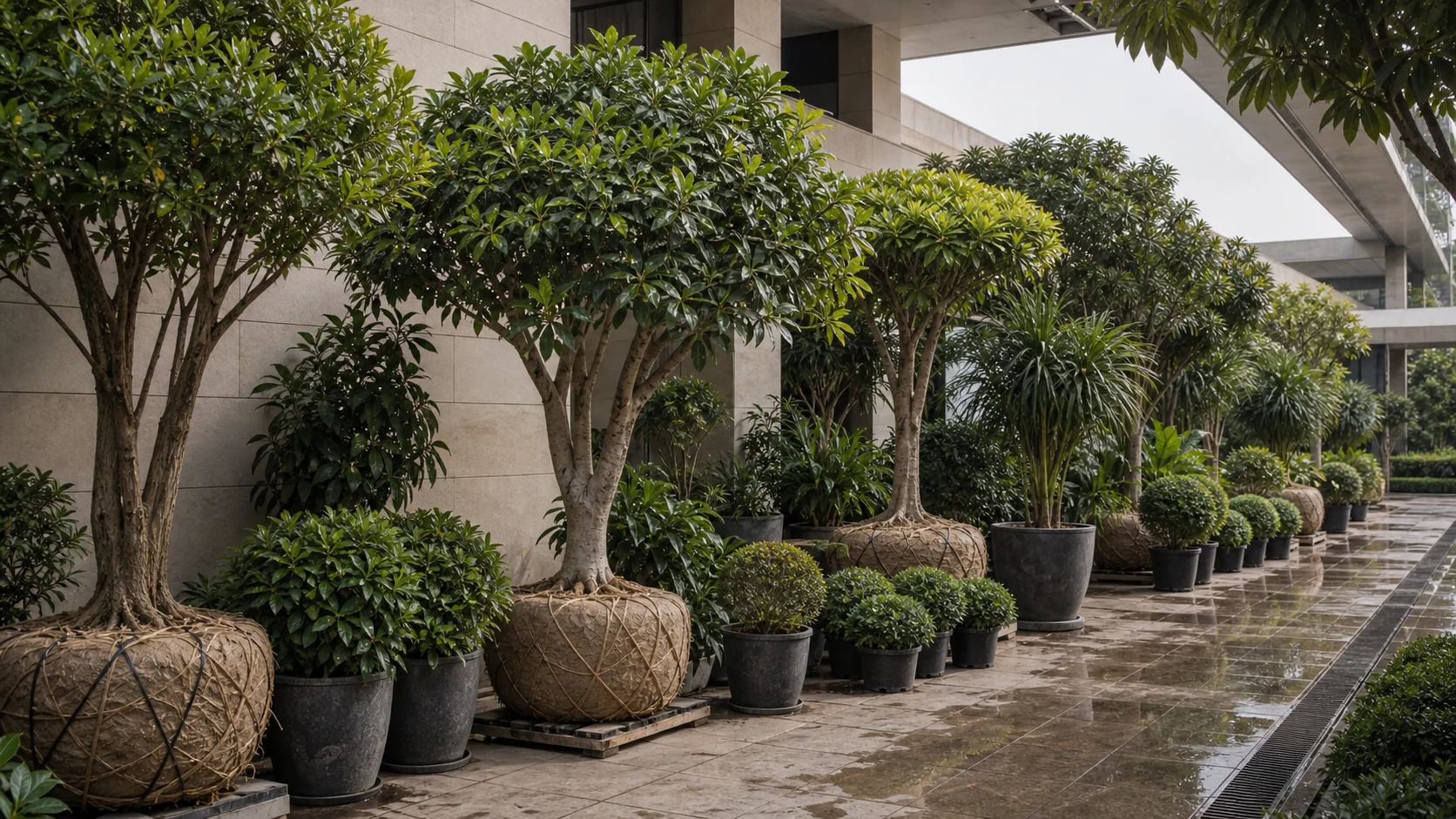
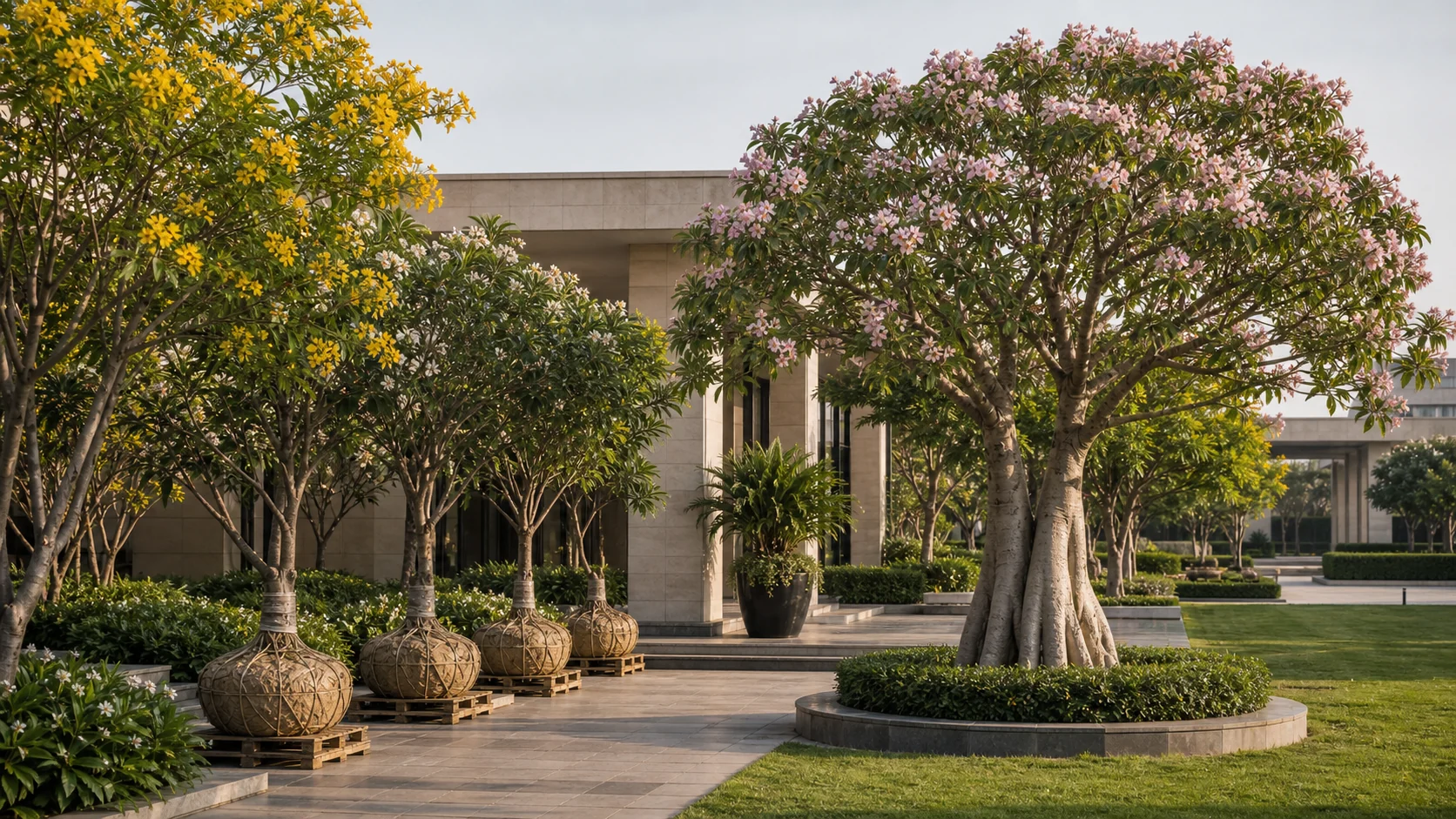
Visual context for placement, scale, handling, and landscape integration.
Section
Where it's used in premium projects
Odollam is specified rarely for glossy coastal evergreen structure with fragrant flowers — only where designers and owners accept toxicity protocols: no schools, playgrounds, public foraging zones, or edible-garden adjacency.
Section
Climate & site suitability in India
Coastal salt tolerance suits marina-edge and humid coast campuses — toxicity caution overrides aesthetic convenience. Inland frost may limit use; toxicity remains the primary site filter, not climate.
Section
Sourcing & acclimatisation
Document toxicity in owner sign-off and maintenance PPE plans before purchase. [Unverified: typical India coastal nursery supply.] Never position as fragrant feature without safety briefing.
Section
Installation (pit, soil, drainage, bracing)
Install outside child-play radii and public lawn foraging areas; plan fruit drop cleanup with trained crews in PPE. Milky sap and seeds are hazardous — not guest maintenance work.
Section
Establishment & AMC
AMC must include scheduled toxic fruit/seed removal and locked waste handling — fragrant flowering does not reduce poison risk. Facility teams need explicit cerberin awareness, not generic evergreen care.
Section
Cost drivers
Explore
Related
Related
Related links
Services, segments, cost, and proof.
- Softscape & horticulture
- Irrigation & water management
- Landscape maintenance (AMC)
- Hotel & resort landscaping
- Luxury resort & spa landscaping
- Mall & retail landscaping
- Corporate campus landscaping
- Projects
- Commercial landscaping cost guide
- Pricing drivers (imported trees)
- Import compliance workflow
- Request a site assessment
- How toxic is Cerbera odollam?
- All parts contain cerberin — seeds are especially deadly; it is known as the suicide tree. Do not place where children or the public could ingest fruit or seeds.
- Why specify a poisonous tree at all?
- Only where coastal glossy evergreen and fragrance justify explicit risk management — many projects should choose non-toxic alternatives instead.
- What maintenance safety is required?
- Trained crews with PPE for fruit/seed handling; scheduled removal; no volunteer or guest cleanup of fallen fruit.
- Is odollam salt-tolerant for coastal India?
- Yes — coastal tolerance is a strength, but toxicity placement rules still dominate site selection.
- How fragrant are the flowers?
- White frangipani-like fragrant blooms — fragrance does not imply safe handling of fruit or seeds.
- What compliance applies to toxic coastal trees?
- Institutional risk review and maintenance PPE protocols should be documented before procurement — quarantine still applies to imported live material if sourced abroad (informational, not legal advice).
- Can odollam sit near hotel pool lawns?
- Only with strict fruit removal, setbacks, and owner acceptance of poison risk — most family resorts should select non-toxic species instead.