
Grass tree
Australian grass tree (Xanthorrhoea preissii)
Xanthorrhoea preissii is the western Australian grass tree — fire-blackened trunk with grassy fountain crown and tall flower spear — extremely slow, fire-adapted, and notorious for transplant failure; large specimens are costly and high-risk in India.
Spec
At a glance
- Botanical name
- Xanthorrhoea preissii
- Family
- Asphodelaceae (Xanthorrhoeaceae)
- Common names
- Grass tree, blackboy (historical), balga
- Origin
- Western Australia
- Plant type
- Grass tree (slow arborescent monocot)
- Mature height
- Trunk 1–5 m+ over decades; flower spear taller
- Trunk / form
- Fire-blackened rough trunk; grassy leaf fountain crown
- Crown spread
- Grass-like leaf fountain; tall flower spear episodic
- Growth rate
- Extremely slow — trunk height is decadal
- Light
- Full sun
- Water needs
- Low; mycorrhiza and drainage critical
- India climate suitability
- Only collector sites with expert establishment; high failure risk in humid monsoon
- Cold/heat & salt/wind tolerance
- Heat and dry adapted; wet transplant stress lethal
- Typical supply size
- Trunk height classes — high-risk large [Unverified]
- Lead time (sourcing)
- [Unverified] regulated Australian harvest documentation
- Install considerations
- Specialist transplant protocol; never standard tree pit
- Maintenance level
- Expert AMC; minimal irrigation; establishment monitoring
- Cautions
- Very high establishment-failure risk; extremely slow; transplant difficulty; confirm regulated harvest paperwork; drainage mandatory
Gallery
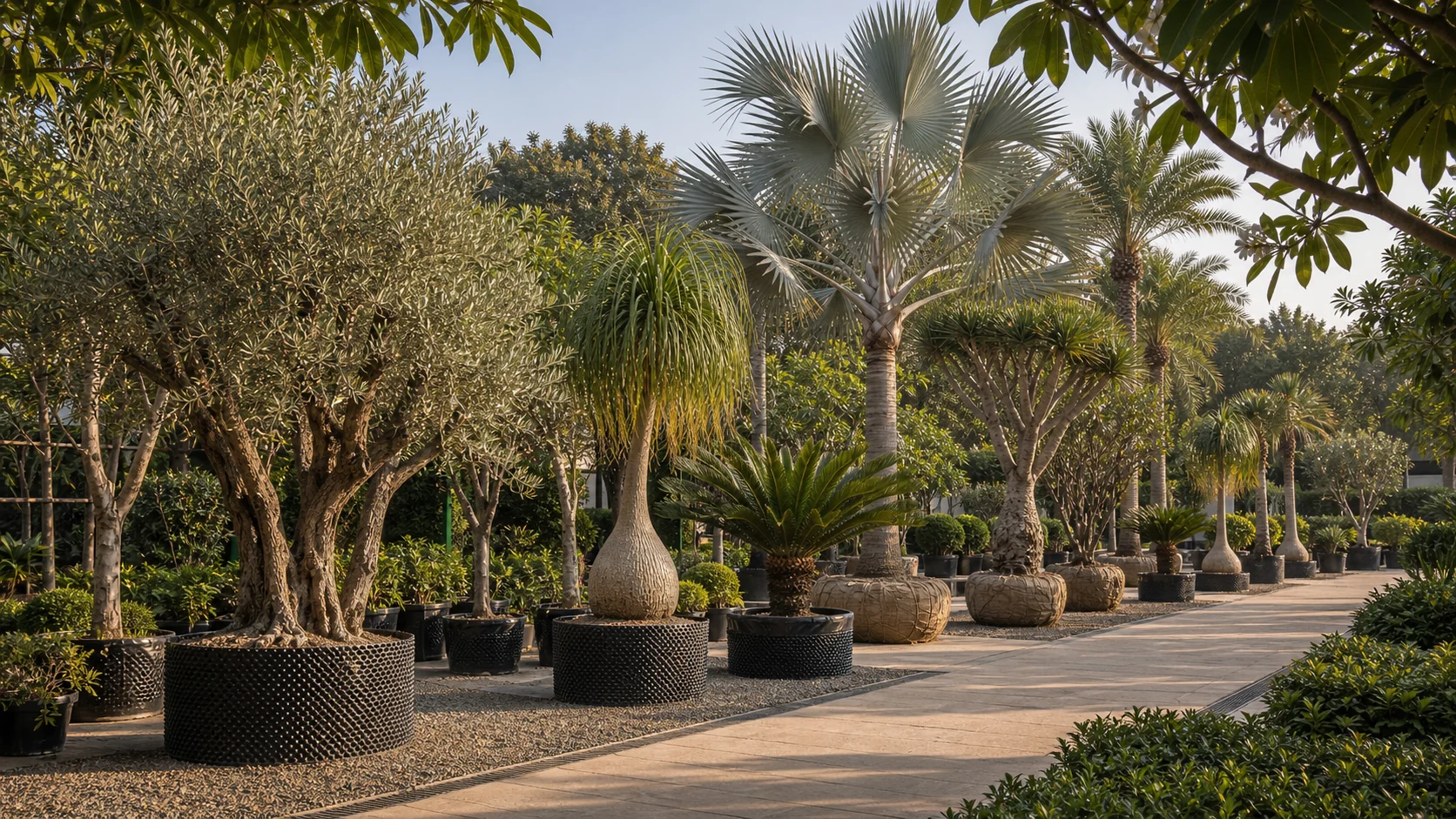
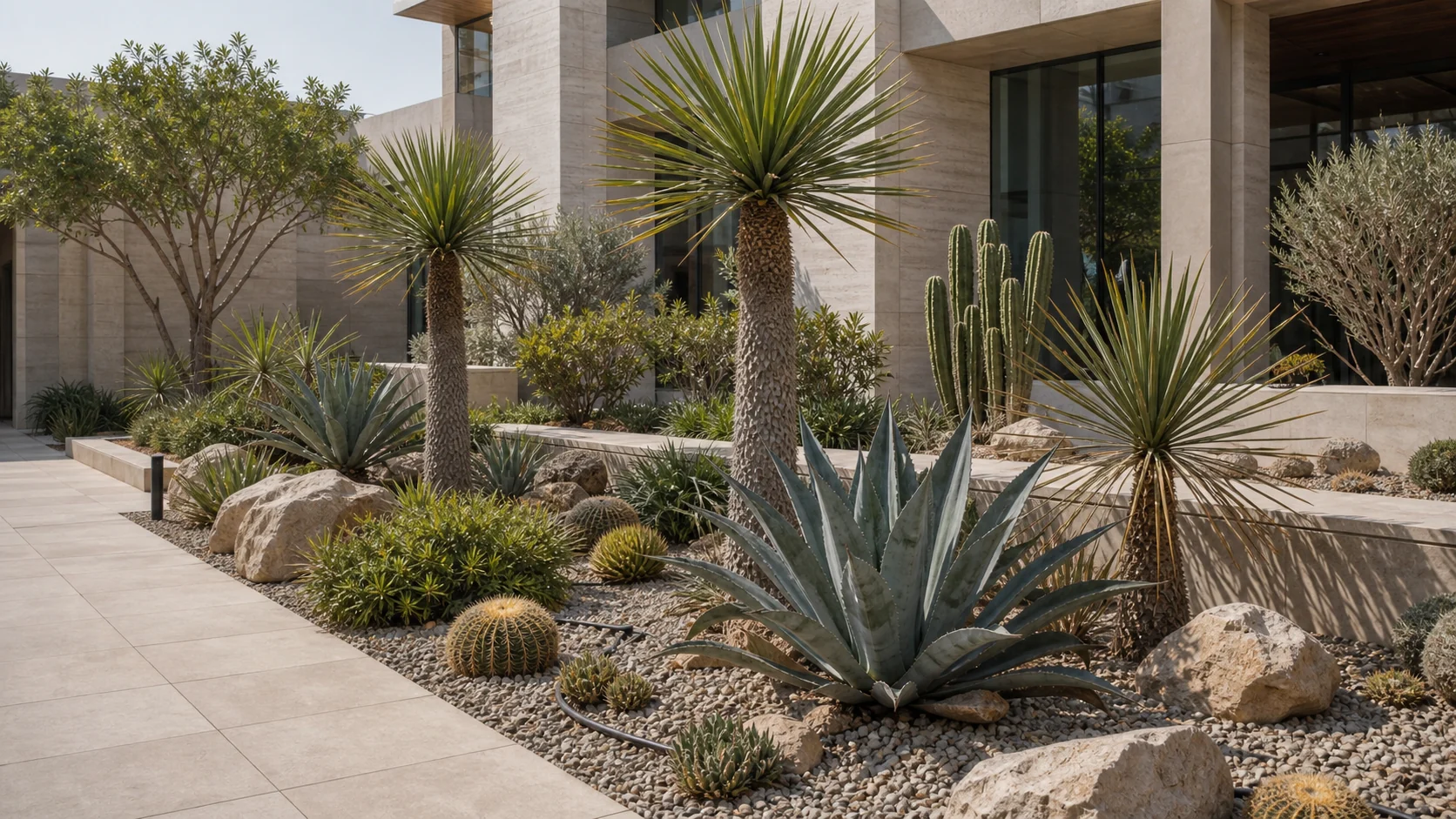
Specimen visual guide
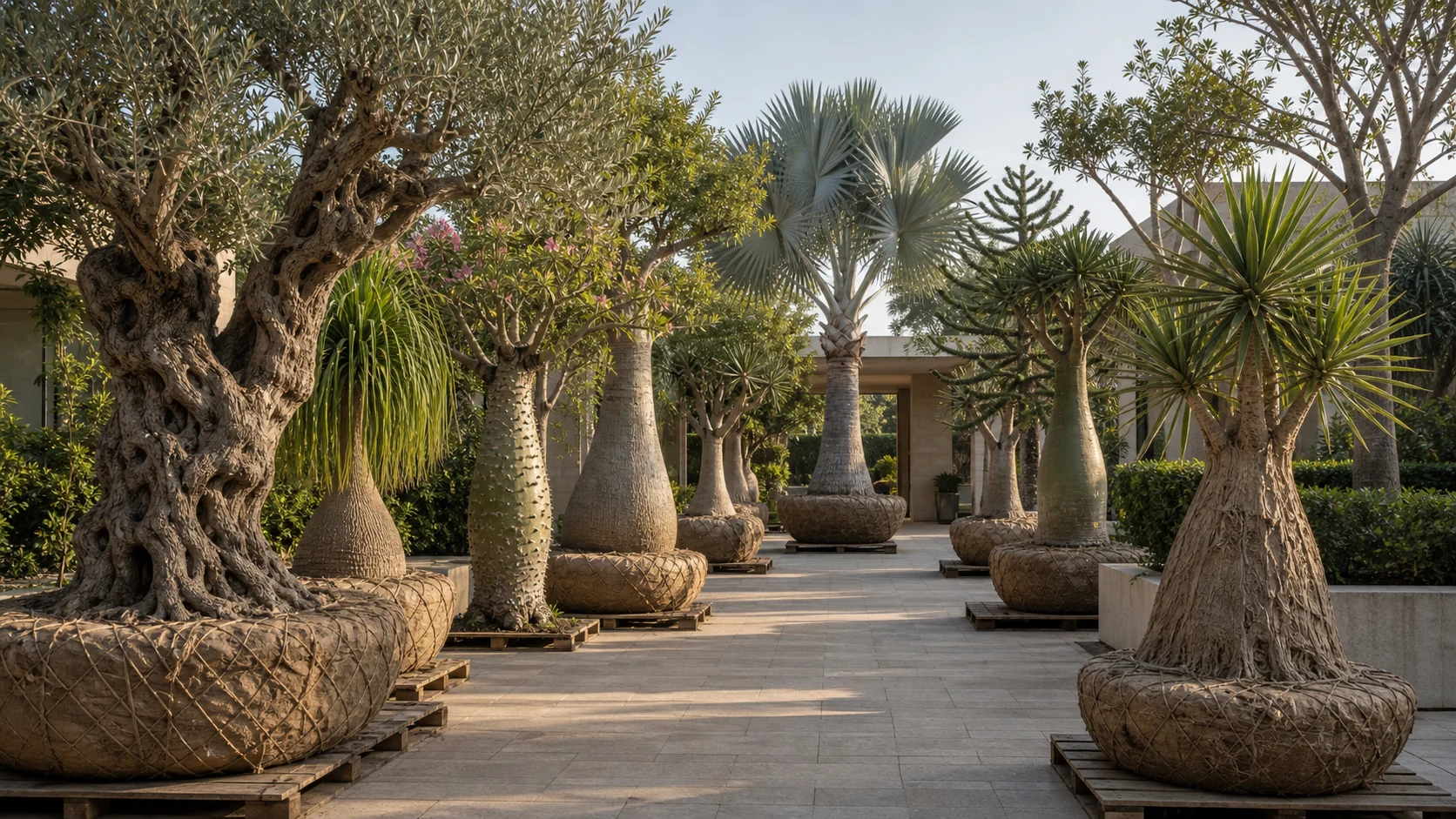
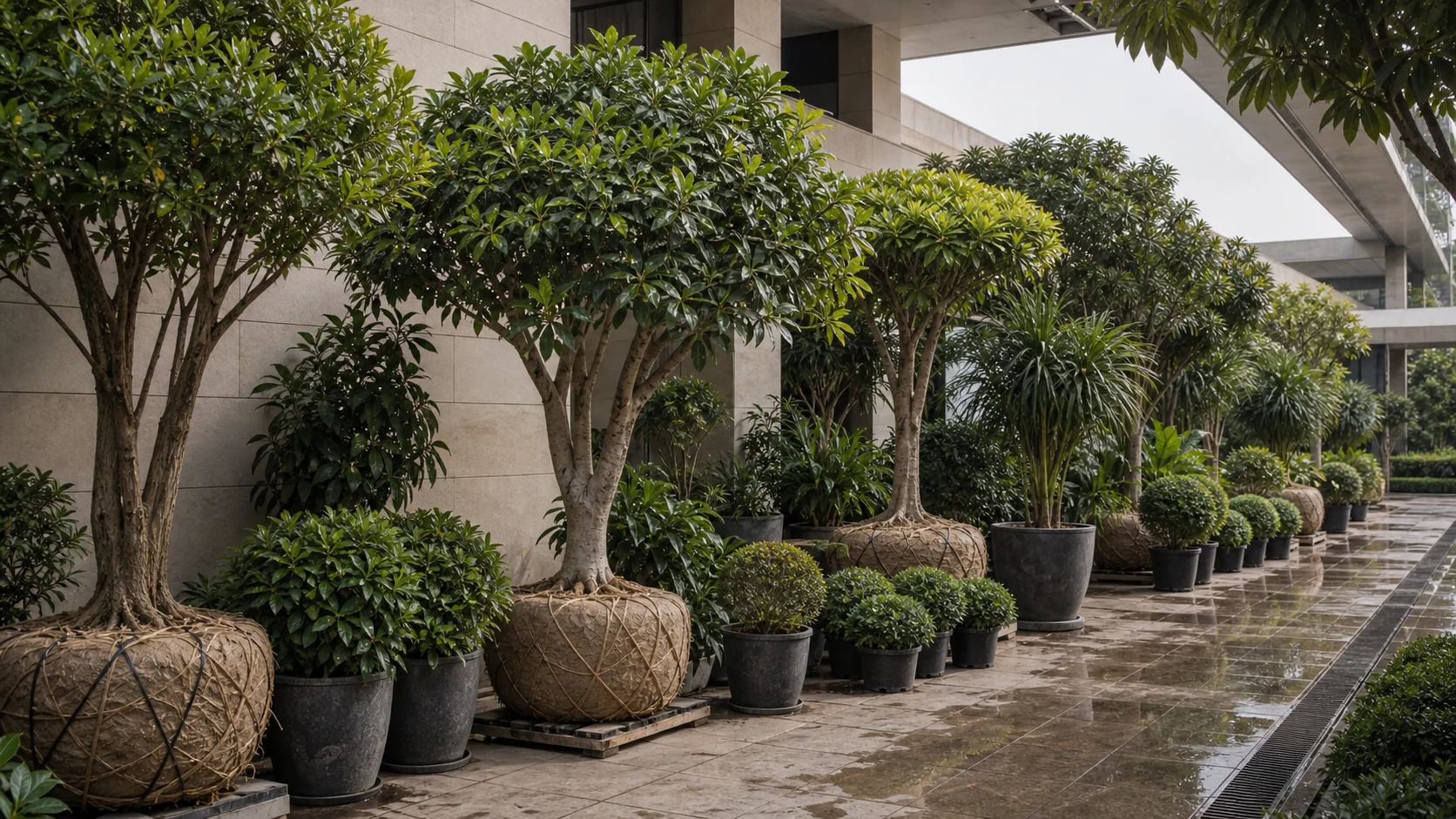
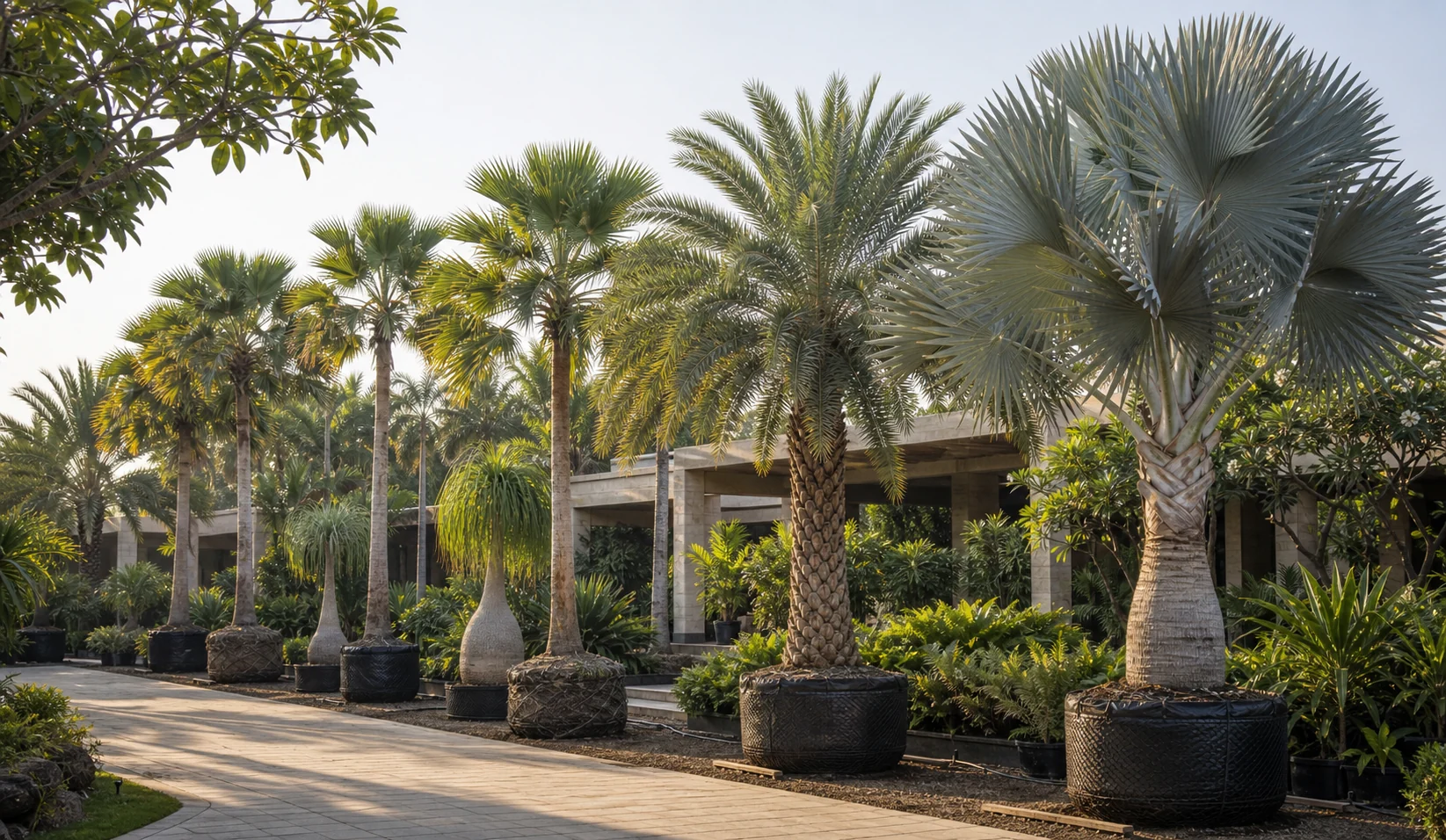
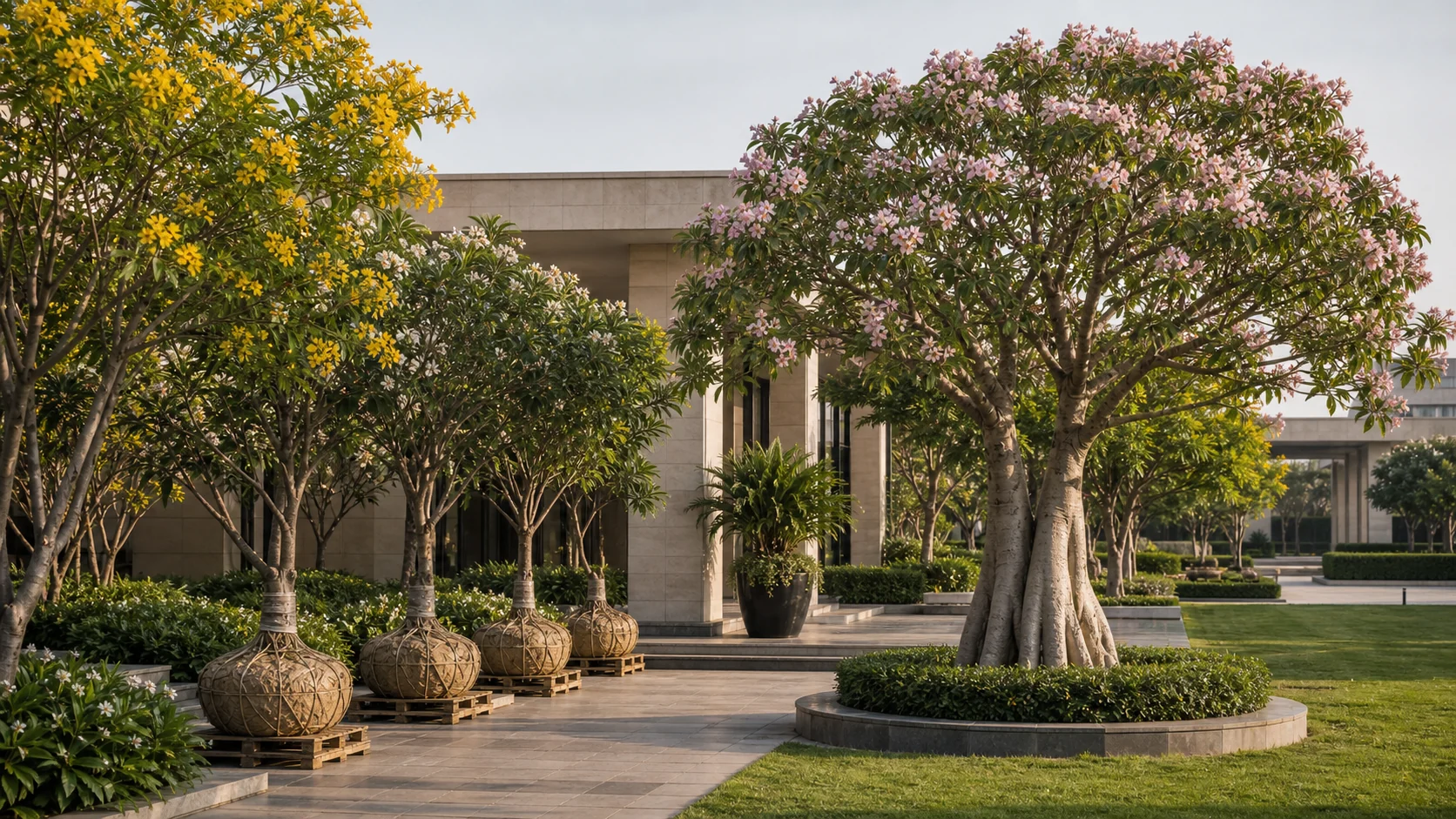
Visual context for placement, scale, handling, and landscape integration.
Section
Where it's used in premium projects
Grass tree is iconic sculptural collector spec — private xeric galleries and estate art pieces where blackened trunk and grass crown justify specialist establishment budgets, not mass hotel planting.
Section
Climate & site suitability in India
Establishment failure risk is the headline — humid Indian monsoon without specialist protocol is honest high-risk. Fire-adapted ecology does not translate to sympathy watering — mycorrhiza and drainage dominate success.
Section
Sourcing & acclimatisation
Regulated harvest and transplant history matter — [Unverified: typical legal Australian supply chain for preissii trunks]. Refuse grass trees without documented root/transplant method.
Section
Installation (pit, soil, drainage, bracing)
Do not use standard ornamental tree pits — specialist grass-tree transplant teams, native-soil mycorrhiza protocols, and drainage voids are mandatory. Flower spears need vertical clearance when they appear.
Section
Establishment & AMC
Overwatering kills establishing grass trees — yet under-watering with broken mycorrhiza also fails; AMC must follow specialist protocol, not landscape defaults. Programme very high establishment-failure risk in owner sign-off. Slow trunk growth means buy height, not hope.
Section
Cost drivers
Explore
Related
Related
Related links
Services, segments, cost, and proof.
- Softscape & horticulture
- Irrigation & water management
- Landscape maintenance (AMC)
- Hotel & resort landscaping
- Luxury resort & spa landscaping
- Mall & retail landscaping
- Corporate campus landscaping
- Projects
- Commercial landscaping cost guide
- Pricing drivers (imported trees)
- Import compliance workflow
- Request a site assessment
- Why is grass tree transplant so difficult?
- Mycorrhiza-dependent root systems and fire-adapted ecology make standard tree planting failure-prone — specialist protocol is mandatory, not optional.
- What is the blackened trunk feature?
- Fire-resilient rough black trunk with grassy fountain crown — the sculptural character, plus episodic tall flower spear.
- What establishment risk should owners accept?
- Very high failure risk even with specialists — honest disclosure before purchase beats post-mortem disputes.
- How slow is trunk growth?
- Extremely slow — centimetres per year; large trunks are old, expensive, and risky to move.
- Can grass trees survive Indian monsoon?
- Only with expert drainage and protocol — humid coast open ground is high-risk without covered or mound culture.
- What regulated sourcing applies?
- Australian harvest rules and export documentation should be verified — [Unverified] typical legal chain per consignment (informational, not legal advice).
- What should grass-tree BOQs include?
- Trunk height photos, transplant method statement, specialist crew line items, failure-risk disclosure, and dry establishment AMC — not standard tree rates.