
Arborvitae topiary
Arborvitae topiary (Thuja occidentalis)
Thuja occidentalis topiary supplies columnar cones and spirals familiar from temperate gardens — but hot-humid Indian lowlands cause browning, spider mites, and collapse unless the site is a cool hill station or dry microclimate. We document climate honesty up front and steer most lowland BOQs to podocarpus or ficus.
Spec
At a glance
- Species
- Thuja occidentalis
- Family
- Cupressaceae
- Origin
- North America — temperate cultivars
- Available trained forms
- Spiral, cone, column
- Foliage
- Flat scale-like evergreen — browns when stressed
- Size range available
- 1–3 m spirals typical [Unverified]
- Growth rate
- Moderate in cool sites; stalls or declines in hot-humid lowlands
- Clipping frequency / AMC
- 2–3 trims/year in viable cool sites
- Light
- Full sun to partial shade
- Water
- Moderate — wet feet plus heat invite decline
- India climate suitability
- Poor in hot-humid lowlands — best in hill stations (Ooty, Shimla, Darjeeling) and cool dry pockets
- Indoor / outdoor
- Outdoor only in viable microclimates
- Drainage
- Sharp drainage mandatory
- Cautions
- Struggles badly in hot-humid India — browning, spider mites; honest hill-station or cool-dry caveat
Gallery
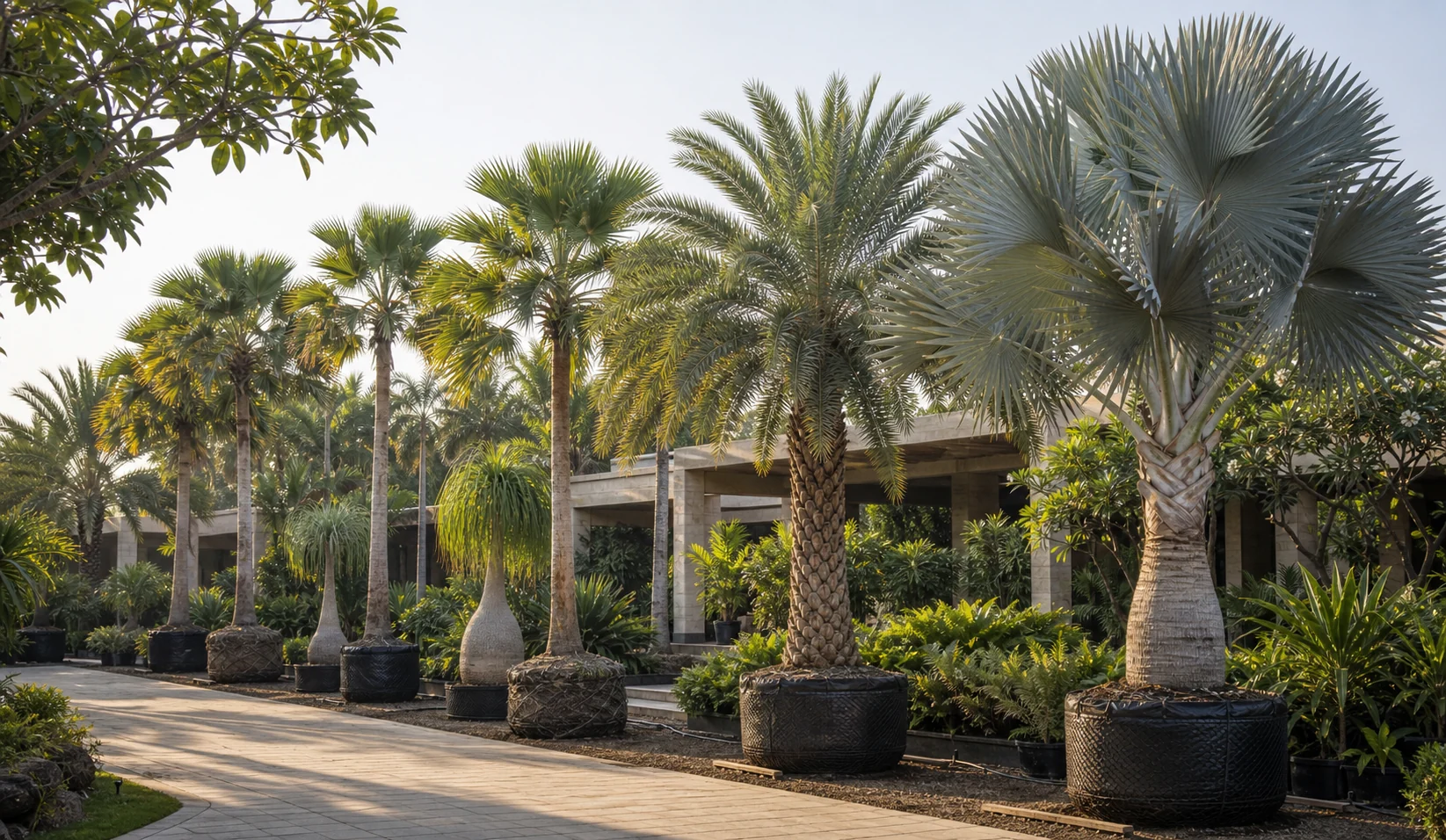
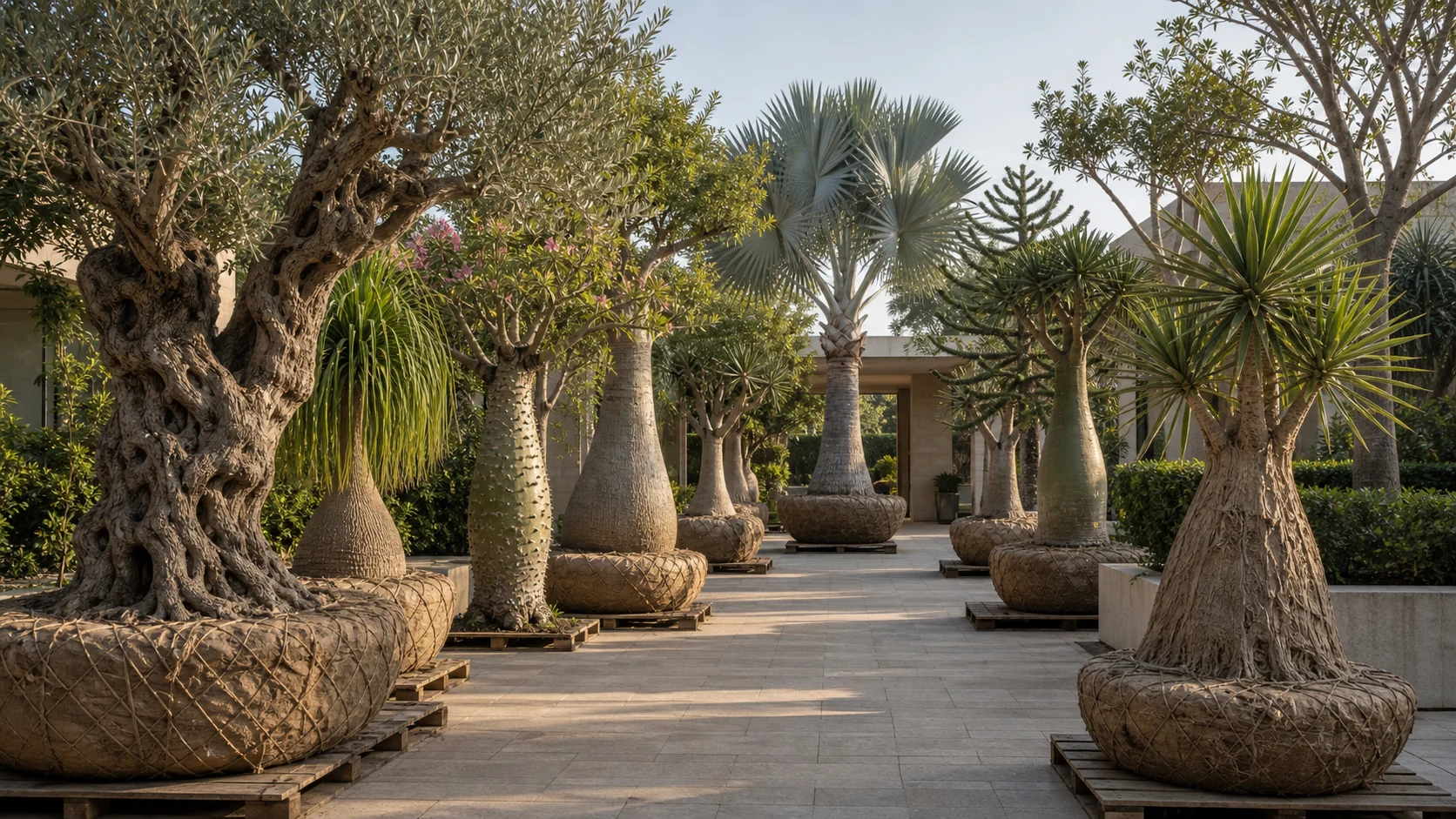
Specimen visual guide
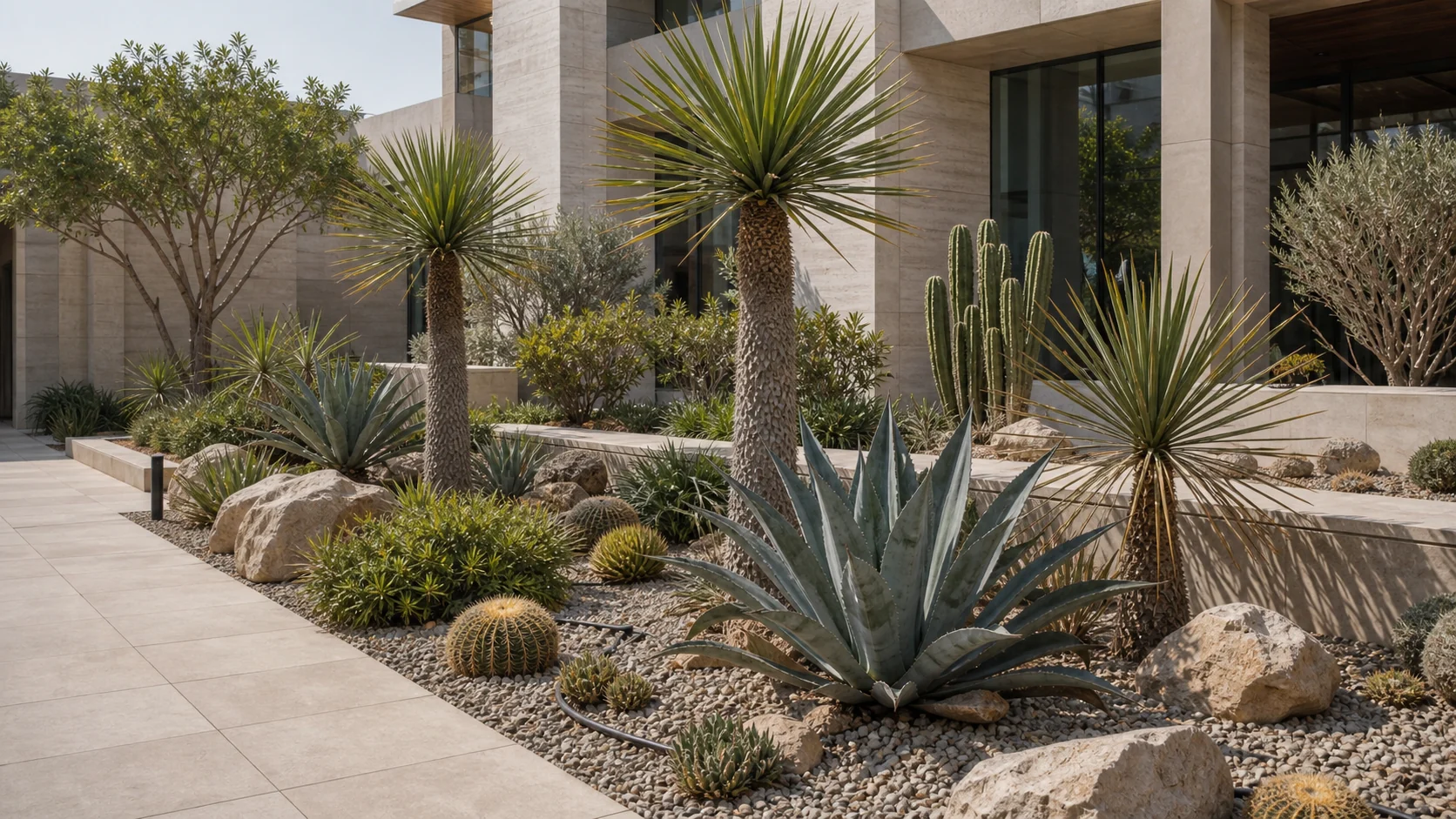
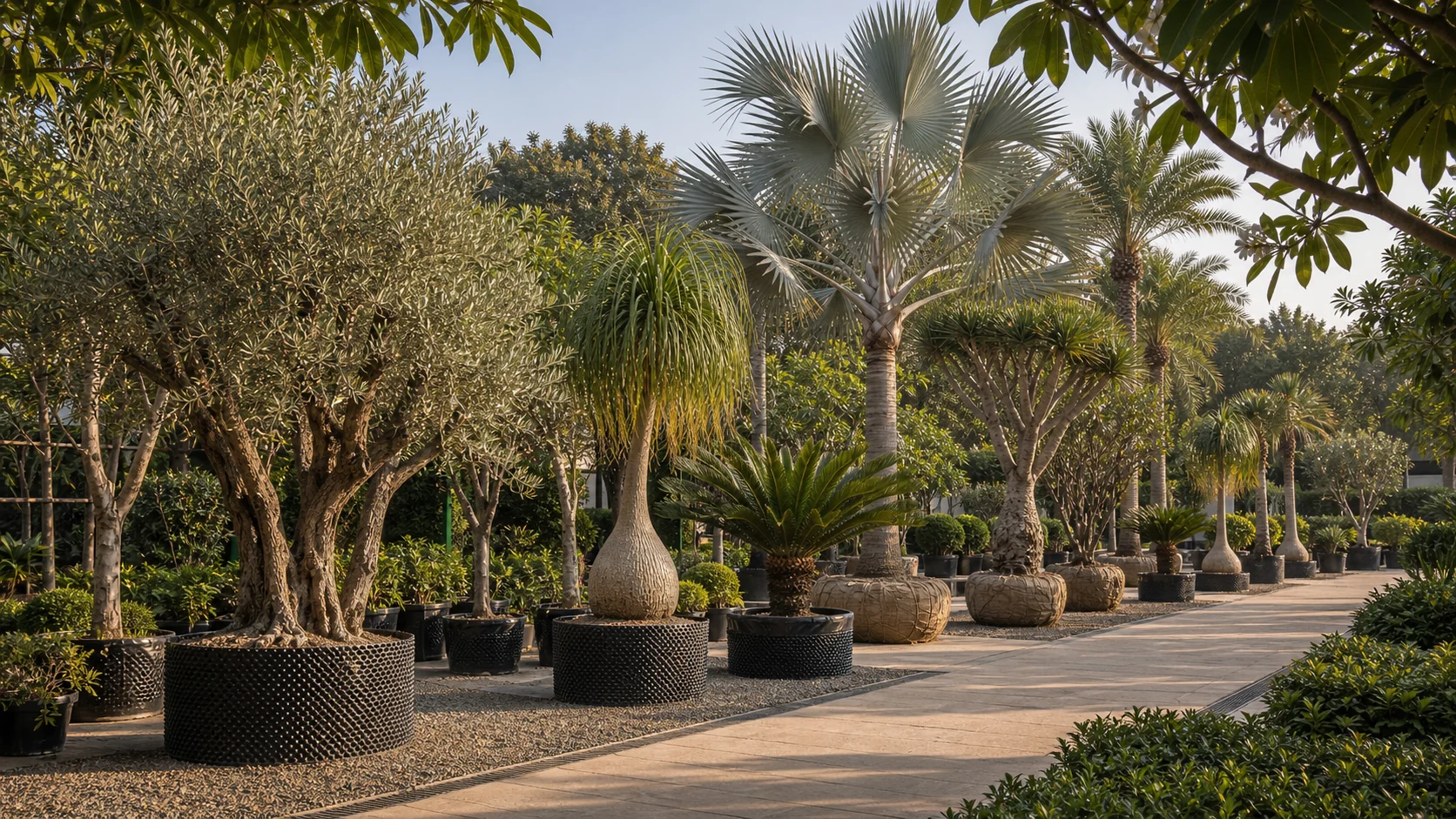
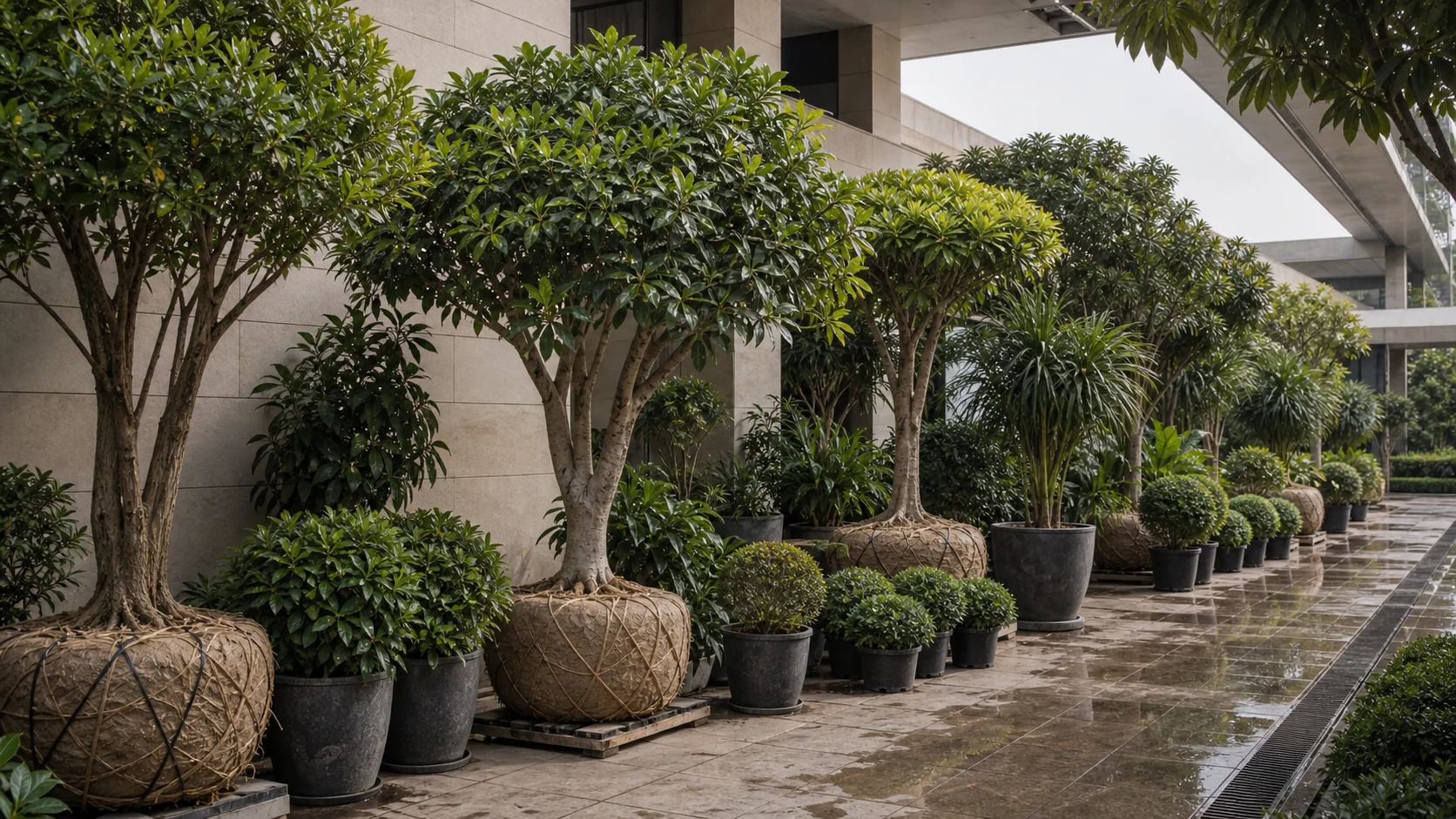
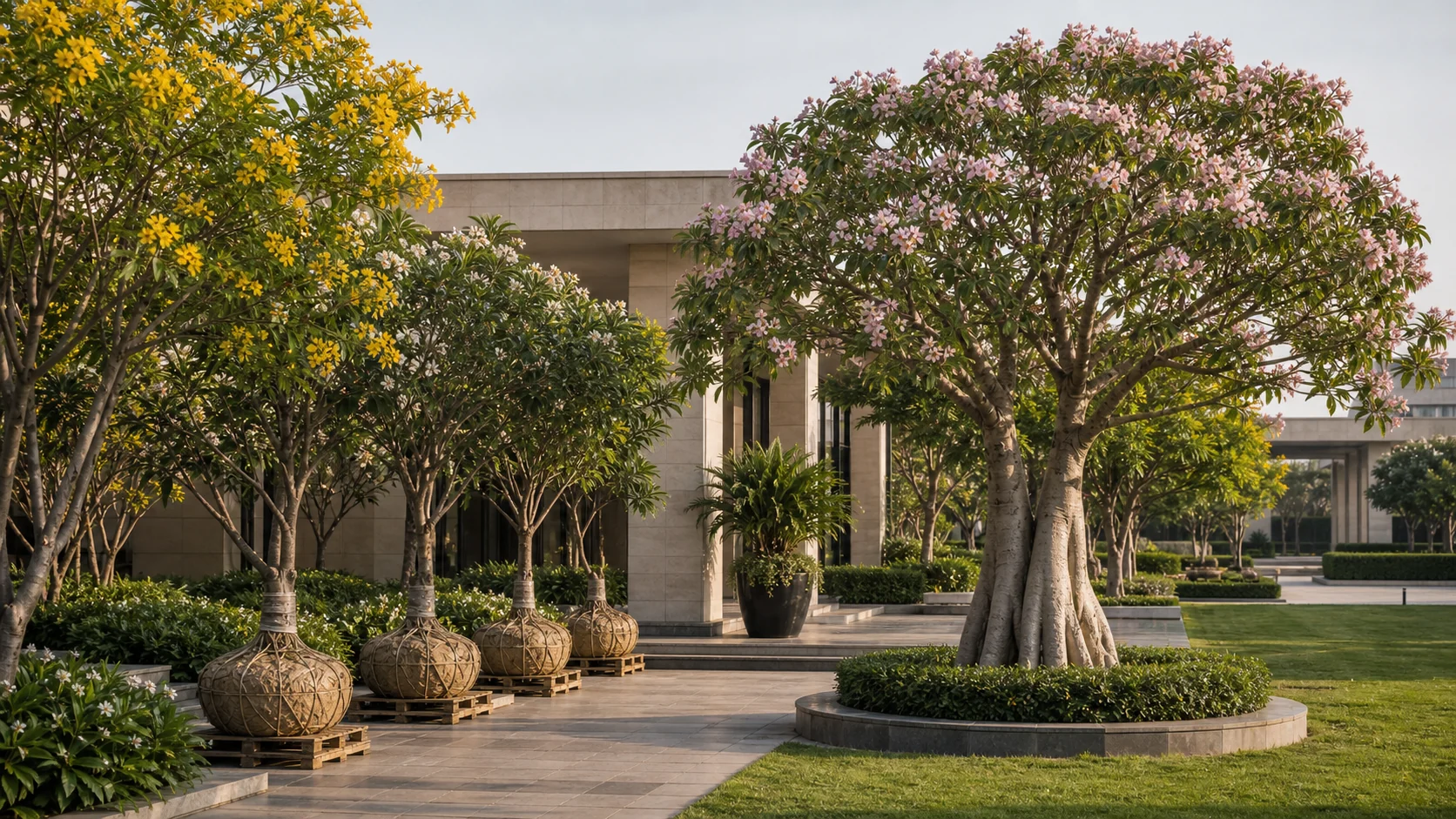
Visual context for placement, scale, handling, and landscape integration.
Section
Where it's used in premium projects
Thuja spirals accent hill-station resort entries and cool corporate campuses where designers import temperate imagery — not for default Chennai or Kochi coastal installs without climate review.
Section
Climate & site suitability in India
Lowland humid heat browns foliage within seasons — specify podocarpus or euonymus instead on those BOQs. Hill stations with cool nights sustain spirals with mite monitoring. Winter sun scorch possible on south-facing slopes — irrigate judiciously.
Section
Sourcing & acclimatisation
Reject pre-brown spirals at delivery — recovery is slow in heat. [Unverified: India hill-nursery stock vs imported temperate forms.]
Section
Installation (containers, anchoring, drainage)
Cool-site gritty beds only; stake spirals first monsoon wind on hills. No planting in waterlogged clay on coasts expecting AMC to save plants.
Section
Establishment & AMC (clipping rhythm)
Mite bronzing needs oil programmes and airflow — do not mask with nitrogen. Replace failed lowland thuja with podocarpus rather than repeat temperate assumptions. Clip only in viable cool windows.
Section
Cost drivers
Explore
Related
Related
Related links
Services, segments, cost, and proof.
- Softscape & horticulture
- Irrigation & water management
- Landscape maintenance (AMC)
- Hotel & resort landscaping
- Luxury resort & spa landscaping
- Mall & retail landscaping
- Corporate campus landscaping
- Projects
- Commercial landscaping cost guide
- Pricing drivers (imported trees)
- Import compliance workflow
- Request a site assessment
- Where does thuja topiary work in India?
- Cool hill stations and dry microclimates — hot-humid lowlands typically brown and fail; use podocarpus or ficus there.
- What forms are sold for Thuja occidentalis?
- Spirals, cones, and columns — buy pre-trained; lowland heat makes retraining unrealistic in one season.
- Why does arborvitae brown in humid heat?
- Heat stress plus spider mites and wet feet — combined decline is common on coastal lowlands without cool nights.
- Can thuja replace cypress on a dry site?
- Different habit — thuja is flat-scale; cypress is narrow Mediterranean column; both need dry air more than humid coast.
- What AMC do spirals need in hills?
- Several trims per year plus mite scouting — still less clip than privet but more disease watch than podocarpus.
- What import paperwork applies?
- Temperate conifer imports need phytosanitary and quarantine inspection (informational, not legal advice).
- How should thuja BOQs be compared?
- Match microclimate viability, pre-trained spiral quality, mite AMC, and replacement risk on lowland sites.