
Kusum tree
Kusum / Lac tree (Schleichera oleosa)
Schleichera oleosa is the native Indian kusum tree with a stunning red-to-pink flush on new foliage each spring, large hardy deciduous shade, and significance as host of the lac insect — specified for heritage estates and dry-region campuses where seasonal new-leaf colour and drought robustness matter more than evergreen lobby gloss.
Spec
At a glance
- Botanical name
- Schleichera oleosa
- Family
- Sapindaceae
- Common names
- Kusum, lac tree, Ceylon oak
- Origin
- Native to India and South-East Asia
- Plant type
- Large deciduous shade tree
- Mature height
- Often 15–25 m+ in favourable sites
- Trunk / form
- Broad crown; red/pink spring flush on new leaves
- Crown spread
- Wide — generous setbacks
- Growth rate
- Slow to moderate; slow establishment
- Light
- Full sun
- Water needs
- Low to moderate once established; drought-hardy
- India climate suitability
- Native dry subtropical and tropical India; strong heritage narrative
- Cold/heat & salt/wind tolerance
- Heat- and drought-tolerant when established; not primary coastal salt tree
- Typical supply size
- Field-grown native specimens [Unverified]
- Lead time (sourcing)
- [Unverified] native nursery holding for large caliper
- Install considerations
- Generous pit; plan deciduous bare season; wide paving setbacks
- Maintenance level
- Low to moderate — seasonal leaf drop, slow formative prune
- Cautions
- Large mature size; deciduous bare period; slow to establish after transplant
Gallery
Specimen visual guide
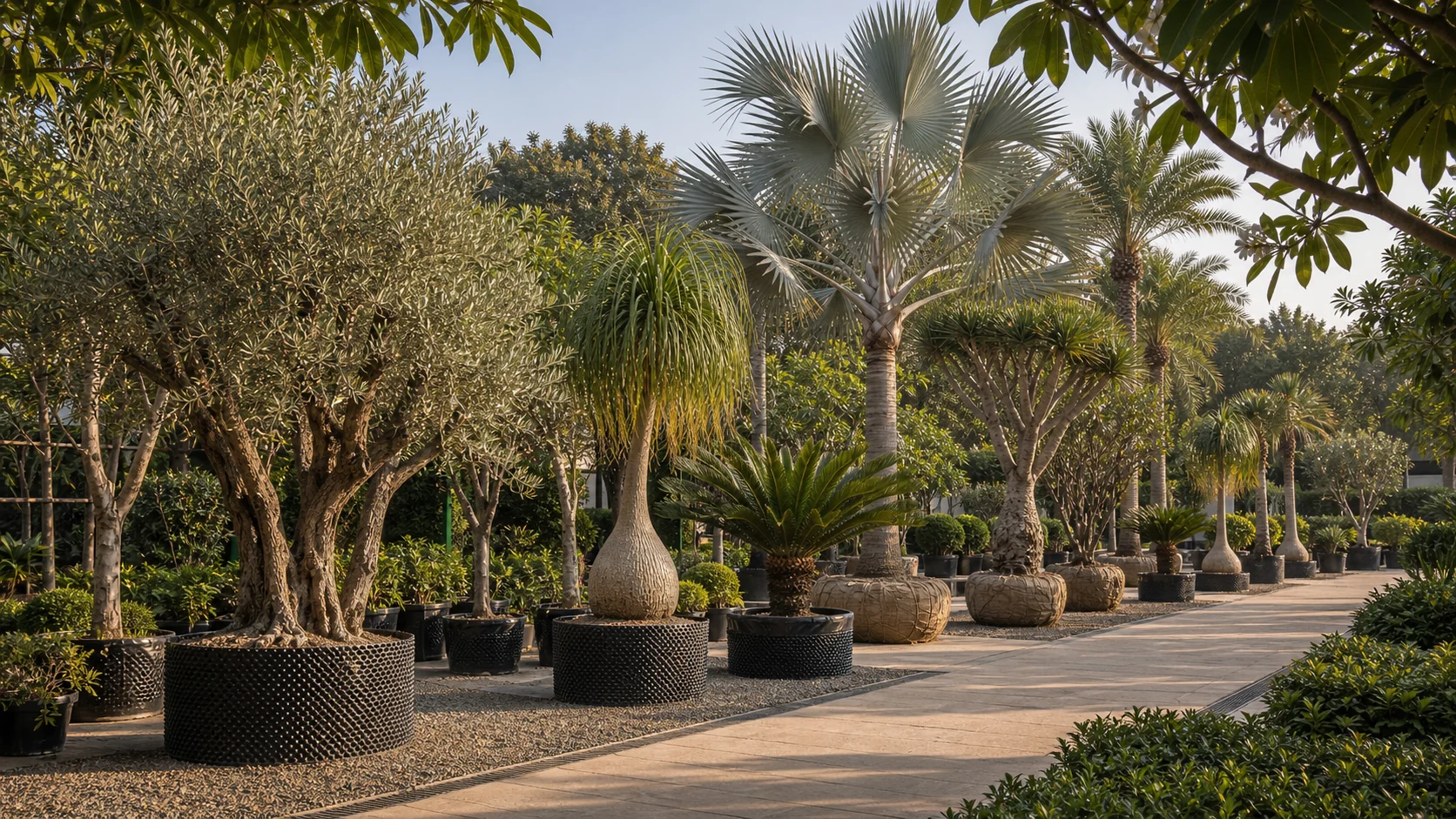
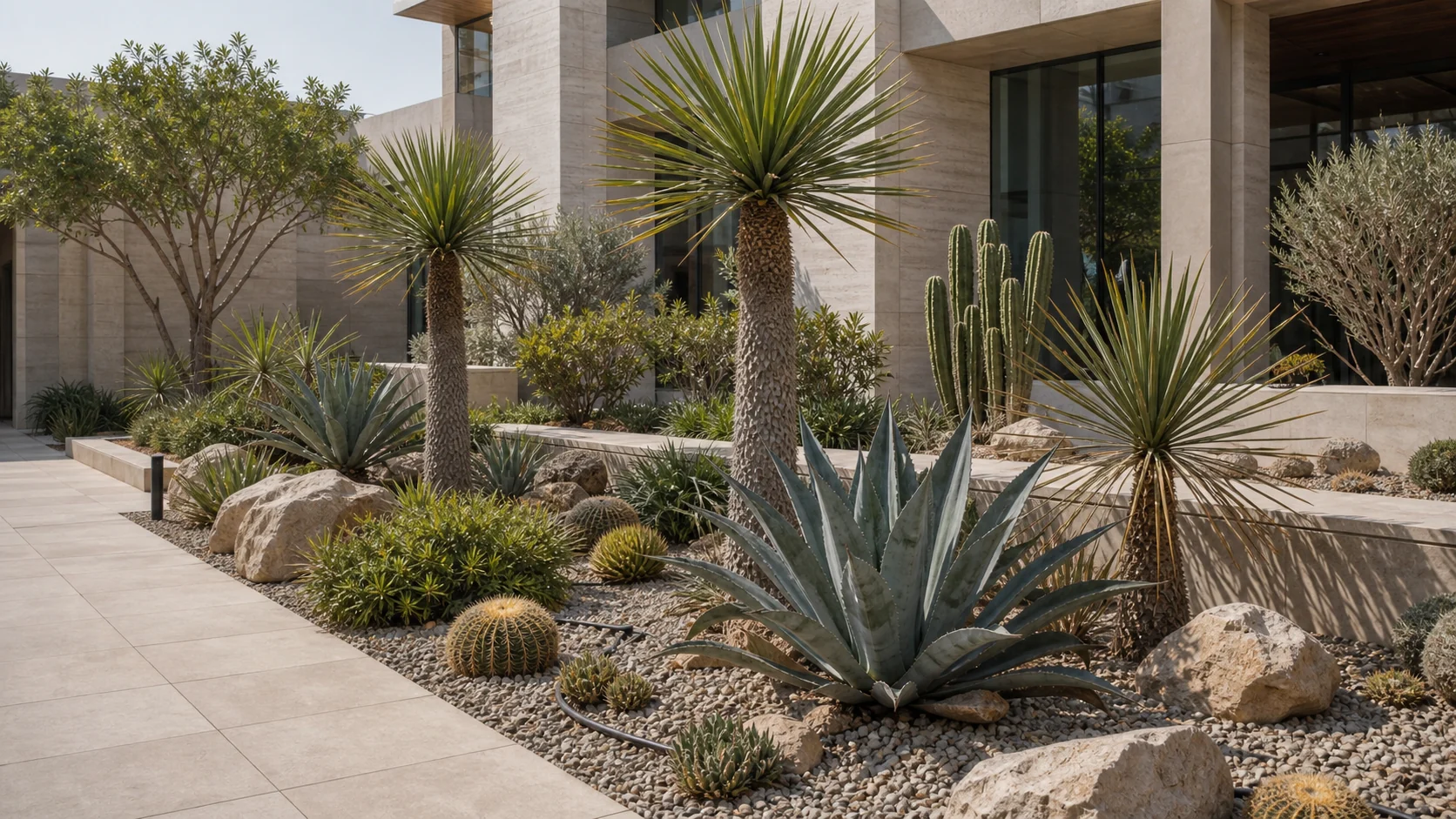
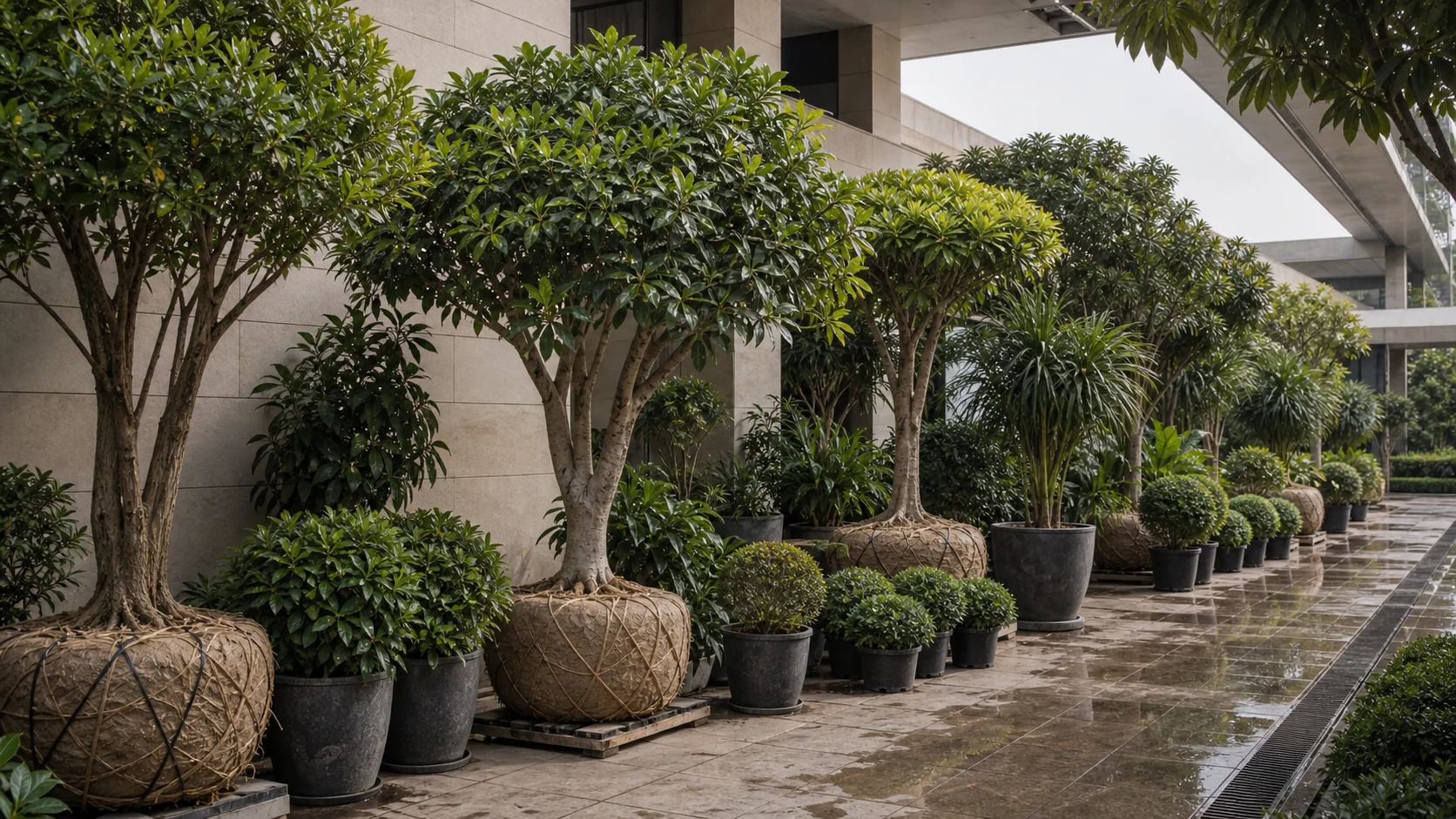
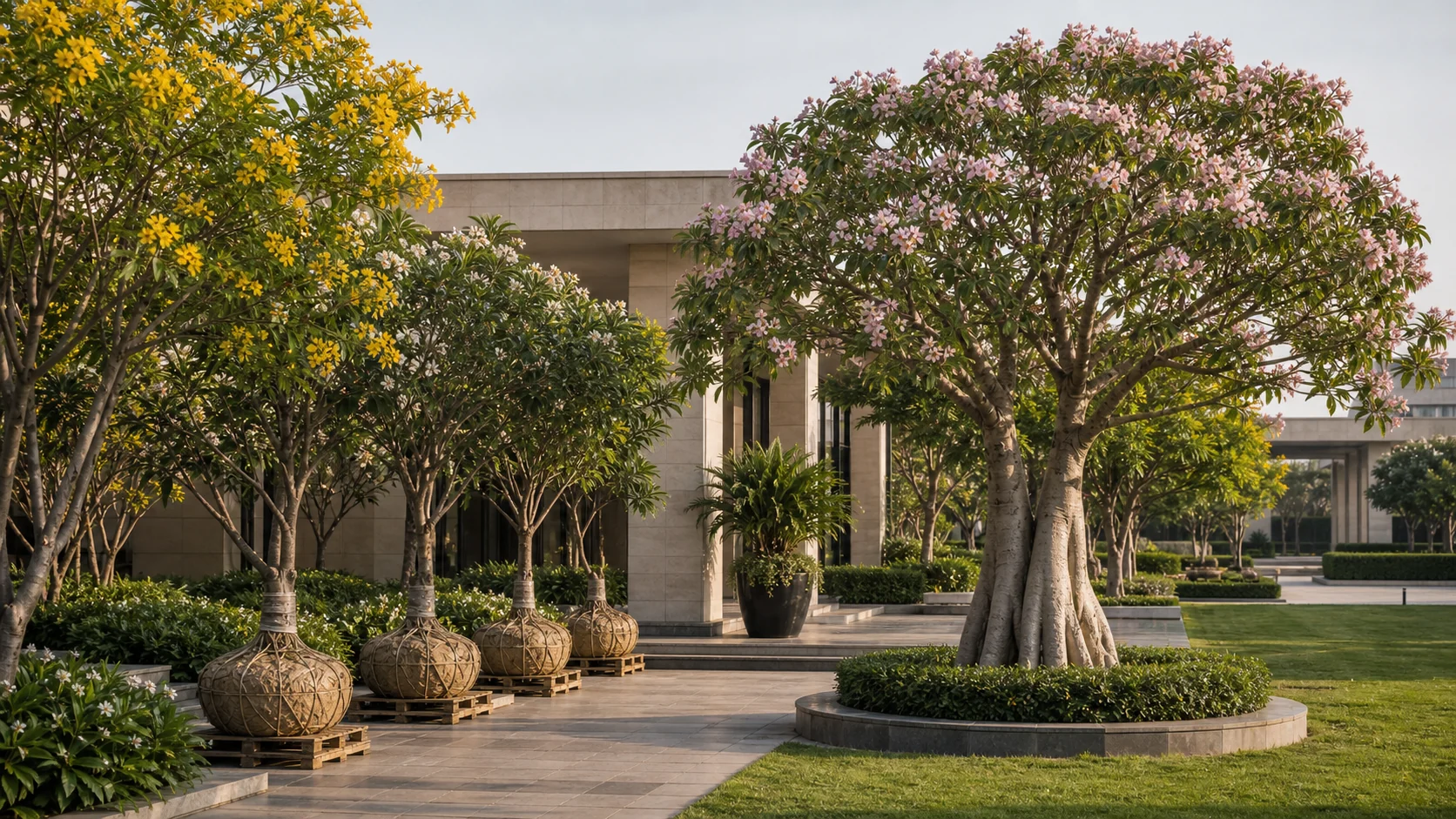
Visual context for placement, scale, handling, and landscape integration.
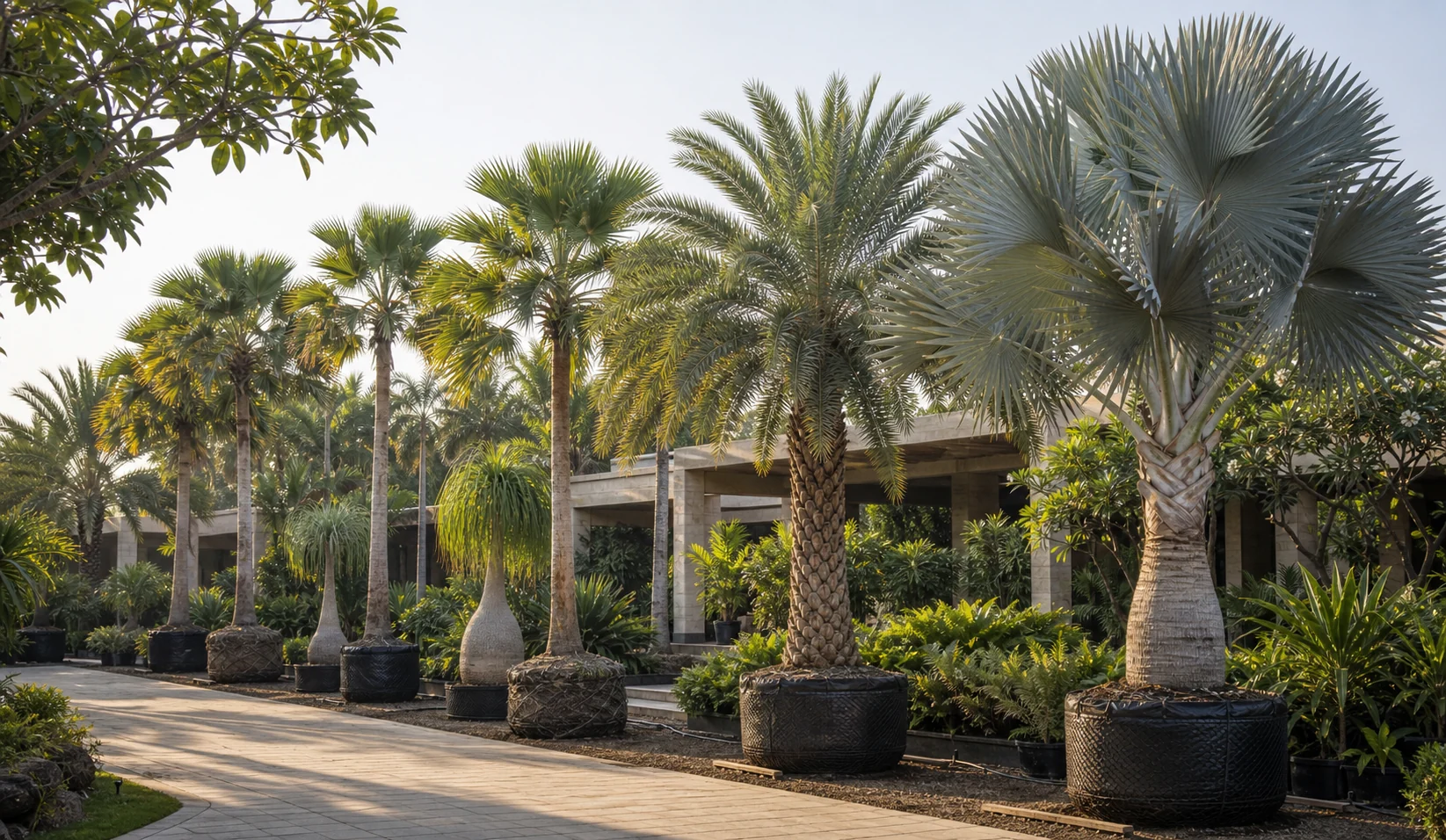
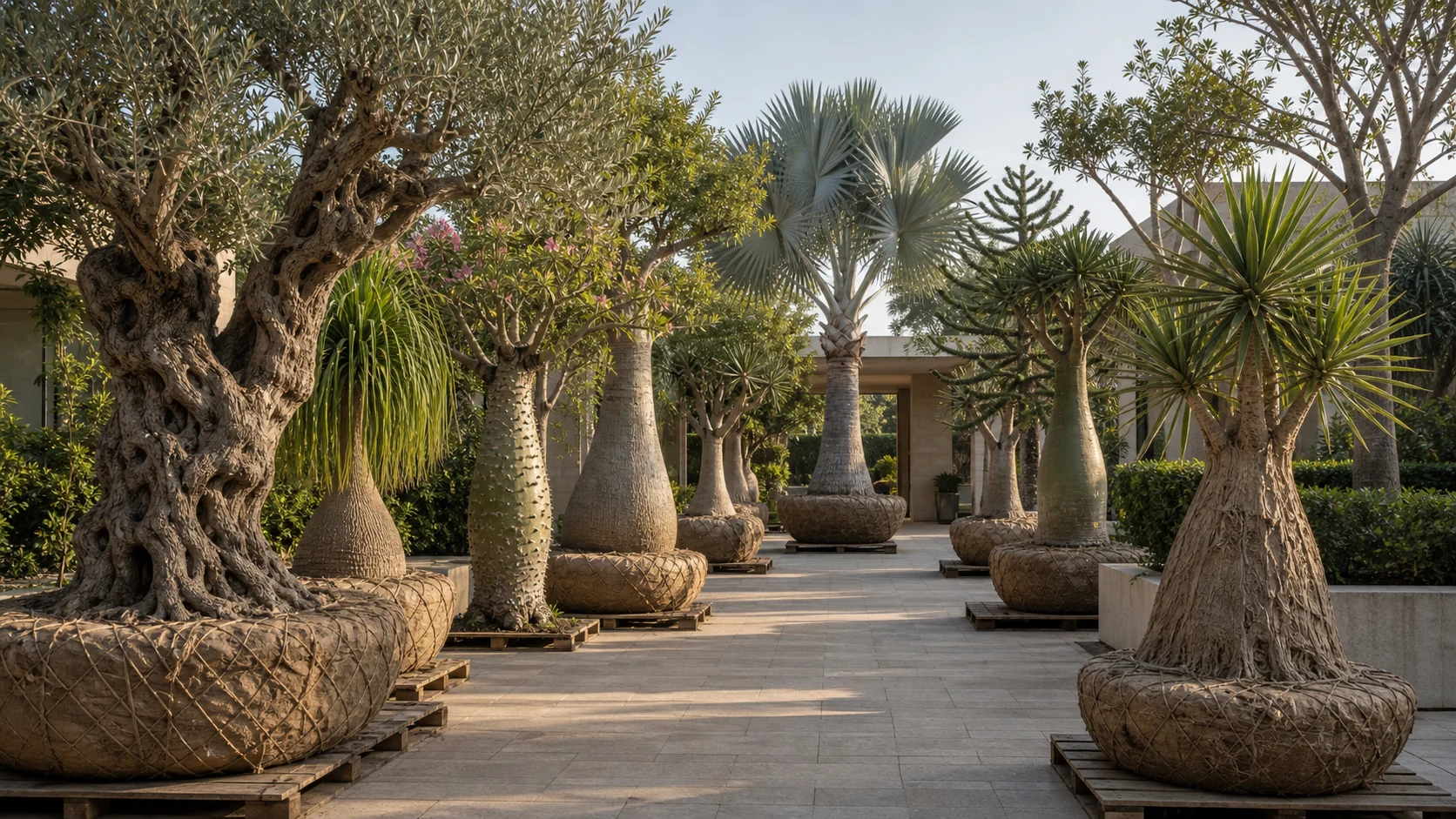
Section
Where it's used in premium projects
Schleichera oleosa suits estate drives, heritage campus masterplans, and dry-region club landscapes where native kusum shade and the spring red-flush foliage moment replace imported evergreen domes — designers cite lac-host significance where ethnobotanical narrative supports the planting palette.
Section
Climate & site suitability in India
Native dry subtropical and tropical vigour helps on Rajasthan and Deccan sites where finicky exotic shade trees fail — still plan wide spread and deciduous winter bareness on arrival axes. Establishment is slow; irrigation through first dry seasons is not optional despite drought-hardy mature reputation.
Section
Sourcing & acclimatisation
Source from reputable native-tree nurseries with caliper documentation — much material is domestic. [Unverified: typical avenue caliper classes on commercial lists.] Acclimatise with deep watering cycles; field-dug stock sulks visibly the first year if rushed.
Section
Installation (pit, soil, drainage, bracing)
Large pits with drainage — monsoon waterlogging still kills slow-establishing roots. Wide paving setbacks for mature spread. Bracing on tall field digs until root plate stability is proven on windy estate drives.
Section
Establishment & AMC
AMC focuses on establishment irrigation through dry seasons, seasonal leaf-drop sweep on drives, and formative pruning that preserves future red-flush display — over-thinning young crowns delays the spring colour moment designers specified.
Section
Cost drivers
Explore
Related
Related
Related links
Services, segments, cost, and proof.
- Softscape & horticulture
- Irrigation & water management
- Landscape maintenance (AMC)
- Hotel & resort landscaping
- Luxury resort & spa landscaping
- Mall & retail landscaping
- Corporate campus landscaping
- Projects
- Commercial landscaping cost guide
- Pricing drivers (imported trees)
- Import compliance workflow
- Request a site assessment
- What is the red new-leaf flush on Schleichera oleosa?
- Spring new growth emerges red to pink before maturing green — specify seasonal timing in designer narrative; it is the primary foliage feature beyond generic shade.
- What is the lac and shellac significance?
- Kusum is a documented host of lac insects used in shellac production — cite verified ethnobotanical sources in heritage proposals without inventing commercial lac yields on hotel sites.
- How drought-hardy is kusum once established?
- Mature trees tolerate dry Indian interiors better than many imported shade specimens — still irrigate through first years after transplant; slow establishment is normal.
- What deciduous bare season should ownership expect?
- Winter leaf drop creates a bare period — do not specify kusum where evergreen arrival presence is the KPI.
- How large does Schleichera oleosa grow?
- Plan wide mature spread on estate drives — it is a legacy shade tree, not a courtyard accent; engineer setbacks decades ahead.
- What import compliance applies to native stock?
- Domestic nursery movement follows standard phyto documentation where required (informational, not legal advice).
- How should estate BOQs be compared?
- Match caliper, native provenance documentation, establishment irrigation weeks, and spread setbacks — not generic shade-tree pricing.