
Brazilian firetree
Brazilian firetree / Bacurubu (Schizolobium parahyba)
Schizolobium parahyba is a very fast tropical American tree with smooth green-grey trunk, huge fern-like bipinnate juvenile leaves, and golden-yellow flowering at maturity — specified when designers want instant vertical scale and dramatic juvenile foliage, with honest planning for soft brittle wood, storm risk, and relatively short landscape lifespan.
Spec
At a glance
- Botanical name
- Schizolobium parahyba
- Family
- Fabaceae
- Common names
- Brazilian firetree, bacurubu, paulownia-leaf tree (trade)
- Origin
- Tropical America (Brazil to Central America)
- Plant type
- Very fast deciduous tropical tree
- Mature height
- Often 20–40 m — very fast vertical gain
- Trunk / form
- Smooth green-grey fast-growing trunk; giant fern-like juvenile bipinnate leaves
- Crown spread
- Wide when mature — juvenile phase is leaf-dominant
- Growth rate
- Very fast — soft wood follows speed
- Light
- Full sun
- Water needs
- Moderate to high in fast growth phase
- India climate suitability
- Warm humid tropical India — Kerala, Goa, NE, coastal Karnataka with storm planning
- Cold/heat & salt/wind tolerance
- Frost-sensitive; very brittle in cyclonic wind; short landscape lifespan
- Typical supply size
- Fast-grown container or field 3–8 m [Unverified]
- Lead time (sourcing)
- [Unverified] tropical nursery fast lines
- Install considerations
- Space for ultimate height; storm setbacks; brittle limb bracing early
- Maintenance level
- Moderate to high — storm tidy, leaf litter, replacement planning
- Cautions
- Very fast soft wood; storm breakage; large leaf litter; relatively short-lived
Gallery
Specimen visual guide
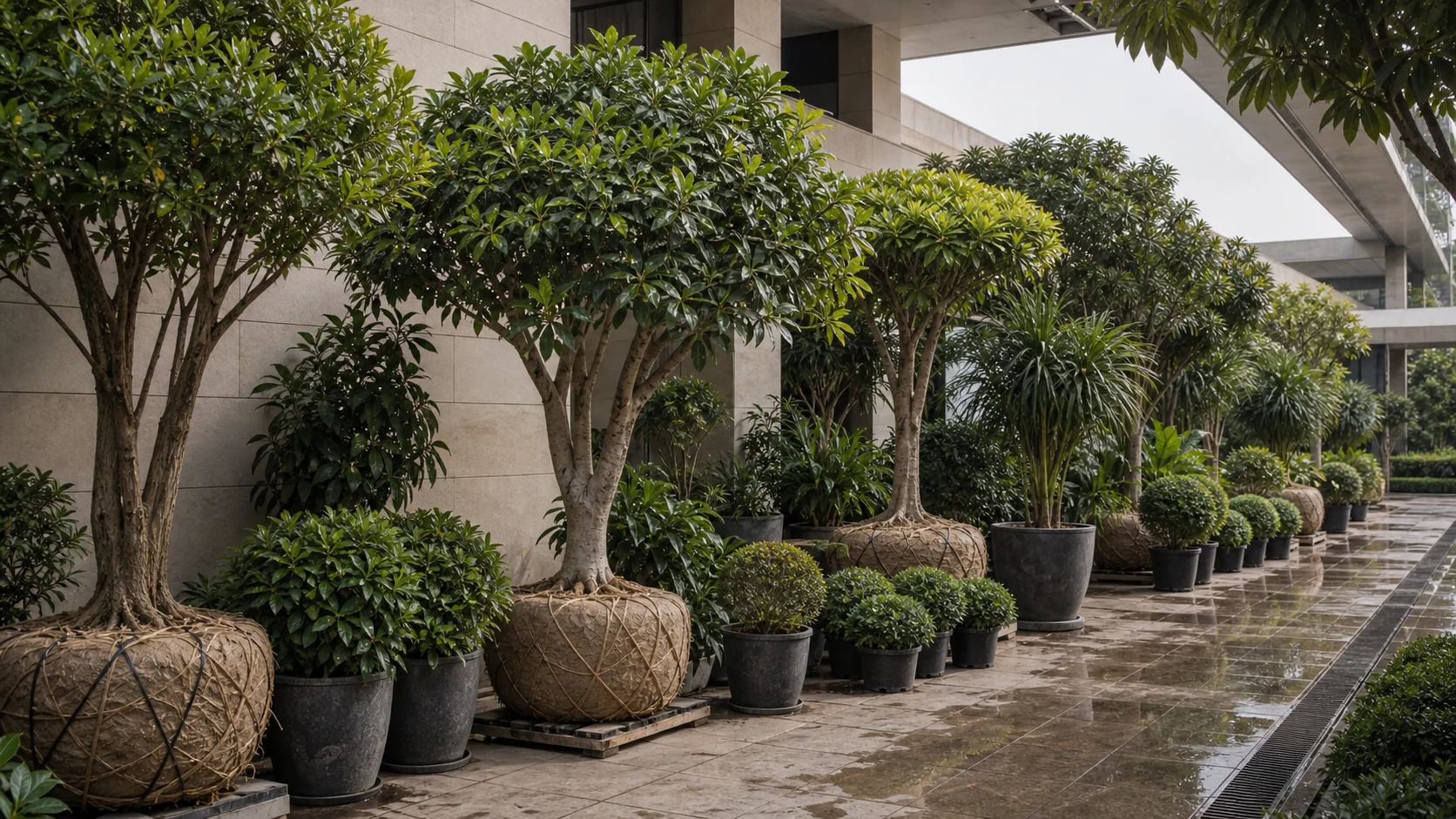
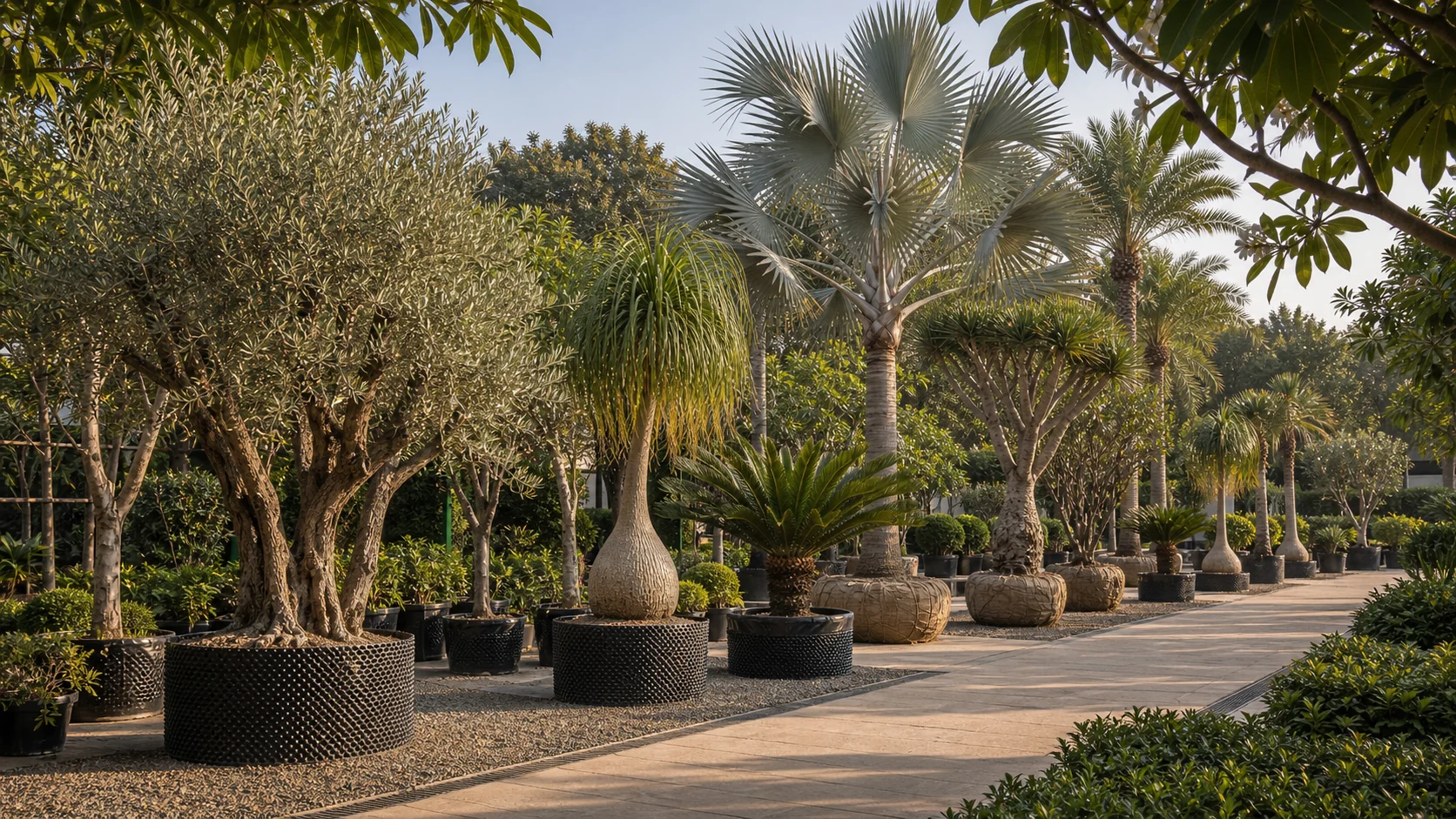
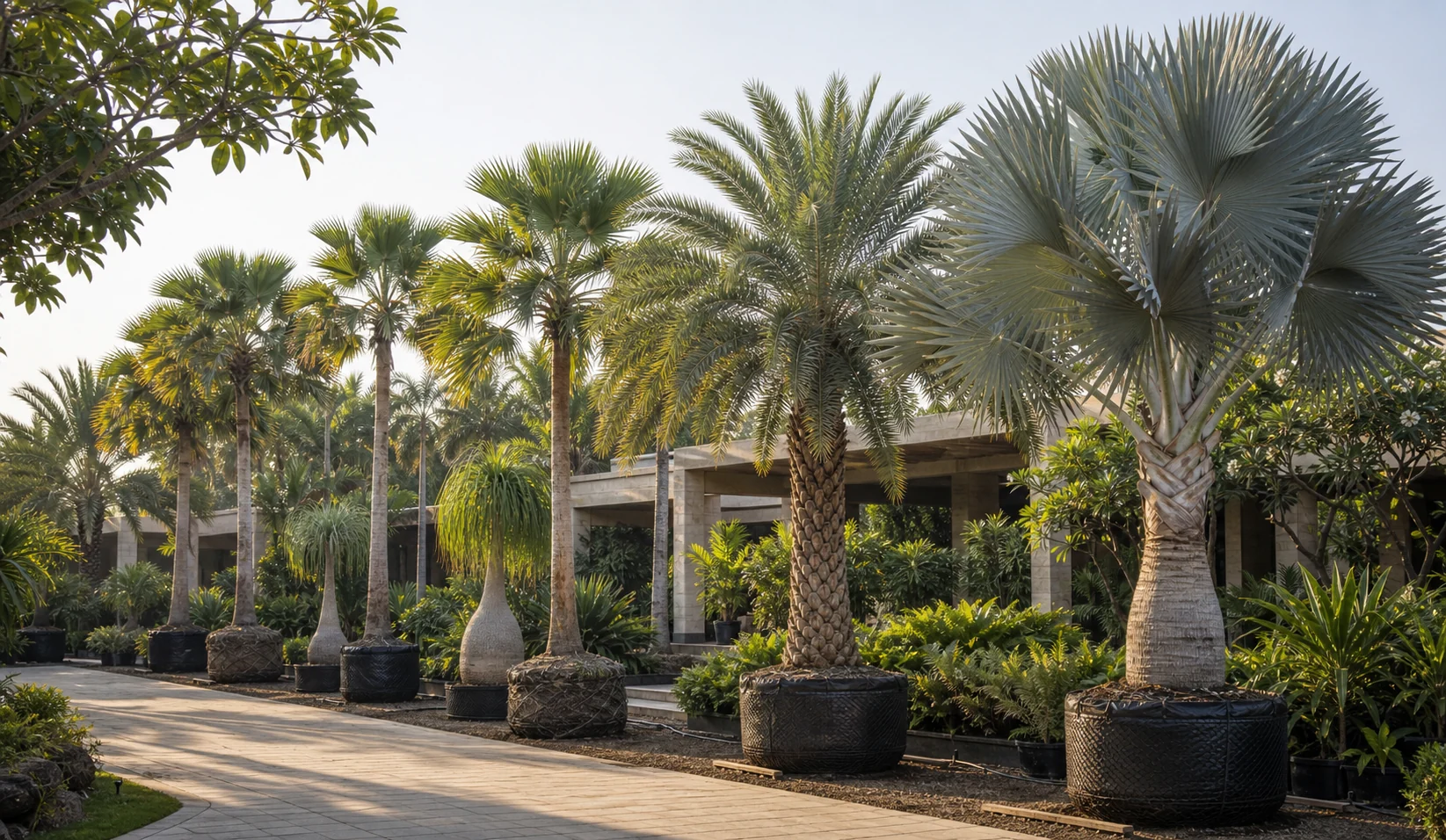
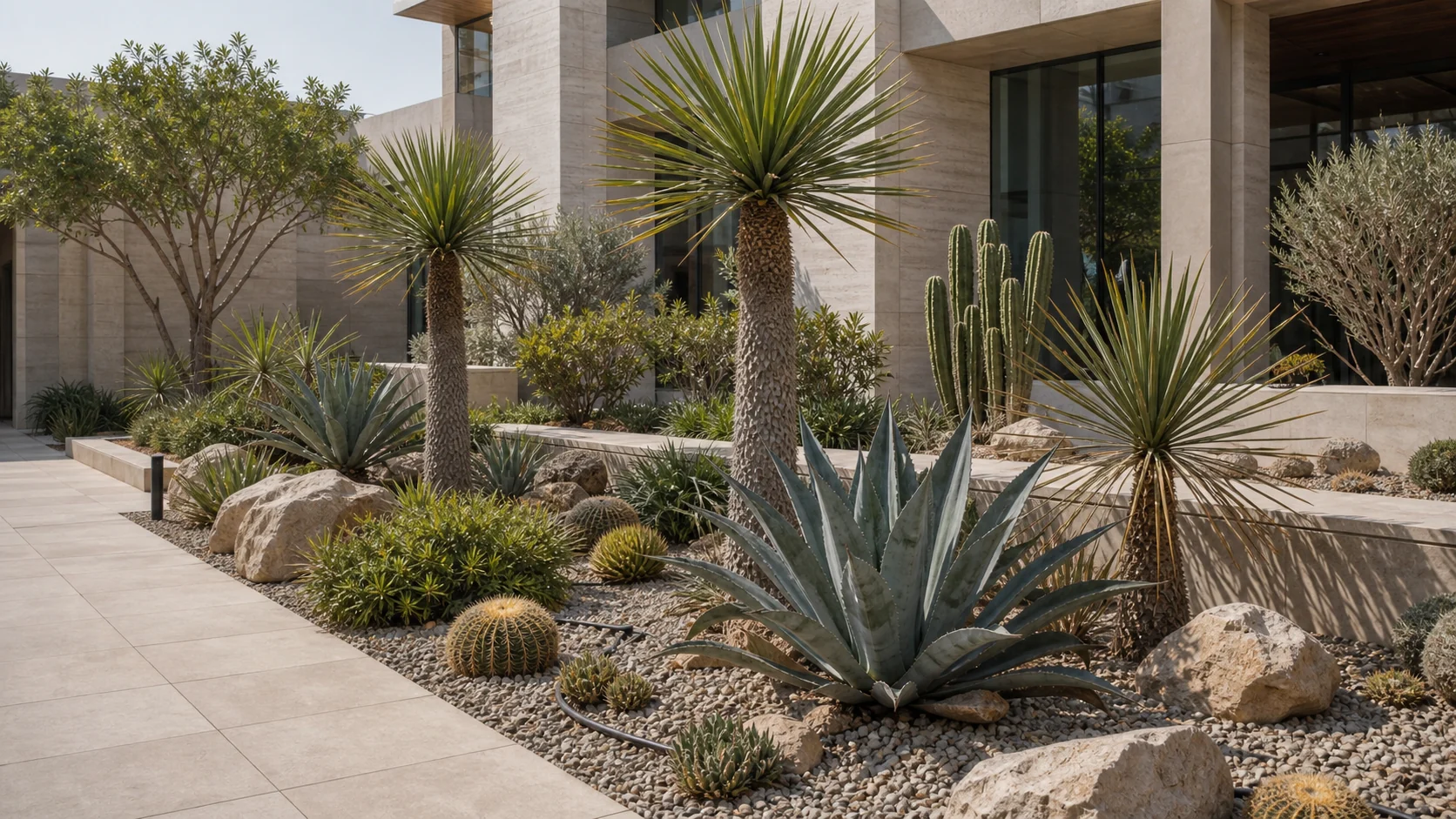
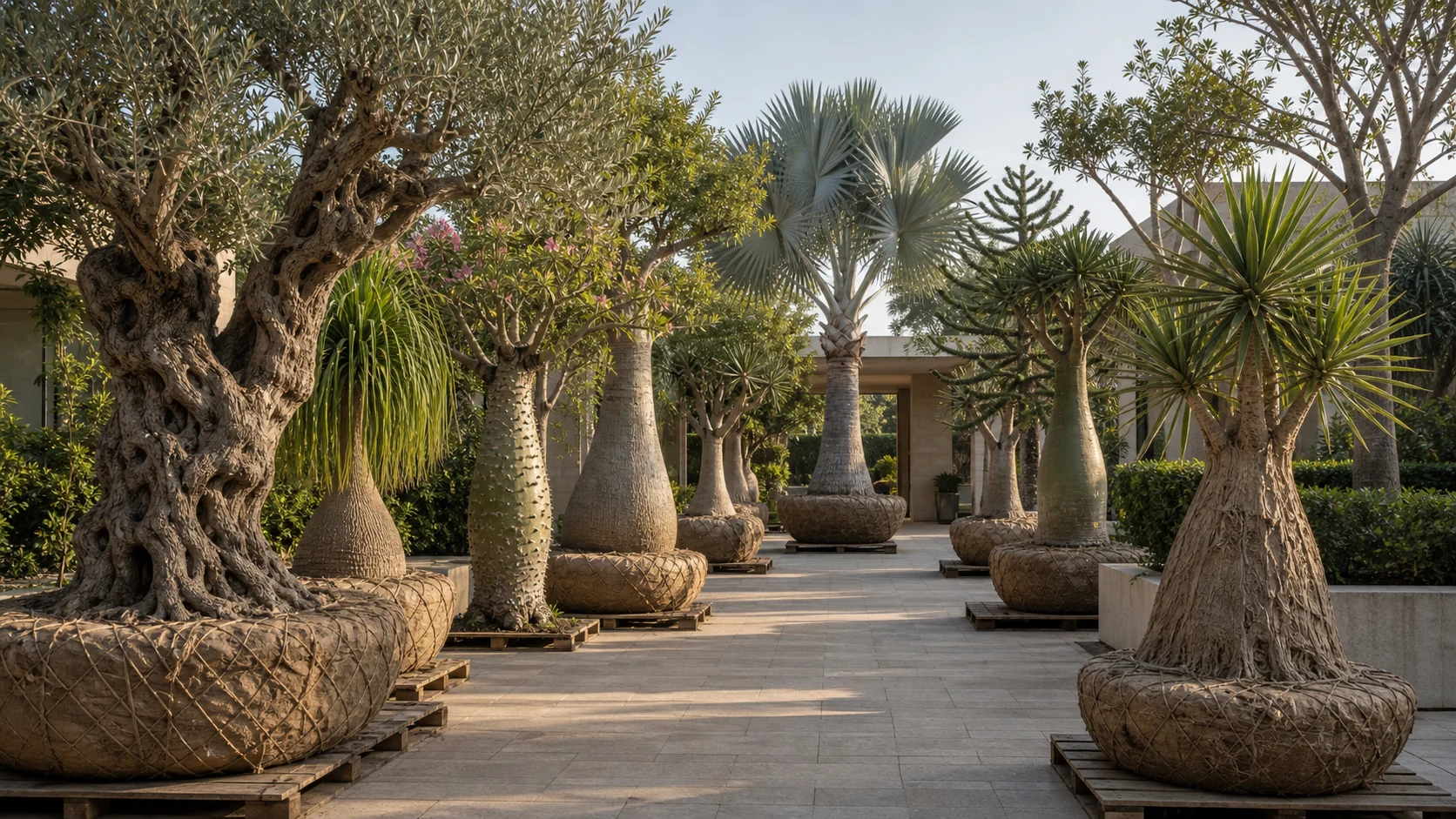
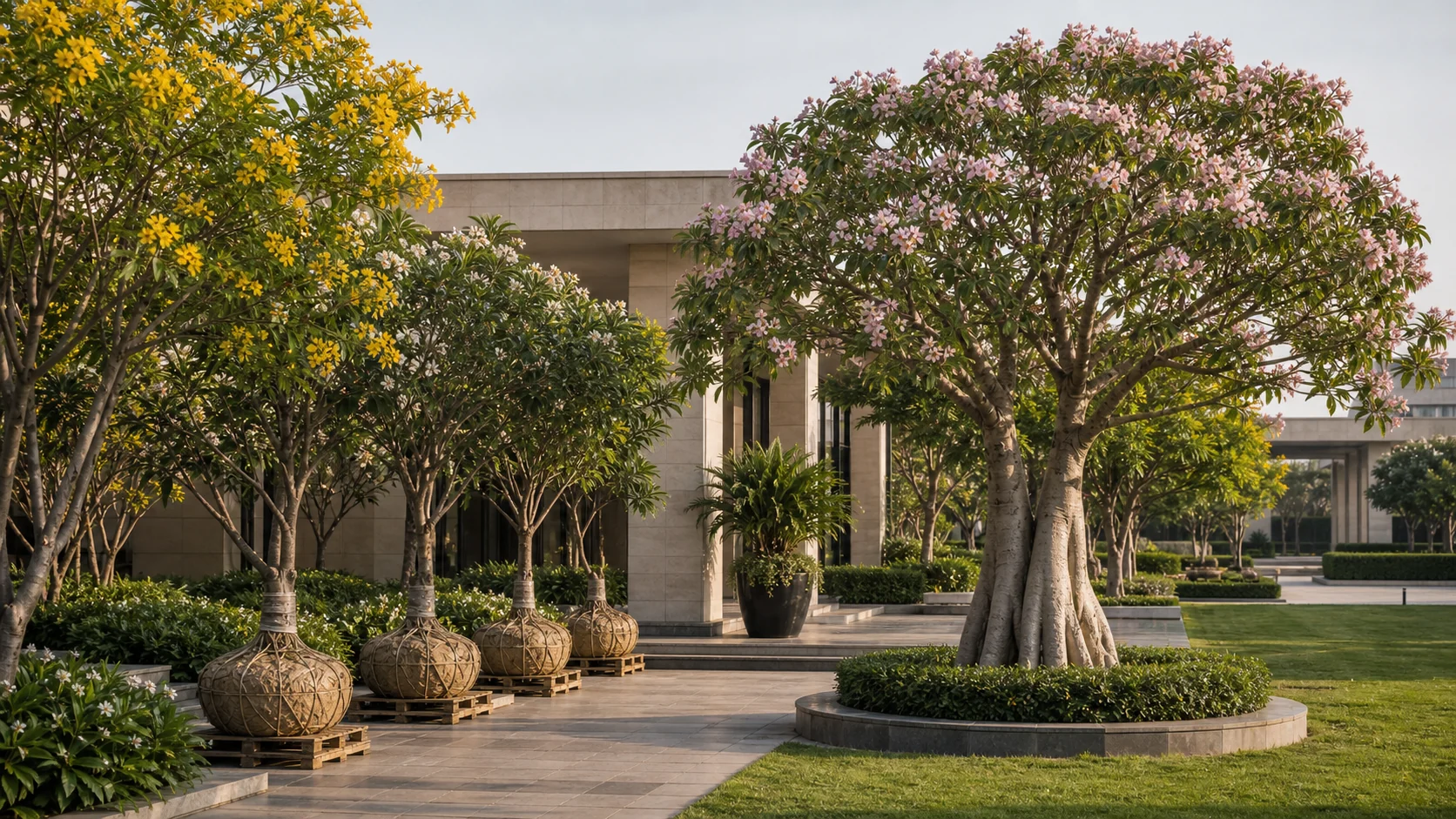
Visual context for placement, scale, handling, and landscape integration.
Section
Where it's used in premium projects
Brazilian firetree delivers instant tropical verticality — resort openings needing immediate canopy, event lawns wanting giant fern juvenile leaves as stage backdrop, and masterplan phases requiring fast height before slower heritage trees mature. Smooth green-grey trunk reads at avenue speed; golden flower arrives at maturity. Brief owners on replacement horizon — this is fast architecture, not generational oak planting.
Section
Climate & site suitability in India
Warm humid tropics support juvenile leaf size and speed — Kerala, Goa, coastal Karnataka, NE. Cyclone corridors need setbacks and post-storm AMC budgets. Dry interiors slow leaf gigantism and height gain. Ultimate tall size needs airspace and brittle limb management away from guest programming.
Section
Sourcing & acclimatisation
Buy on juvenile leaf size and straight trunk leader — fast nursery fertilizer produces height with weak wood if rushed. [Unverified: India nursery parahyba versus Latin American import.] Acclimatise in full sun; shaded holding produces etiolated giant leaves that shred in first monsoon.
Section
Installation (pit, soil, drainage, bracing)
Large pit for fast root push — barrier utilities if needed. Early structural prune and short-term bracing on exposed sites; wood is soft despite size. Giant leaf litter zones away from pool inlets — leaves clog drains when juvenile phase is featured.
Section
Establishment & AMC
AMC includes post-storm limb removal, leaf litter sweep during juvenile showcase phase, and owner updates when flowering maturity approaches. Plan successor planting before brittleness peaks — lifecycle honesty prevents surprise replacement bills.
Section
Cost drivers
Explore
Related
Related
Related links
Services, segments, cost, and proof.
- Softscape & horticulture
- Irrigation & water management
- Landscape maintenance (AMC)
- Hotel & resort landscaping
- Luxury resort & spa landscaping
- Mall & retail landscaping
- Corporate campus landscaping
- Projects
- Commercial landscaping cost guide
- Pricing drivers (imported trees)
- Import compliance workflow
- Request a site assessment
- What are the giant fern-like juvenile leaves?
- Huge bipinnate leaves on young fast growth — dramatic tropical stage backdrop; leaf size reduces as tree matures and flowers.
- How fast does Schizolobium parahyba grow?
- Very fast in warm humid sites — budget brittle soft wood and storm management alongside instant height marketing.
- When does golden flowering occur?
- At maturity after juvenile leaf phase — exact timing varies; do not promise flower on opening day from juvenile stock.
- What wind and lifespan cautions apply?
- Soft wood snaps in cyclonic gusts — setbacks, structural prune, and replacement planning are honest scope items.
- Is leaf litter a maintenance issue?
- Yes during juvenile phase — giant leaves clog pools and drains; programme sweep and inlet protection on featured lawns.
- What phytosanitary rules apply to Brazilian imports?
- Live Fabaceae tropical trees require standard plant quarantine clearance — schedule inspection before monsoon events (informational, not legal advice).
- How should firetree BOQs compare to slow trunk monuments?
- Match juvenile leaf stage, storm AMC, replacement horizon, and height clearance — not baobab caudex crane economics.