
Kans grass
Kans grass (Saccharum spontaneum)
Saccharum spontaneum is the tall native silver-plumed grass landscape architects use for naturalistic buffers and eco-tones that must read Indian, not imported prairie — Kans rhythm along roads and wetlands. It is aggressive and seedy: contain like a wetland engineer, not a polite border perennial.
Spec
At a glance
- Botanical name
- Saccharum spontaneum
- Family
- Poaceae
- Type
- Native ornamental grass (wild sugarcane / Kans)
- Origin
- Indian subcontinent and tropical Asia — native
- Mature height & spread
- 2–4 m tall plumes × spreading clumps and rhizomes
- Plume / flower
- Silvery-white silky panicles autumn
- Foliage colour
- Blue-green cane-like stems
- Evergreen / deciduous / annual
- Semi-evergreen — cut back in management regimes
- Growth rate
- Fast in moist soils; rhizome spread in wetlands
- Light
- Full sun
- Water
- Moderate to high — natural wetland edges; irrigation on terraces
- India climate suitability
- Native fit across plains and moist belts; contain away from wild wetlands policy zones
- Hardiness
- Heat-hardy; fire-adapted ecology in native range
- Invasiveness / containment
- Aggressive/seedy — contain clumps; avoid planting adjacent to open waterways
- Typical supply
- Division clumps from nursery-grown stock [Unverified]
- Annual maintenance
- Annual cut-back; remove seed heads before shed if policy requires; rhizome patrol
- Cautions
- Large scale; seedy spread; not for small urban courtyards without containment
Gallery
Specimen visual guide
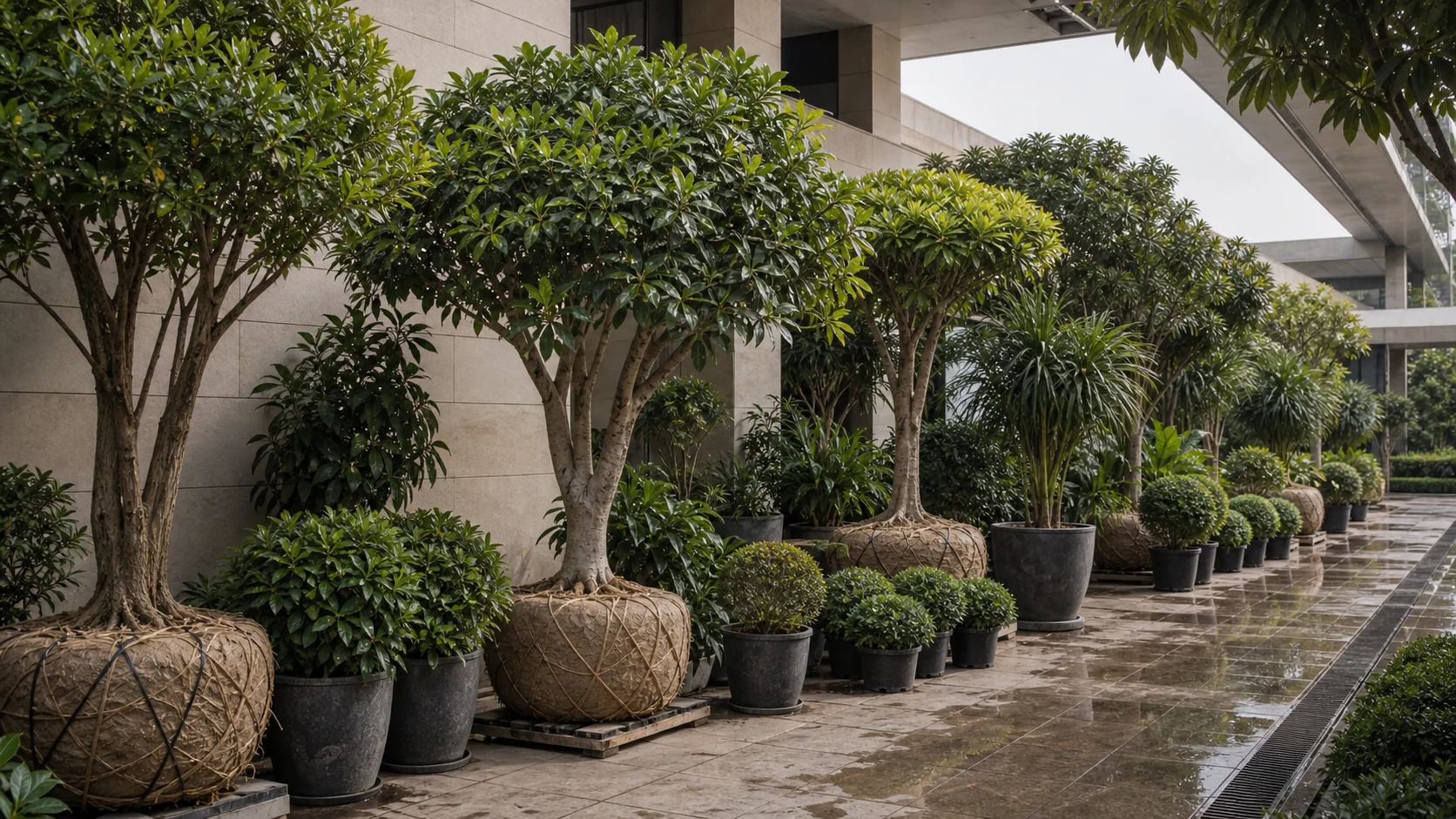
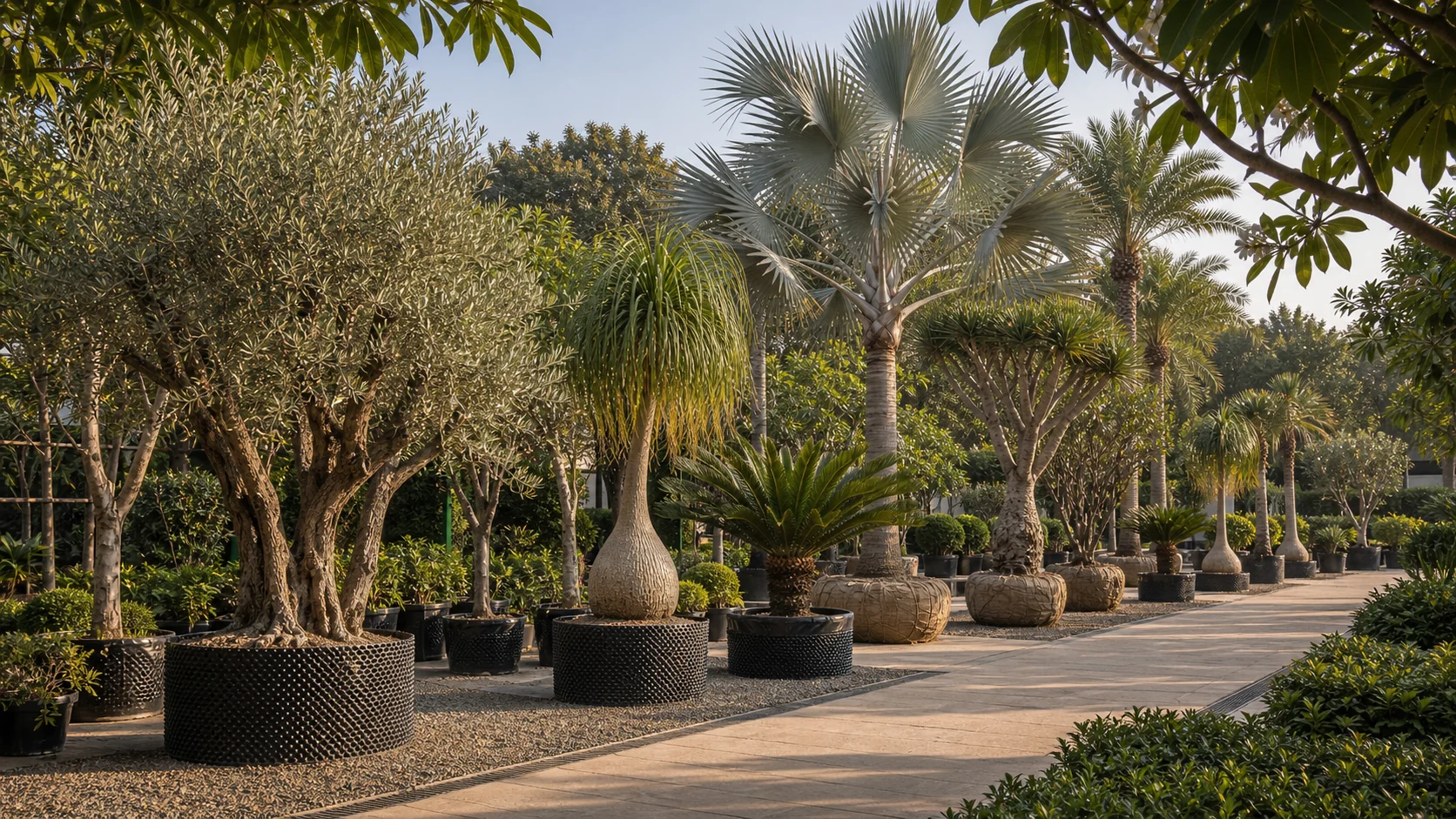
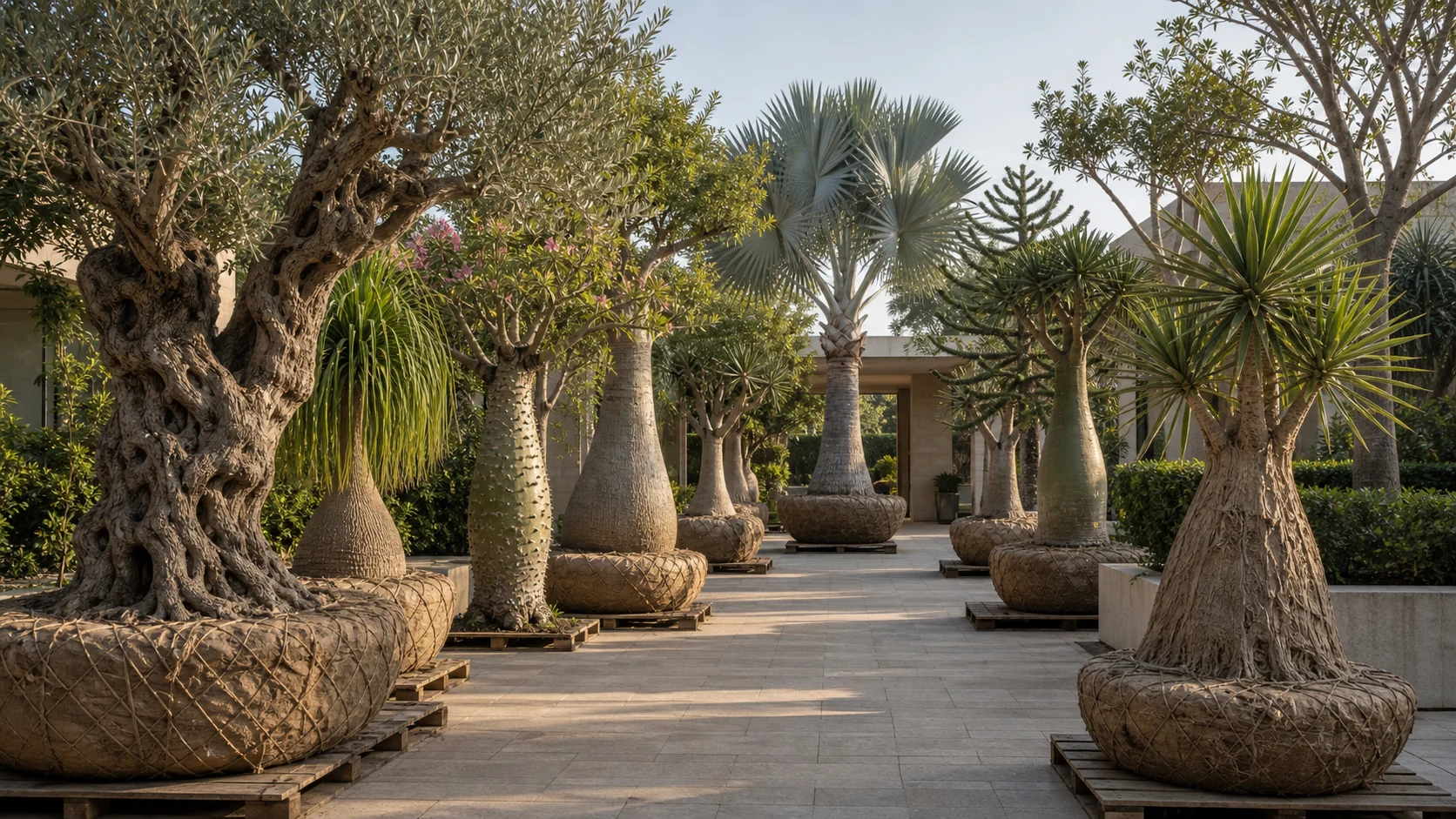
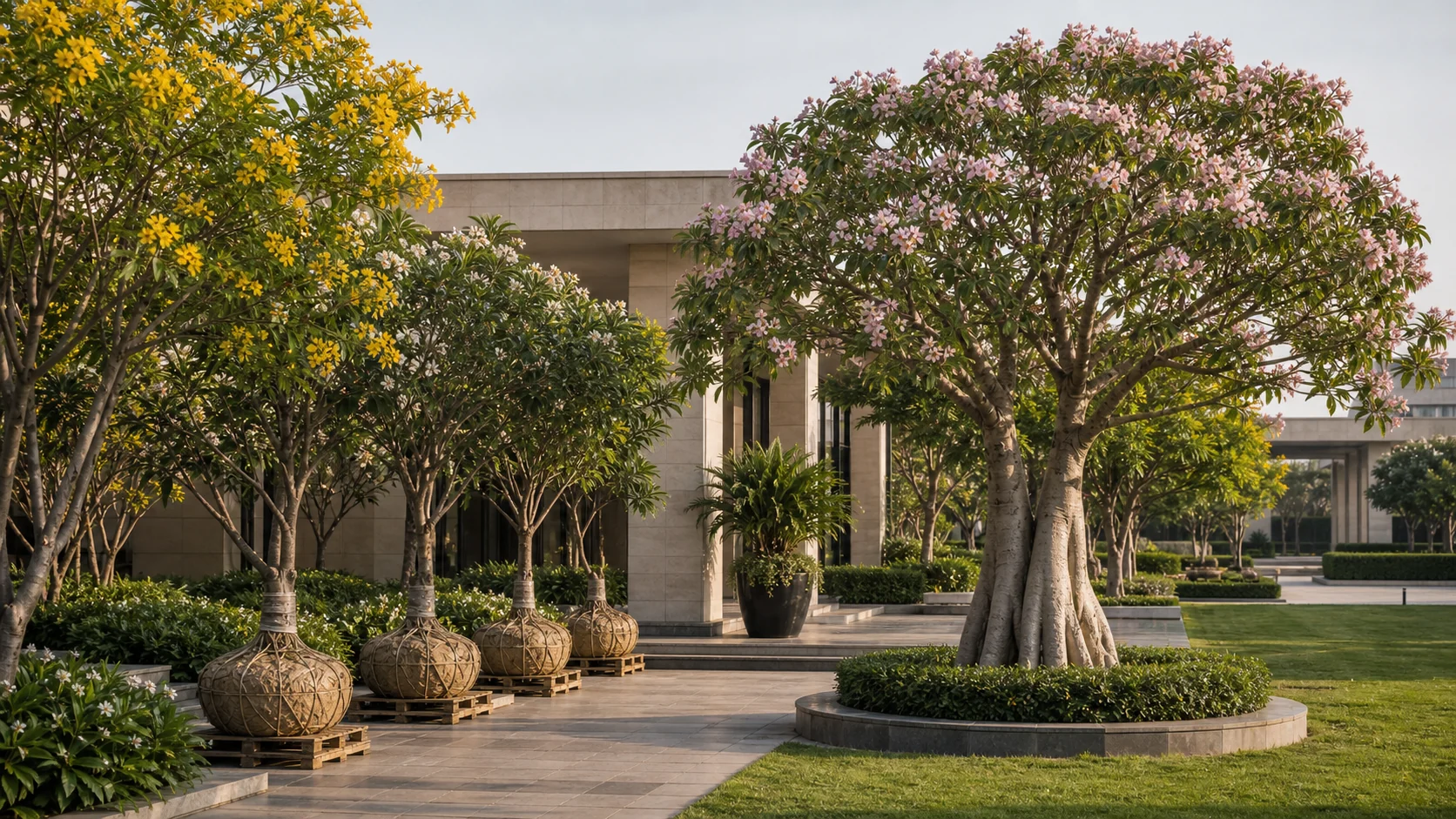
Visual context for placement, scale, handling, and landscape integration.
Section
Where it's used in premium projects
Kans grass naturalises resort buffer belts, highway-edge landscape retrofits, and eco-resort masterplans where native plumes must sway — pair with policy review near protected wetlands. Not for tight villa courtyards without engineered beds.
Section
Climate & site suitability in India
Moist soils produce tallest plumes; drought shortens stands but rhizomes persist. Wind events lodge tall canes — plan cut-back or stake groups on exposéd terraces. Native status does not mean low maintenance on irrigated sites.
Section
Sourcing & acclimatisation
Source nursery divisions, not wild harvest from protected areas — document provenance for eco audits. [Unverified: commercial division sizes in India nurseries.]
Section
Installation (planting, containment, drainage)
Treat like giant reed containment on small sites — barriers or isolated beds. On large buffers, define mow line and fire-management strip. Do not plant uphill of organic farms if seed shed is restricted.
Section
Establishment & AMC
Hard cut-back after plume display renews upright stems — AMC includes seed-head removal when site bans volunteers. Patrol rhizomes at bed edges quarterly on irrigated terraces.
Section
Cost drivers
Explore
Related
Related
Related links
Services, segments, cost, and proof.
- Softscape & horticulture
- Irrigation & water management
- Landscape maintenance (AMC)
- Hotel & resort landscaping
- Luxury resort & spa landscaping
- Mall & retail landscaping
- Corporate campus landscaping
- Projects
- Commercial landscaping cost guide
- Pricing drivers (imported trees)
- Import compliance workflow
- Request a site assessment
- Is Kans grass native to India?
- Yes — Saccharum spontaneum is native across much of the subcontinent; designers use it for authentic naturalistic buffers, still with containment on small sites.
- Why contain a native grass?
- Rhizomes and seed spread aggressively in irrigated beds — small courtyards and terraces need barriers like any vigorous grass.
- When do silver plumes appear?
- Typically autumn on mature stands — first-year divisions may be shorter until clumps establish.
- Can Kans replace imported pampas ethically?
- Often yes for native mood — different scale and leaf texture; not a silver feather duplicate, but authentic Indian plume.
- Is wild harvest acceptable for projects?
- Use nursery divisions with provenance — wild dig from protected wetlands is a compliance and ecology failure.
- What permits apply to native grass divisions?
- Nursery stock is domestic; still document species on compliance submittals if eco policies require (informational, not legal advice).
- How should Kans buffer BOQs be priced?
- Price area, cut-back AMC, seed management, and edge containment on small sites — not single tree rates.