
Cork oak
Cork oak (Quercus suber)
Quercus suber is the western Mediterranean evergreen oak with thick rugged harvestable cork bark — very drought- and fire-tolerant, slow, and long-lived. In India it suits heritage trunk features on drier temperate palettes where corky plate texture reads as evergreen shade without hot-humid coastal defaults.
Spec
At a glance
- Botanical name
- Quercus suber
- Family
- Fagaceae
- Common names
- Cork oak
- Origin
- Western Mediterranean (Portugal, Spain, North Africa)
- Plant type
- Evergreen oak
- Mature height
- Often 15–20 m — slow long-lived
- Trunk / form
- Thick rugged cork bark plates; evergreen oak branching
- Crown spread
- Broad evergreen shade crown when mature
- Growth rate
- Slow — cork bark thickens over decades
- Light
- Full sun
- Water needs
- Very drought-tolerant once established; hates waterlogging
- India climate suitability
- Drier temperate and Mediterranean-style India — Pune, Bangalore hills, North India dry winters; poor on hot-humid coast
- Cold/heat & salt/wind tolerance
- Moderate frost tolerance; fire-adapted cork; dislikes high humidity and wet roots
- Typical supply size
- Container or field 2–5 m — cork texture matures with age [Unverified]
- Lead time (sourcing)
- [Unverified] Mediterranean nursery import or India-held stock
- Install considerations
- Excellent drainage; do not harvest cork on landscape specimens without expert plan
- Maintenance level
- Low — acorn litter, occasional structural prune
- Cautions
- Slow cork development on young trees; root rot in waterlogged clay; not for Chennai humidity defaults
Gallery
Specimen visual guide
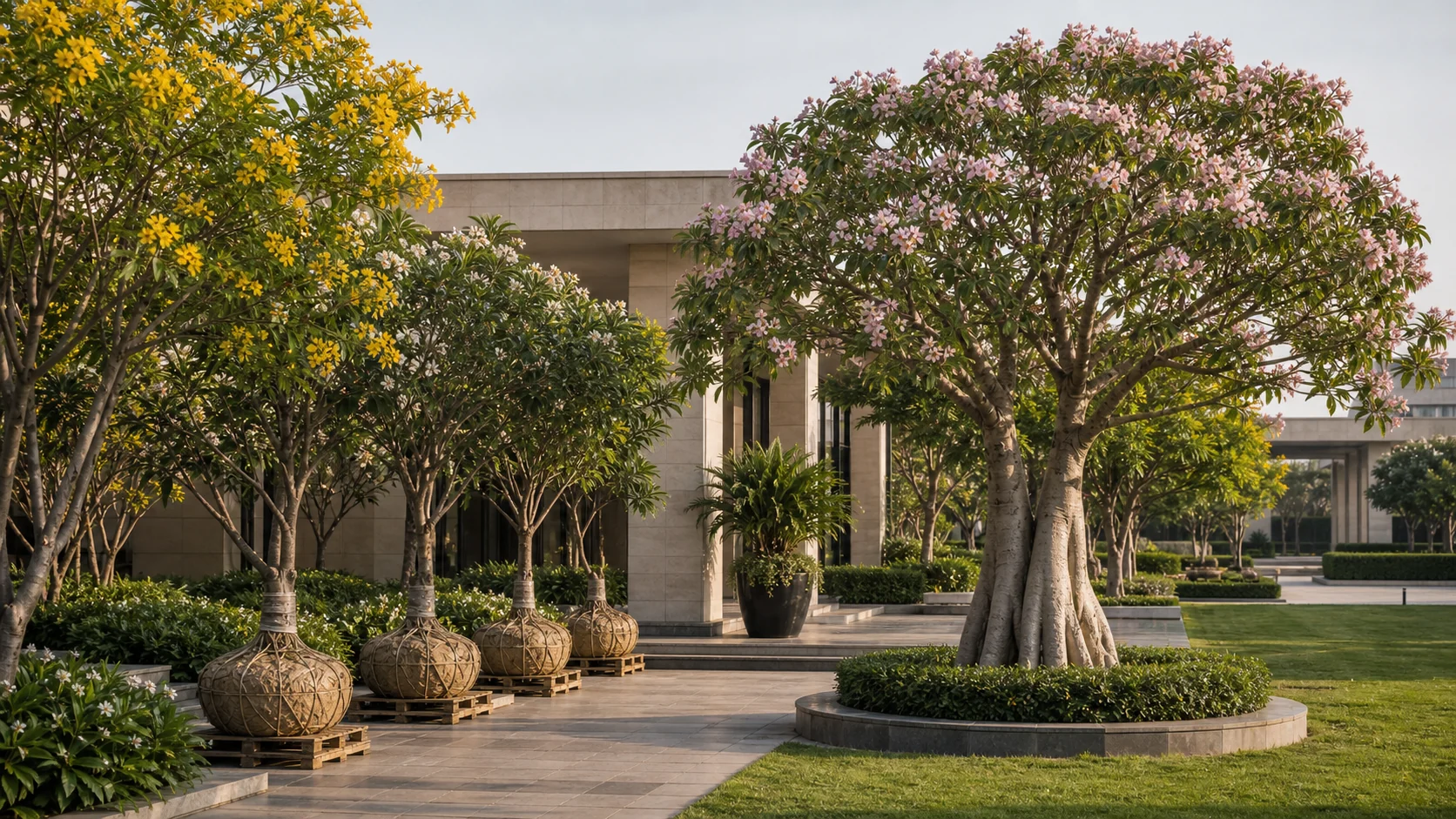
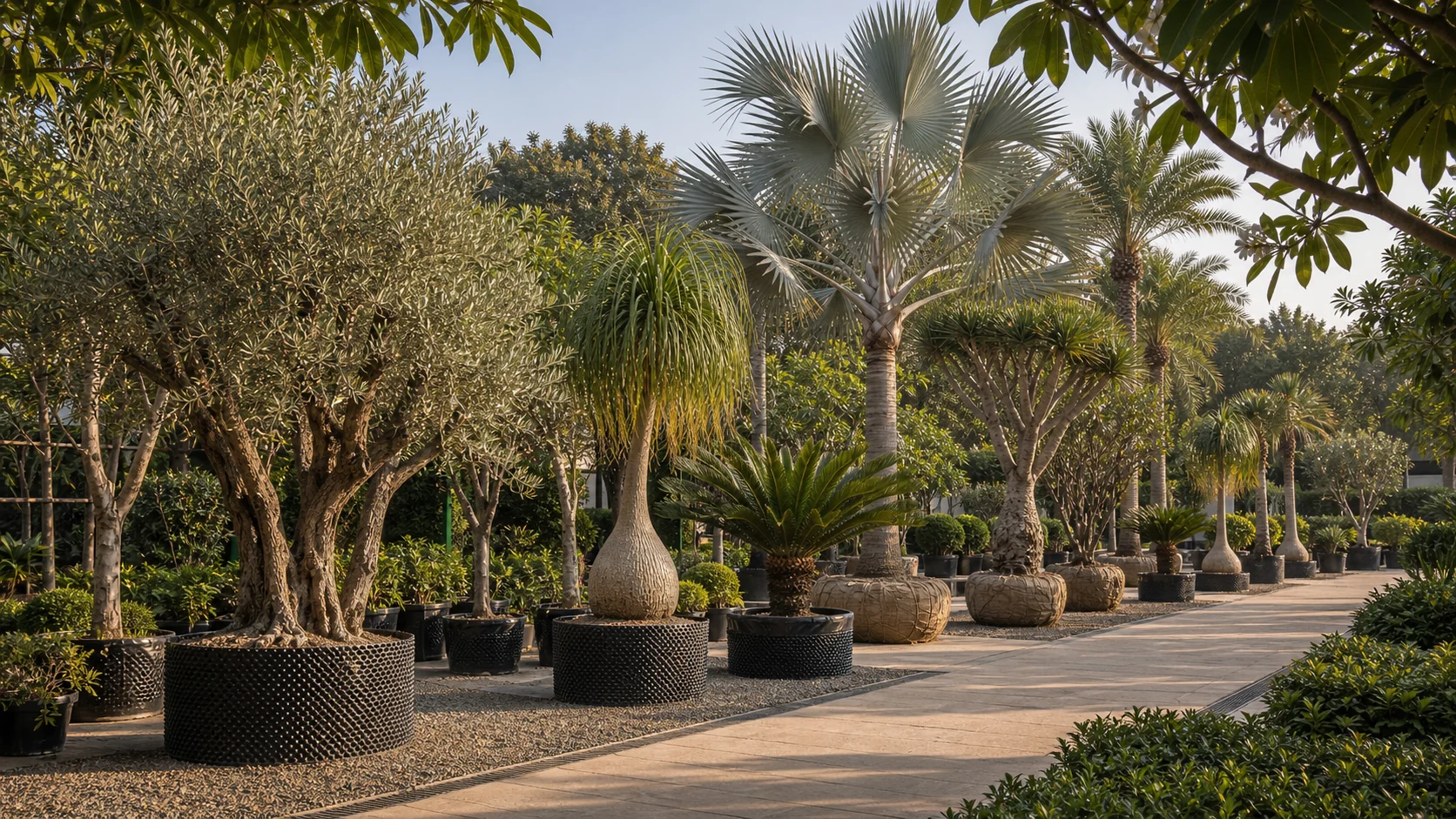
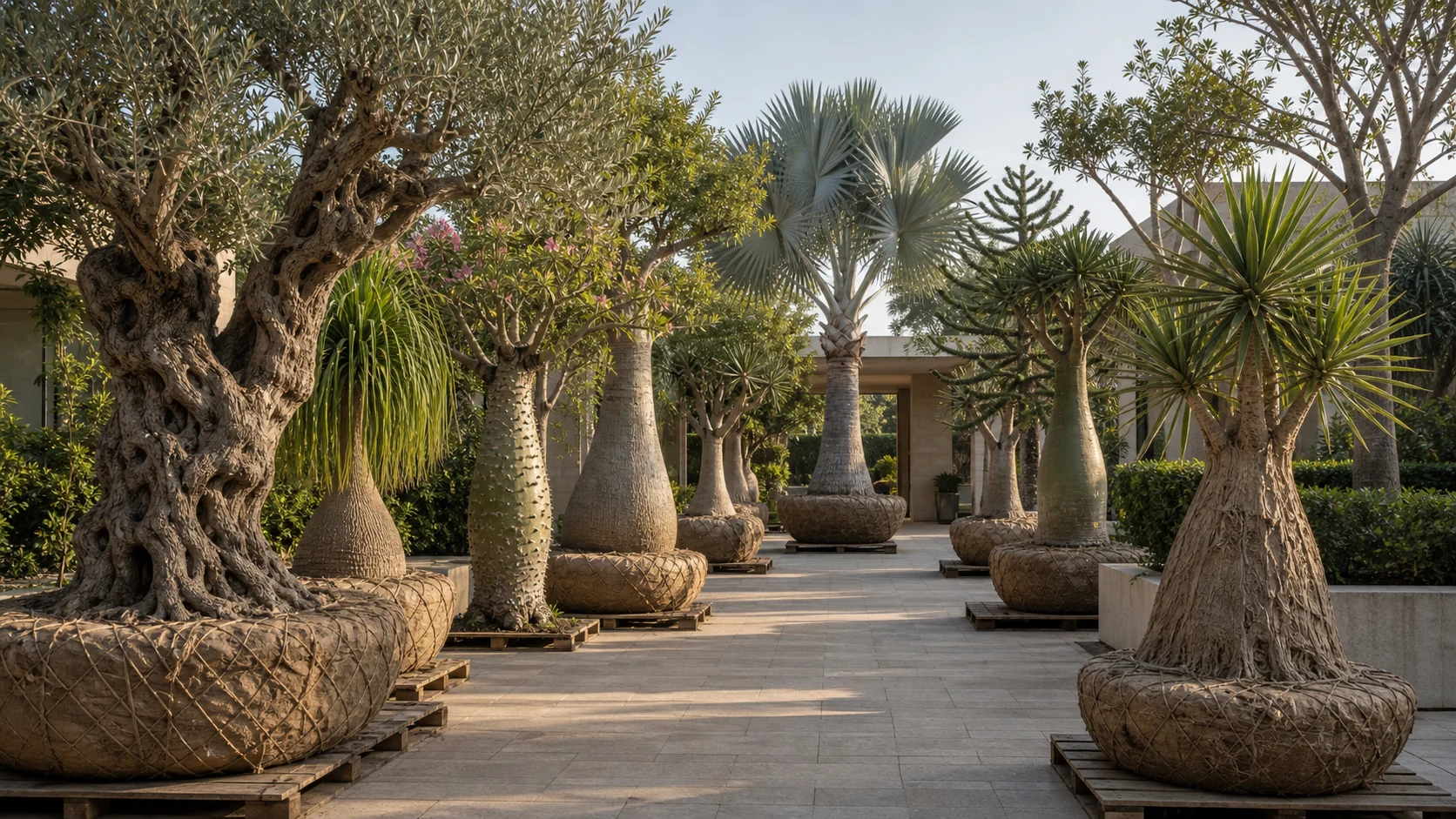
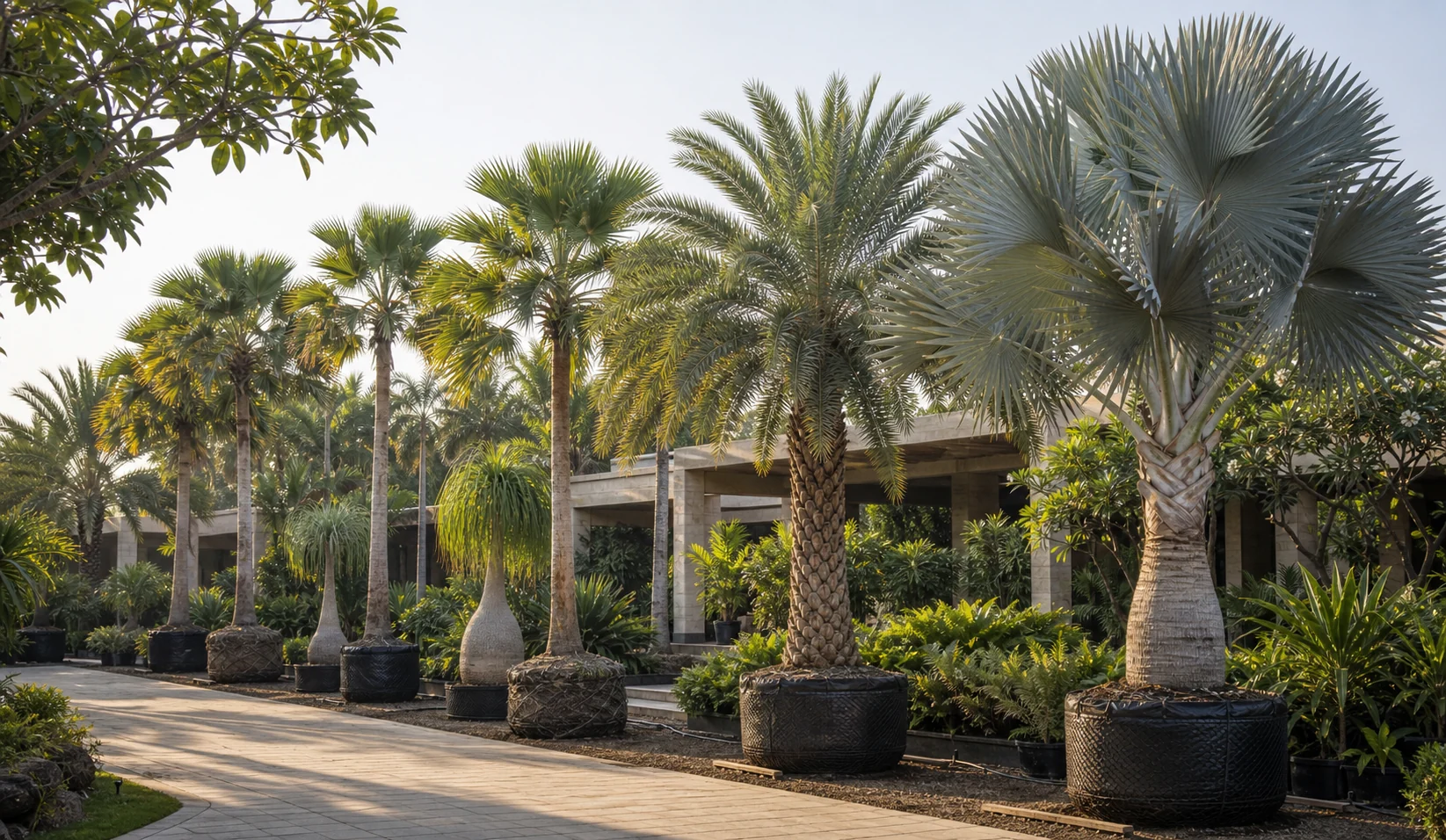
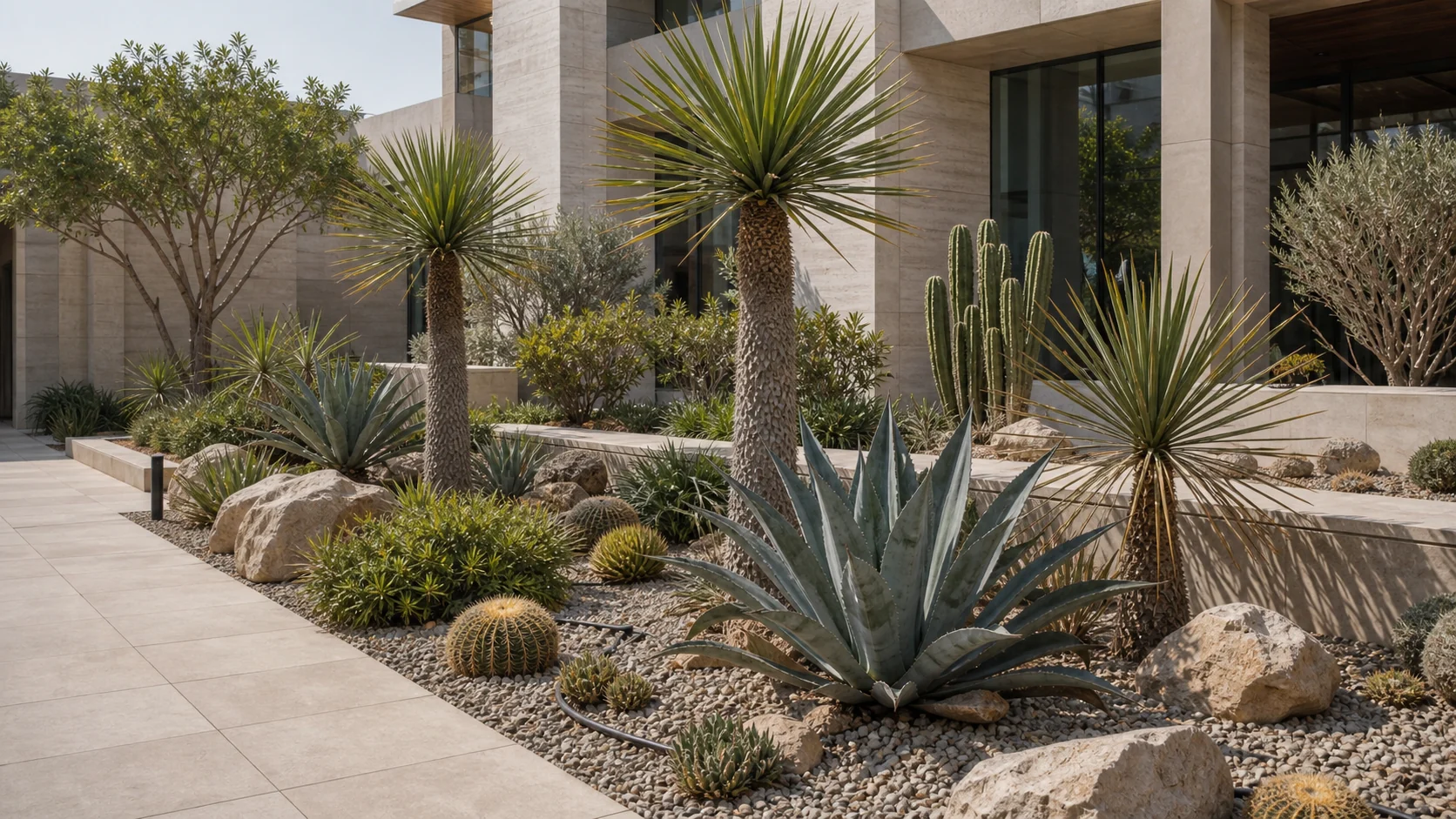
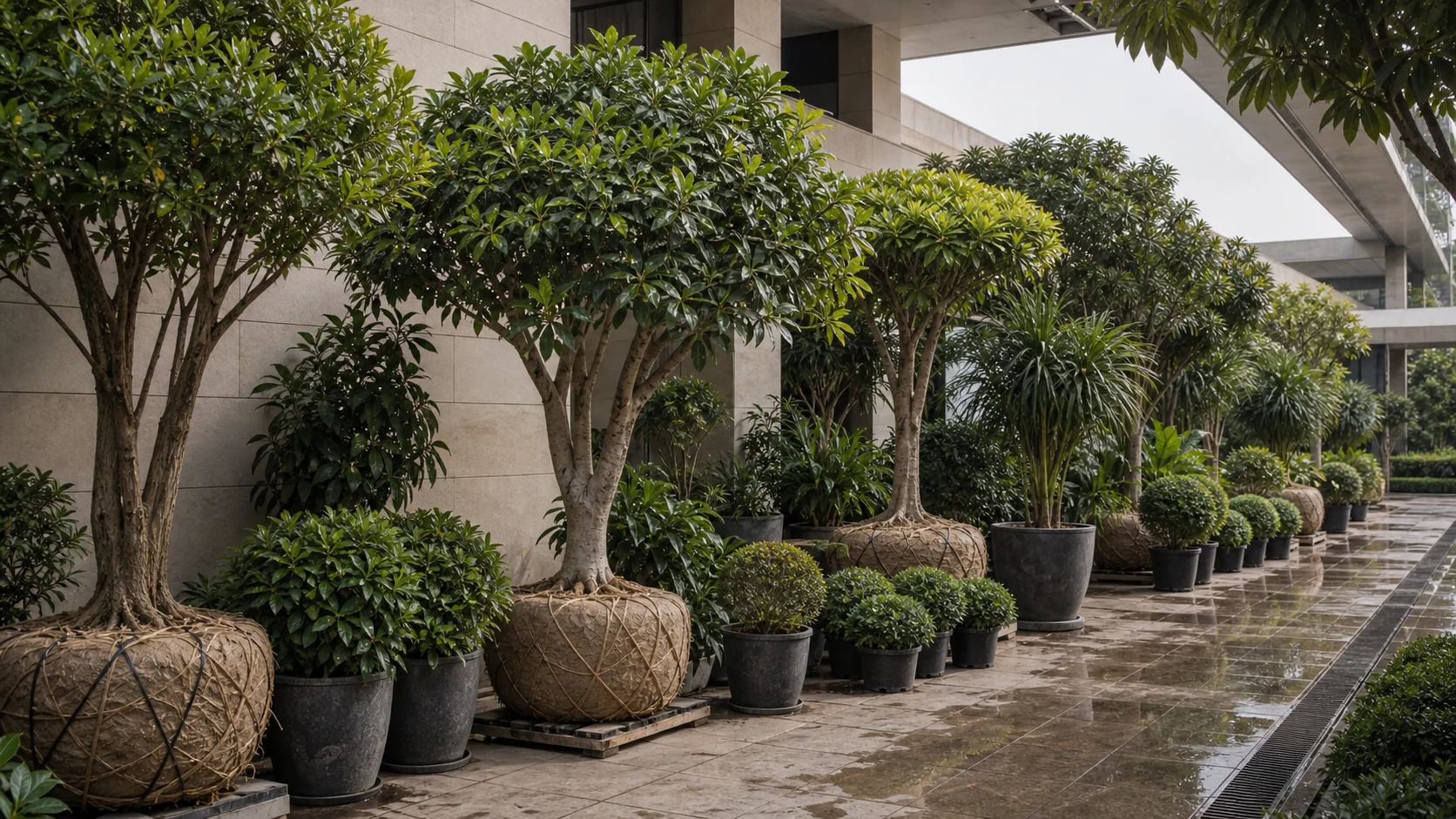
Visual context for placement, scale, handling, and landscape integration.
Section
Where it's used in premium projects
Cork oak anchors Mediterranean and Iberian-inspired estates — winery landscapes, hill-station clubs, and formal evergreen shade courts where thick cork plates on trunk and major limbs are the heritage feature. Young trees look like ordinary oaks until cork thickens — set owner expectations on bark payoff timeline. Evergreen shade complements cork trunk in summer-dry palette planting.
Section
Climate & site suitability in India
Drier temperate microclimates outperform hot humid coasts — Pune, Bangalore outer hills, and North India sites with dry winters. Waterlogging kills cork oak faster than drought. Cork bark harvest is agricultural practice in Portugal — landscape specimens in India are usually left unharvested for aesthetics unless a deliberate agri-story is planned.
Section
Sourcing & acclimatisation
Specify cork bark maturity expectations — juvenile smooth bark is not the selling feature yet. [Unverified: India nursery suber versus Mediterranean import lead times.] Acclimatise in open sun; shaded holding produces open evergreen crowns weak in wind.
Section
Installation (pit, soil, drainage, bracing)
Large pit with gravel drainage — oak root rot in monsoon clay is common failure. Protect cork plates from strap damage; scars alter harvest geometry permanently on agricultural trees and aesthetics on ornamentals. Light stake until root plate spreads on windy hill sites.
Section
Establishment & AMC
AMC sweeps acorn litter from guest paving and monitors irrigation so cork bark zones stay aerated. Structural prune for clearance only — do not strip cork plates for views. Document that cork harvest is not default AMC unless specialist arborist engaged.
Section
Cost drivers
Explore
Related
Related
Related links
Services, segments, cost, and proof.
- Softscape & horticulture
- Irrigation & water management
- Landscape maintenance (AMC)
- Hotel & resort landscaping
- Luxury resort & spa landscaping
- Mall & retail landscaping
- Corporate campus landscaping
- Projects
- Commercial landscaping cost guide
- Pricing drivers (imported trees)
- Import compliance workflow
- Request a site assessment
- Is cork bark harvested on landscape specimens in India?
- Usually no — harvest is agricultural practice in cork forests; ornamental projects typically preserve plates for trunk character unless a deliberate agri-narrative is planned with specialists.
- What makes cork oak bark distinctive?
- Thick rugged cork plates on trunk and limbs — texture thickens over decades; young trees look smooth until cork develops.
- Where in India does cork oak perform best?
- Drier temperate Mediterranean-style sites with drainage — not default hot-humid coastal clay without soil rebuild.
- How fast does cork oak grow?
- Slow — designers should plan long horizons for cork texture and evergreen shade maturity; buy older stock for earlier bark read.
- What causes root rot on cork oak?
- Waterlogged soils and over-irrigation — engineered drainage outweighs fertiliser for survival in Indian monsoon climates.
- What import steps apply to Mediterranean oak stock?
- Live Quercus imports require phytosanitary certificates and Indian plant quarantine — factor inspection before monsoon planting (informational, not legal advice).
- How should cork oak BOQs be compared?
- Match trunk caliper, cork plate maturity, drainage engineering, and long-horizon AMC — not fast evergreen shade tree pricing.