
Sander's screw pine
Sander's screw pine (Pandanus sanderi)
Pandanus sanderi is the variegated screw pine with yellow-striped strappy spiral leaves in a bold rosette that develops aerial prop roots — specified as a sculptural tropical accent where variegated spiral foliage and stilt-root architecture read at coastal resorts and container courts, with spiny leaf margins routed away from guest contact.
Spec
At a glance
- Botanical name
- Pandanus sanderi
- Family
- Pandanaceae
- Common names
- Sander's screw pine, variegated screw pine
- Origin
- South-East Asia (ornamental trade)
- Plant type
- Evergreen rosette tree with prop roots
- Mature height
- Often 3–6 m+ as prop roots develop
- Trunk / form
- Yellow-striped spiral strappy leaves; aerial prop/stilt roots
- Crown spread
- Moderate rosette; prop roots widen footprint
- Growth rate
- Slow to moderate in warm sites
- Light
- Full sun to bright partial — variegation needs strong light
- Water needs
- Moderate; coastal humidity helps
- India climate suitability
- Frost-free tropical and warm coastal India; container retreat inland on cold snaps
- Cold/heat & salt/wind tolerance
- Moderate coastal tolerance; cold-sensitive; spiny leaf margins
- Typical supply size
- Rosette specimens 1.5–2.5 m [Unverified]
- Lead time (sourcing)
- [Unverified] verify sanderi versus utilis on variegation
- Install considerations
- Prop-root room in pit; spiny margins away from paths; bright placement for stripes
- Maintenance level
- Moderate — dead leaf removal, prop-root clearance, stripe light management
- Cautions
- Spiny leaf margins; prop roots need space; variegation fades in shade; cold-sensitive
Gallery
Specimen visual guide
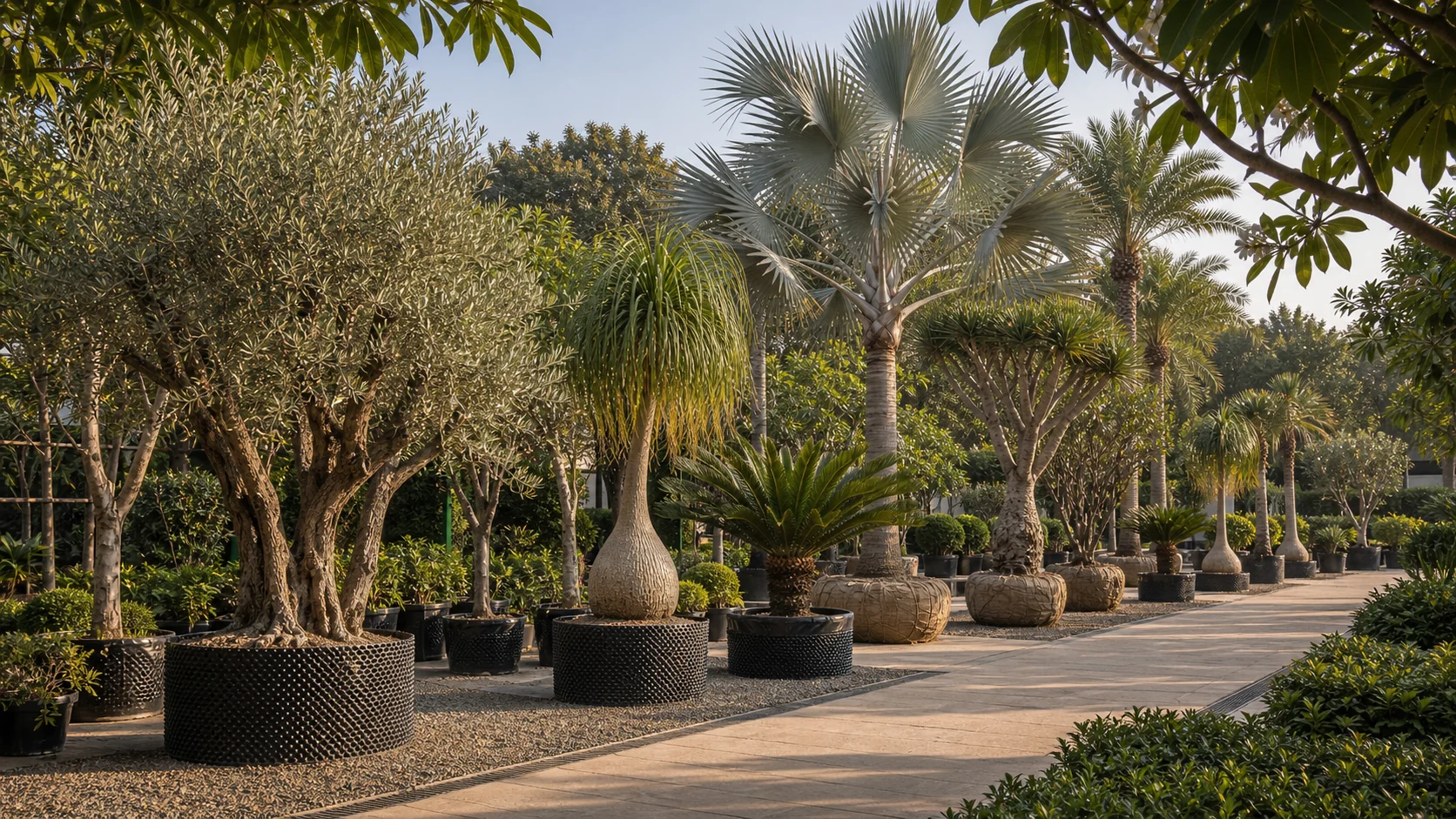
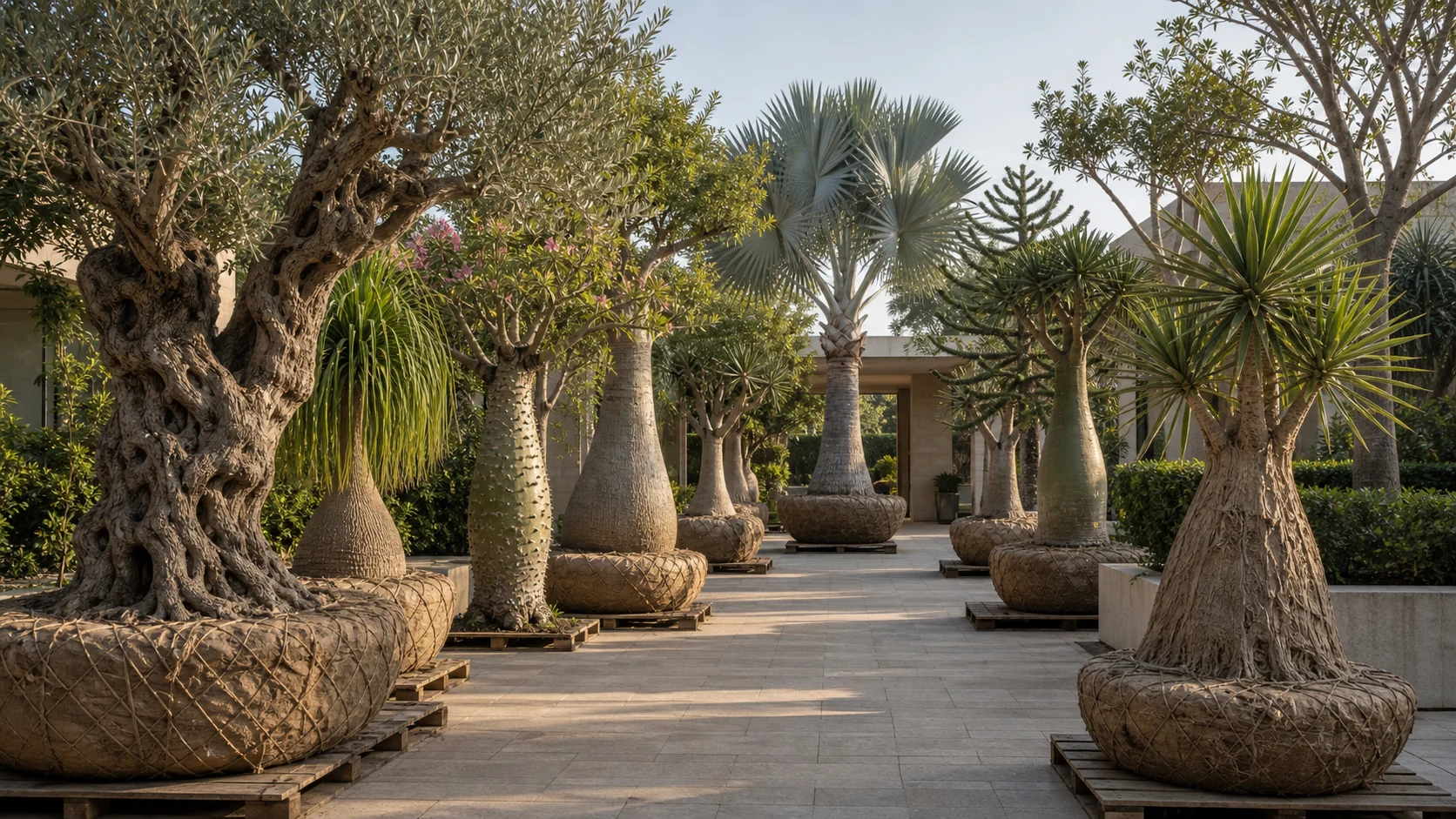
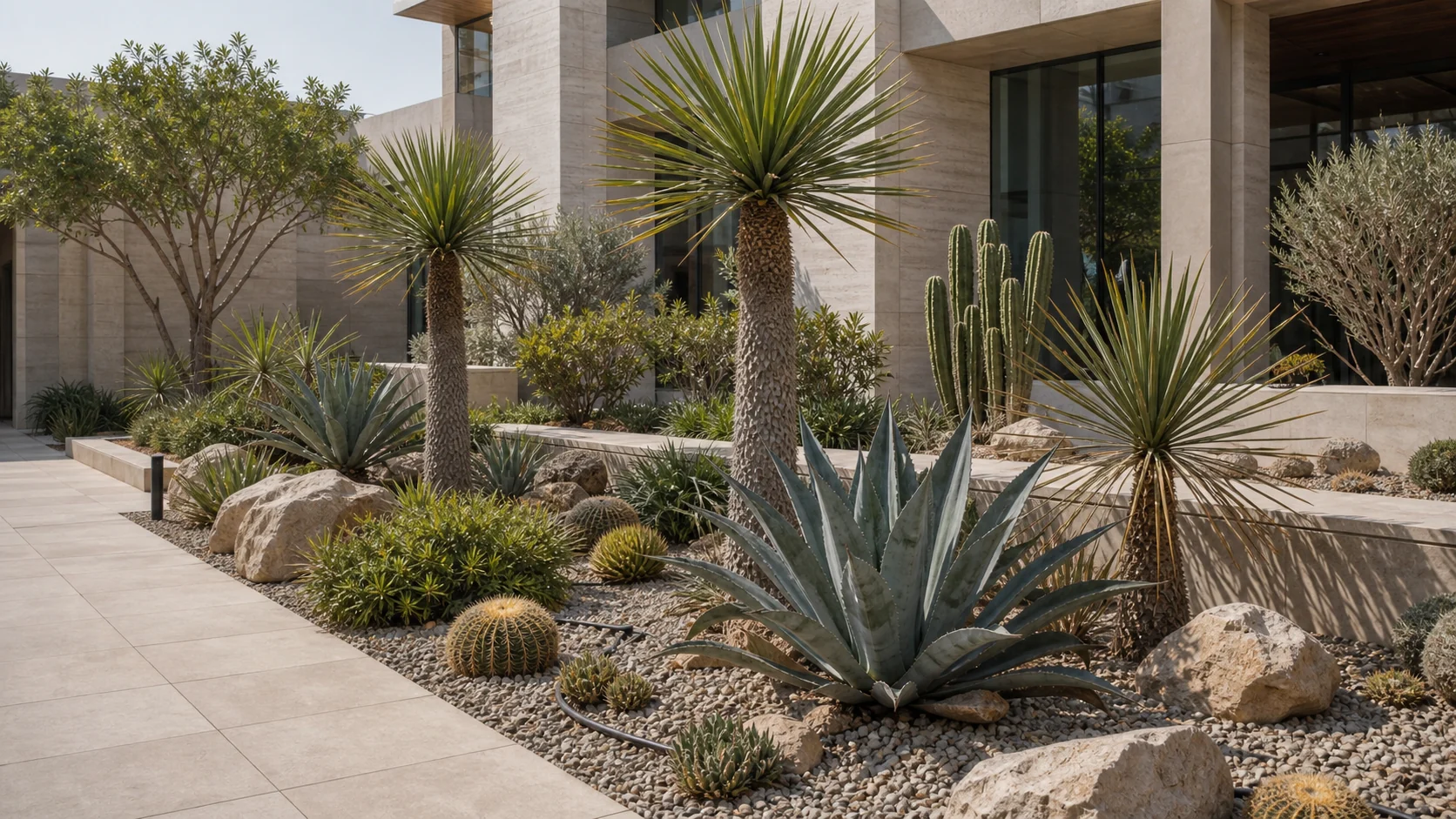
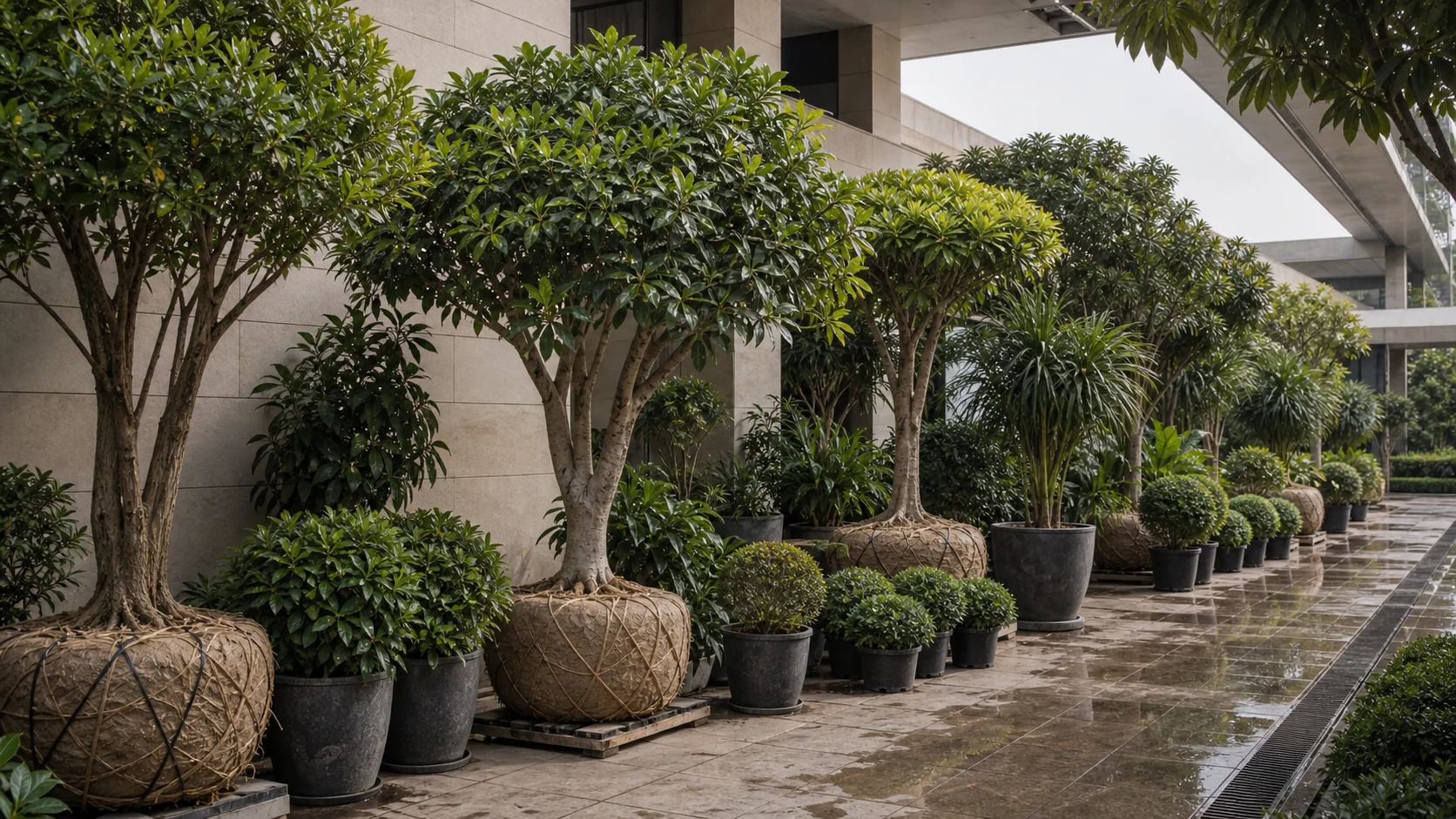
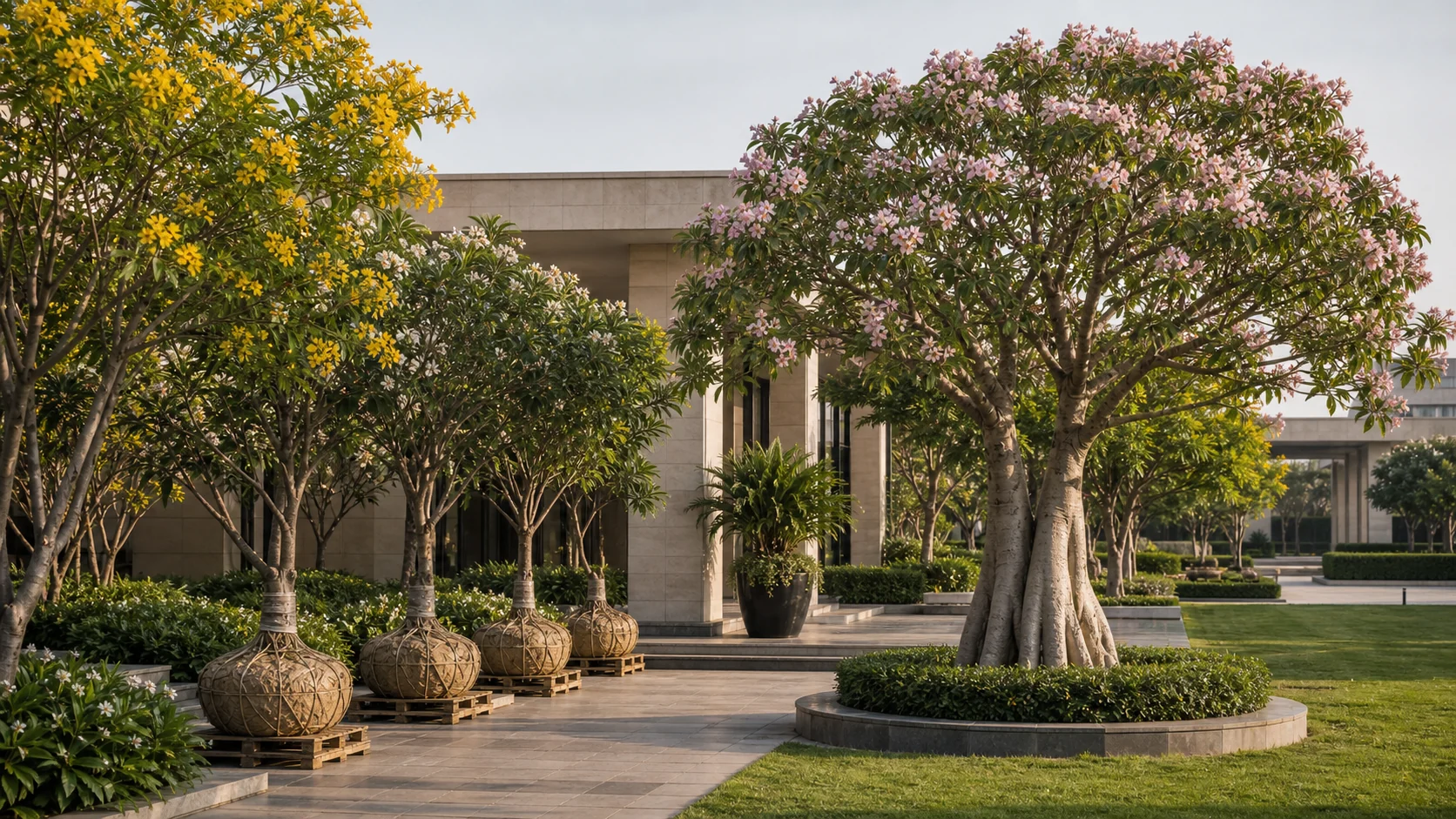
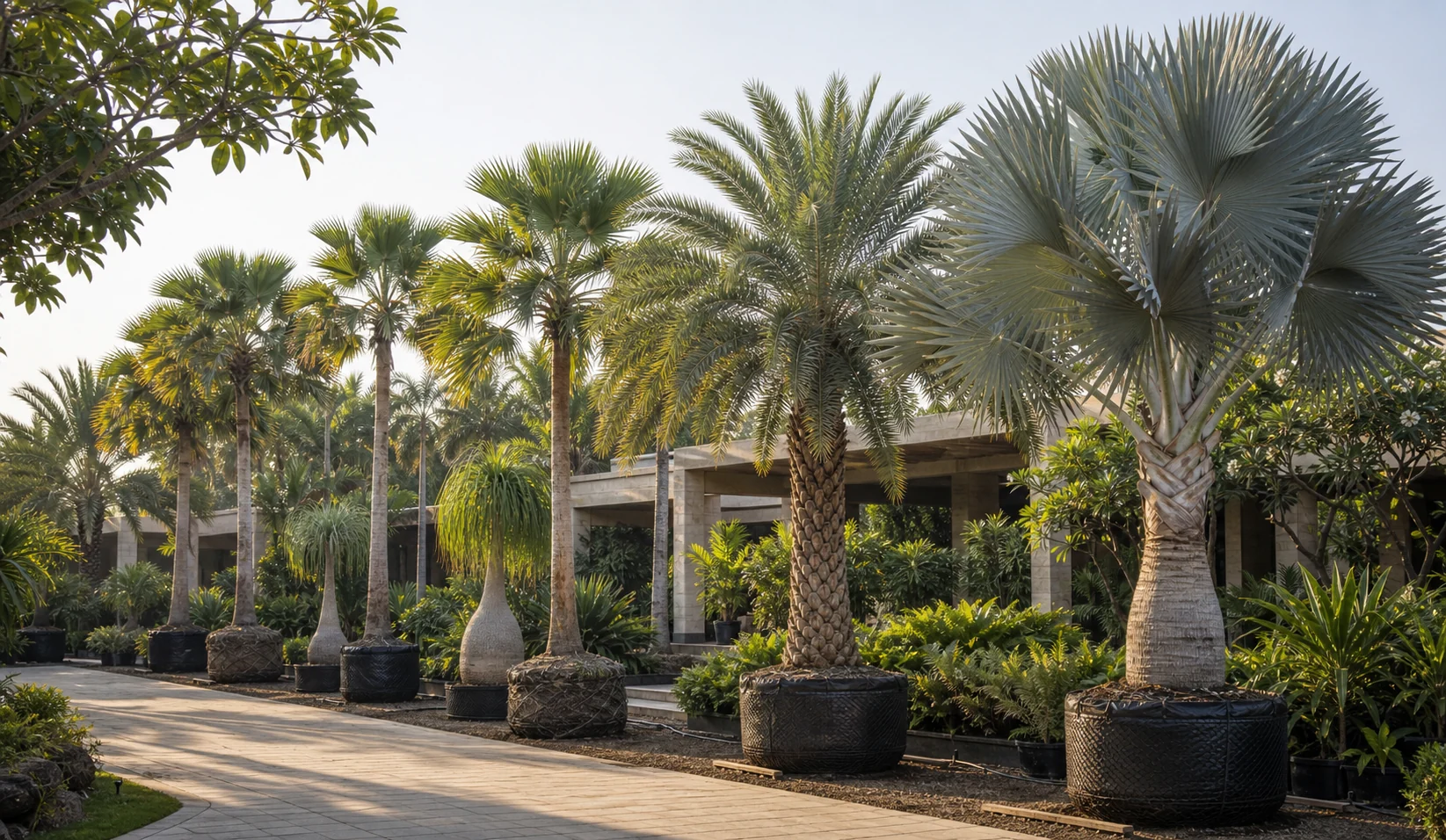
Visual context for placement, scale, handling, and landscape integration.
Section
Where it's used in premium projects
Pandanus sanderi anchors sculptural coastal accents — resort pool corners, beachfront container groups, and arrival plazas where yellow-striped spiral leaves and emerging stilt roots become the foliage statement. It is not a fine-textured courtyard tree; specify for bold rosette architecture.
Section
Climate & site suitability in India
Warm coastal tropics suit outdoor rosettes; variegation needs strong light — deep shade washes yellow stripes to green. Frost-free requirement limits north-India open courts without protection. Prop roots widen the physical footprint over years — pit and paving layout must anticipate stilt architecture.
Section
Sourcing & acclimatisation
Confirm Pandanus sanderi versus Pandanus utilis on stripe pattern — utilis is blue-green without yellow variegation. [Unverified: typical rosette size at specialist nurseries.] Hold in bright light before install so stripe KPI is visible at handover.
Section
Installation (pit, soil, drainage, bracing)
Oversize pits or containers allowing prop-root spread — stilt roots are the design feature, not an afterthought to cut off. Route guest paths away from spiny leaf margins; PPE for maintenance crews. Drainage still required despite coastal tolerance.
Section
Establishment & AMC
AMC removes dead strap leaves safely, clears prop roots from drain grates and paving joints, and monitors stripe colour — relocation to shade fades variegation within a season. Document spine hazard on guest-facing maintenance maps.
Section
Cost drivers
Explore
Related
Related
Related links
Services, segments, cost, and proof.
- Softscape & horticulture
- Irrigation & water management
- Landscape maintenance (AMC)
- Hotel & resort landscaping
- Luxury resort & spa landscaping
- Mall & retail landscaping
- Corporate campus landscaping
- Projects
- Commercial landscaping cost guide
- Pricing drivers (imported trees)
- Import compliance workflow
- Request a site assessment
- Are Pandanus sanderi leaf margins safe near guest paths?
- Leaves carry spines sharper than Pandanus utilis — route seating and paths outside the working rosette zone and brief maintenance crews with PPE.
- How do we keep yellow stripe variegation?
- Strong bright light holds yellow bands — deep shade reverts toward green; document final placement and avoid later shade from new construction.
- What is the prop-root or stilt-root habit?
- Aerial roots descend from the stem to support the rosette — pits and paving must allow this architecture; cutting props for tidy paving destroys the sculptural value.
- How does sanderi differ from Pandanus utilis?
- Sanderi carries yellow-striped variegation with sharper spines; utilis is blue-green coastal screw pine with milder margins — verify tags on mixed lists.
- Can it live in containers on a hotel terrace?
- Yes with drainage and frost protection — prop-root spread may require eventual in-ground transplant or oversized containers.
- What import compliance applies?
- Live plants follow India quarantine workflow (informational, not legal advice).
- How should BOQs be compared?
- Match verified sanderi ID, stripe visibility, rosette size, prop-root pit scope, and spine-safe maintenance — not generic screw-pine pricing.