
Indian trumpet tree
Indian trumpet tree / Midnight horror (Oroxylum indicum)
Oroxylum indicum is the native Indian trumpet tree with huge bipinnate leaves clustered at branch tips, large sword-like hanging pods, and night-flowering bat-pollinated blooms — specified as a botanical and heritage feature where dramatic foliage and ethnobotanical context matter, with honest placement planning for gangly youth and falling pods.
Spec
At a glance
- Botanical name
- Oroxylum indicum
- Family
- Bignoniaceae
- Common names
- Indian trumpet tree, midnight horror, tree of Damocles
- Origin
- Native to India and South-East Asia
- Plant type
- Deciduous broadleaf feature tree
- Mature height
- Often 8–15 m in favourable sites
- Trunk / form
- Huge bipinnate leaves at branch tips; long hanging pods
- Crown spread
- Moderate to wide when mature
- Growth rate
- Moderate when young; gangly until structure forms
- Light
- Full sun to partial shade
- Water needs
- Moderate establishment; tolerates some dry season when mature
- India climate suitability
- Native across humid subtropical and tropical India; ethnobotanical heritage value
- Cold/heat & salt/wind tolerance
- Moderate heat; some frost sensitivity when young; not coastal salt specialist
- Typical supply size
- Young to mid-size field specimens [Unverified]
- Lead time (sourcing)
- [Unverified] native nursery stock versus specialist holdings
- Install considerations
- Route guest paths away from pod fall zone; night-flower scent near windows
- Maintenance level
- Moderate — pod litter, formative prune in youth, seasonal leaf drop
- Cautions
- Falling pods; strong night flower scent; gangly juvenile habit
Gallery
Specimen visual guide
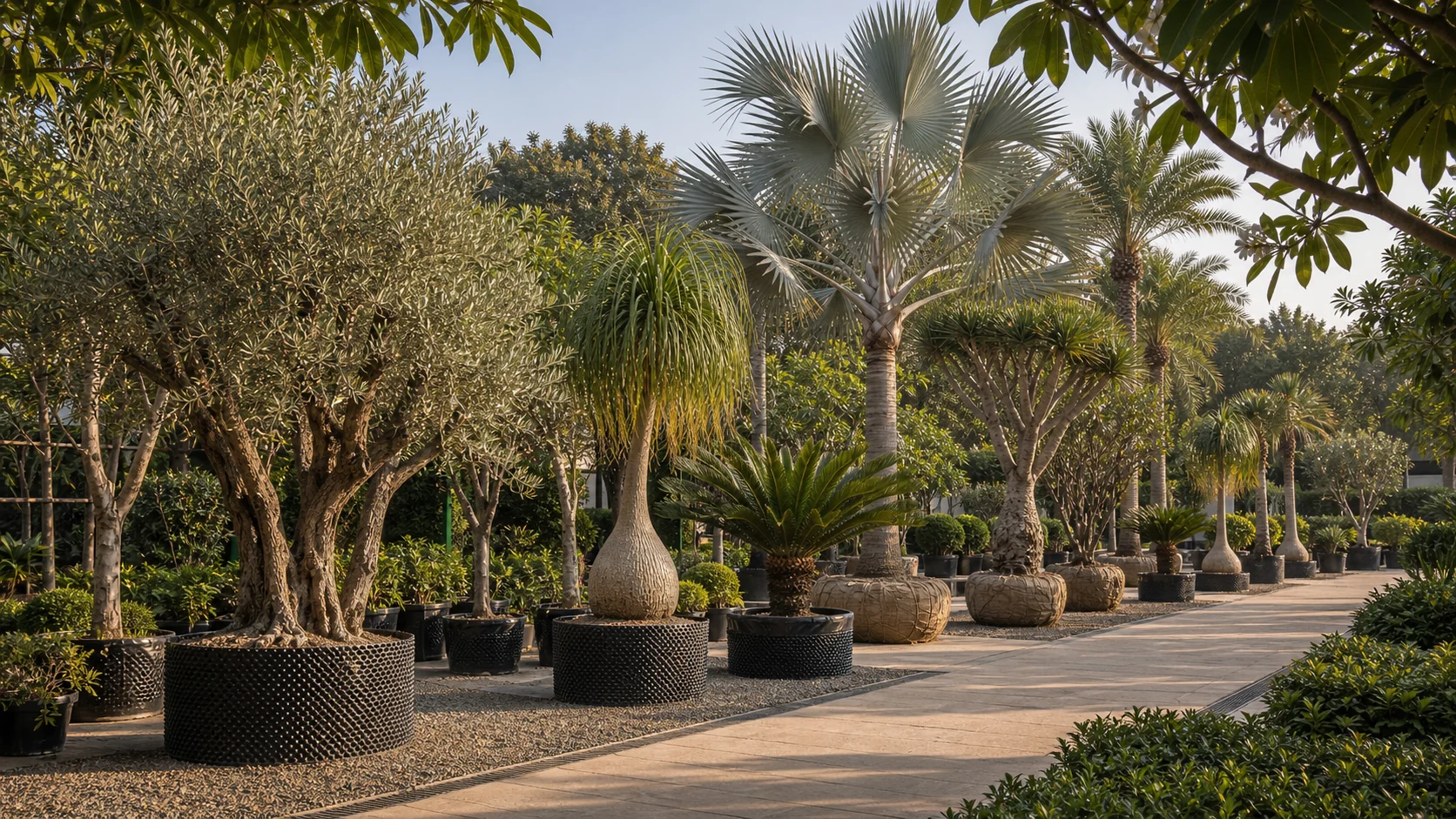
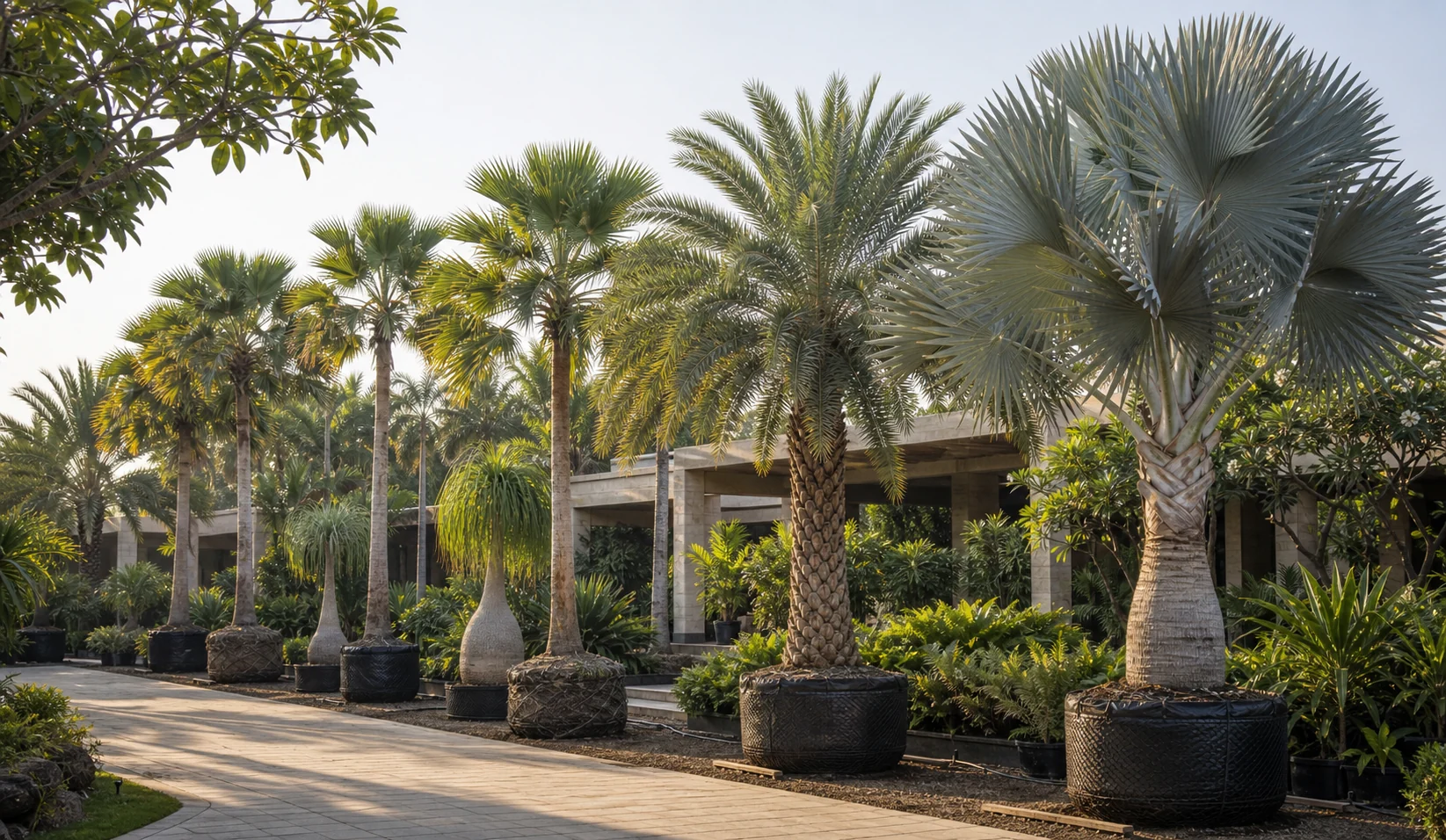
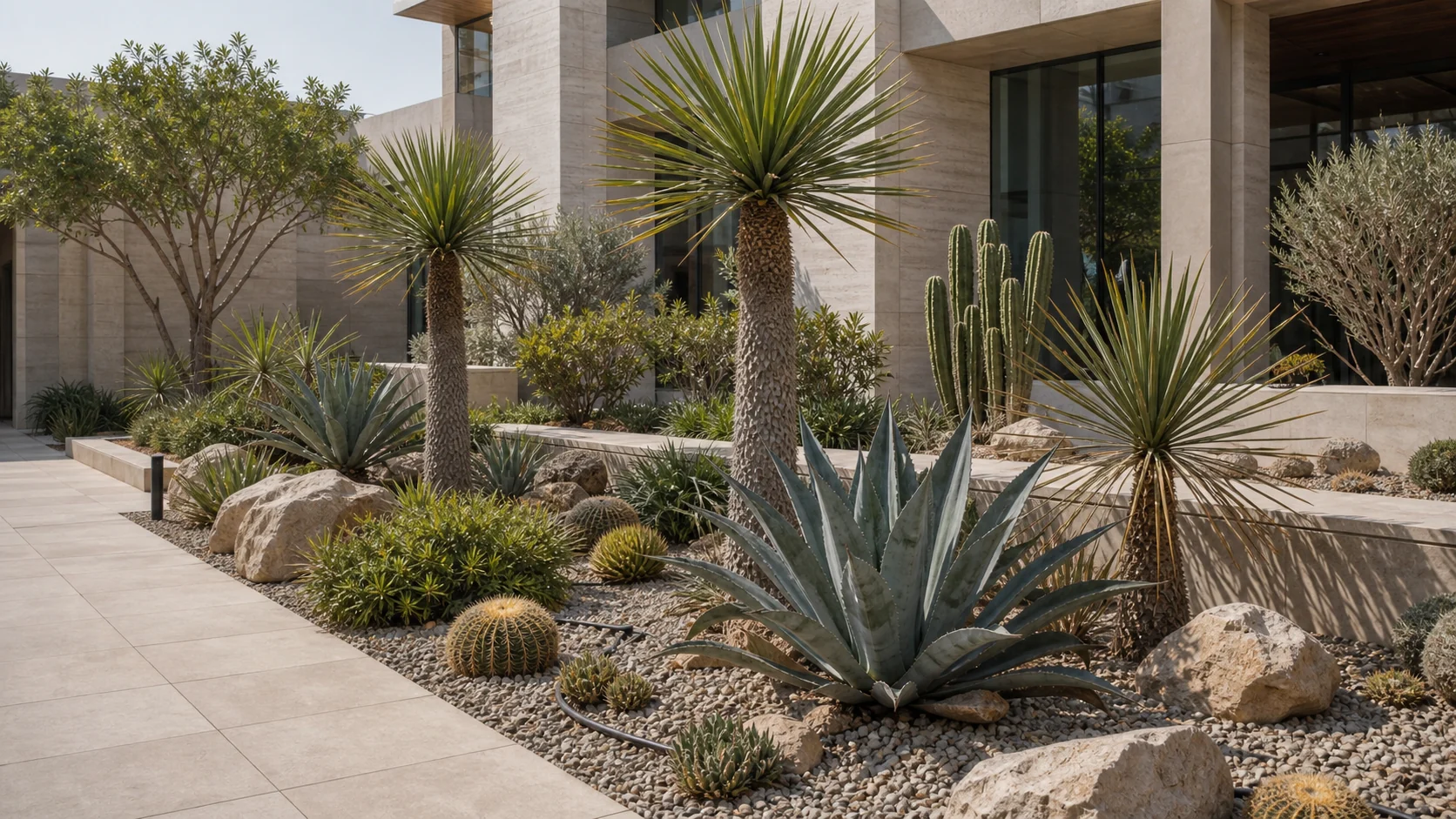
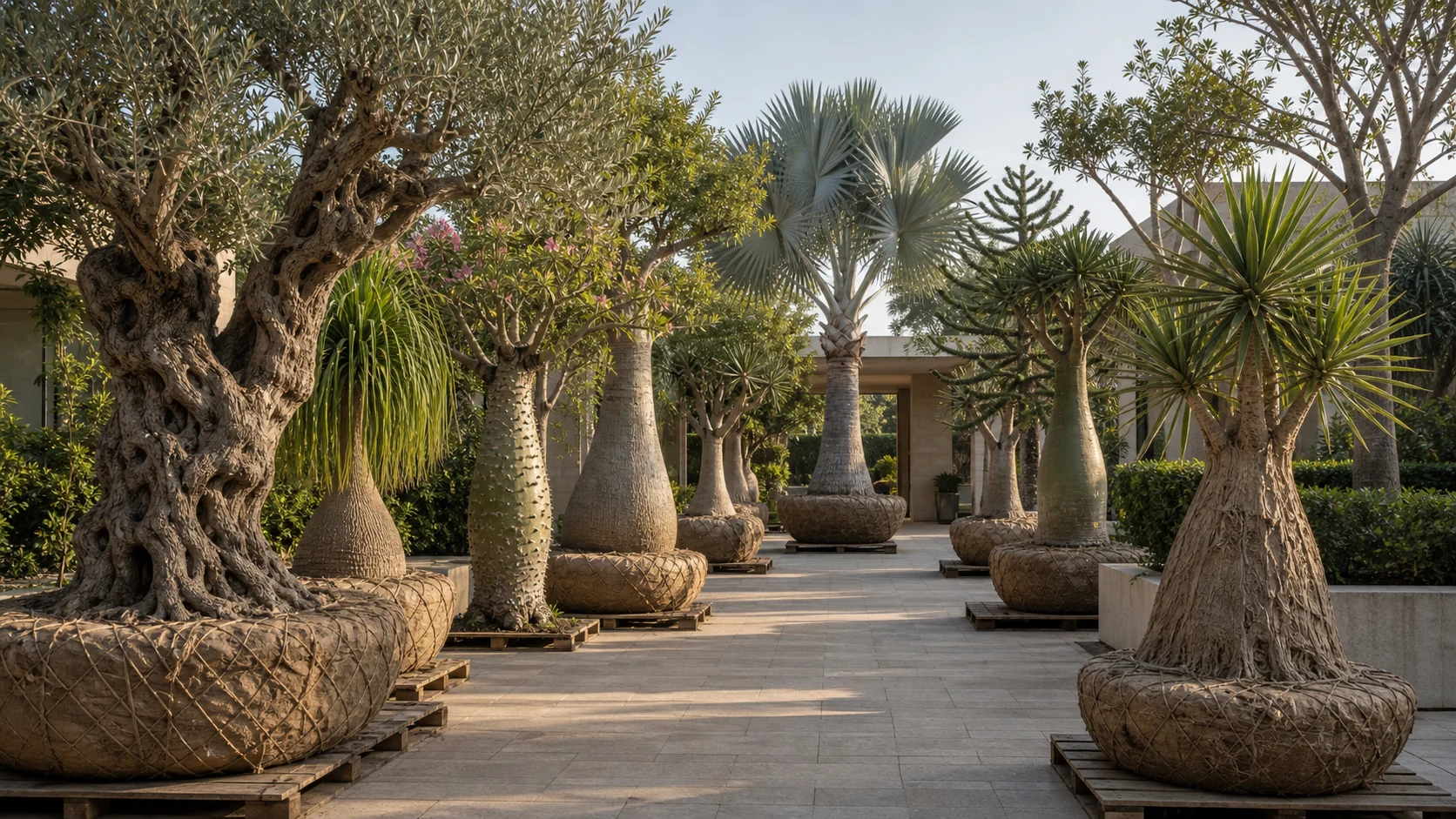
Visual context for placement, scale, handling, and landscape integration.
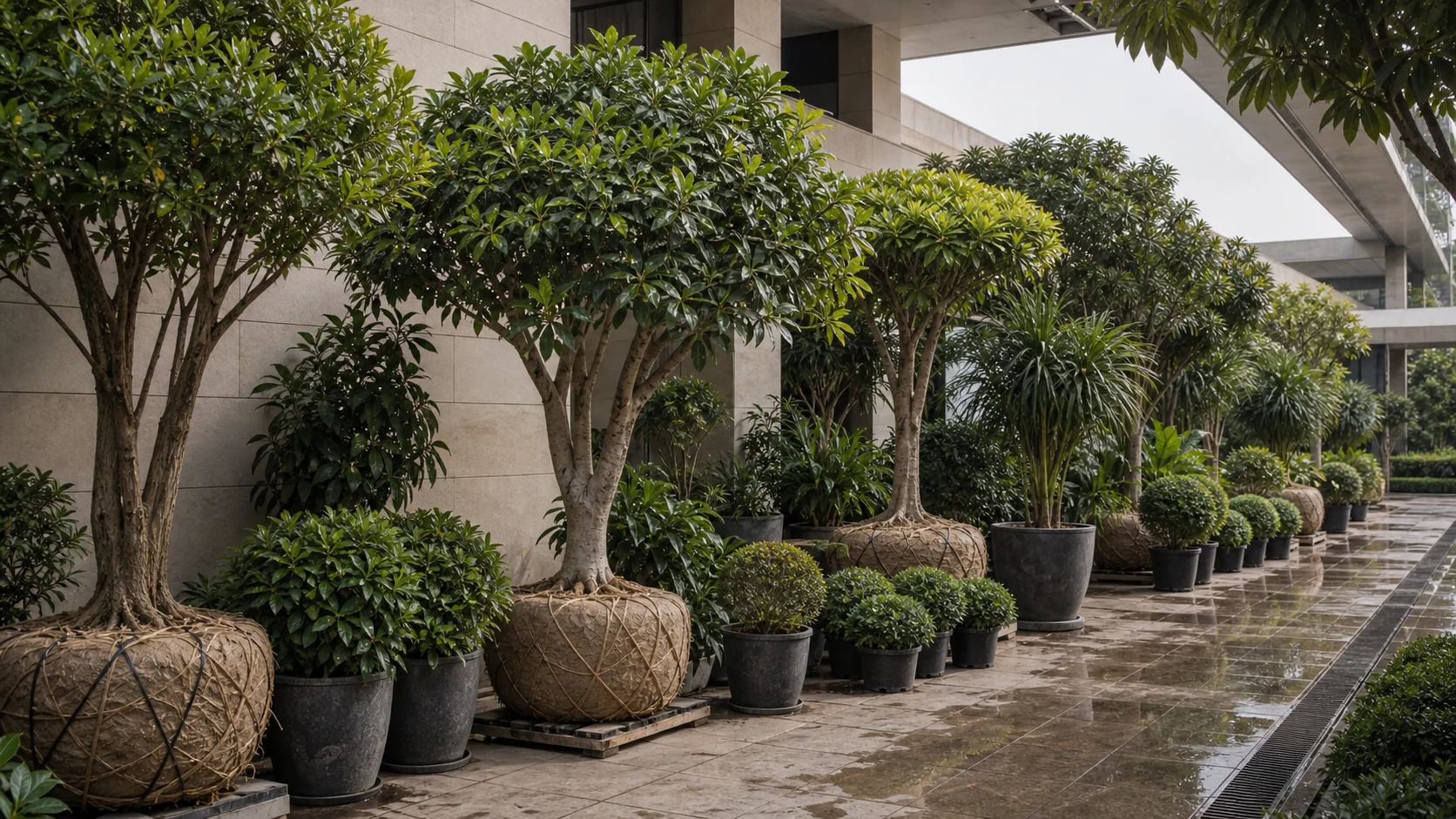
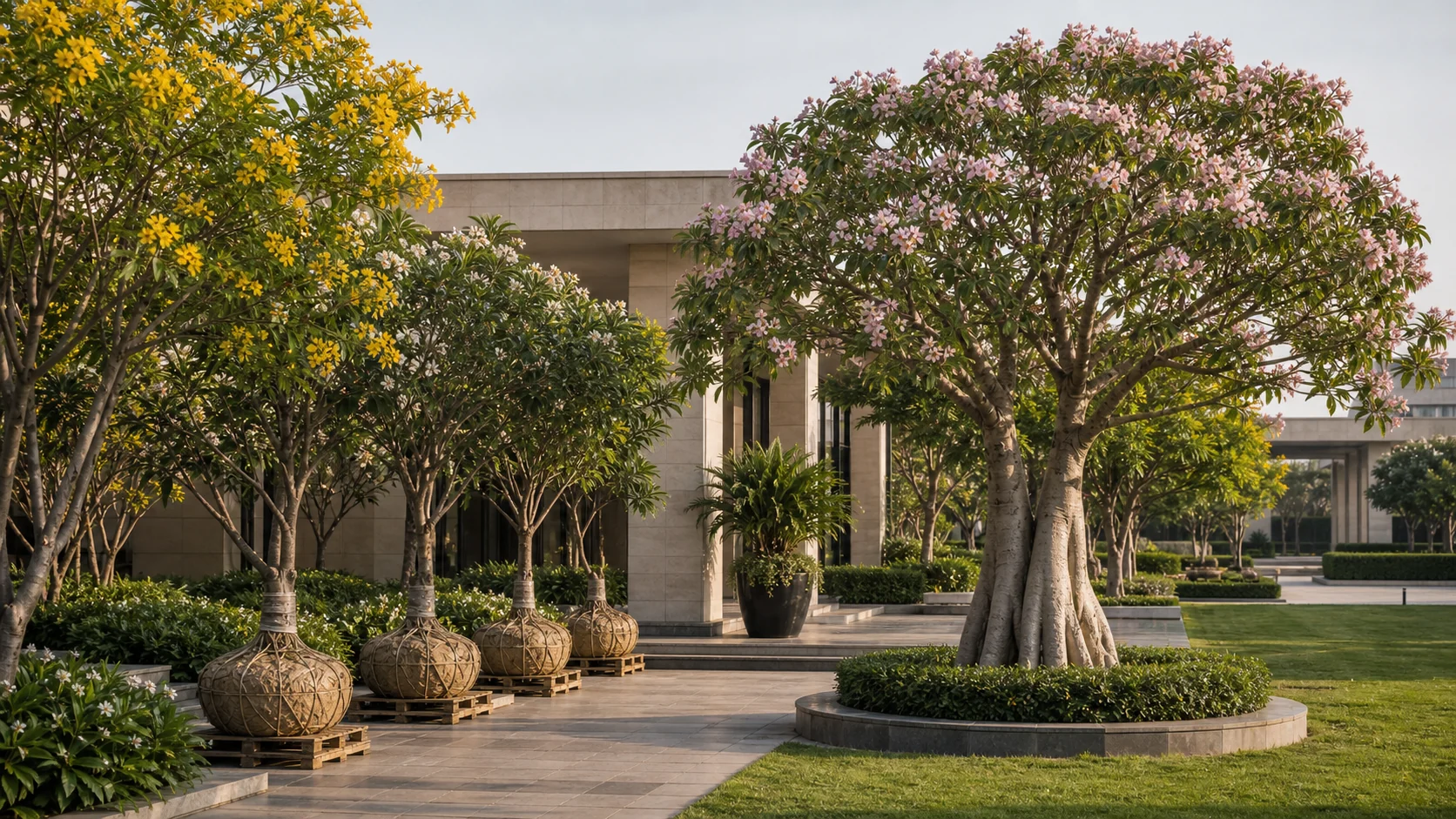
Section
Where it's used in premium projects
Oroxylum indicum suits heritage courtyards, wellness retreats citing native ethnobotany, and botanical-feature arrival zones where huge bipinnate foliage and dramatic hanging pods tell a story — not generic shade filler. Ayurvedic and traditional-use context can support designer narrative where appropriate and verified.
Section
Climate & site suitability in India
Native vigour across humid subtropical and tropical metros helps establishment versus exotic rarities — still plan pod fall zones away from guest seating and pool decks. Night flowers are bat-pollinated with strong scent — locate away from bedroom wings unless the brief celebrates nocturnal ecology.
Section
Sourcing & acclimatisation
Much stock is domestically sourced native material — document provenance for heritage submittals. [Unverified: typical caliper classes on commercial native-tree lists.] Juvenile plants look gangly until apical structure forms — photograph nursery habit so ownership expects youth phase, not instant dome.
Section
Installation (pit, soil, drainage, bracing)
Generous pits with drainage; light staking on gangly youth in windy forecourts. Route paths outside pod drop envelope — sword-like pods are heavy when mature. No tight planter specification; ultimate scale needs space.
Section
Establishment & AMC
AMC sweeps pods and deciduous leaf drop on guest routes, shapes juvenile structure without destroying bipinnate display, and documents seasonal flower scent for hotel operations. Formative pruning reduces gangliness over first years.
Section
Cost drivers
Explore
Related
Related
Related links
Services, segments, cost, and proof.
- Softscape & horticulture
- Irrigation & water management
- Landscape maintenance (AMC)
- Hotel & resort landscaping
- Luxury resort & spa landscaping
- Mall & retail landscaping
- Corporate campus landscaping
- Projects
- Commercial landscaping cost guide
- Pricing drivers (imported trees)
- Import compliance workflow
- Request a site assessment
- What are the dramatic hanging pods on Oroxylum indicum?
- Large sword-like pods hang from branches when mature — specify placement away from guest seating, pools, and glass canopies where falling pods create safety and cleaning issues.
- Why is it called midnight horror?
- Night-flowering bat-pollinated blooms release strong scent after dark — locate near guest rooms only if the brief intentionally celebrates nocturnal ecology.
- What is the native and medicinal significance?
- Oroxylum indicum is native to India with documented ethnobotanical use — cite verified sources in heritage proposals; do not invent clinical claims in landscape BOQs.
- How should designers plan for juvenile habit?
- Young trees can look gangly until branch tips carry the huge bipinnate leaf clusters — budget formative pruning and realistic handover photos, not instant canopy.
- Is it suitable for tight mall planters?
- No — ultimate size and pod drop need generous pits and clear fall zones; specify for courts and estate features with space.
- What import compliance applies to native stock?
- Domestic movement still follows nursery phyto documentation where required — see compliance workflow (informational, not legal advice).
- How should BOQs be compared?
- Match caliper, habit phase, pod-route planning scope, and formative pruning AMC — not generic native-tree pricing.