
Giant moringa
Giant moringa (Moringa hildebrandtii)
Moringa hildebrandtii is the giant bottle moringa of Madagascar — extinct in the wild but surviving in cultivation, with a tall stout bottle-trunked caudex and fine foliage. It suits sculptural trunk specimens where conservation narrative and ethical documented sourcing matter as much as the swollen pale geometry.
Spec
At a glance
- Botanical name
- Moringa hildebrandtii
- Family
- Moringaceae
- Common names
- Giant moringa, Hildebrandt's moringa
- Origin
- Madagascar — extinct in wild; cultivated ex situ
- Plant type
- Dry-deciduous conservation caudex tree
- Mature height
- Often 8–15 m — taller stout bottle than drouhardii
- Trunk / form
- Tall stout bottle-trunked caudex; fine ferny foliage
- Crown spread
- Moderate open crown above bottle
- Growth rate
- Slow — stout bottle develops over many years
- Light
- Full sun
- Water needs
- Xerophytic — drainage-critical at bottle base
- India climate suitability
- Dry tropical collector sites with drainage — not humid waterlogged coasts
- Cold/heat & salt/wind tolerance
- Heat-hardy; frost-sensitive; conservation stock handling standards
- Typical supply size
- Documented cultivation-origin bottle grades [Unverified]
- Lead time (sourcing)
- [Unverified] ethical nursery propagation records required
- Install considerations
- Verify cultivation origin; caudex drainage; taller rigging than drouhardii
- Maintenance level
- Low — caudex inspection and dry-season AMC
- Cautions
- Extinct in wild — ethical sourcing mandatory; slow; caudex rot if wet; rare
Gallery
Specimen visual guide
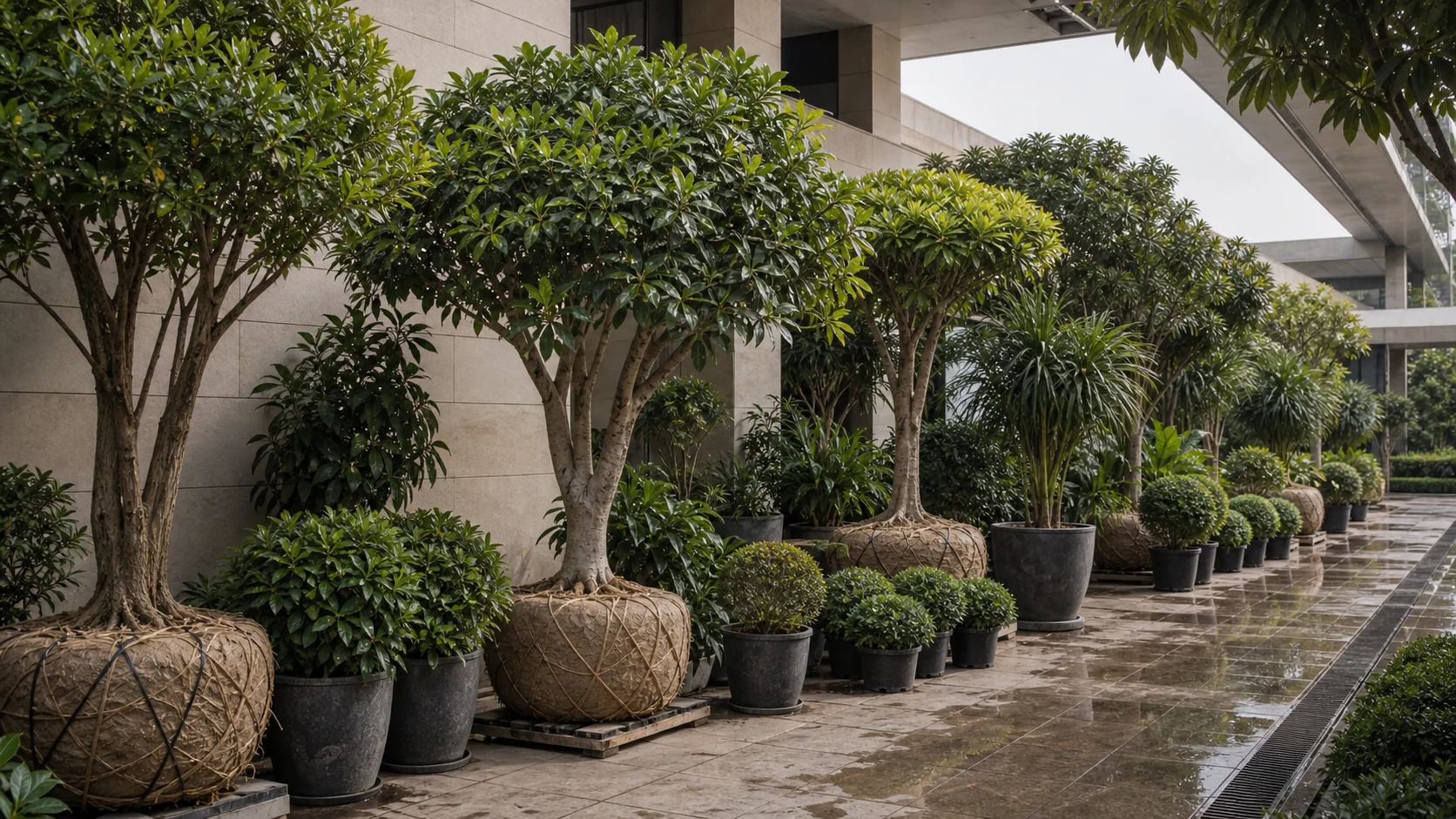
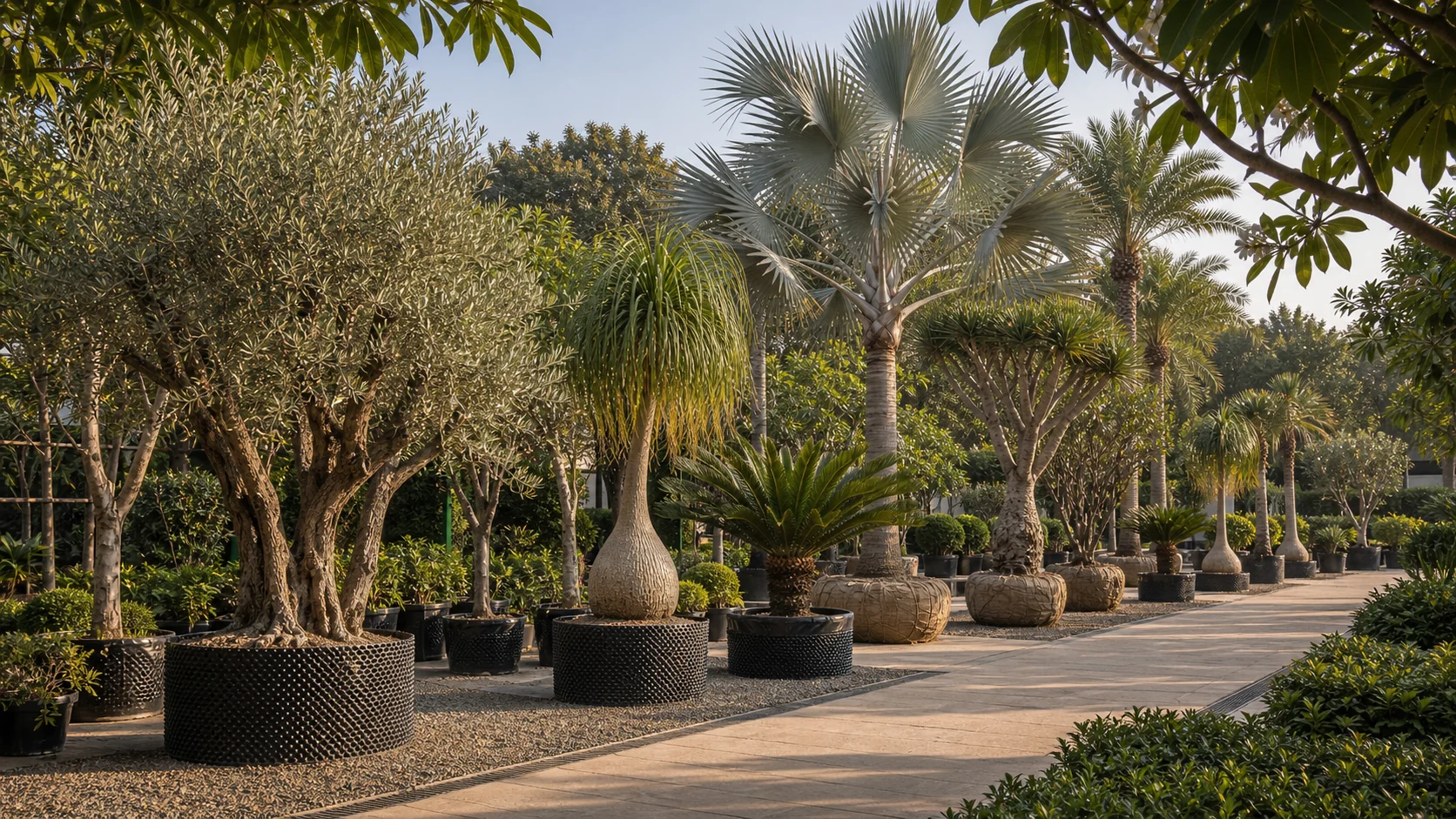
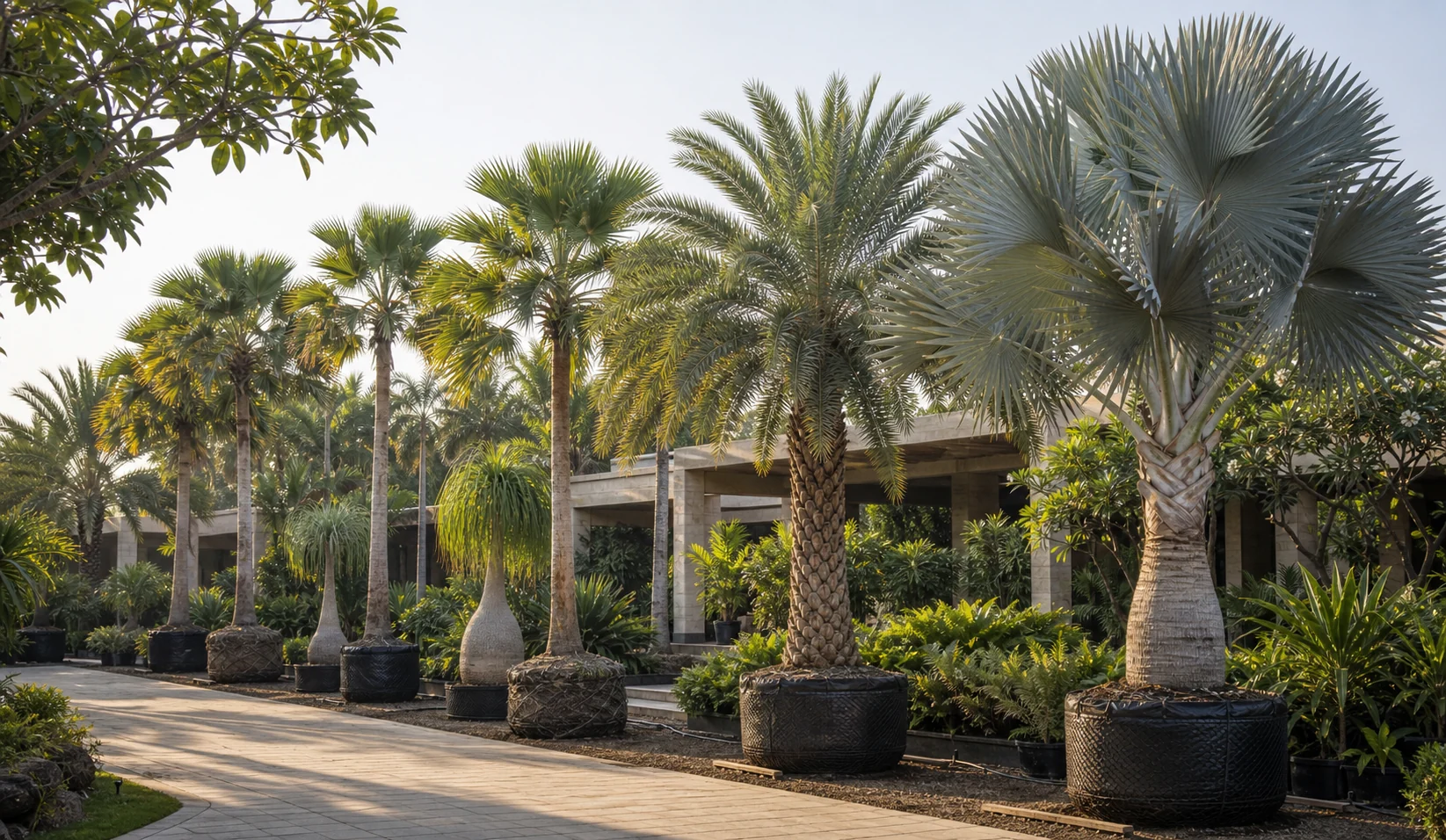
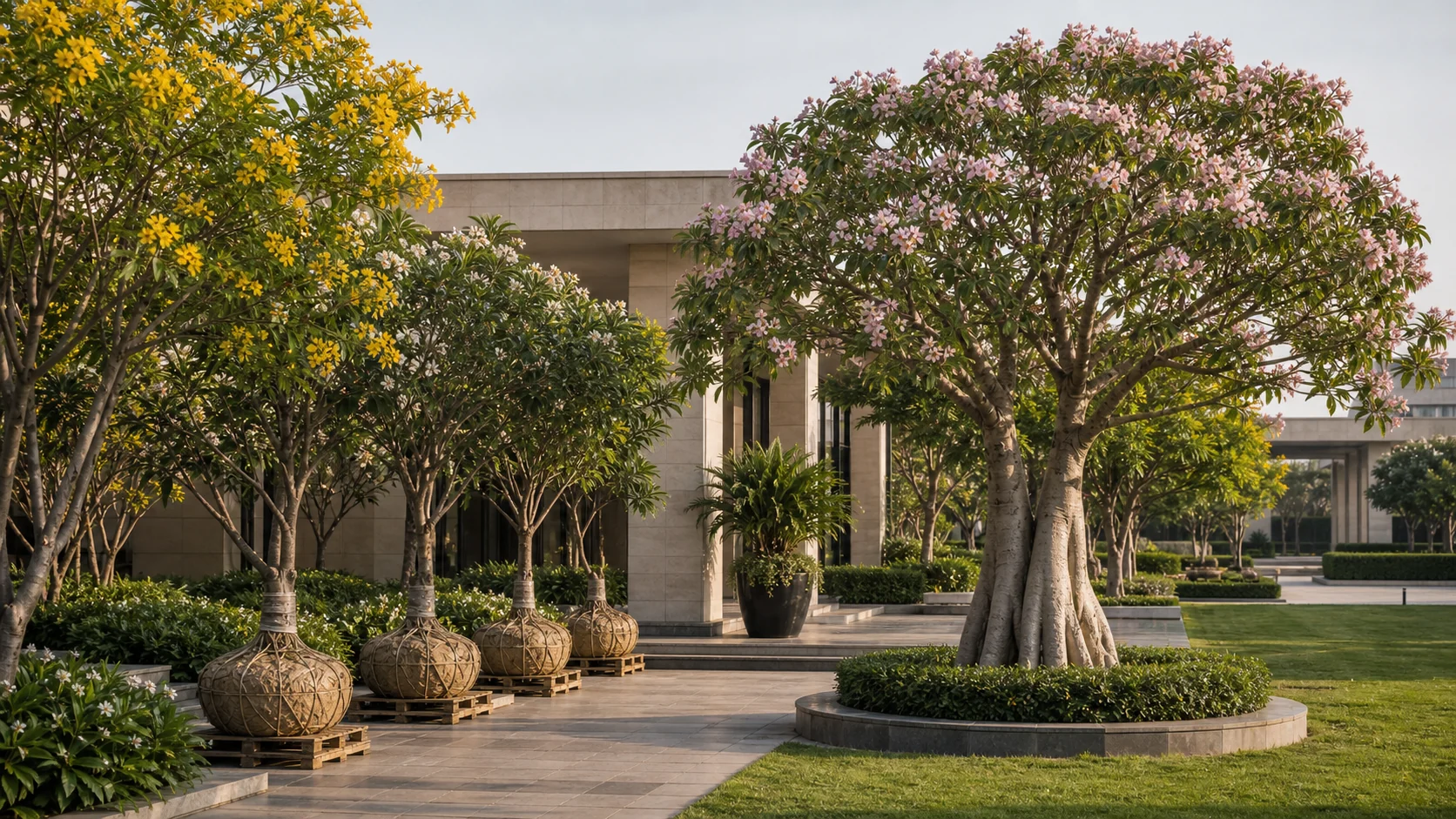
Visual context for placement, scale, handling, and landscape integration.
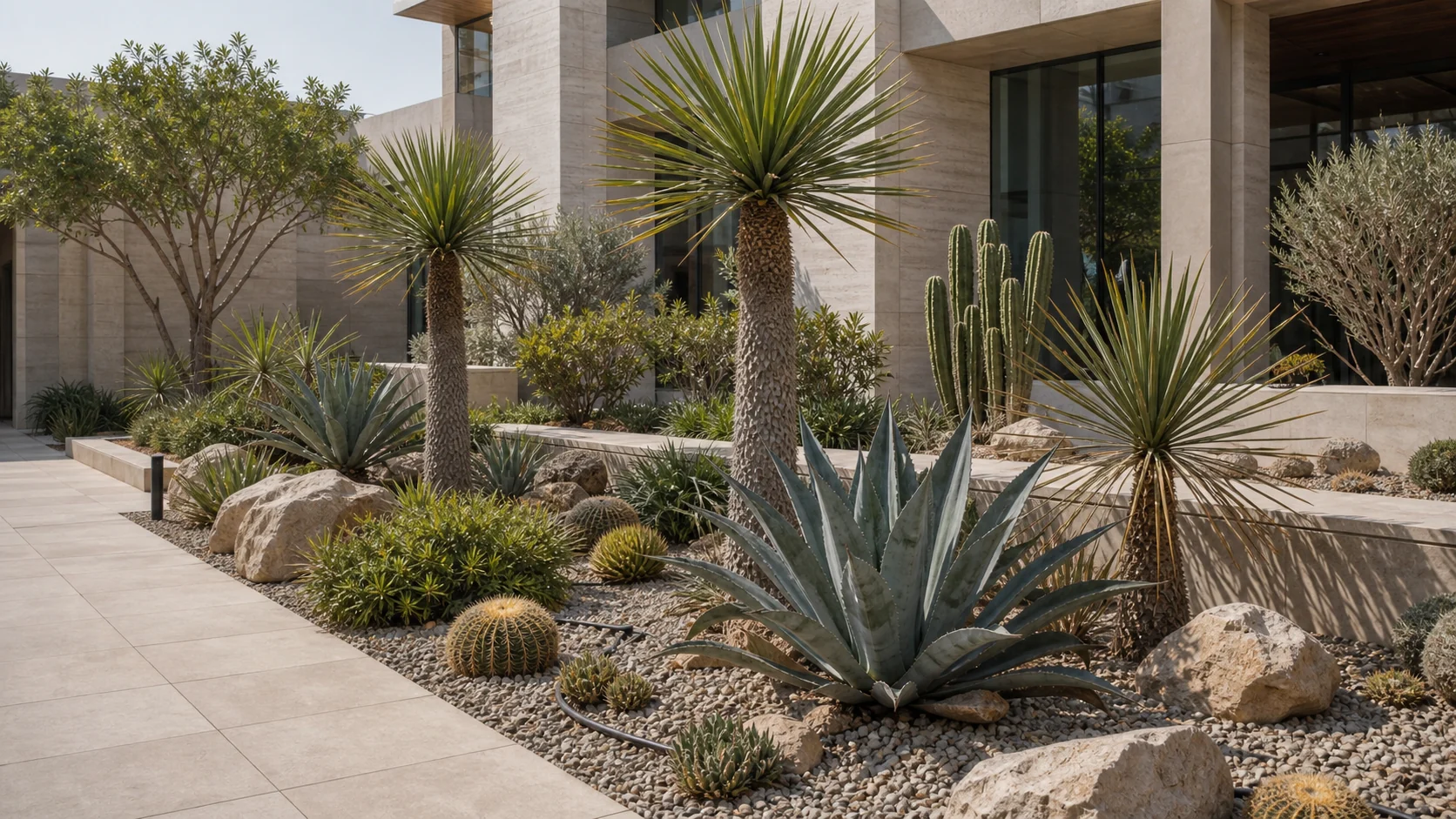
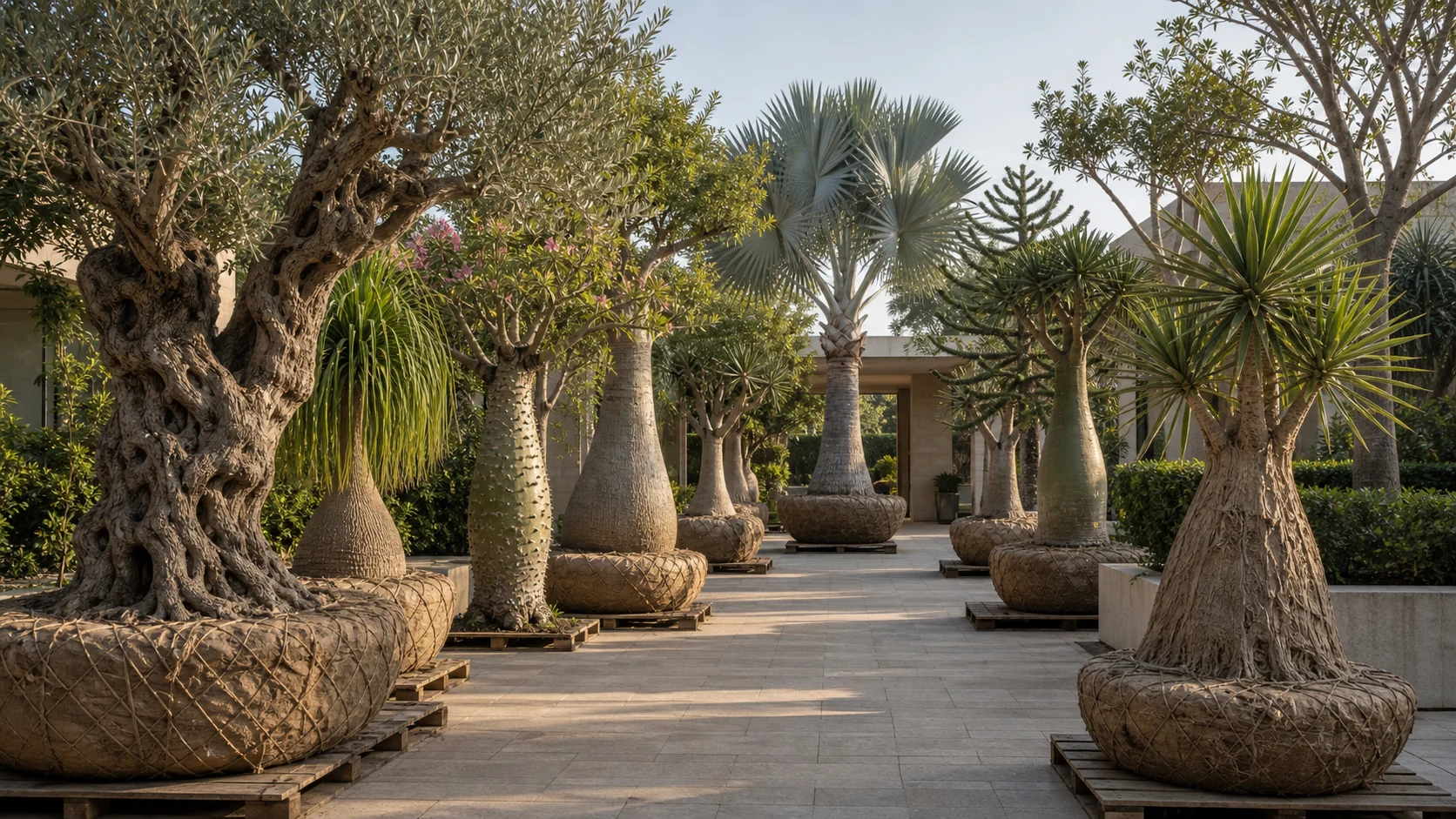
Section
Where it's used in premium projects
Giant moringa fits conservation-led collector masterplans — botanical gardens, education-focused resorts, and private xeric estates where a stout tall bottle trunk carries both sculptural and storytelling weight. The narrative includes extinction in the wild and ex-situ survival — procurement must document ethical cultivation origin alongside trunk photos. Scale exceeds M. drouhardii when a taller stout bottle is required.
Section
Climate & site suitability in India
Same dry caudex rules as drouhardii but plan vertical clearance — hildebrandtii grows taller stout bottles. Free-draining mounds on arid resort pads; fail on monsoon clay without rebuild. Dry-deciduous bare seasons apply — lighting should showcase bottle trunk year-round.
Section
Sourcing & acclimatisation
Wild origin is unacceptable — request nursery propagation documentation and chain-of-custody for conservation-grade stock. [Unverified: India-accessible ethical hildebrandtii channels.] Verify tall stout bottle versus drouhardii pale compact bottle on dated nursery photography.
Section
Installation (pit, soil, drainage, bracing)
Taller bottles may need crane on large grades — still protect smooth caudex bark. Raised planting with gravel underlay mandatory. Rigging plans differ from drouhardii due to height — specify in method statements.
Section
Establishment & AMC
Dry establishment with caudex collar monitoring — rot ends conservation value and project story. AMC logs bottle circumference and any soft spots quarterly in early years. Include conservation provenance in handover documentation for institutional clients.
Section
Cost drivers
Explore
Related
Related
Related links
Services, segments, cost, and proof.
- Softscape & horticulture
- Irrigation & water management
- Landscape maintenance (AMC)
- Hotel & resort landscaping
- Luxury resort & spa landscaping
- Mall & retail landscaping
- Corporate campus landscaping
- Projects
- Commercial landscaping cost guide
- Pricing drivers (imported trees)
- Import compliance workflow
- Request a site assessment
- What is the conservation story for giant moringa?
- Extinct in the wild in Madagascar but persists in cultivation — projects should treat documented nursery propagation as a specification requirement.
- How does the bottle trunk compare to M. drouhardii?
- Hildebrandtii is taller with a stout giant bottle; drouhardii is paler and more compact — different scale on the same dry pad.
- How does it compare to drumstick moringa?
- Oleifera is fast edible pole tree without caudex; hildebrandtii is slow sculptural conservation bottle — unrelated landscape use despite shared genus.
- Why does ethical sourcing matter on BOQ?
- Wild-extinct status means reputable projects require cultivation-origin proof — treat traceability as deliverable alongside trunk grade.
- What drainage prevents caudex rot?
- Raised free-draining planting and dry-season discipline at stout bottle flare — same failure mode as other xeric caudices.
- What CITES or quarantine steps apply?
- Madagascar-origin conservation plants may trigger additional review — align nursery paperwork with import compliance early (informational, not legal advice).
- How should hildebrandtii quotations be evaluated?
- Match propagation documentation, stout bottle photos, rigging scope, and conservation narrative support — not generic moringa sapling rates.