
Nasturtium tree
Nasturtium tree / Coral-leaf macaranga (Macaranga grandifolia)
Macaranga grandifolia delivers big rounded peltate nasturtium-like leaves on a fast soft-wooded tropical tree — specified for lush bold-foliage fill and screening where designers want immediate tropical mass, with honest planning for pioneer biology, cold sensitivity, and a shorter landscape lifespan than hardwood specimens.
Spec
At a glance
- Botanical name
- Macaranga grandifolia
- Family
- Euphorbiaceae
- Common names
- Nasturtium tree, coral-leaf macaranga
- Origin
- South-East Asia, New Guinea
- Plant type
- Fast-growing soft-wooded tropical tree
- Mature height
- Often 6–10 m in warm humid sites
- Trunk / form
- Large peltate nasturtium-like leaves; soft lush crown
- Crown spread
- Moderate to wide when young
- Growth rate
- Fast in humid tropics
- Light
- Full sun to partial shade when young
- Water needs
- Moderate to high in establishment
- India climate suitability
- Humid tropical India; poor in cool dry interiors without irrigation
- Cold/heat & salt/wind tolerance
- Cold-sensitive; soft leaves desiccate in dry heat; not salt specialist
- Typical supply size
- Young fast-fill specimens 2–4 m [Unverified]
- Lead time (sourcing)
- [Unverified] confirm species versus M. tanarius on nursery tags
- Install considerations
- Wind shelter for soft leaves; plan replacement horizon in long-life masterplans
- Maintenance level
- Moderate — litter, self-seed monitoring, structural pruning as wood softens
- Cautions
- Soft-wooded and relatively short-lived; can self-seed; tropical/cold-sensitive
Gallery
Specimen visual guide
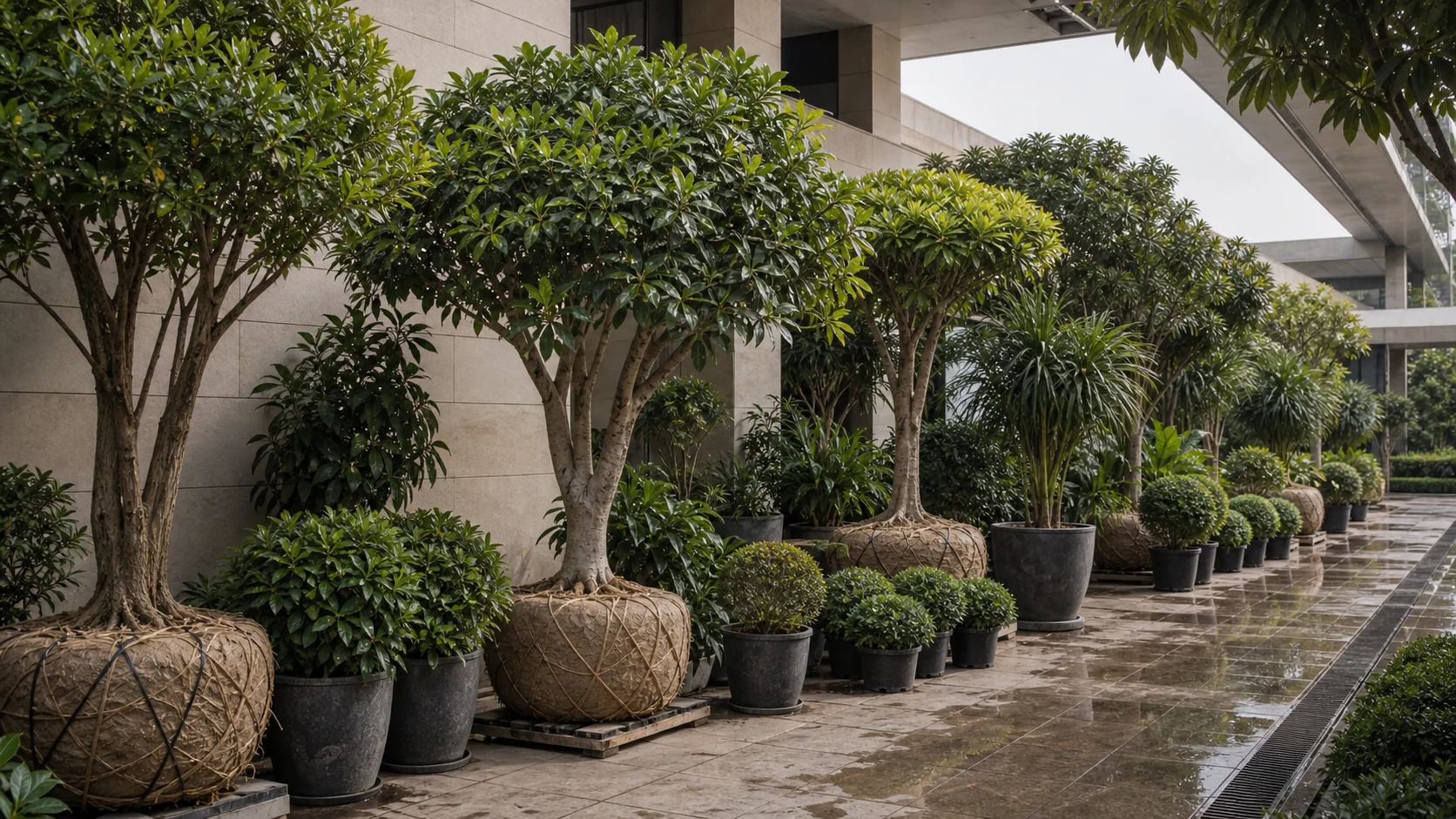
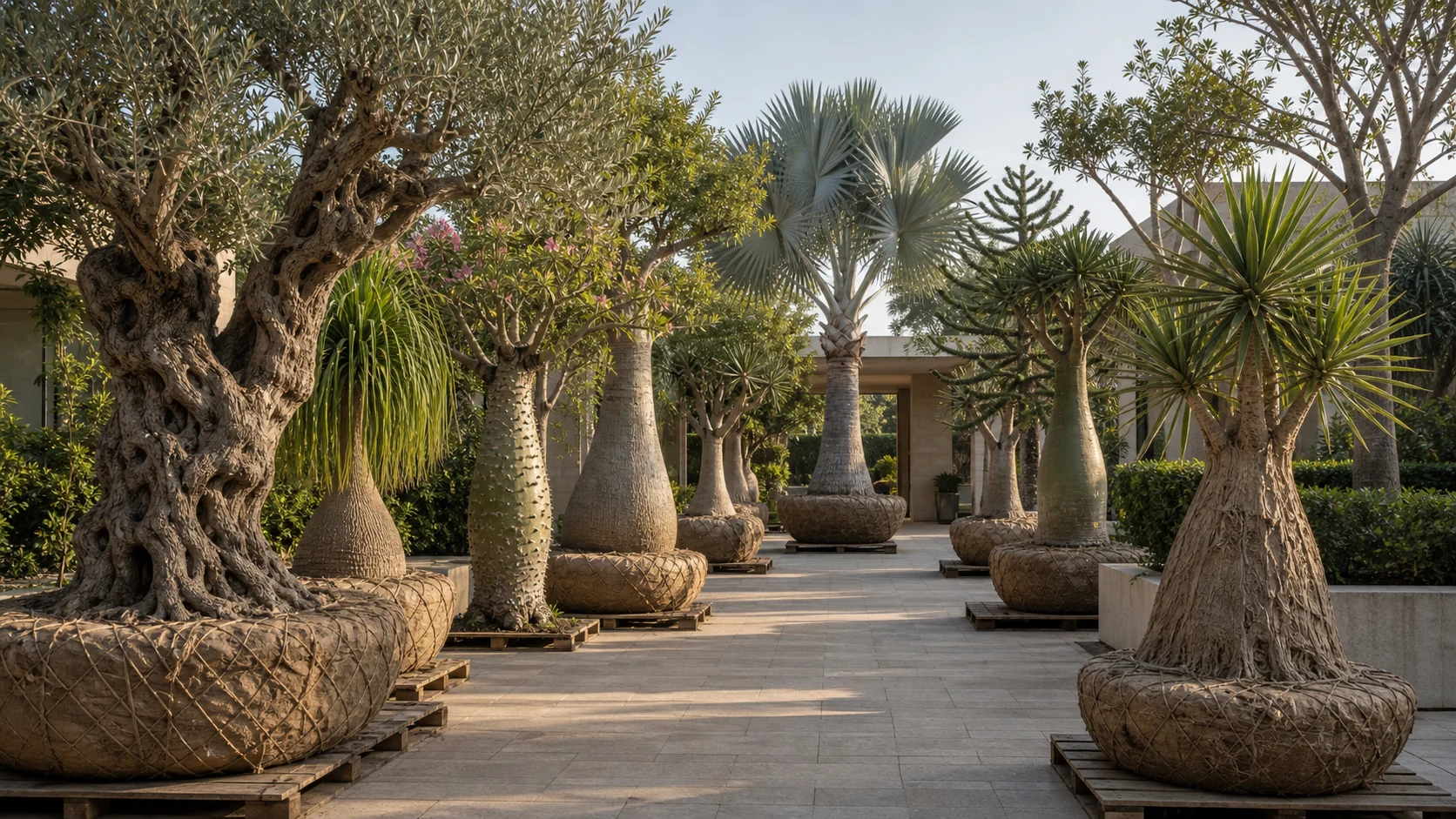
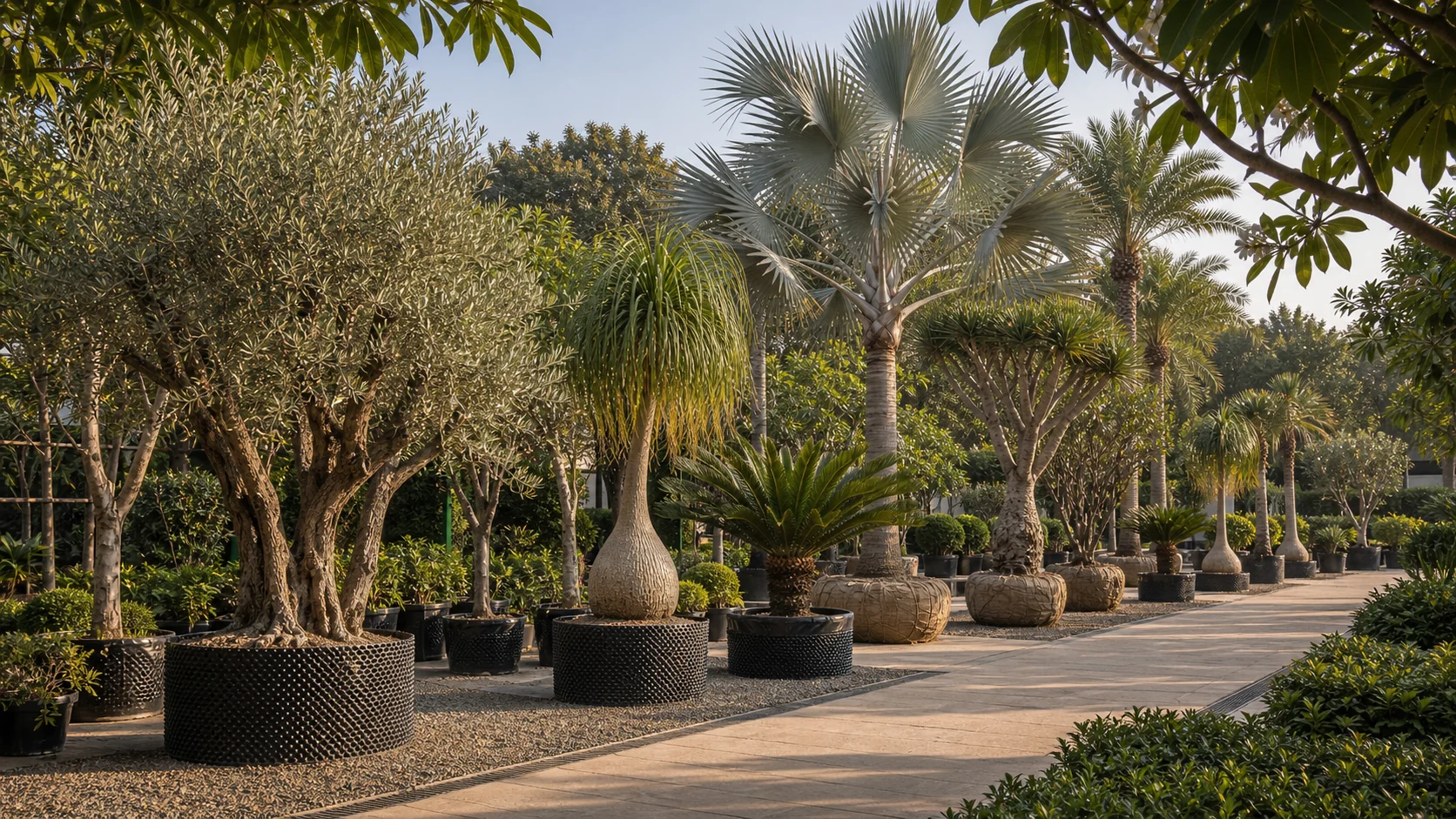
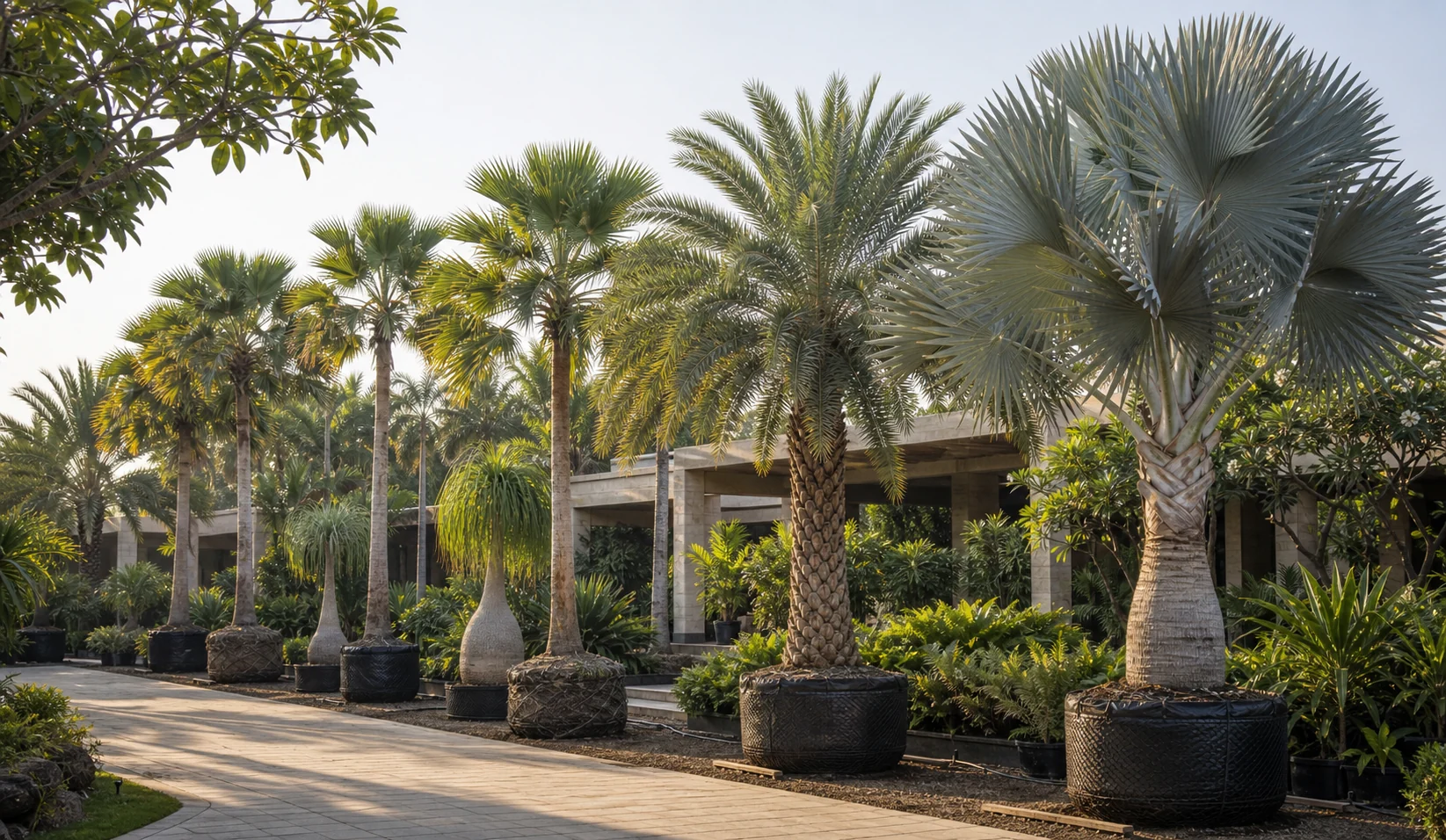
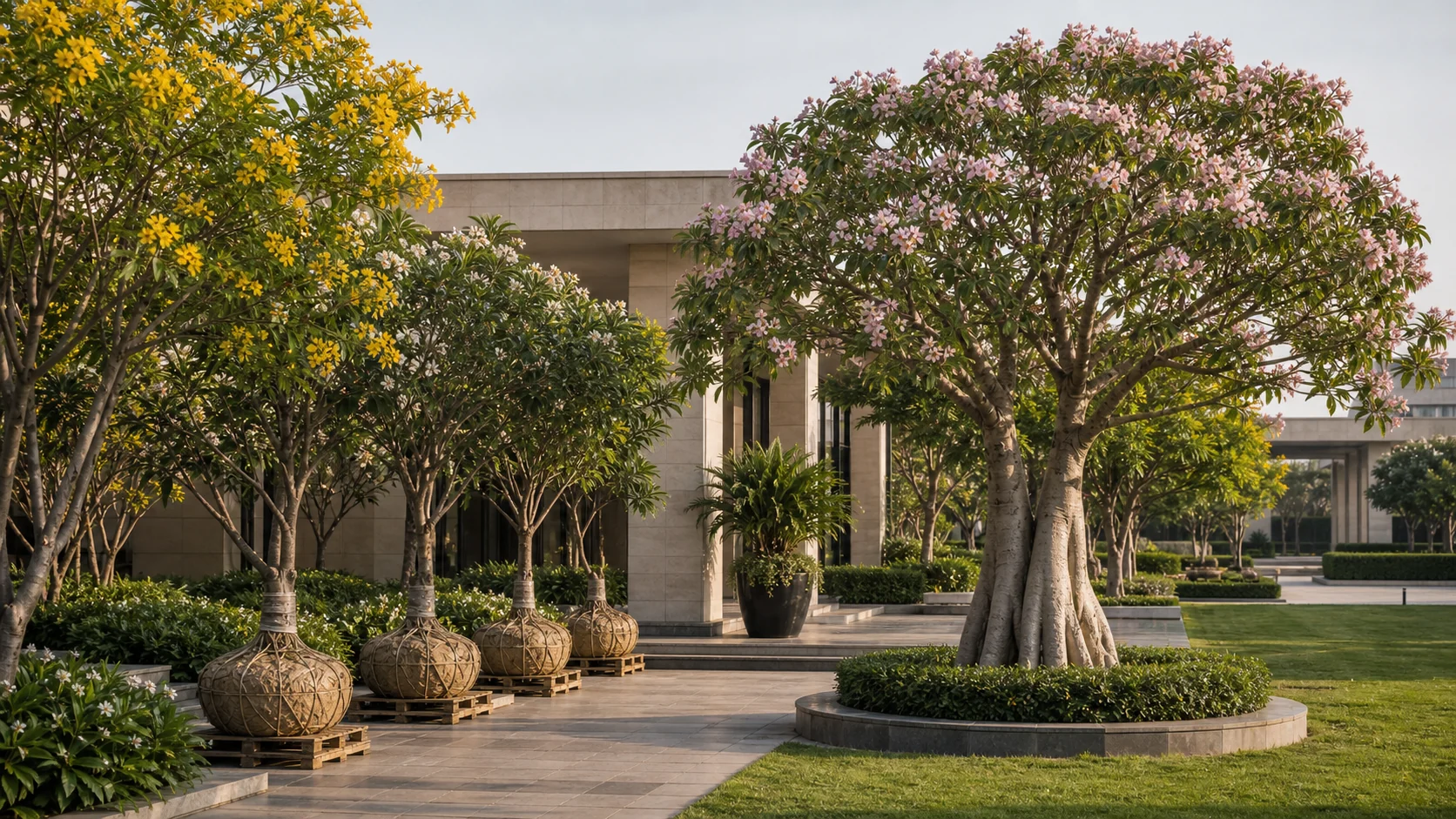
Visual context for placement, scale, handling, and landscape integration.
Section
Where it's used in premium projects
Macaranga grandifolia fills resort back-of-house screens, event-lawn tropical edges, and lush understory bands where large peltate leaves must read immediately — not as a century shade legacy tree. Designers pair it with slower permanent specimens knowing the fast-fill role.
Section
Climate & site suitability in India
Humid coasts and tropical metros outperform Delhi NCR without frost protection and humidity. Soft leaves shred in dry wind corridors on high terraces. Self-seeding appears on irrigated campuses — document management policy if ownership wants native-only understory long term.
Section
Sourcing & acclimatisation
Verify Macaranga grandifolia versus M. tanarius on tags — leaf size differs materially on masterplans. [Unverified: typical nursery height for fast-fill orders.] Buy on leaf peltate scale; fast growth means BOQ height bands shift within one season without AMC shape control.
Section
Installation (pit, soil, drainage, bracing)
Standard drainage pits despite fast growth — monsoon waterlogging snaps soft stems. Light bracing on exposed coastal drops until roots anchor. Do not promise 30-year structure; engineer successor planting pits in masterplans if required.
Section
Establishment & AMC
AMC thins crowded stems on soft wood, sweeps large leaf litter on guest paths, and monitors self-seeded seedlings in irrigated beds. Compare lifespan expectations to permanent shade trees in handover docs — replacement is a design choice, not a failure headline.
Section
Cost drivers
Explore
Related
Related
Related links
Services, segments, cost, and proof.
- Softscape & horticulture
- Irrigation & water management
- Landscape maintenance (AMC)
- Hotel & resort landscaping
- Luxury resort & spa landscaping
- Mall & retail landscaping
- Corporate campus landscaping
- Projects
- Commercial landscaping cost guide
- Pricing drivers (imported trees)
- Import compliance workflow
- Request a site assessment
- What are the nasturtium-like leaves on Macaranga grandifolia?
- Large rounded peltate leaves resemble nasturtium foliage at tree scale — specify leaf size on nursery photos for fast-fill briefs.
- Why is fast growth a trade-off?
- Soft wood and pioneer biology deliver quick lush mass but shorter landscape lifespan than hardwood shade trees — plan replacement or nurse-tree role honestly.
- How does grandifolia differ from Macaranga tanarius?
- Grandifolia carries larger peltate leaves at bolder scale; tanarius is the smaller fast pioneer parasol-leaf tree — verify tags on mixed nursery lists.
- Can it survive Bangalore or Delhi courts?
- Only with frost-free humid microclimate and irrigation — default to true tropical coasts unless horticultural review approves inland engineering.
- Is self-seeding a maintenance issue?
- Yes on irrigated campuses — AMC should state seedling removal policy if designers want controlled understory.
- What import compliance applies?
- Live material follows India plant quarantine workflow (informational, not legal advice).
- How should BOQs be compared?
- Match verified species ID, height band, establishment weeks, and replacement-horizon scope — not generic fast-screen pricing.