
Red hot poker Lola
Red hot poker 'Lola' (Kniphofia 'Lola')
Kniphofia 'Lola' is the coral-to-orange torch perennial designers use beside grasses for height contrast — not a true grass, but grouped in ornamental-grass palettes for its vertical flower spikes. It needs sharp drainage and deadheading to keep clumps tidy through Indian summer wet cycles.
Spec
At a glance
- Botanical name
- Kniphofia 'Lola' (cultivar)
- Family
- Asphodelaceae
- Type
- Clumping perennial (torch lily)
- Origin
- Hybrid — nursery selection
- Mature height & spread
- Foliage 40–60 cm; flower spikes to 90–110 cm
- Plume / flower
- Coral-orange torch spikes late spring–summer
- Foliage colour
- Strap-like grey-green leaves
- Evergreen / deciduous / annual
- Semi-evergreen — may die back in cold hill stations
- Growth rate
- Moderate clump expansion
- Light
- Full sun for best flower colour
- Water
- Moderate; rot in waterlogged monsoon pits
- India climate suitability
- Best in Pune, Bangalore, hill terraces with drainage; poor in heavy clay without amendment
- Hardiness
- Heat OK with drainage; protect from waterlogging
- Invasiveness / containment
- Low — clumping; not rhizome invasive
- Typical supply
- Pot clumps #3–#5 [Unverified]
- Annual maintenance
- Deadhead spent torches; divide crowded clumps every 3–4 years
- Cautions
- Needs drainage; spikes flop in shade; not a grass for mass erosion control
Gallery
Specimen visual guide
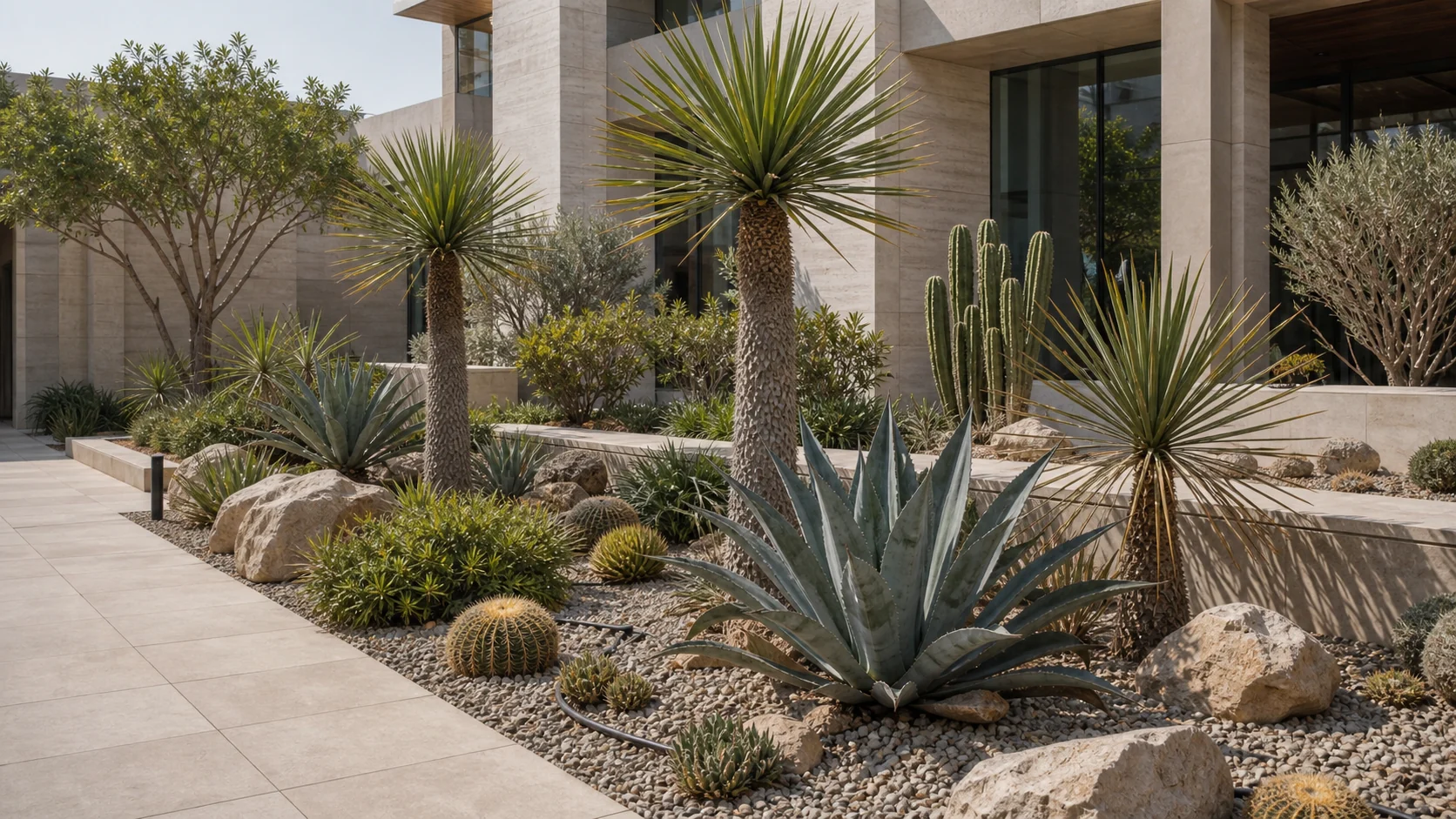
Visual context for placement, scale, handling, and landscape integration.
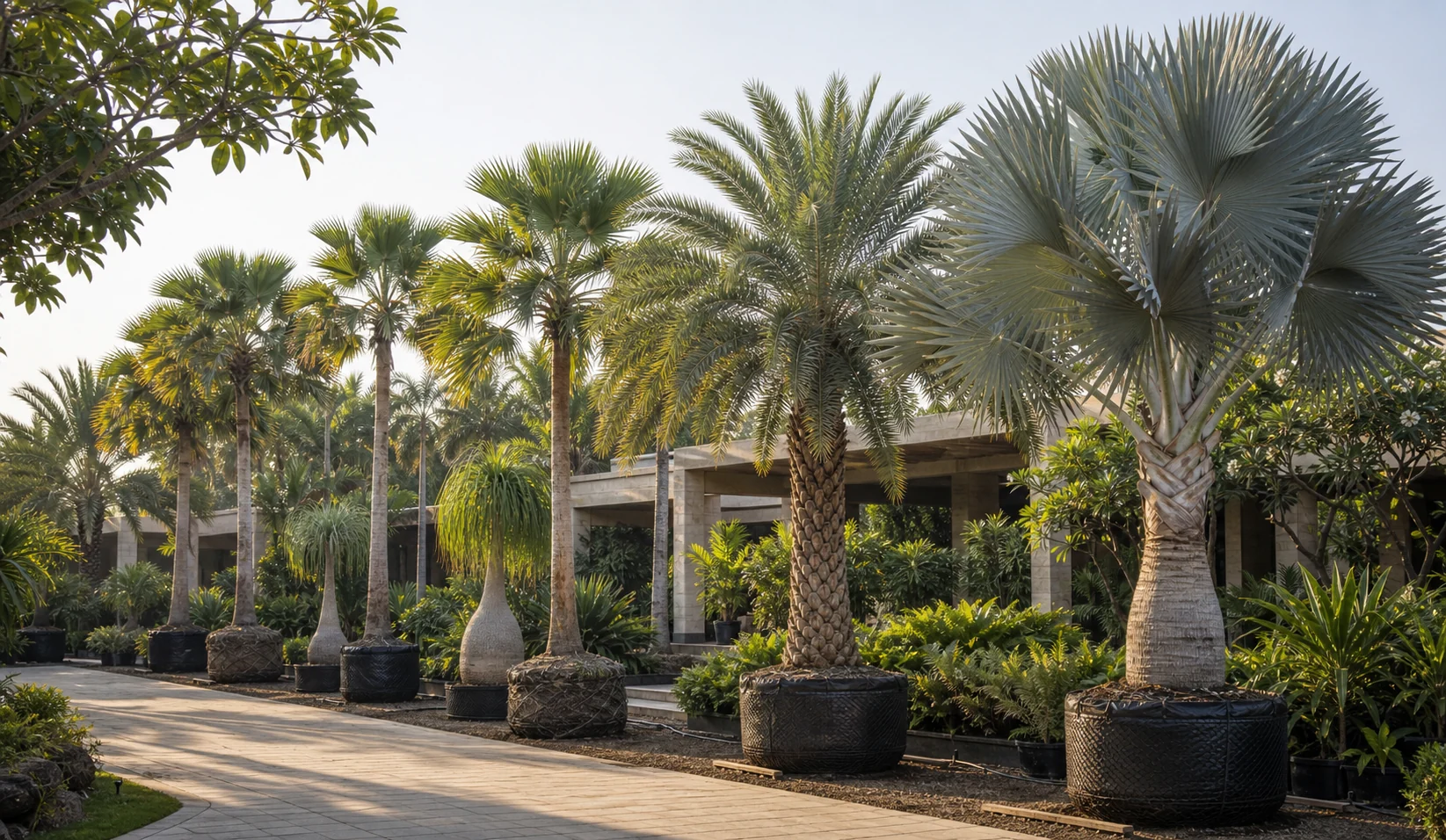
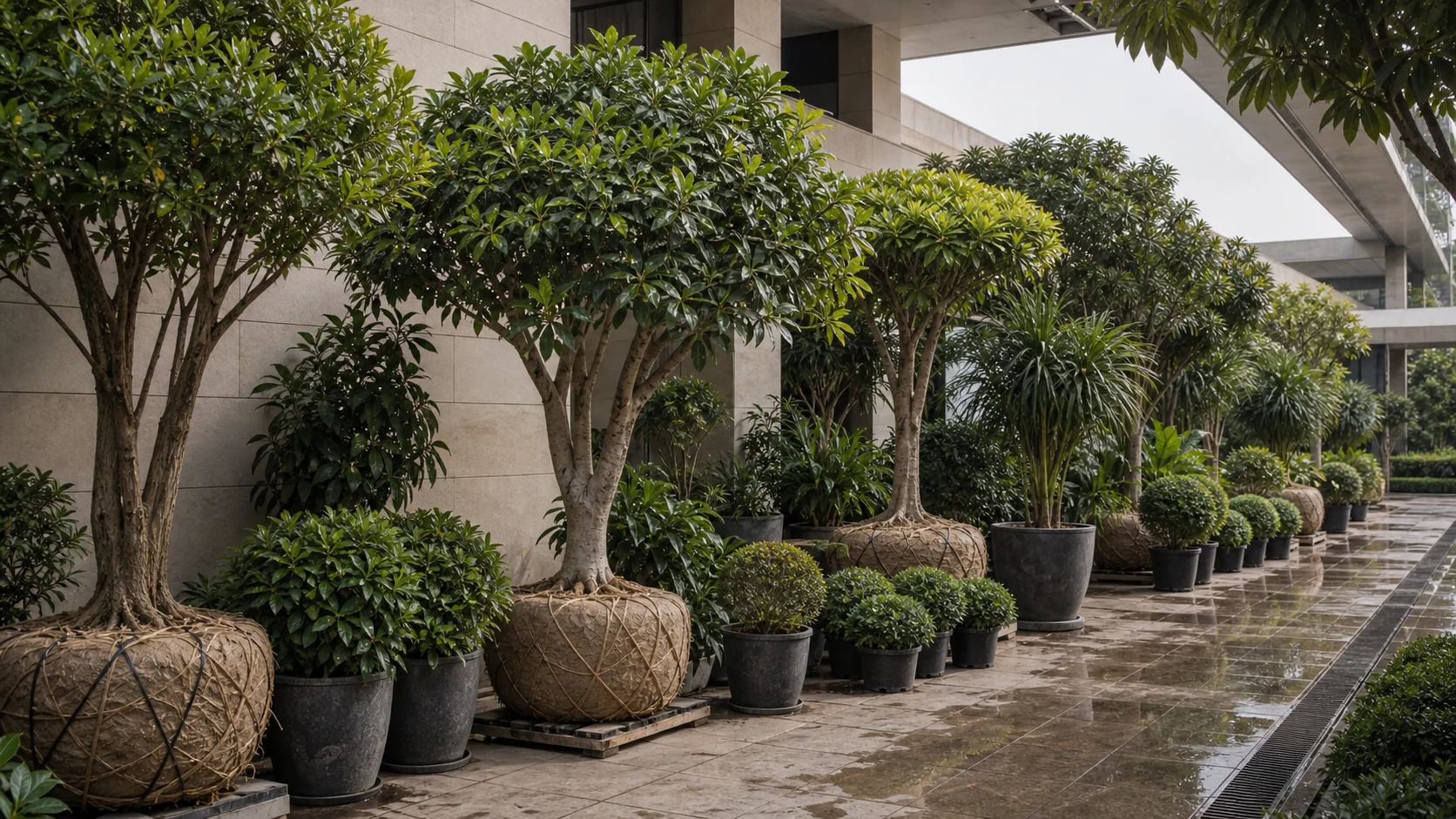
Section
Where it's used in premium projects
Lola torches punctuate grass matrices at boutique hotel entries and winery-style lawns — pair with muhly or ruby grass for colour layering. Specify as a perennial focal, not a screen plant.
Section
Climate & site suitability in India
Flowers fade in deep humid shade — give open morning sun. Monsoon waterlogging rots crowns; raise beds or use gritty mixes on terraces. Coastal salt is usually tolerable if drainage holds.
Section
Sourcing & acclimatisation
Verify cultivar label — 'Lola' colour should read coral-orange, not generic red-hot poker mixes. [Unverified: India nursery availability vs imported liners.]
Section
Installation (planting, containment, drainage)
Plant in amended gritty loam on mounds; crown at grade, not buried. Space 45–60 cm for mature torch display without overcrowding. Do not install in bottomless clay pits that hold monsoon water.
Section
Establishment & AMC
Remove spent spikes to encourage repeat bloom on vigorous clumps. Divide when centre dies out — AMC should flag hollow crowns after year four. Light feed after flowering, not heavy nitrogen that suppresses torches.
Section
Cost drivers
Explore
Related
Related
Related links
Services, segments, cost, and proof.
- Softscape & horticulture
- Irrigation & water management
- Landscape maintenance (AMC)
- Hotel & resort landscaping
- Luxury resort & spa landscaping
- Mall & retail landscaping
- Corporate campus landscaping
- Projects
- Commercial landscaping cost guide
- Pricing drivers (imported trees)
- Import compliance workflow
- Request a site assessment
- Is Kniphofia 'Lola' a grass?
- No — a clumping Asphodelaceae perennial with torch flowers; it is grouped with grass palettes for height and texture contrast only.
- What colour are Lola flower spikes?
- Coral to orange torches on tall stems — verify cultivar tag at delivery; generic kniphofia mixes may differ.
- How wide should Lola clumps be spaced?
- Roughly 45–60 cm centre-to-centre for mature torches without crown rot from overcrowding.
- Why do kniphofia crowns rot in monsoon?
- Waterlogged clay — mound planting, gritty media, and deadheading keep crowns dry and flowering.
- When do Lola torches bloom in India?
- Late spring into summer on sun-grown clumps — shade delays or prevents strong colour.
- Does Lola need import paperwork?
- Usually domestic nursery stock; imported liners still need standard phytosanitary and quarantine steps (informational, not legal advice).
- How should Lola BOQs be compared?
- Match cultivar authenticity, mound drainage scope, and deadhead AMC — not fountain grass plug pricing.