
Philippine fig
Philippine fig / Palm-like fig (Ficus pseudopalma)
Ficus pseudopalma delivers an erect, mostly unbranched stem topped by a rosette of long leaves — a palm-like silhouette in a small fig package — specified as a novelty vertical accent in tight courtyards, grouped planting, and containers where designers want palm rhythm without true palm scale.
Spec
At a glance
- Botanical name
- Ficus pseudopalma
- Family
- Moraceae
- Common names
- Philippine fig, palm-like fig
- Origin
- Philippines
- Plant type
- Small evergreen tree with palm-like habit
- Mature height
- Often 2–4 m in landscape use
- Trunk / form
- Erect unbranched stem; rosette of long leaves at apex
- Crown spread
- Narrow vertical accent; modest spread
- Growth rate
- Moderate in warm humid sites
- Light
- Bright partial to full sun when acclimated
- Water needs
- Moderate; avoid prolonged drought on containers
- India climate suitability
- Frost-free tropical and warm coastal India; poor in cool dry winters without protection
- Cold/heat & salt/wind tolerance
- Cold-sensitive; moderate wind tolerance; not primary salt specialist
- Typical supply size
- 1.5–2.5 m rosette stems on accent BOQs [Unverified]
- Lead time (sourcing)
- [Unverified] uncommon — verify nursery identity before design freeze
- Install considerations
- Container drain or pit drainage; group for rhythm; frost protection inland
- Maintenance level
- Low to moderate — rosette cleaning, cold protection inland
- Cautions
- Tropical/cold-sensitive; modest scale; verify not mislabelled palm seedling
Gallery
Specimen visual guide
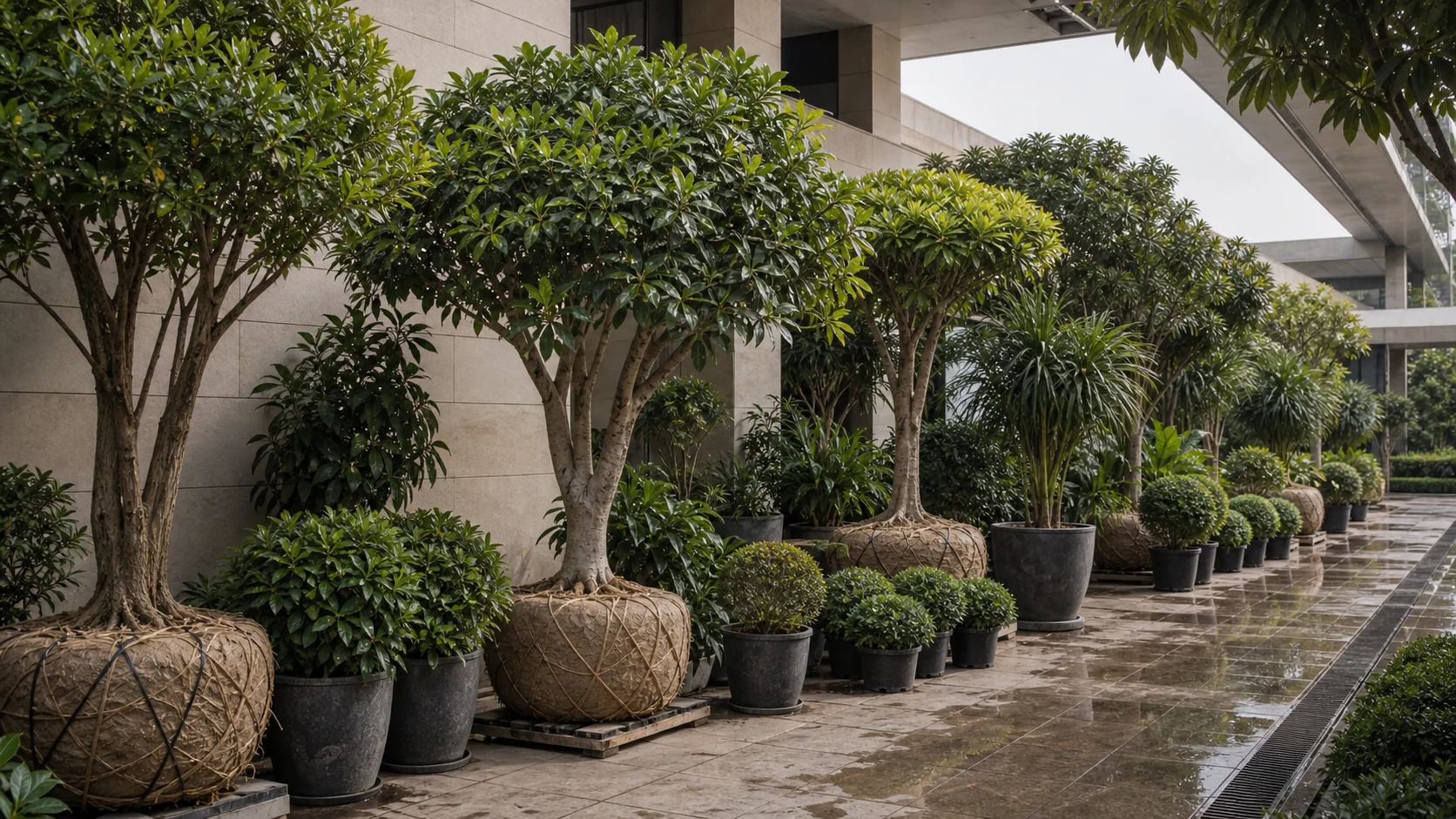
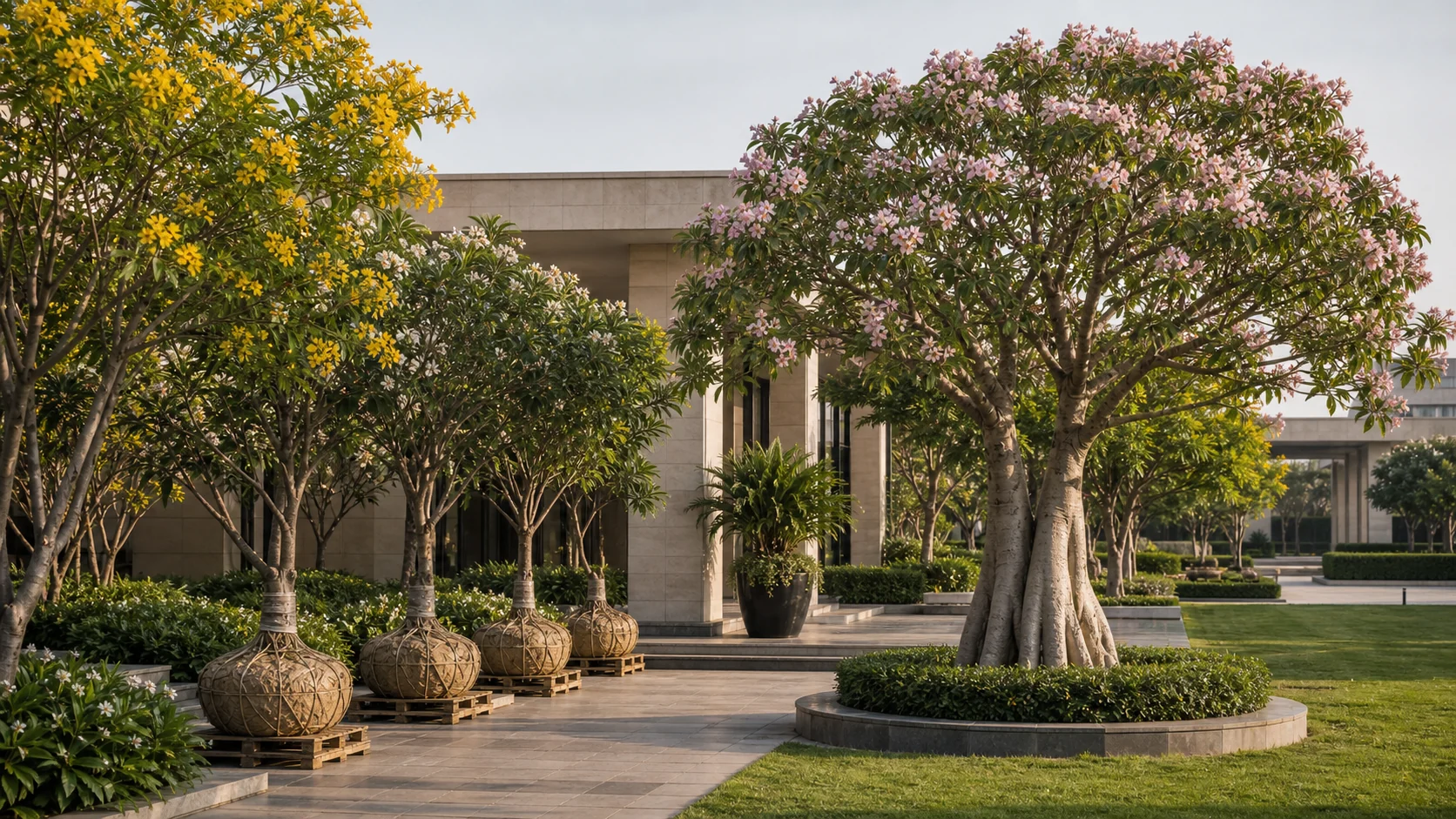
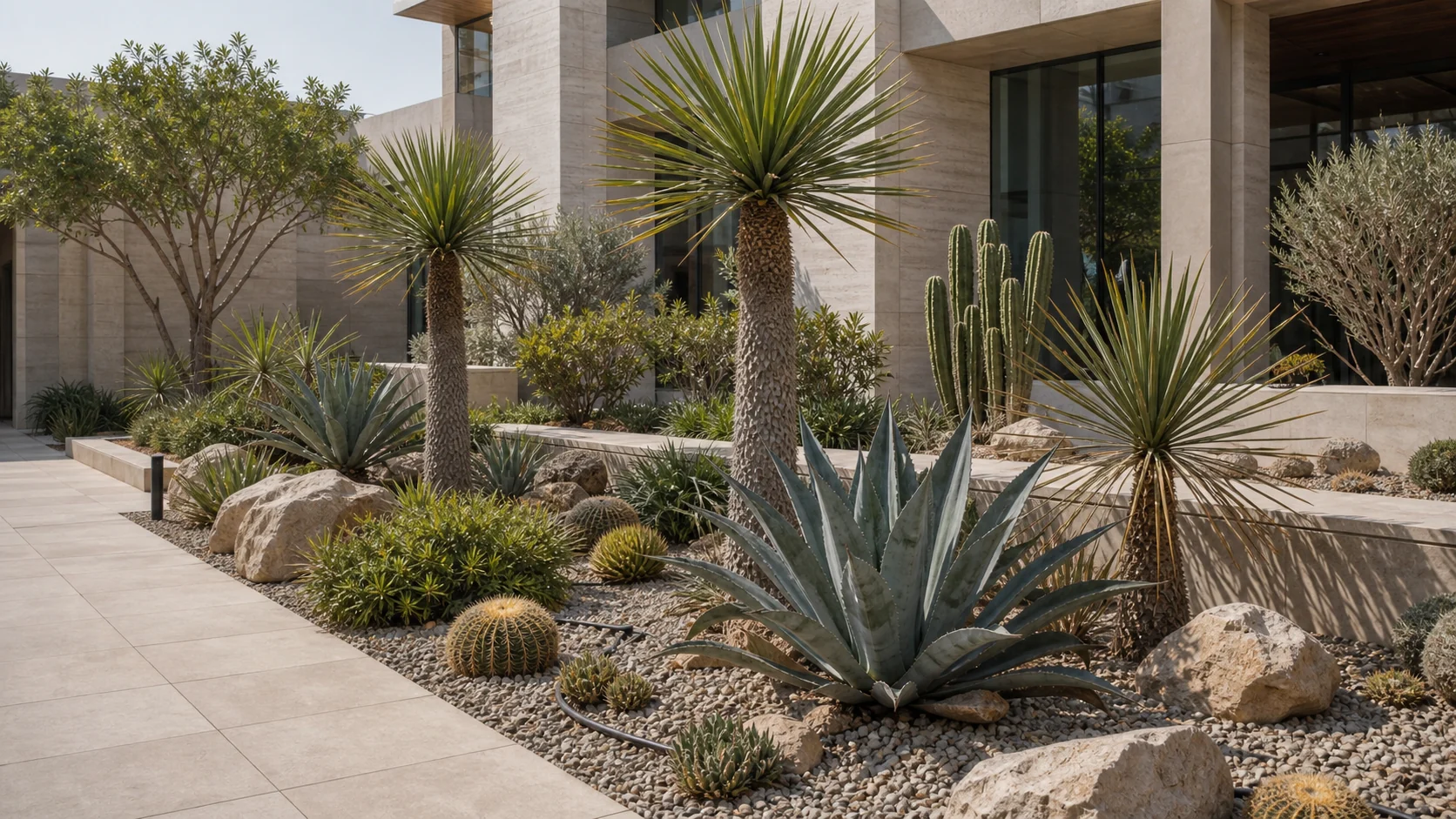
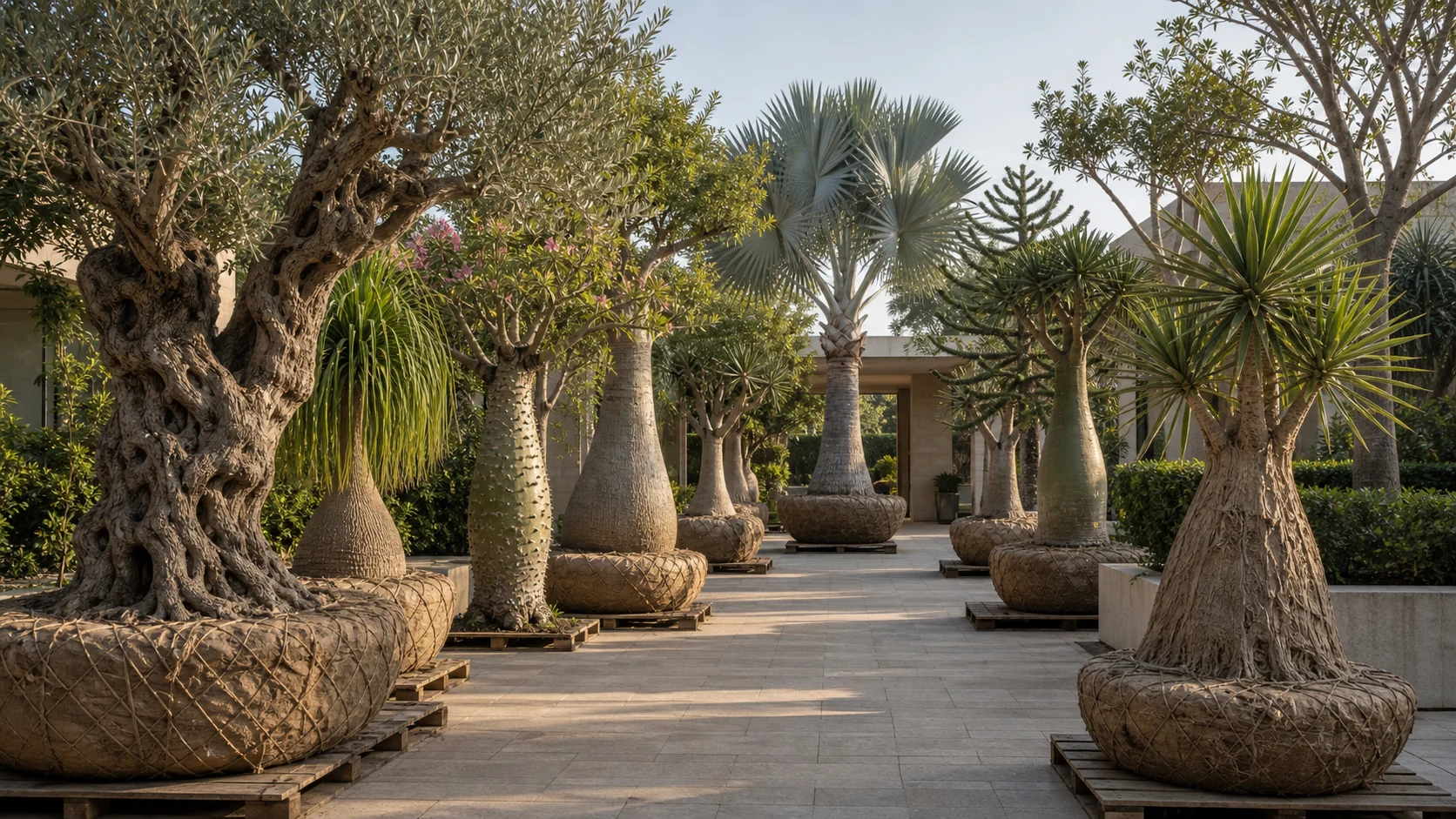
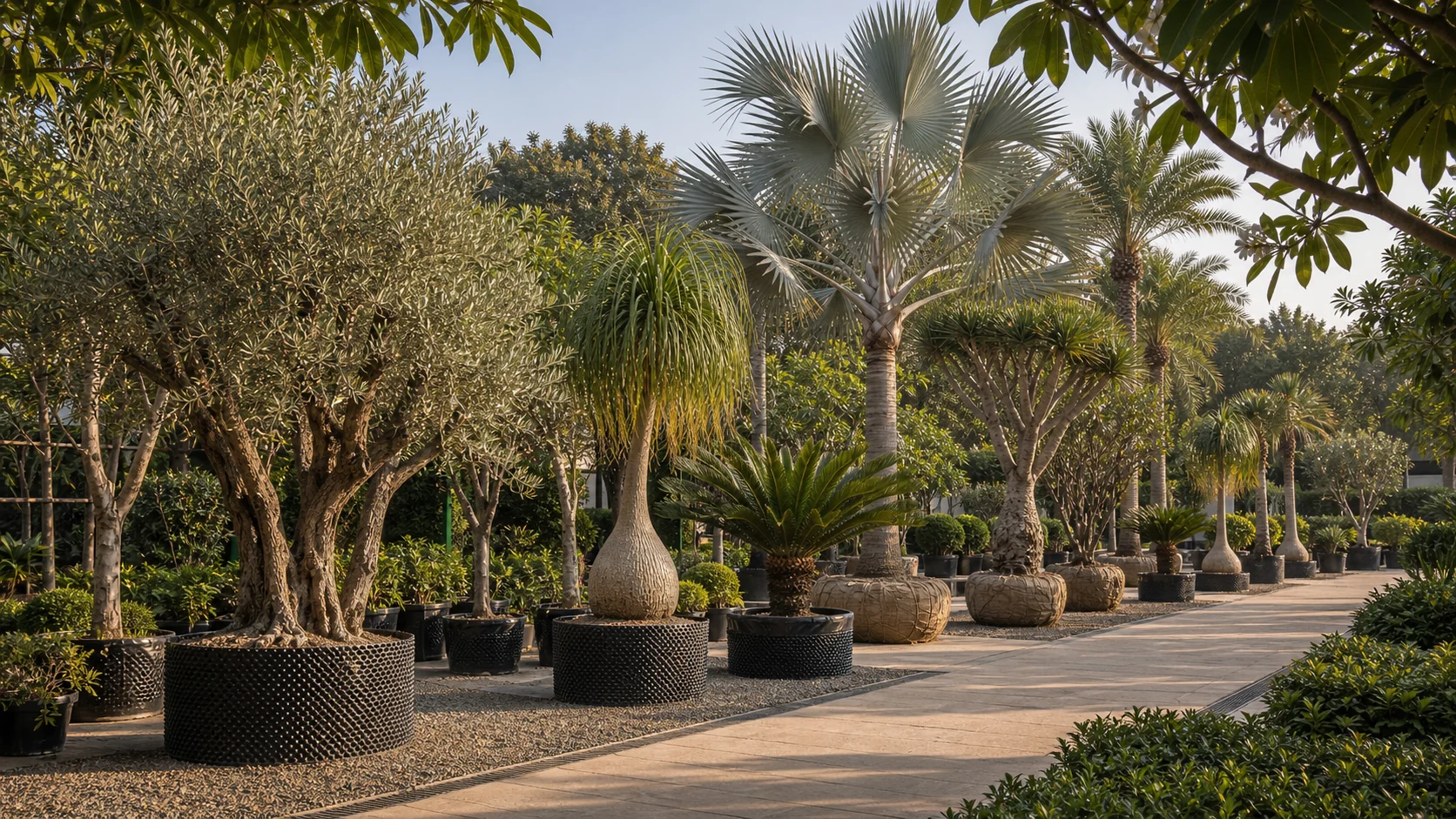
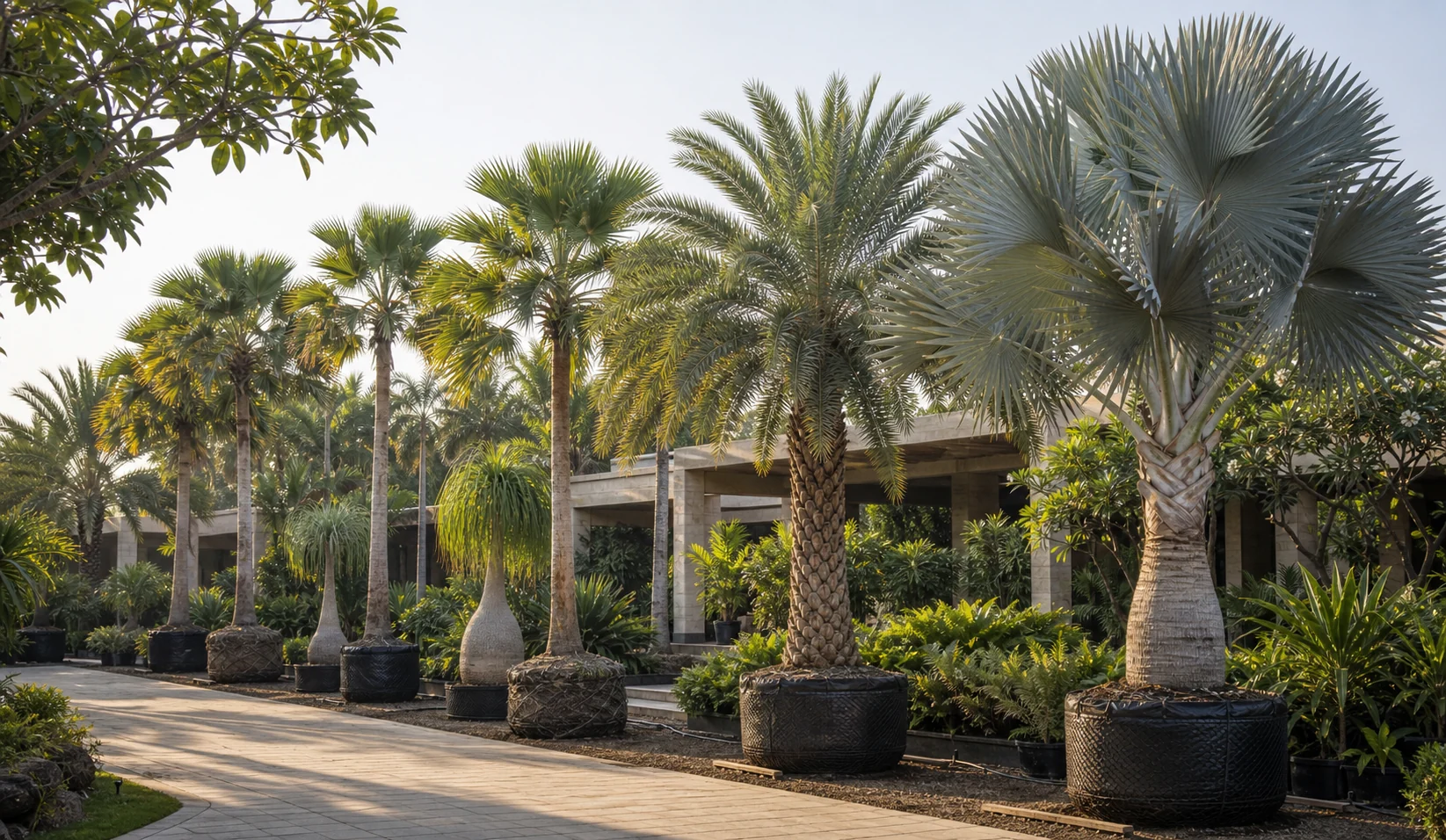
Visual context for placement, scale, handling, and landscape integration.
Section
Where it's used in premium projects
Landscape teams specify Ficus pseudopalma when a court or pool edge needs vertical palm-like accents without committing full palm pits — grouped rosettes in boutique resort courts, container rows on terraces, and novelty entries where the fig silhouette reads as architectural vertical foliage.
Section
Climate & site suitability in India
Frost-free humid metros and coastal resorts suit outdoor planting; Delhi NCR winters require protection or indoor/container retreat. Modest scale means it is not a shade tree — specify for accent height bands, not canopy cover. Dry inland heat stresses rosette tips without irrigation.
Section
Sourcing & acclimatisation
Uncommon in trade — confirm botanical identity versus generic “palm-like” fig labels on nursery lists. [Unverified: domestic specialist holdings versus import.] Buy on rosette fullness and stem straightness; grouped orders should match height bands for rhythm.
Section
Installation (pit, soil, drainage, bracing)
Containers need free drainage — rosette figs fail on saucers holding water. In-ground pits still require drainage through monsoon. Light staking only if stem is soft from nursery shade; rosette weight is moderate compared to true palms.
Section
Establishment & AMC
AMC removes spent rosette leaves cleanly, monitors container moisture on terraces, and applies frost cloth inland on cold snaps. Replace grouped specimens that lose apical rosette to maintain design rhythm — single-stem form does not recover branched architecture quickly.
Section
Cost drivers
Explore
Related
Related
Related links
Services, segments, cost, and proof.
- Softscape & horticulture
- Irrigation & water management
- Landscape maintenance (AMC)
- Hotel & resort landscaping
- Luxury resort & spa landscaping
- Mall & retail landscaping
- Corporate campus landscaping
- Projects
- Commercial landscaping cost guide
- Pricing drivers (imported trees)
- Import compliance workflow
- Request a site assessment
- Why does Ficus pseudopalma look like a palm?
- Mostly unbranched erect stems carry a terminal rosette of long leaves — the palm-like silhouette is the design hook; it is still a fig with different root and scale behaviour than true palms.
- Is it suitable for small courtyards and containers?
- Yes at modest height — specify grouped rhythm for impact; single stems suit tight niches where full palms will not fit pit or budget.
- How cold-sensitive is Ficus pseudopalma in India?
- Treat as frost-free tropical — inland north-India winters need protection or indoor holdover; do not specify open courts in cold pockets without horticultural review.
- Can it substitute for Ficus lyrata in a lobby?
- Different brief — pseudopalma is a narrow vertical rosette accent; lyrata delivers large violin leaves at sculptural lobby scale — match species to space and silhouette.
- What should nursery submittals verify?
- Botanical name on tags and rosette stem form — mislabelled juvenile palms or unrelated ficuses appear on generic tropical lists.
- What import compliance applies?
- Live material follows India plant quarantine workflow (informational, not legal advice).
- How should BOQs be compared?
- Match stem height band, rosette fullness, group consistency, and container versus in-ground scope — not generic ficus accent pricing.