
Kapiak fig
Kapiak / Dinner-plate fig (Ficus dammaropsis)
Ficus dammaropsis is specified for spectacular enormous pleated quilted leaves that can reach half a metre — a true conversation plant for shaded humid courtyards and atrium-adjacent courts where the brief is dramatic foliage under canopy, not sun-baked terrace planting.
Spec
At a glance
- Botanical name
- Ficus dammaropsis
- Family
- Moraceae
- Common names
- Kapiak, dinner-plate fig, Papua fig
- Origin
- New Guinea highlands
- Plant type
- Large shrub to small tree
- Mature height
- Often 3–6 m in landscape use
- Trunk / form
- Enormous pleated quilted leaves; open habit
- Crown spread
- Moderate; leaf mass dominates silhouette
- Growth rate
- Moderate in ideal humidity and shade
- Light
- Bright shade to filtered sun — scorches in harsh direct heat
- Water needs
- Moderate to high; steady humidity preferred
- India climate suitability
- Humid tropical courts (Kerala, Goa, Kolkata); poor in dry heat without shade and mist
- Cold/heat & salt/wind tolerance
- Cold-sensitive; leaves tear in dry wind; not a coastal salt specialist
- Typical supply size
- Container specimens with visible leaf scale [Unverified]
- Lead time (sourcing)
- [Unverified] rare — confirm nursery holding before BOQ lock
- Install considerations
- Wind shelter, shade cloth at establishment, generous moisture retention
- Maintenance level
- Moderate to high — humidity, wind protection, torn-leaf removal
- Cautions
- Rare; scorches in extreme heat/dry wind; cold-sensitive; needs humidity
Gallery
Specimen visual guide
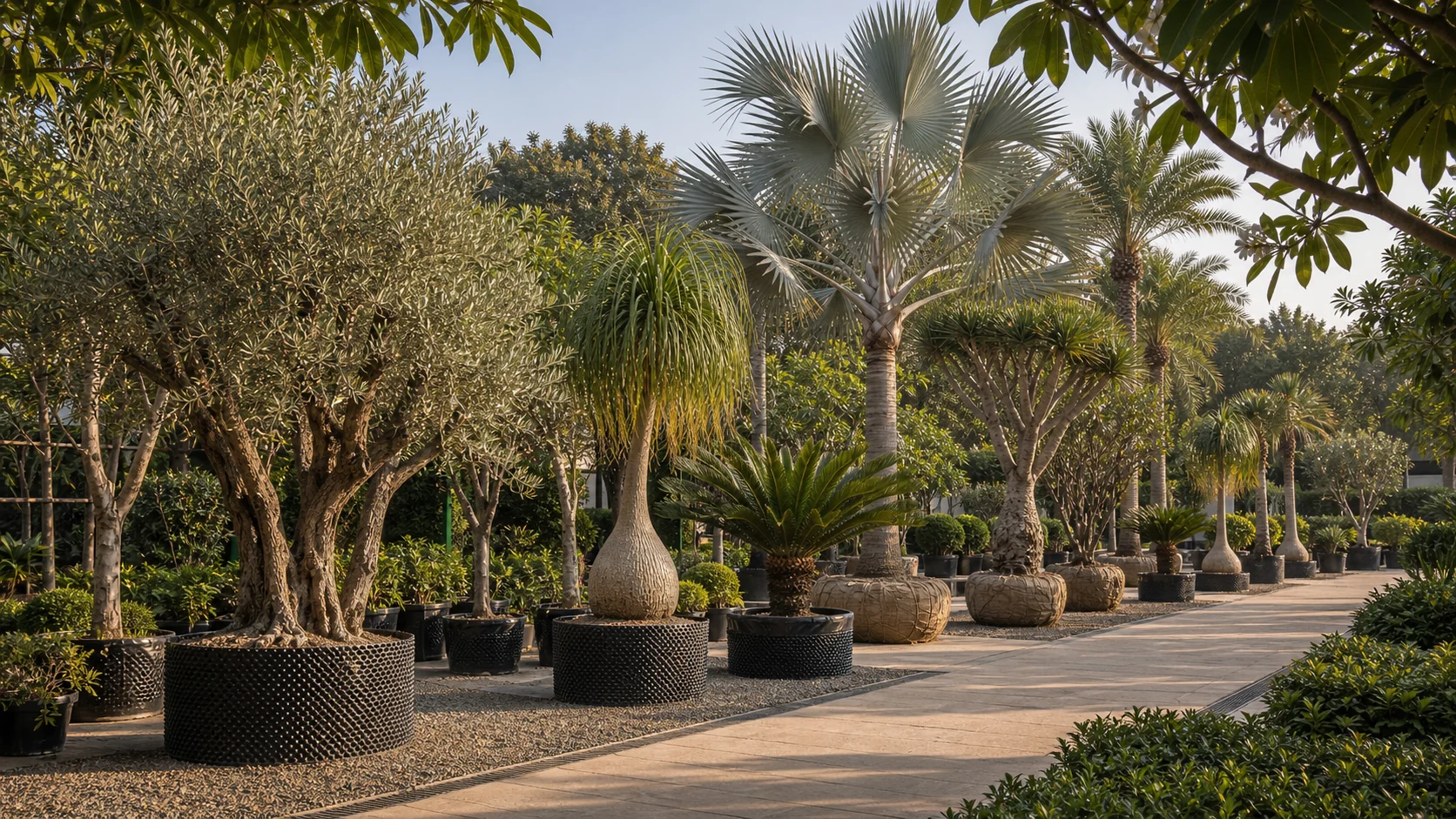
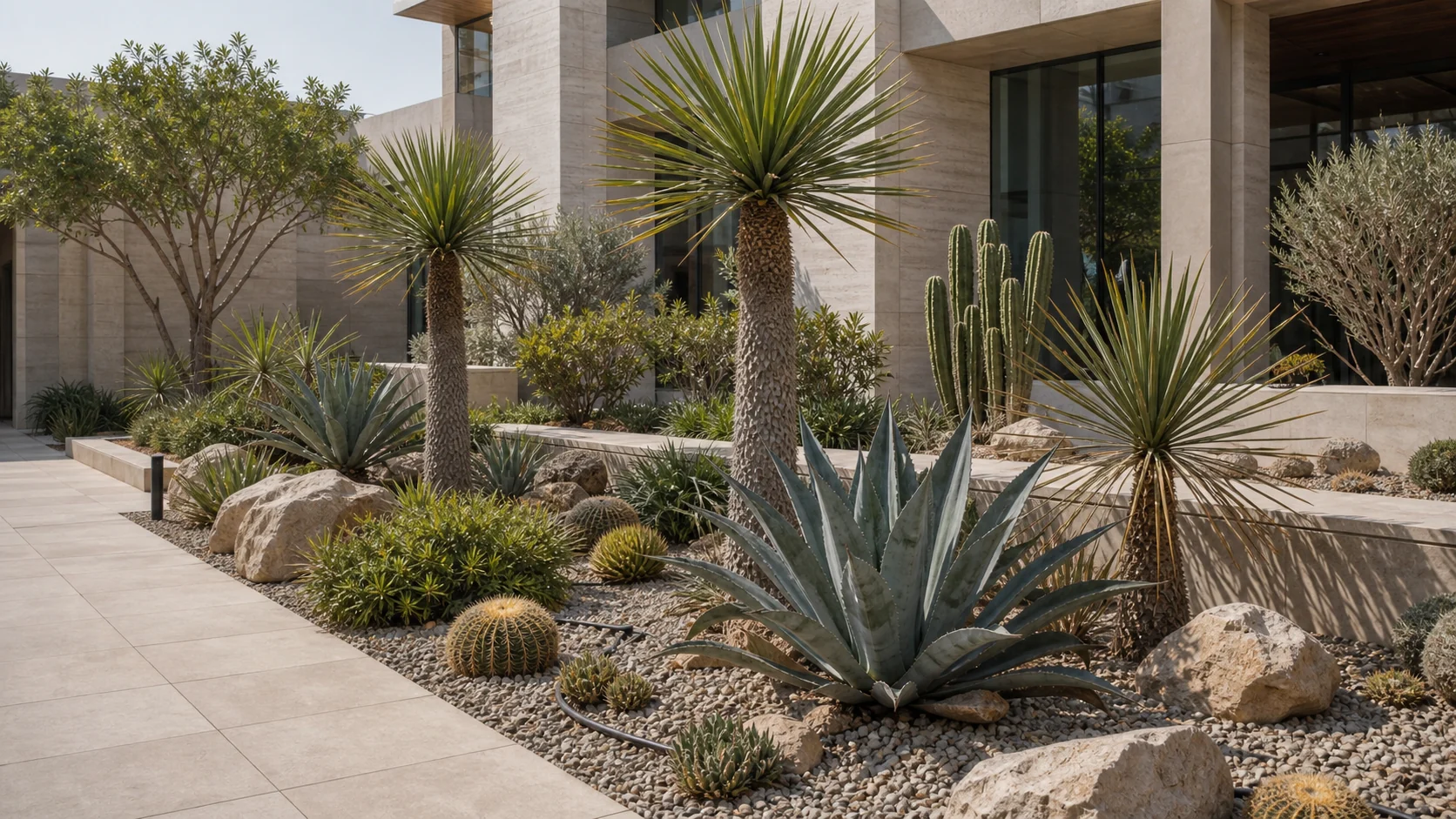
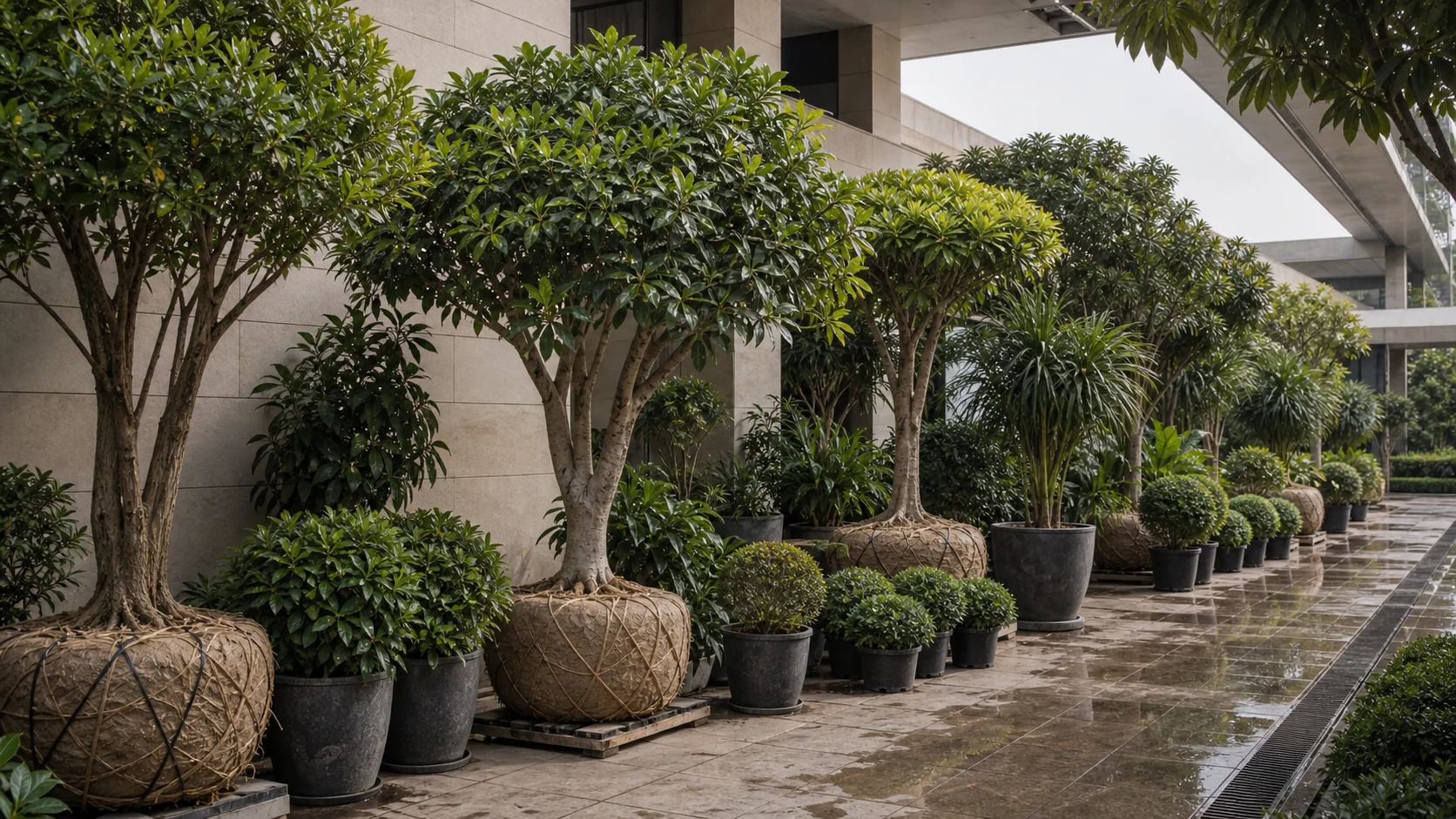
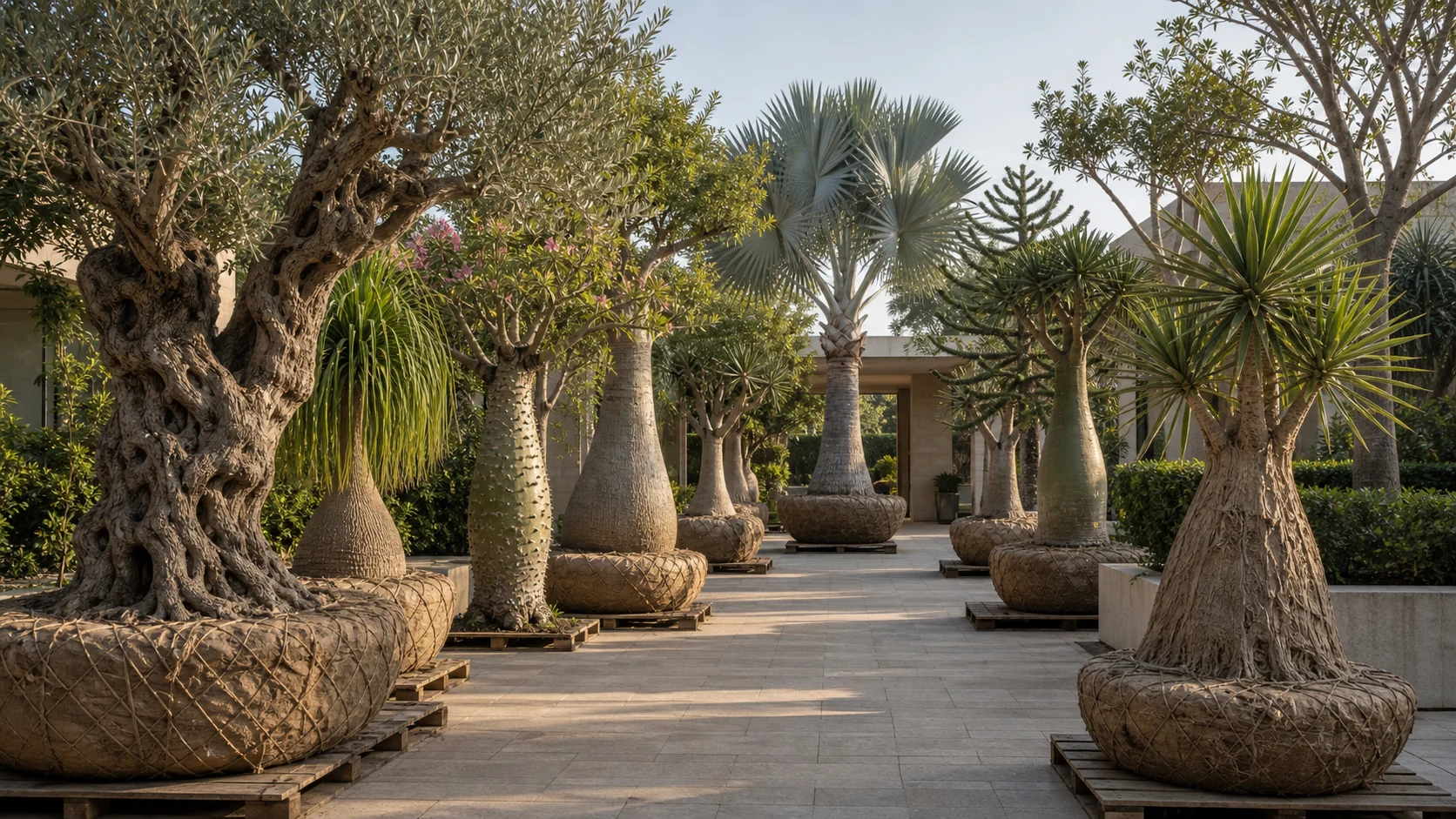
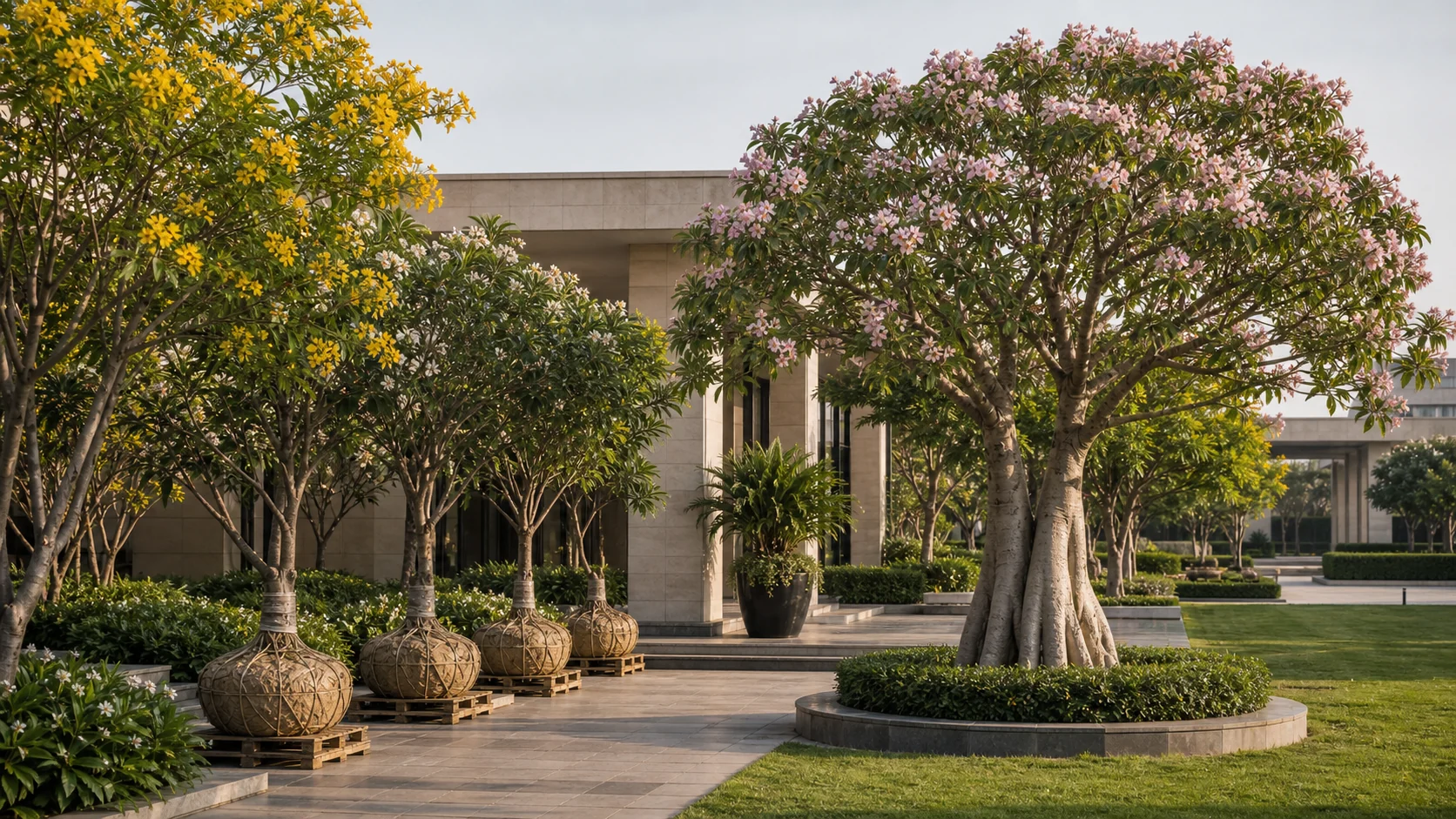
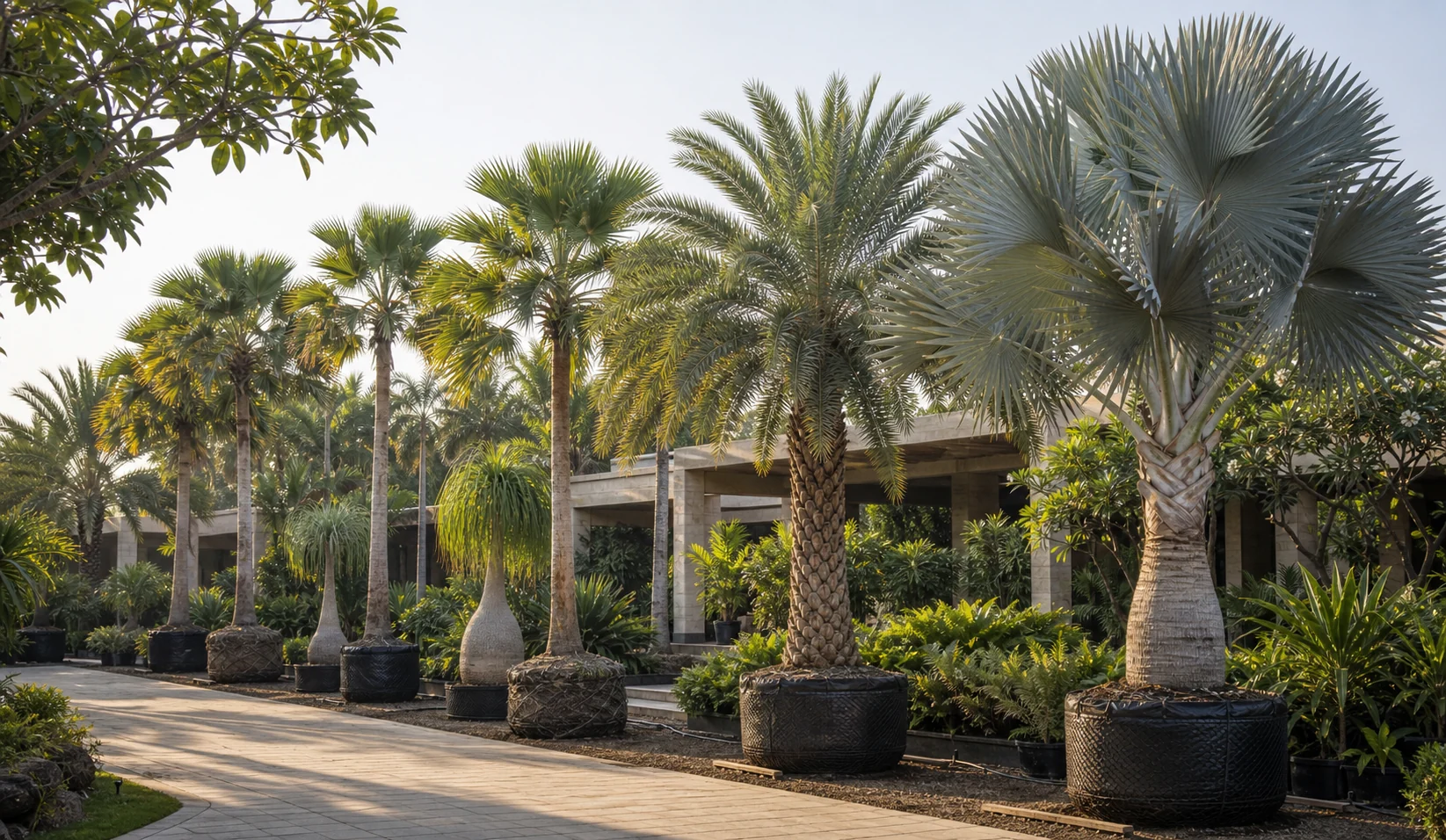
Visual context for placement, scale, handling, and landscape integration.
Section
Where it's used in premium projects
Designers specify Ficus dammaropsis when a shaded tropical court or atrium edge must deliver a single dramatic foliage moment — boutique hotel courtyards under taller canopy, botanical-feature niches, and lobby-adjacent courts where pleated dinner-plate leaves read against stone and glass. It is not a pool-deck sun tree.
Section
Climate & site suitability in India
Highland-origin biology means filtered light, humidity, and wind protection outperform full Rajasthan sun — leaves tear and scorch on exposed terraces. Humid metros with partial shade succeed; dry NCR summers need engineered shade and irrigation. Compare to Ficus auriculata only where sun and spread are available — dammaropsis is the shade-humidity specialist.
Section
Sourcing & acclimatisation
Rarity drives procurement — photograph leaf pleating and scale at nursery gate; seedlings do not prove the brief. [Unverified: import share versus specialist domestic holdings.] Hold under shade with consistent moisture before exposing to site microclimate; sudden relocation to harsh sun collapses leaf quality within weeks.
Section
Installation (pit, soil, drainage, bracing)
Rich organic soil with drainage — waterlogging still kills roots despite humidity needs. Windbreaks or court walls on exposed drops; temporary shade cloth through first hot season. Pit size should anticipate leaf mass irrigation demand, not just trunk caliper.
Section
Establishment & AMC
AMC monitors humidity, removes torn leaves before rot spreads, and avoids moving the specimen once positioned — like other bold ficuses, relocation stress shows as leaf drop. Mist or understory irrigation on dry-site resorts may be required through establishment.
Section
Cost drivers
Explore
Related
Related
Related links
Services, segments, cost, and proof.
- Softscape & horticulture
- Irrigation & water management
- Landscape maintenance (AMC)
- Hotel & resort landscaping
- Luxury resort & spa landscaping
- Mall & retail landscaping
- Corporate campus landscaping
- Projects
- Commercial landscaping cost guide
- Pricing drivers (imported trees)
- Import compliance workflow
- Request a site assessment
- How large do Ficus dammaropsis leaves grow?
- Pleated leaves can approach half a metre in ideal conditions — specify mature leaf scale on nursery photos, not juvenile container stock.
- Can Ficus dammaropsis live in full sun on a hotel terrace?
- Usually no — highland origin prefers bright shade and humidity; harsh sun and dry wind scorch and tear leaves unless engineered shade is permanent.
- What humidity and wind protection does it need?
- Steady moisture and shelter from desiccating wind are non-optional on Indian dry-season sites — treat torn-leaf repair and misting as establishment scope, not optional AMC.
- How does dammaropsis differ from elephant-ear fig (F. auriculata)?
- Dammaropsis needs shade and humidity with pleated dinner-plate leaves; auriculata is a sun-loving spreading outdoor fig with rounded elephant-ear foliage and cauliflorous fruit.
- Why is sourcing often difficult?
- Commercial availability is limited — lock nursery holding and leaf-scale photos before design freeze; generic fig lines rarely deliver this species.
- What import compliance applies?
- Live plants follow India plant quarantine workflow — coordinate before shipment (informational, not legal advice).
- How should procurement compare quotes?
- Match verified species ID, visible leaf pleating scale, shade establishment weeks, and wind-shelter scope — not generic ficus container pricing.