
Elephant-ear fig
Roxburgh fig / Elephant-ear fig (Ficus auriculata)
Ficus auriculata is chosen for huge rounded elephant-ear leaves and cauliflorous figs borne on trunk and branches — a bold tropical foliage statement native to parts of India and the Himalaya foothills, specified only where spread, water, and aggressive roots can be accommodated.
Spec
At a glance
- Botanical name
- Ficus auriculata
- Family
- Moraceae
- Common names
- Roxburgh fig, elephant-ear fig
- Origin
- Himalaya and South-East Asia; native in parts of India
- Plant type
- Fast-spreading broadleaf fig tree
- Mature height
- Often 8–15 m; spreading habit
- Trunk / form
- Very large rounded leaves; figs on trunk/branches (cauliflorous)
- Crown spread
- Wide spreading canopy
- Growth rate
- Fast in warm humid sites with water
- Light
- Full sun to bright partial shade when young
- Water needs
- Moderate to high — needs steady moisture for leaf size
- India climate suitability
- Humid subtropical and tropical India; NE and Western Ghats foothills; poor in arid sites without irrigation
- Cold/heat & salt/wind tolerance
- Frost-sensitive; wind can tear large leaves; not primary salt specialist
- Typical supply size
- Young to mid-size field specimens [Unverified]
- Lead time (sourcing)
- [Unverified] domestic nursery vs import for large-leaf forms
- Install considerations
- Generous pit; root barrier near paving; fig-drop staining on light stone
- Maintenance level
- Moderate — leaf and fig litter, root zone monitoring
- Cautions
- Aggressive roots; fig drop stains paving; needs space and water
Gallery
Specimen visual guide
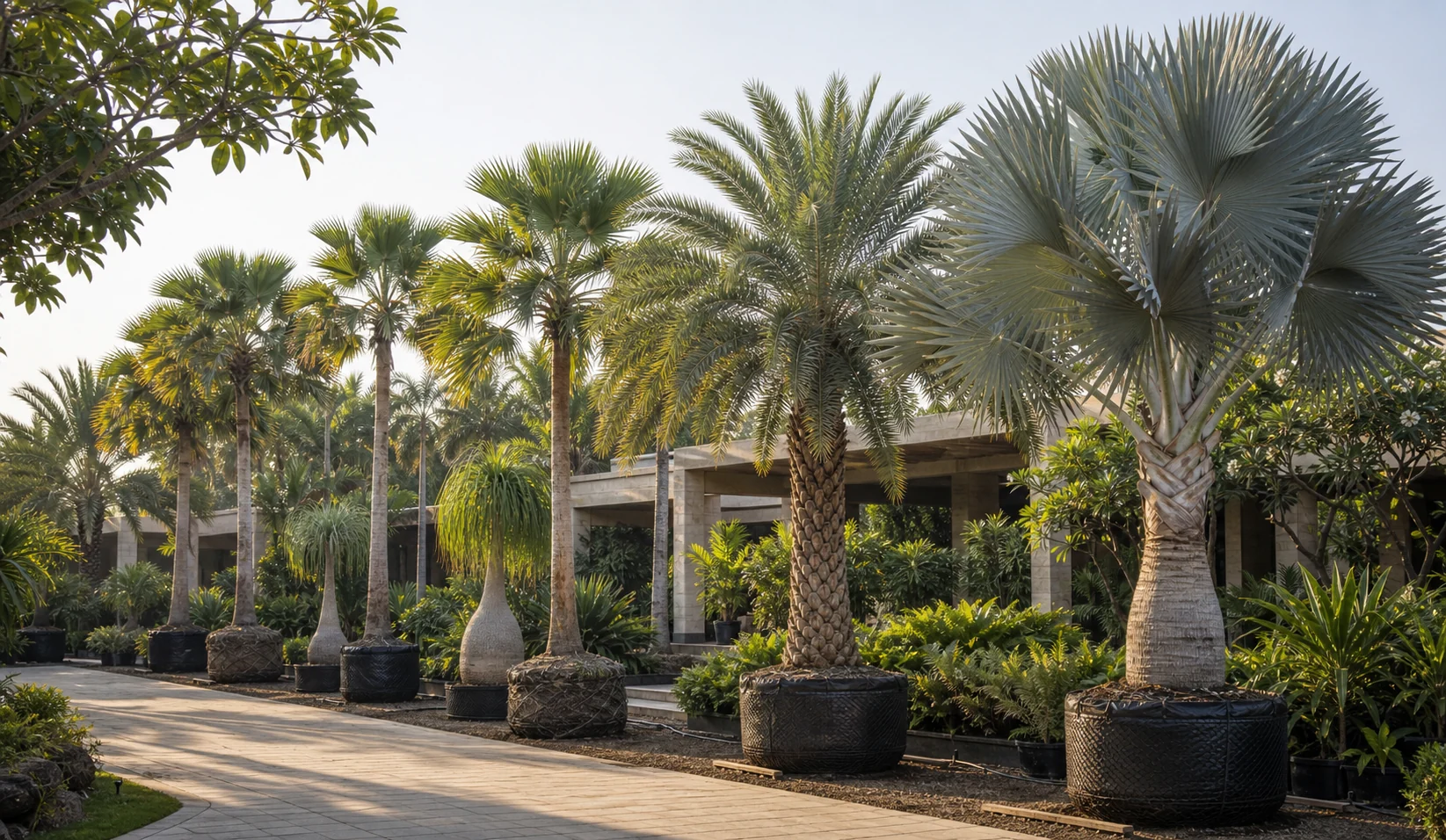
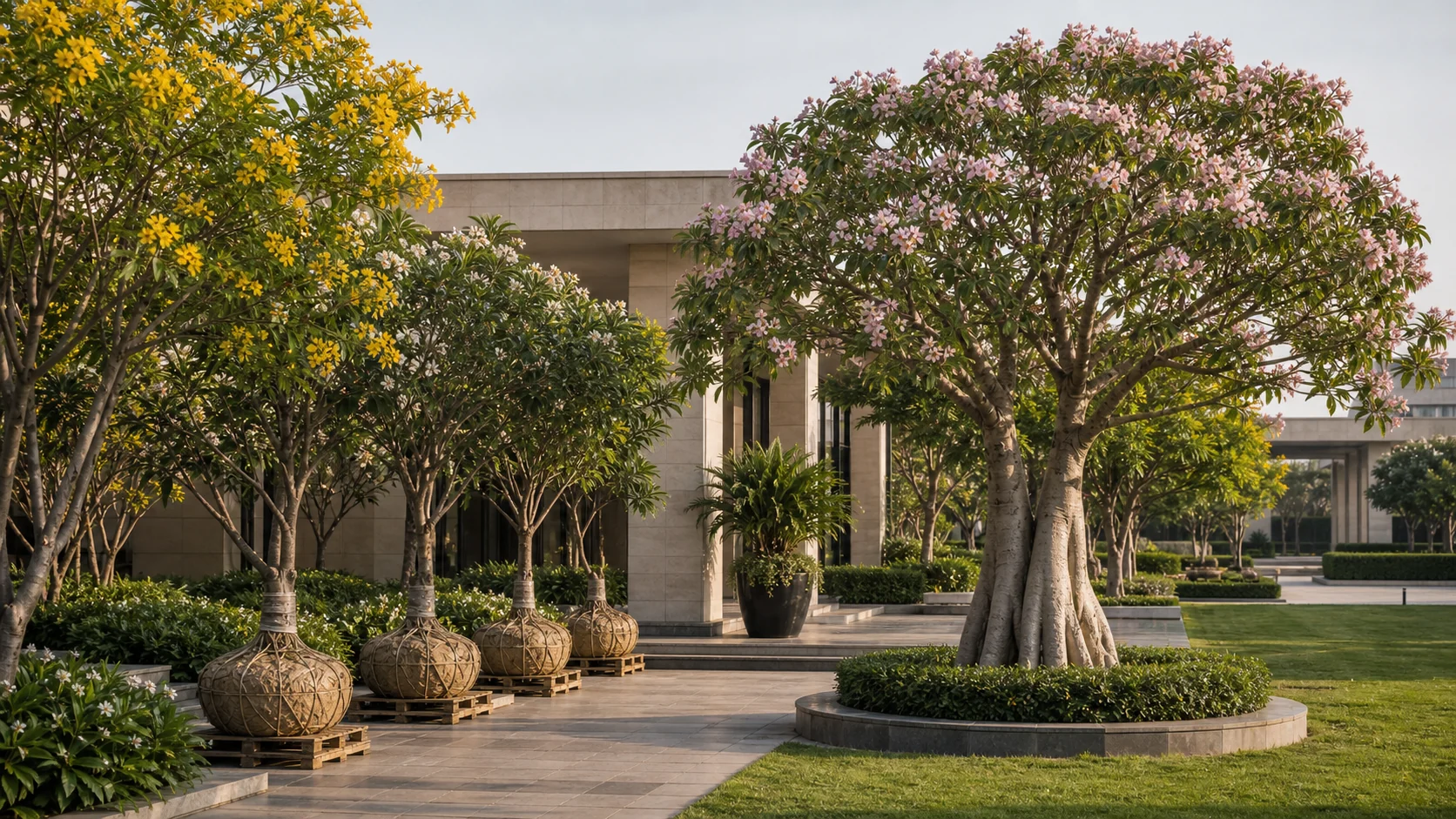
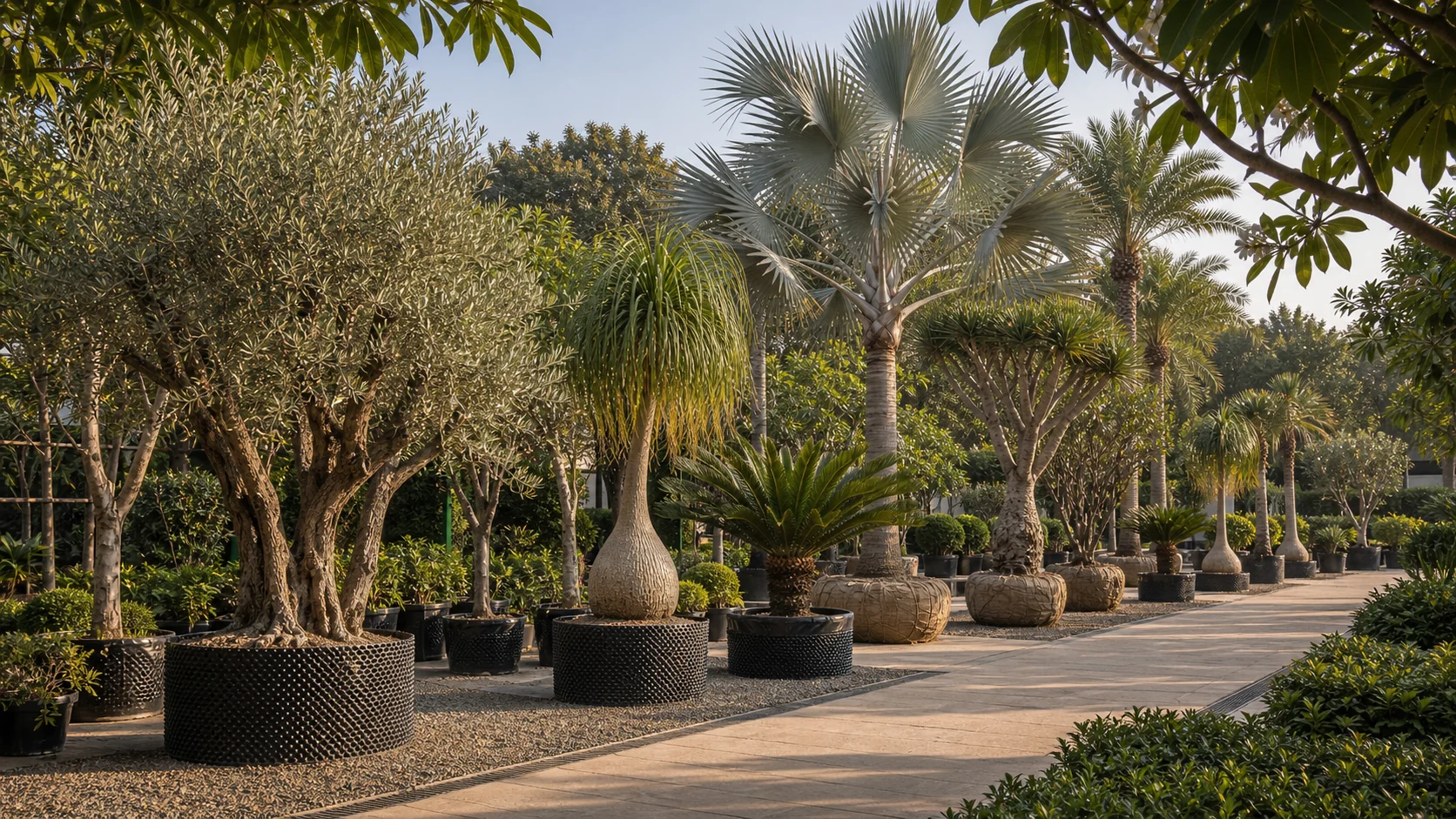
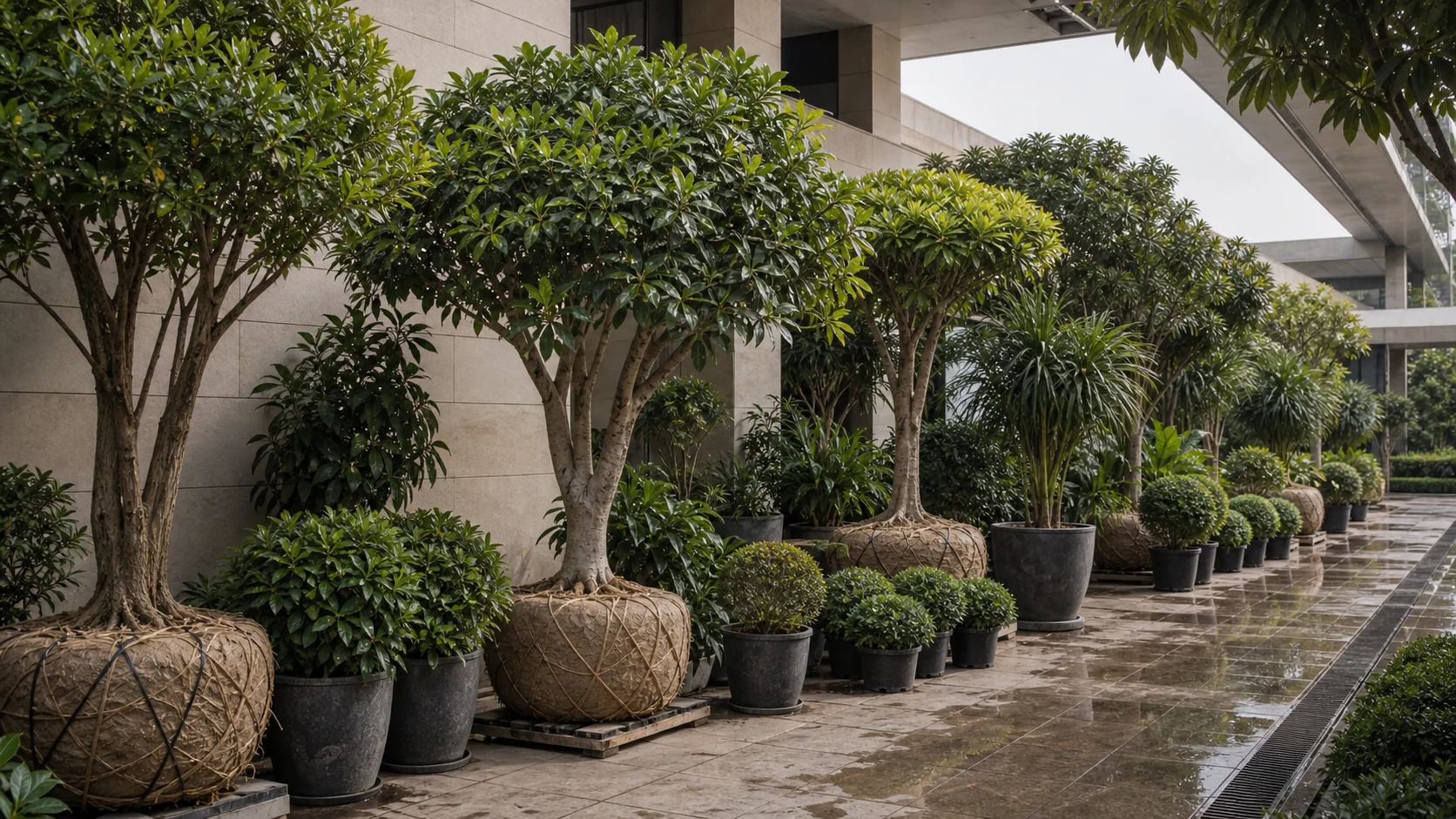
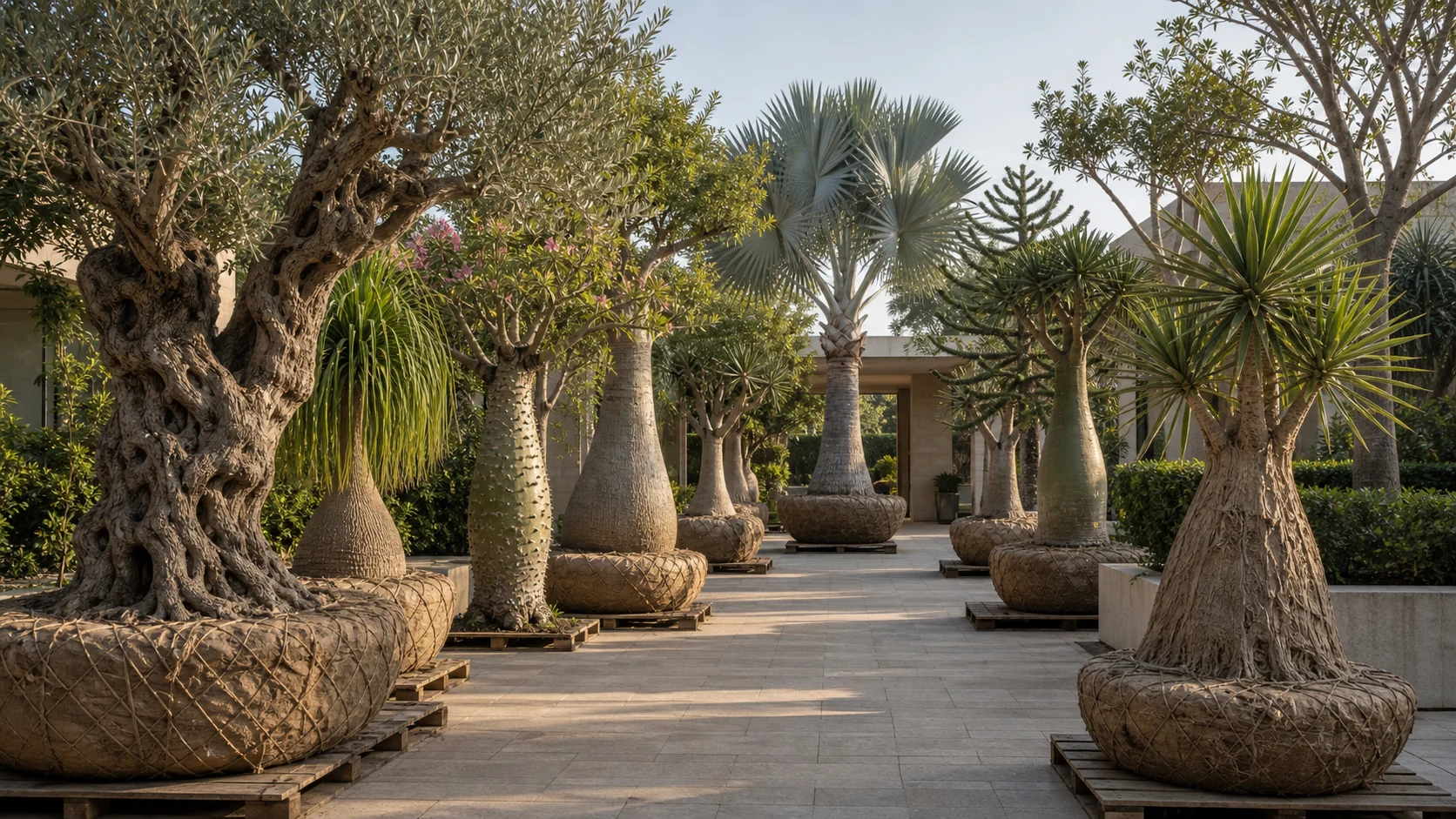
Visual context for placement, scale, handling, and landscape integration.

Section
Where it's used in premium projects
Landscape architects specify Ficus auriculata when the courtyard or atrium-adjacent court must read as a giant-leaf tropical statement — boutique hotels in humid metros, botanical-feature courts, and estate water-garden edges where cauliflorous figs on the trunk become a talking point. Not a tight mall planter tree.
Section
Climate & site suitability in India
Native-range vigour suits humid Kolkata, Kerala, and foothill metros with irrigation — Rajasthan courtyards fail without engineered water. Large leaves desiccate in dry wind corridors on high terraces. Plan ultimate spread before glazing layout — this fig outgrows “feature tree” labels within years.
Section
Sourcing & acclimatisation
Buy on leaf size, trunk form, and whether cauliflorous fruiting is visible on nursery stock photos. Much material is domestically grown — import story is weaker than for Pacific rarities. [Unverified: typical specimen height class at commercial nurseries.] Acclimatise with steady moisture; sudden drought puckers elephant-ear leaves.
Section
Installation (pit, soil, drainage, bracing)
Large pits with drainage and root barriers where paving sits inside the mature drip line — Ficus root behaviour is aggressive on Indian hardscape. Route cauliflorous fig drop away from white stone and pool decks. Light bracing only if trunk leans on windy drops; crown weight is leaf mass, not timber.
Section
Establishment & AMC
AMC sweeps fig and leaf litter on guest paths, monitors root heave, and maintains irrigation through the first two dry seasons. Prune for clearance, not hedge shape — destroying the large leaf display defeats the species choice.
Section
Cost drivers
Explore
Related
Related
Related links
Services, segments, cost, and proof.
- Softscape & horticulture
- Irrigation & water management
- Landscape maintenance (AMC)
- Hotel & resort landscaping
- Luxury resort & spa landscaping
- Mall & retail landscaping
- Corporate campus landscaping
- Projects
- Commercial landscaping cost guide
- Pricing drivers (imported trees)
- Import compliance workflow
- Request a site assessment
- What are cauliflorous figs on Ficus auriculata?
- Figs develop on trunk and older branches, not only twig tips — specify whether fruiting presence is required on nursery photos for botanical-feature briefs.
- How large do the elephant-ear leaves grow?
- Leaves are among the boldest in Indian commercial planting — confirm mature leaf scale on nursery stock, not seedling pots, before promising arrival-scale impact.
- Is Ficus auriculata native to India?
- Yes in parts of the range — proposals can cite native vigour, but still engineer space and roots like any large fig on hardscape.
- Will fig drop stain hotel paving?
- Yes on light stone near fruiting trees — route planting, harvest, or litter AMC on pool and arrival paving.
- How much root setback does paving need?
- Treat as aggressive Ficus — root barriers and wide setbacks where paving must survive inside the drip line for decades.
- Can it substitute for Ficus dammaropsis indoors?
- No — dammaropsis needs shade and humidity; auriculata is a sun-loving giant outdoor fig with different leaf texture and scale.
- How should BOQs be compared?
- Match leaf size class, spread control scope, root-barrier lines, and establishment irrigation — not generic fig pricing.