
Spike dracaena
Spike dracaena (Cordyline australis — sold as Dracaena indivisa)
What trade calls *Dracaena indivisa* is usually *Cordyline australis* — the cabbage tree spike dracaena — a fountain of narrow strappy leaves for vertical accent and containers; name confusion is horticulturally muddled and must be confirmed on every BOQ.
Spec
At a glance
- Botanical name
- Cordyline australis (often mislabelled Dracaena indivisa)
- Family
- Asparagaceae (Asteliaceae historically)
- Common names
- Cabbage tree, spike dracaena, Ti plant confusion
- Origin
- New Zealand
- Plant type
- Strappy accent tree (not desert dracaena)
- Mature height
- Often 3–8 m; narrow vertical emphasis
- Trunk / form
- Slender trunk or multi-stem; fountain of narrow strappy leaves
- Crown spread
- Vertical strappy fountain — not umbrella draco
- Growth rate
- Moderate in cool-temperate preference; not desert-slow
- Light
- Full sun to part shade depending on clone
- Water needs
- Moderate; more water-tolerant than desert dracaenas
- India climate suitability
- Cooler subtropical pockets and containers; verify ID vs true dracaenas
- Cold/heat & salt/wind tolerance
- Moderate hardiness; heat stress in lowland humid heat without air movement
- Typical supply size
- Height and stem count classes [Unverified]
- Lead time (sourcing)
- [Unverified] nursery stock — confirm Cordyline vs Dracaena on tags
- Install considerations
- Confirm botanical ID before pit design; container or formal row
- Maintenance level
- Moderate — remove spent lower leaves; not dry-desert AMC
- Cautions
- Name/ID confusion with Cordyline australis; not a desert dracaena; moderate hardiness
Gallery
Specimen visual guide
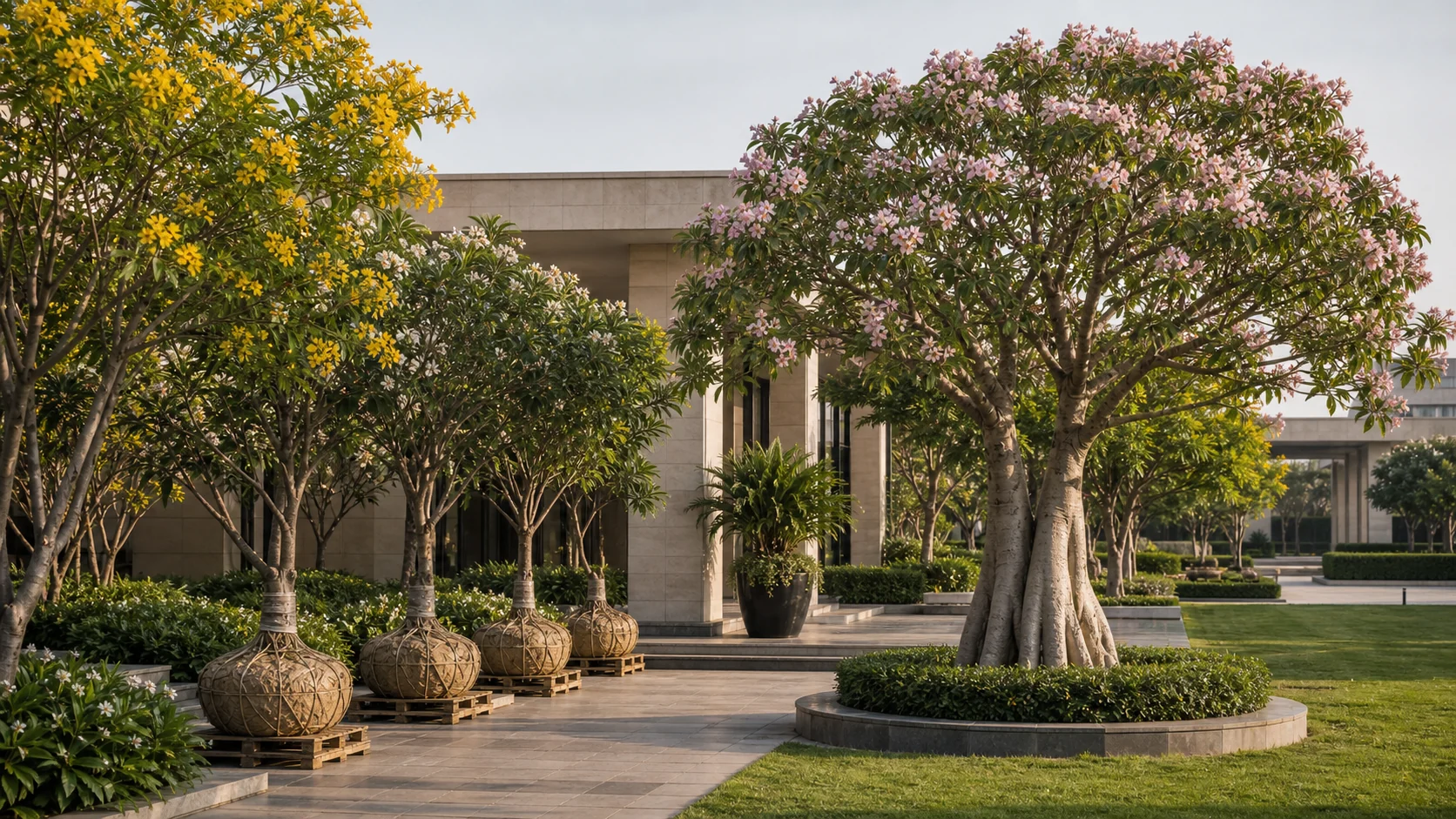
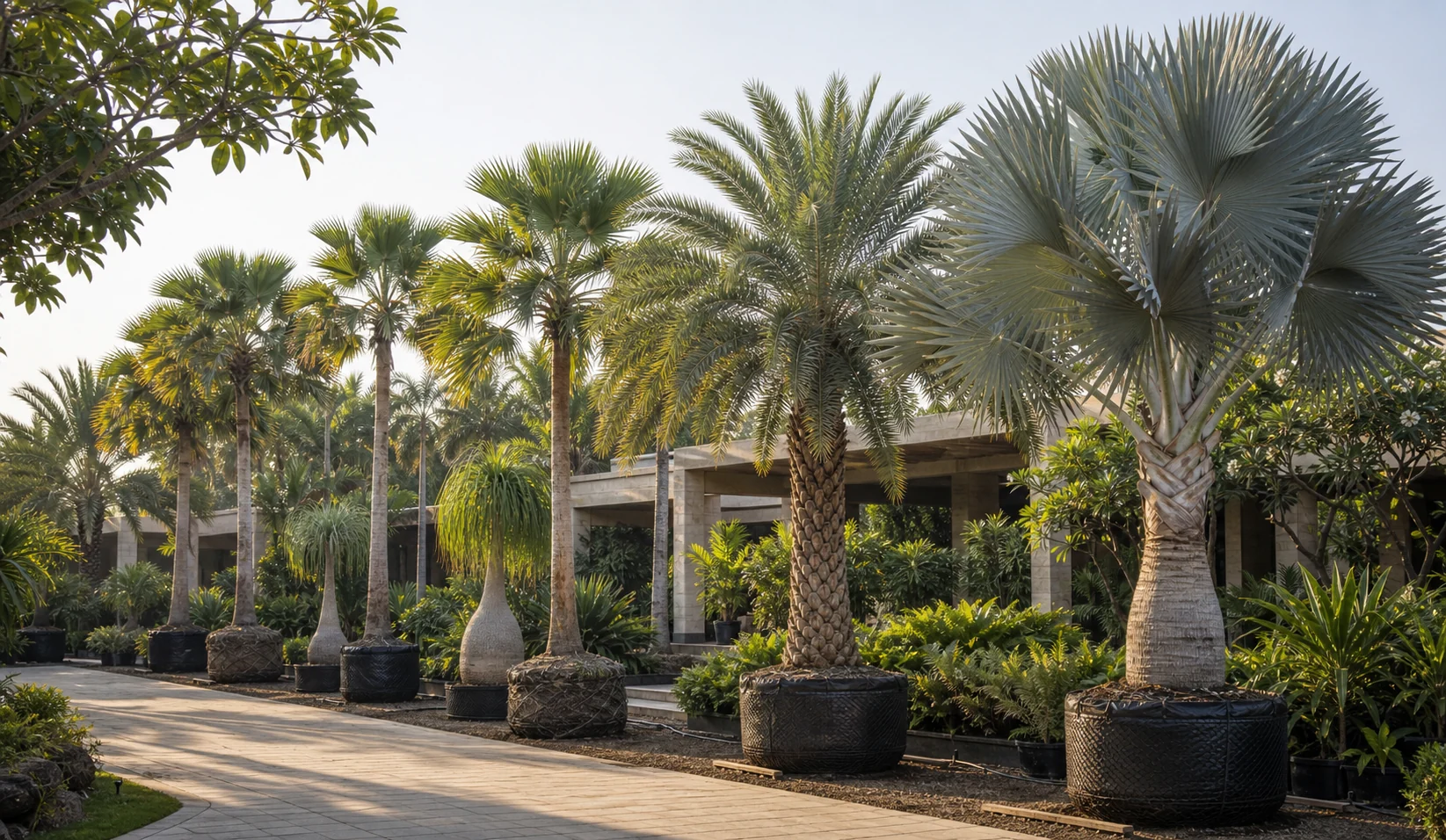
Visual context for placement, scale, handling, and landscape integration.
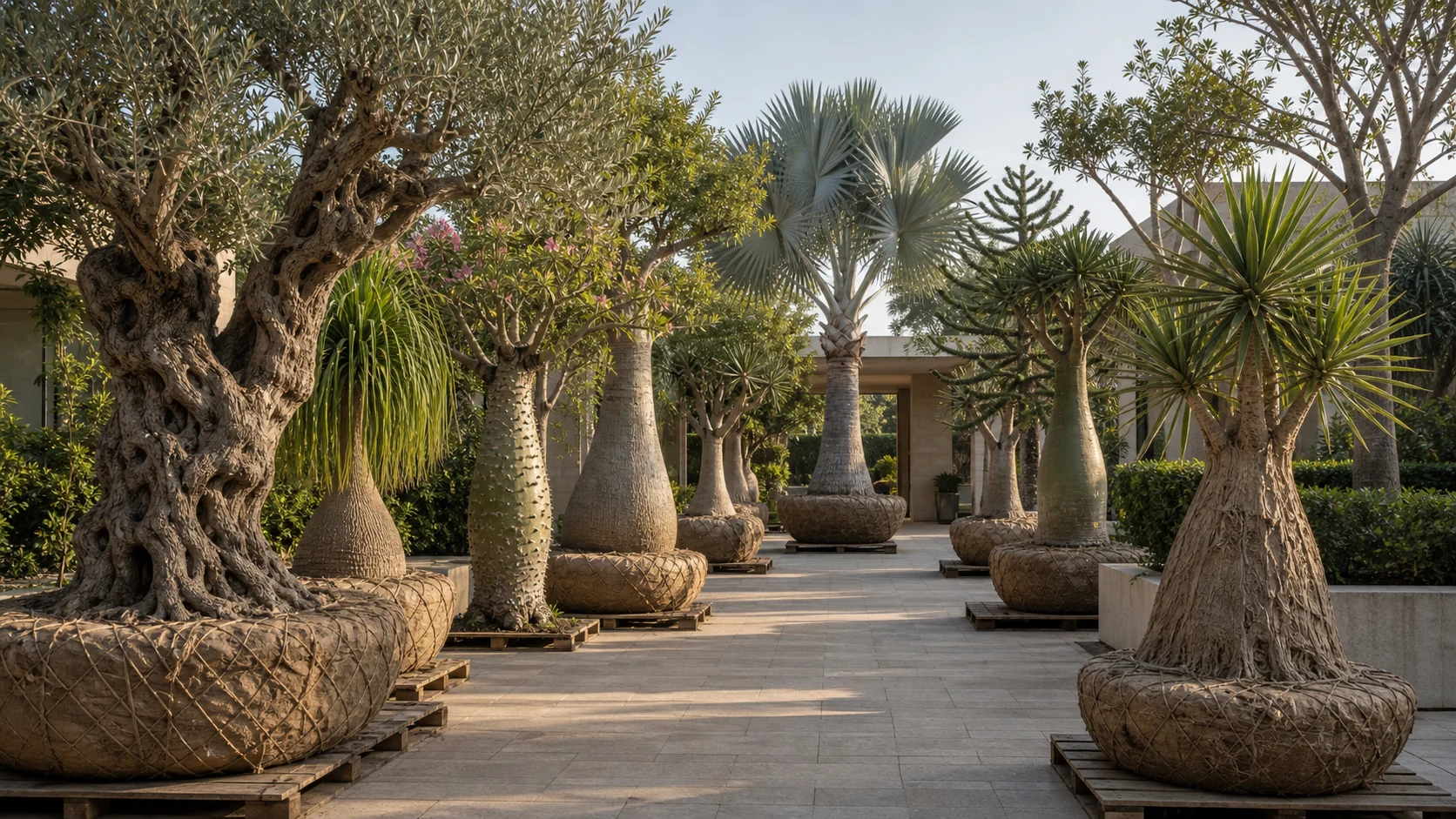
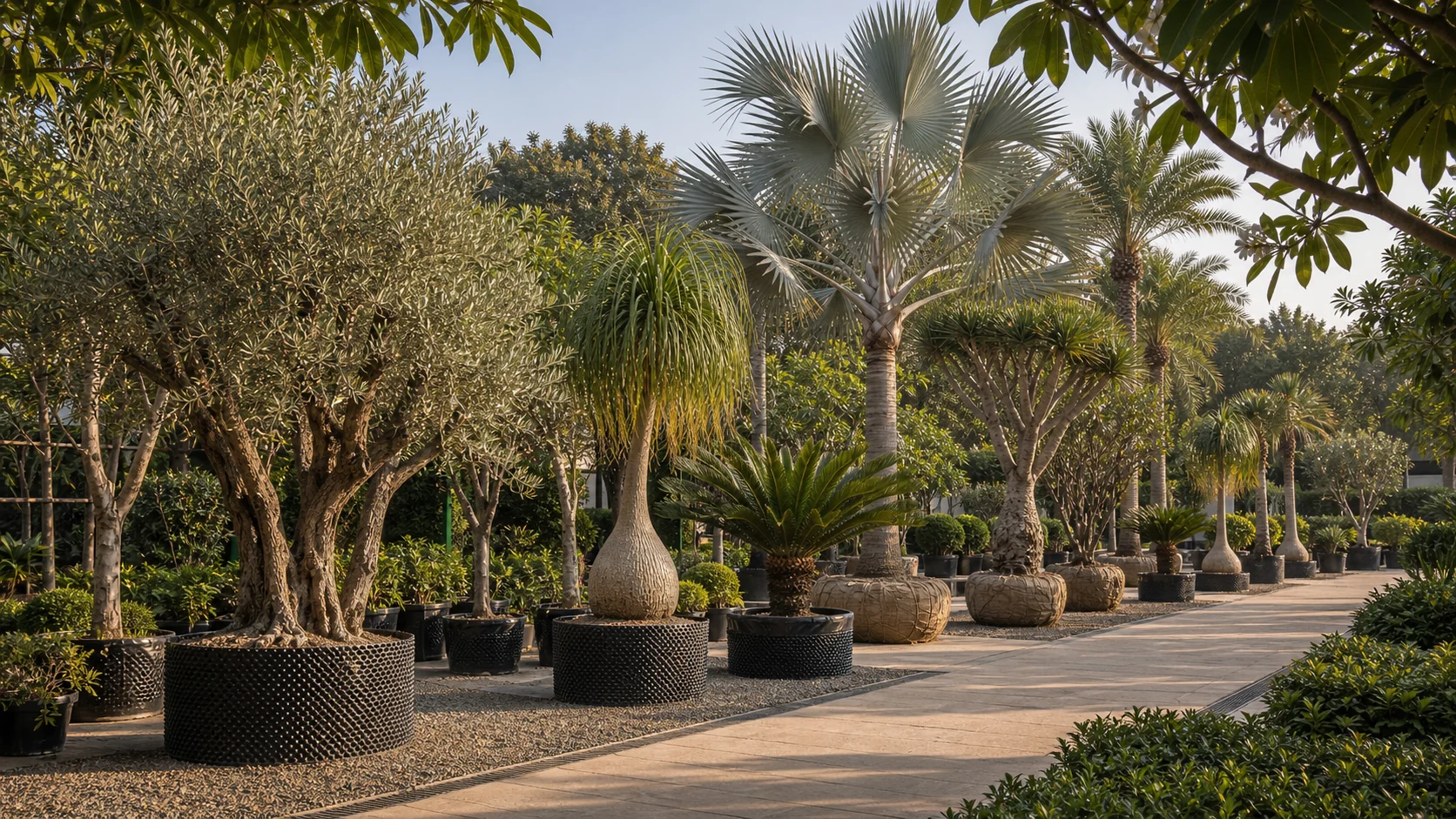
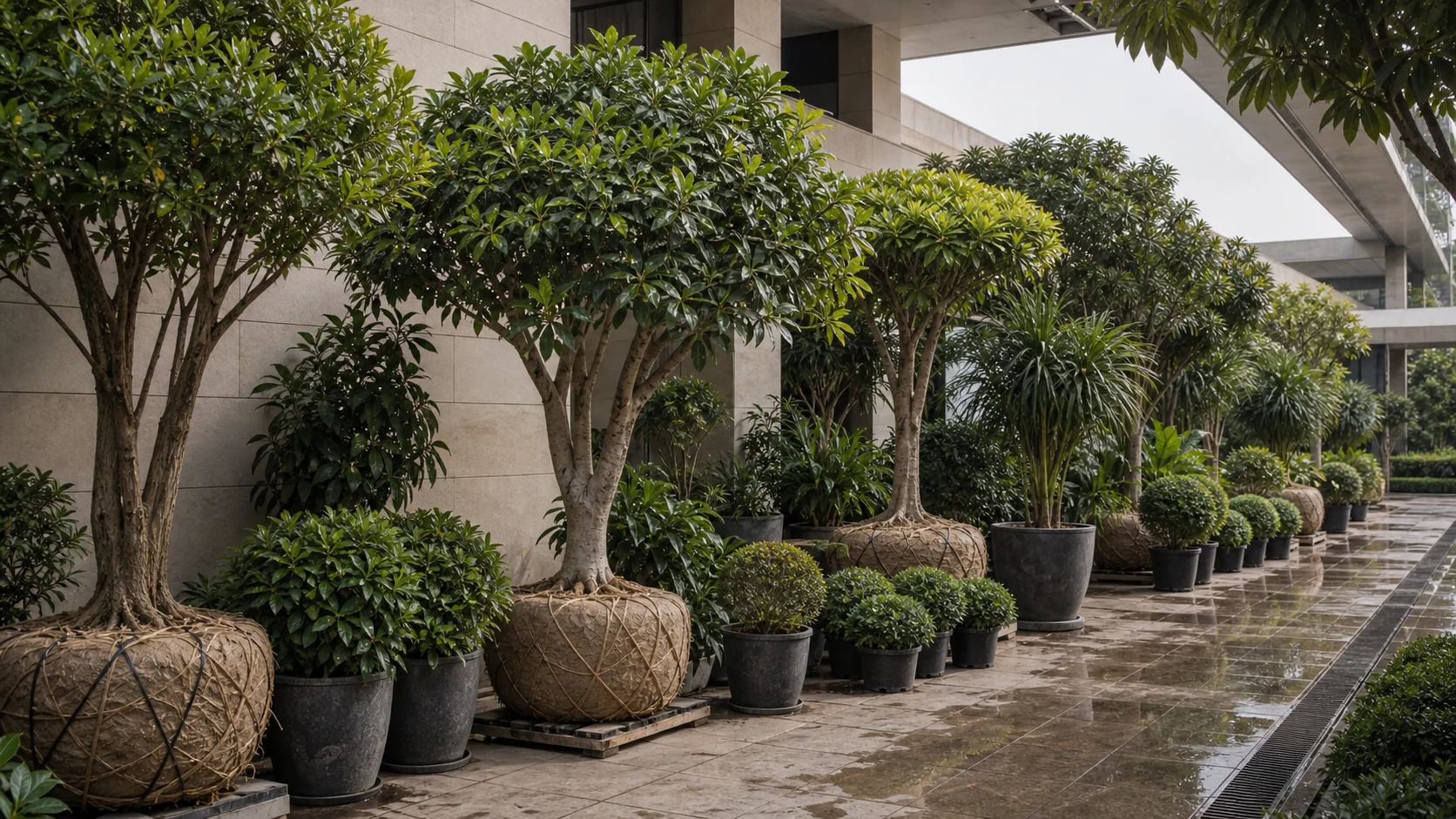
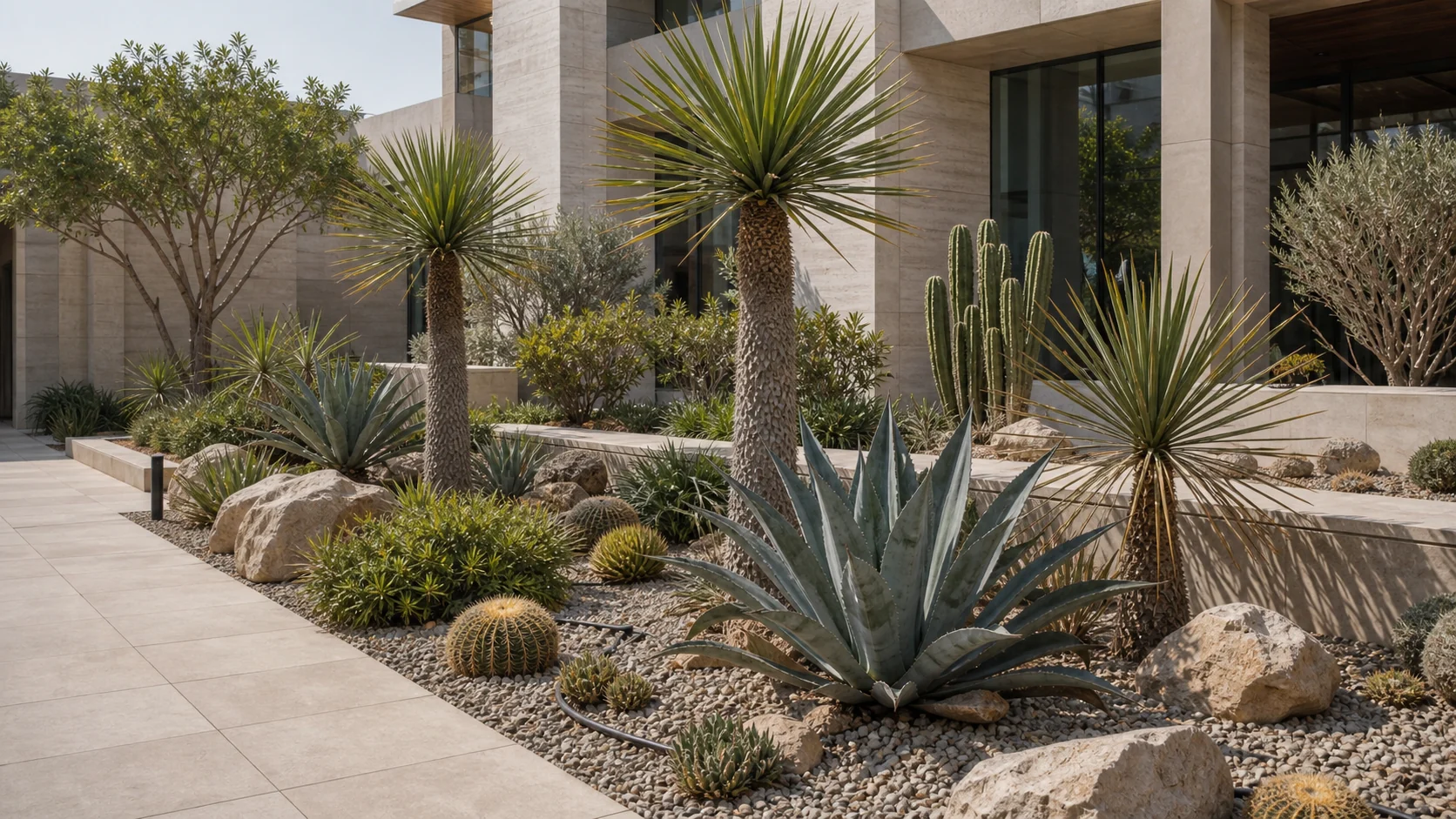
Section
Where it's used in premium projects
Spike dracaena is the vertical strappy accent — formal containers, courtyard punctuation, and modern planting rows where narrow leaf fountains add height without wide shade — after confirming Cordyline ID, not desert *D. draco*.
Section
Climate & site suitability in India
More moderate than desert dracaenas — still review humid lowland heat and monsoon ventilation for container culture. Honest BOQ notes prevent installing cabbage tree where designers expected Canary dragon tree.
Section
Sourcing & acclimatisation
Confirm tags: *Cordyline australis* vs true *Dracaena* — [Unverified: typical India mislabelling rate on indivisa SKUs]. Photograph leaf width and trunk form before purchase.
Section
Installation (pit, soil, drainage, bracing)
Do not use desert gravel-only protocol if clone needs moderate moisture — still avoid waterlogged pots. Formal rows need uniform stem height; containers need drainage holes, not saucers.
Section
Establishment & AMC
Overwatering in sealed containers still kills roots — AMC differs from saguaro dry-down but must not leave saucers full through monsoon. Clarify ID in handover docs so maintenance does not apply dragon-tree drought regime by mistake.
Section
Cost drivers
Explore
Related
Related
Related links
Services, segments, cost, and proof.
- Softscape & horticulture
- Irrigation & water management
- Landscape maintenance (AMC)
- Hotel & resort landscaping
- Luxury resort & spa landscaping
- Mall & retail landscaping
- Corporate campus landscaping
- Projects
- Commercial landscaping cost guide
- Pricing drivers (imported trees)
- Import compliance workflow
- Request a site assessment
- Is Dracaena indivisa the correct name?
- Trade labels are muddled — most 'indivisa' stock is *Cordyline australis* cabbage tree; confirm ID on tags and import paperwork before design lock.
- How is spike dracaena different from dragon tree?
- Narrow strappy fountain vs draco's thick-trunk blue-green umbrella — different genus, climate, and BOQ.
- Can it be used in containers?
- Yes — vertical accent is the common India use; drainage holes and honest ID on maintenance sheets matter.
- Does it need desert dry AMC?
- No — not a desert dracaena; avoid applying saguaro-style drought regime unless soil is genuinely waterlogged.
- What hardiness should North India expect?
- Moderate — better than tropical dracaenas in cool dry winters but review heat in humid lowland summers.
- What quarantine issues arise from mislabelled dracaena?
- Cordyline stock labelled Dracaena complicates inspection — botanical accuracy on phytosanitary certificates prevents clearance delays (informational, not legal advice).
- What should BOQ photos show?
- Leaf width, stem form, and nursery tag close-up — prevent dragon tree substitution.