
Tree grape
Tree grape (Cyphostemma currorii)
Cyphostemma currorii — tree grape or cobas — is a Namibian pachycaul with a stout water-storing trunk, peeling yellowish bark, and large grape-relative leaves; the swollen caudex is the collector feature and rots fast in wet Indian soils.
Spec
At a glance
- Botanical name
- Cyphostemma currorii
- Family
- Vitaceae
- Common names
- Tree grape, cobas, Cyphostemma
- Origin
- Namibia and Angola
- Plant type
- Pachycaul caudiciform succulent
- Mature height
- Often 3–6 m; caudex mass dominates
- Trunk / form
- Stout swollen water-storing trunk; peeling yellowish bark
- Crown spread
- Large seasonal grape-like leaves; drought-deciduous
- Growth rate
- Slow caudex development — buy trunk girth
- Light
- Full sun; bright collector houses
- Water needs
- Low; caudex rot if wet
- India climate suitability
- Dry collector sites with drainage; poor in humid monsoon beds
- Cold/heat & salt/wind tolerance
- Heat-hardy; loses leaves in drought; protect from wet cold
- Typical supply size
- Caudex girth classes 1–3 m+ [Unverified]
- Lead time (sourcing)
- [Unverified] collector nursery channels
- Install considerations
- Mound planting; never wet caudex collar; seasonal leaf drop normal
- Maintenance level
- Low dry AMC; accept drought-deciduous leaflessness
- Cautions
- Drainage-critical caudex rot; drought-deciduous; rare/slow
Gallery
Specimen visual guide
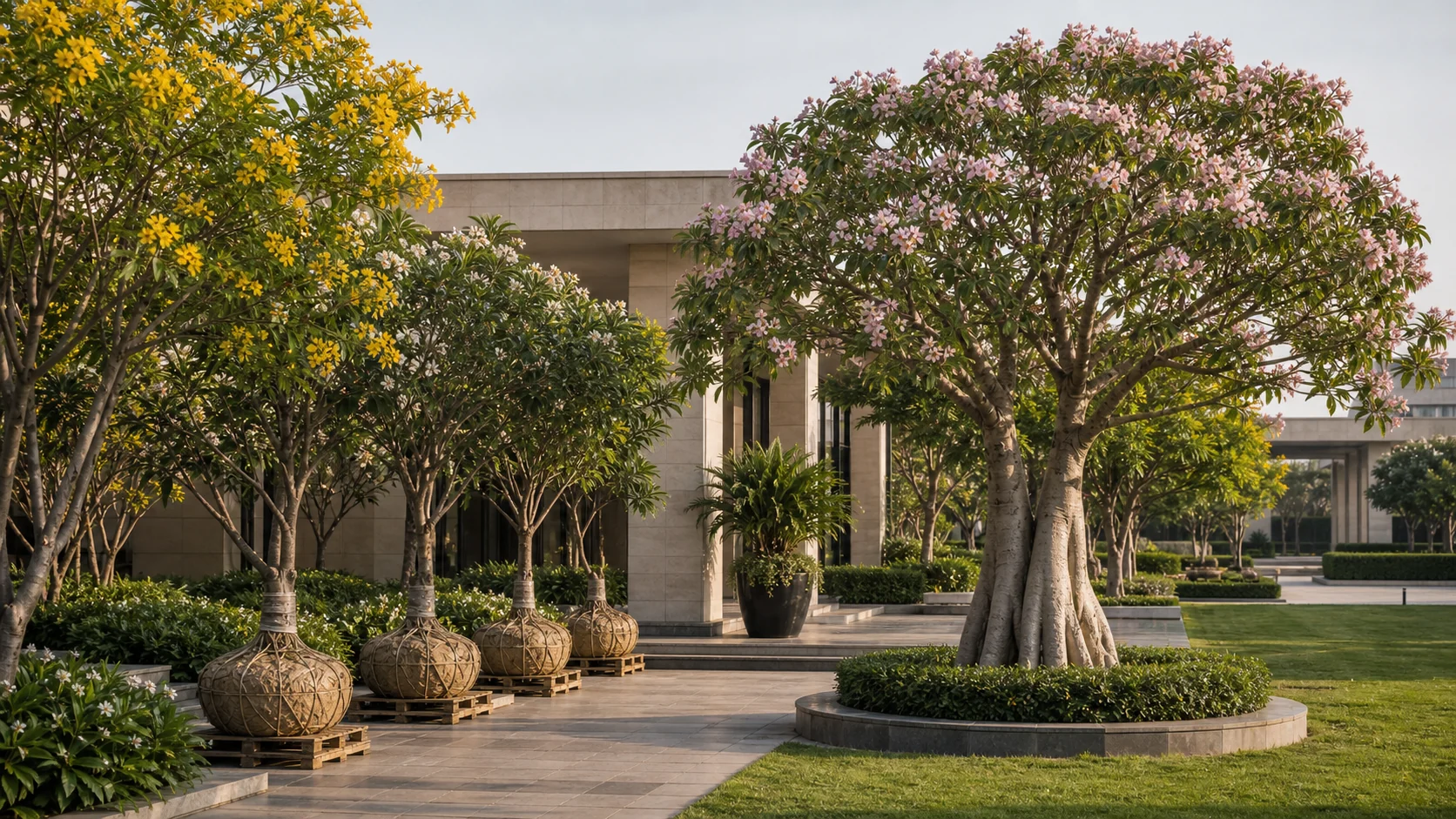
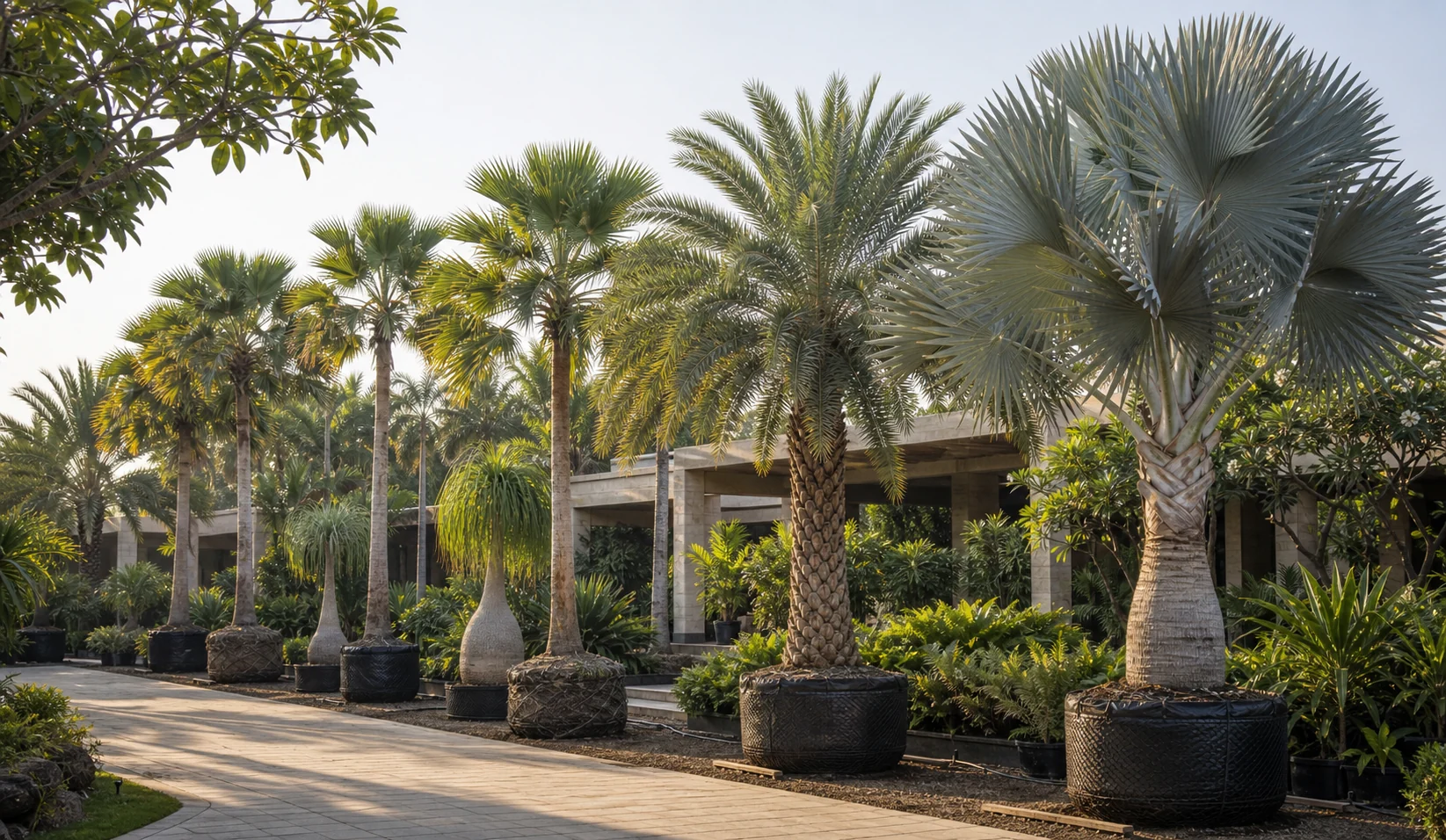
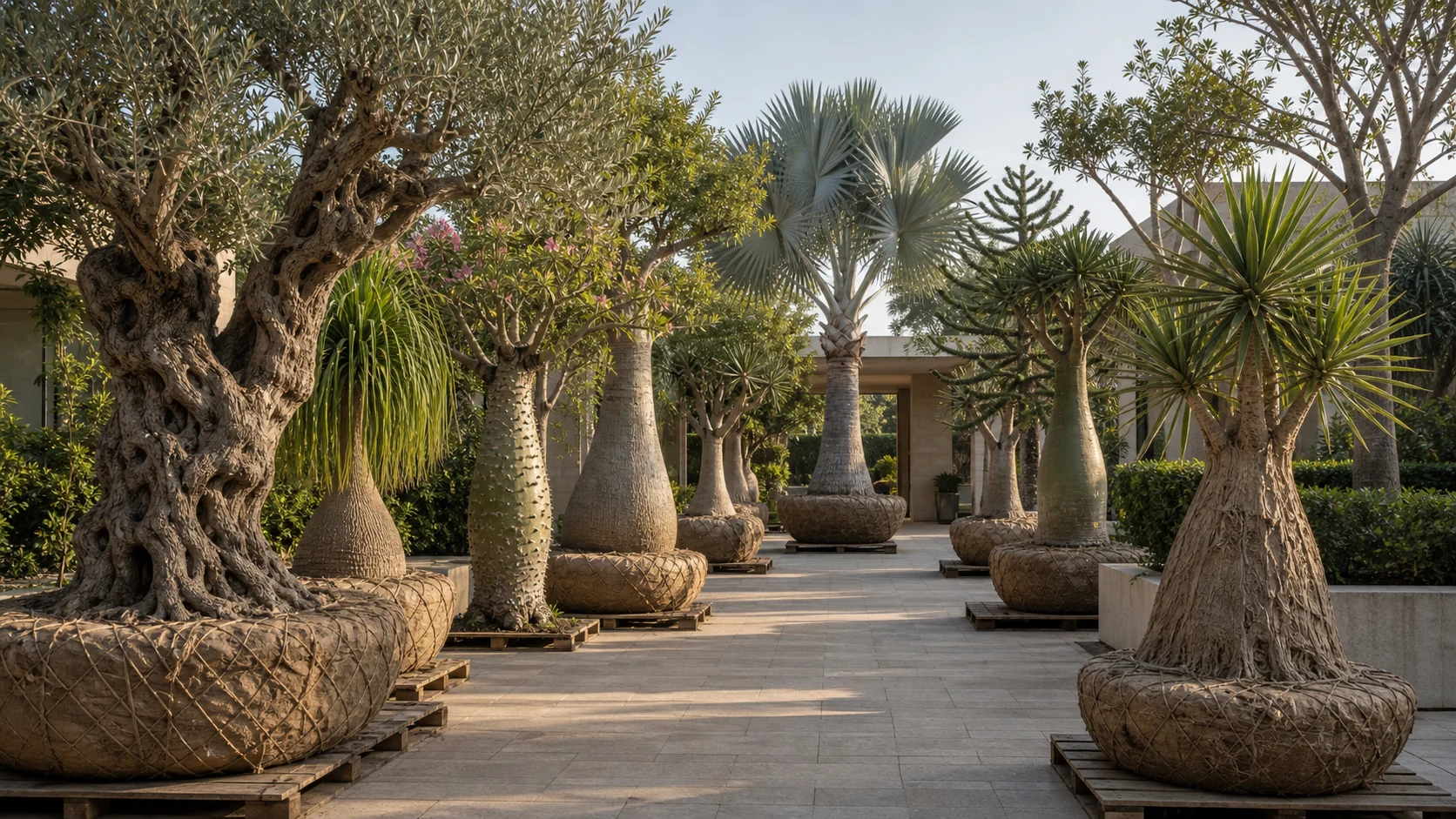
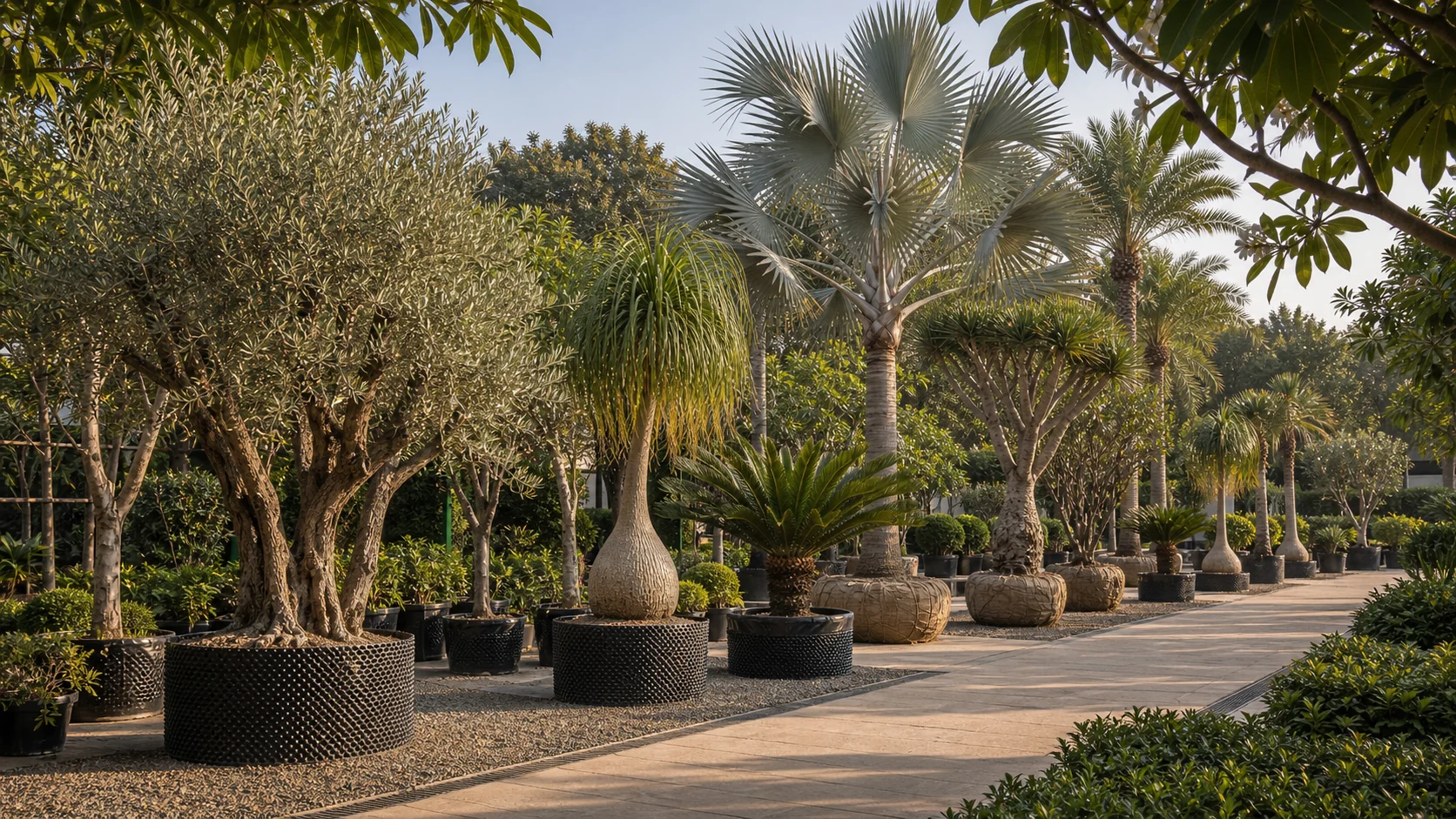
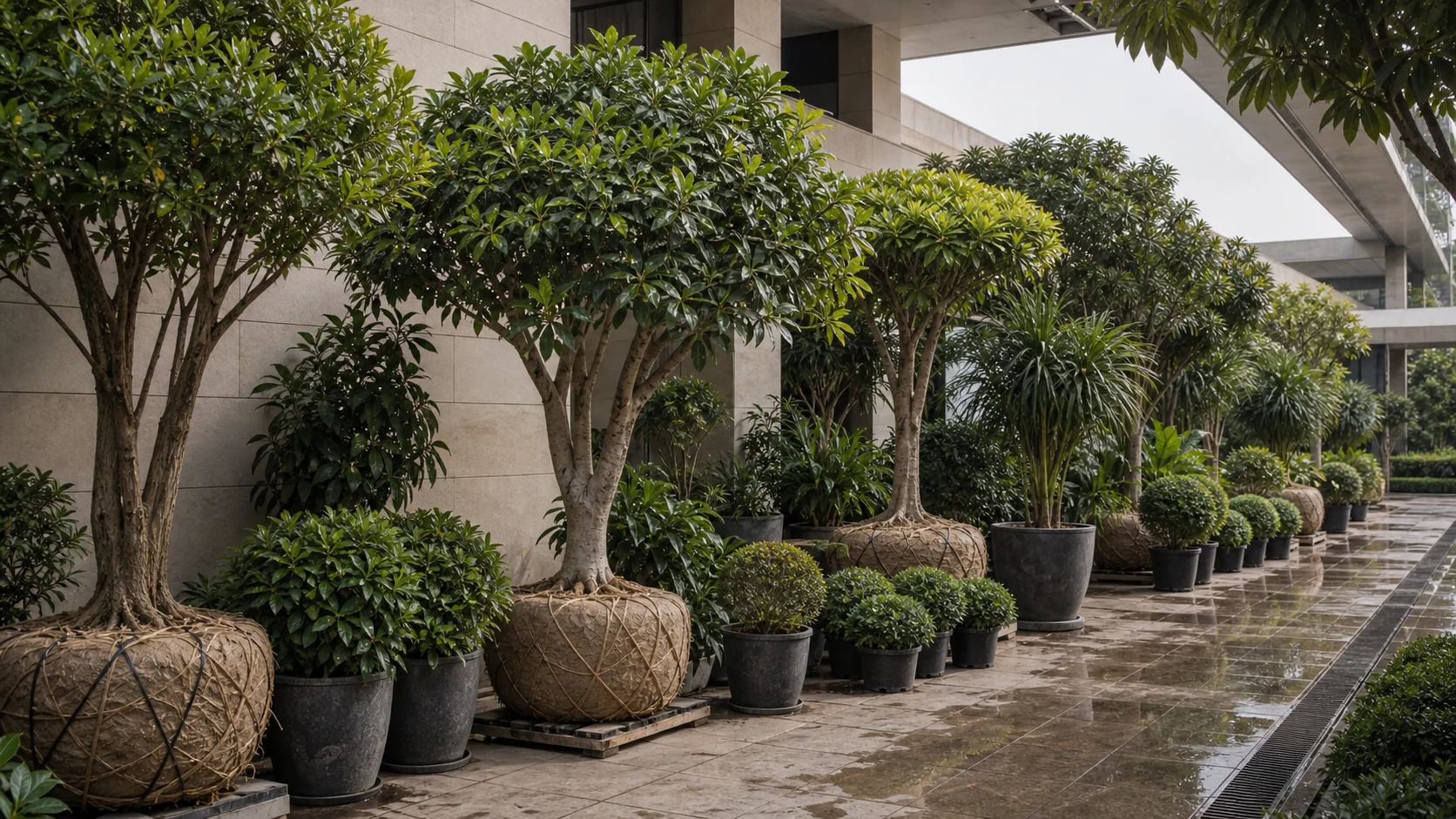
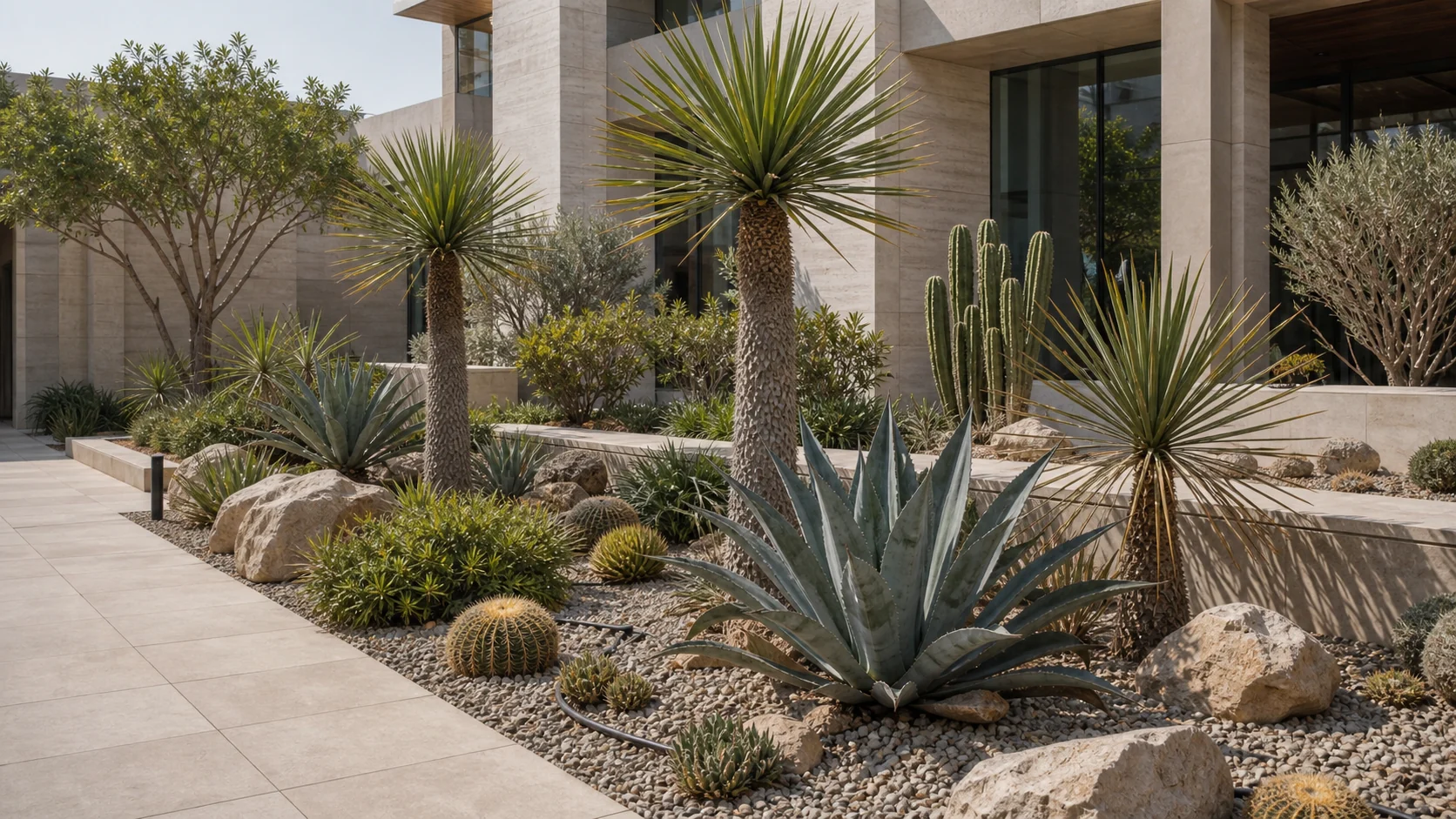
Visual context for placement, scale, handling, and landscape integration.
Section
Where it's used in premium projects
Tree grape is a collector pachycaul — sculptural swollen trunk in xeric galleries, private desert gardens, and estate collector courts where peeling bark and caudex mass read as living geology, not shade volume.
Section
Climate & site suitability in India
Drainage-critical: monsoon perched water rots the caudex faster than heat stress. Leafless periods are normal drought-deciduous behaviour — do not irrigate into rot. Humid coasts need covered or mound-only culture.
Section
Sourcing & acclimatisation
Rare slow species — specify caudex girth and bark condition. [Unverified: typical India collector hold vs Namibian import.] Document Vitaceae identity on paperwork, not generic grapevine.
Section
Installation (pit, soil, drainage, bracing)
Plant proud on gravel mounds; protect peeling bark in rigging. Large leaves mean seasonal litter — plan paving tolerance. Forbid turf spray on caudex zone.
Section
Establishment & AMC
Overwatering is the top establishment killer — AMC must allow leaf drop without increasing water. Soft caudex is emergency dry-down. Collector teams should expect slow caudex expansion year on year.
Section
Cost drivers
Explore
Related
Related
Related links
Services, segments, cost, and proof.
- Softscape & horticulture
- Irrigation & water management
- Landscape maintenance (AMC)
- Hotel & resort landscaping
- Luxury resort & spa landscaping
- Mall & retail landscaping
- Corporate campus landscaping
- Projects
- Commercial landscaping cost guide
- Pricing drivers (imported trees)
- Import compliance workflow
- Request a site assessment
- What is the tree grape swollen trunk?
- A pachycaul water-storing caudex with peeling yellowish bark — the horticultural feature, not the seasonal grape-like leaves alone.
- Why did leaves drop in summer?
- Drought-deciduous habit — normal in dry stress; overwatering to force leaves back causes caudex rot.
- Is Cyphostemma related to edible grapes?
- Vitaceae family relative — ornamental collector plant, not a vineyard substitute.
- What drainage is required in India?
- Raised gritty mounds with monsoon overflow — wet collars kill caudex faster than drought.
- How rare is currorii in trade?
- Collector-grade — lead times and size classes vary; [Unverified] typical India availability should be confirmed early in design.
- What import paperwork fits tree grape?
- Vitaceae caudiciforms need genus/species accuracy on phytosanitary certificates for quarantine — generic 'grape' labels fail review (informational, not legal advice).
- How should currorii BOQs be evaluated?
- Caudex photos, bark condition, mound engineering, and dry AMC — not deciduous leaf colour at purchase.