
Leopard tree
Leopard tree (Caesalpinia ferrea / Libidibia ferrea)
Caesalpinia ferrea combines smooth mottled grey-green-cream 'leopard' bark with fine ferny foliage and yellow flowers — a refined avenue and courtyard tree for filtered parking shade where patterned trunk skin and filigree canopy, not heavy dome shade, define the premium read.
Spec
At a glance
- Botanical name
- Caesalpinia ferrea (syn. Libidibia ferrea)
- Family
- Fabaceae
- Common names
- Leopard tree, Brazilian ironwood (trade)
- Origin
- Brazil
- Plant type
- Semi-deciduous ornamental shade tree
- Mature height
- Often 10–15 m
- Trunk / form
- Smooth mottled leopard-spotted bark; fine bipinnate foliage
- Crown spread
- Moderate — light filtered shade
- Growth rate
- Moderate to fast in warm sites
- Light
- Full sun for bark mottling and flower
- Water needs
- Moderate; drought-tolerant once established
- India climate suitability
- Warm dry to semi-humid India — courtyards, parking groves, avenues
- Cold/heat & salt/wind tolerance
- Heat-hardy; somewhat brittle in strong wind; surface roots on tight pavements
- Typical supply size
- Standard 3–5 m avenue whips to branched 4–6 m [Unverified]
- Lead time (sourcing)
- [Unverified] nursery avenue stock versus specimen branched grades
- Install considerations
- Root zone width for surface roots; wind-exposed sites need structure review
- Maintenance level
- Moderate — leaf litter, surface root monitoring
- Cautions
- Brittle branches in wind; surface roots lift paving; semi-deciduous leaf drop
Gallery
Specimen visual guide
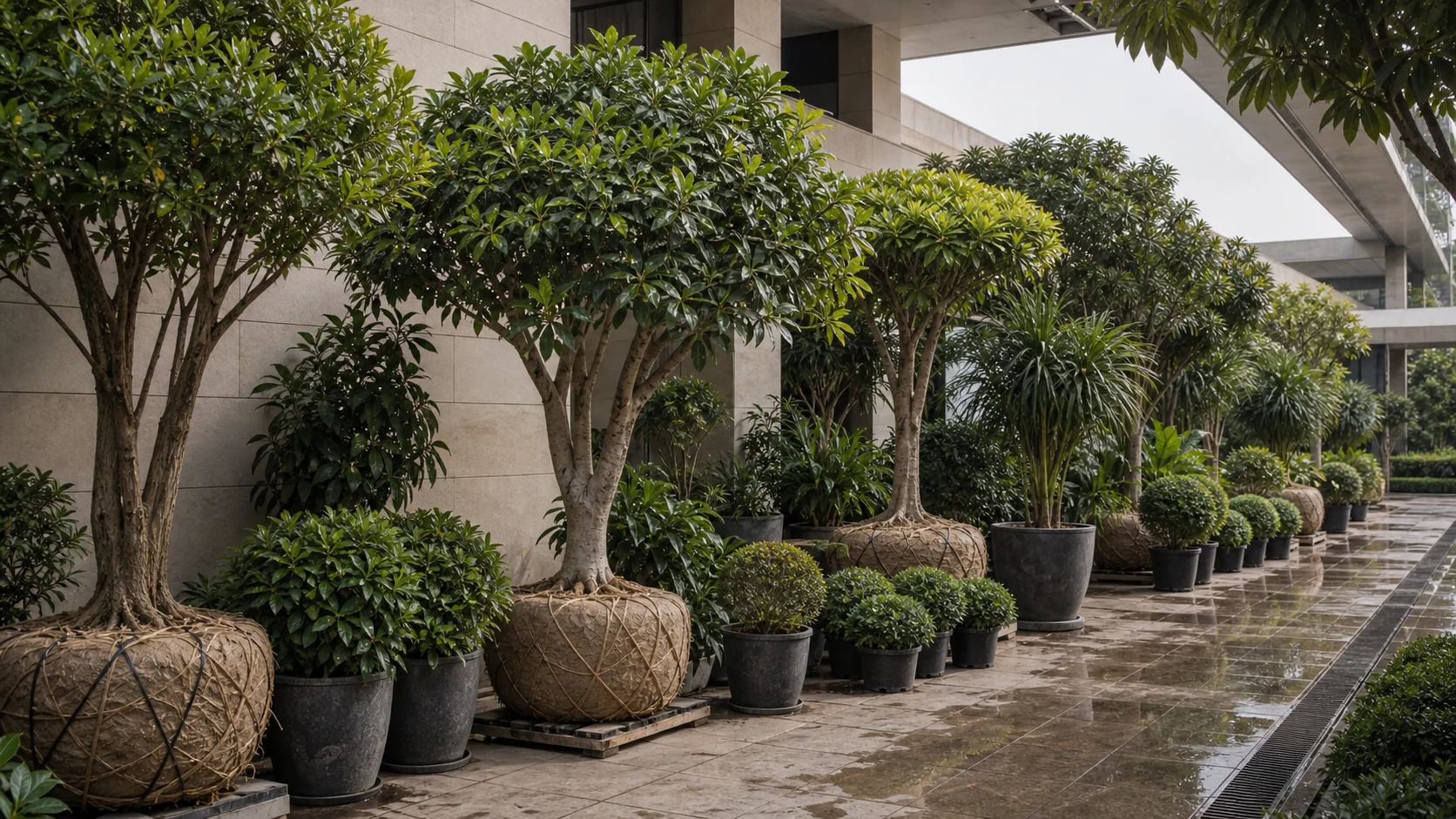
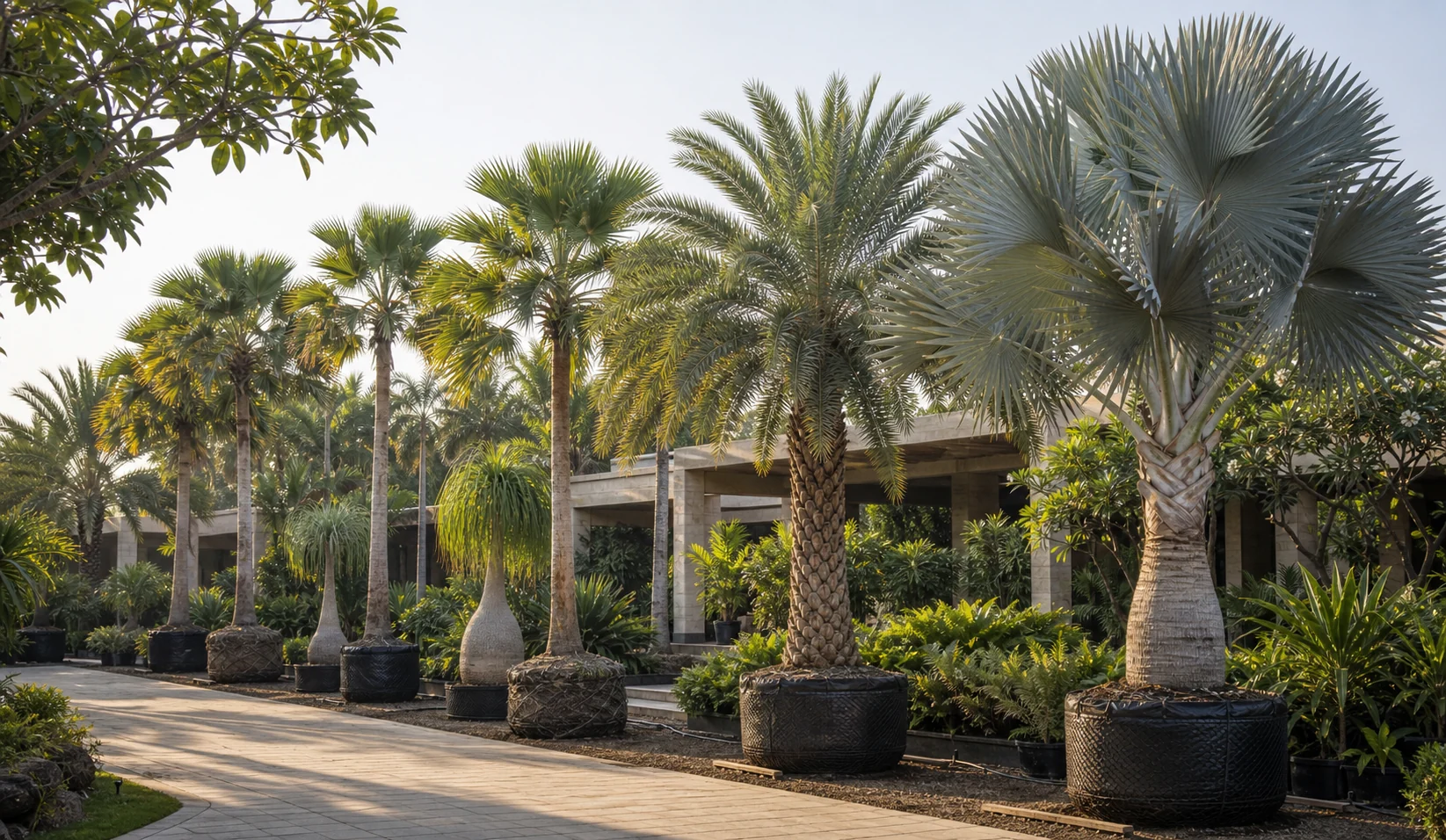
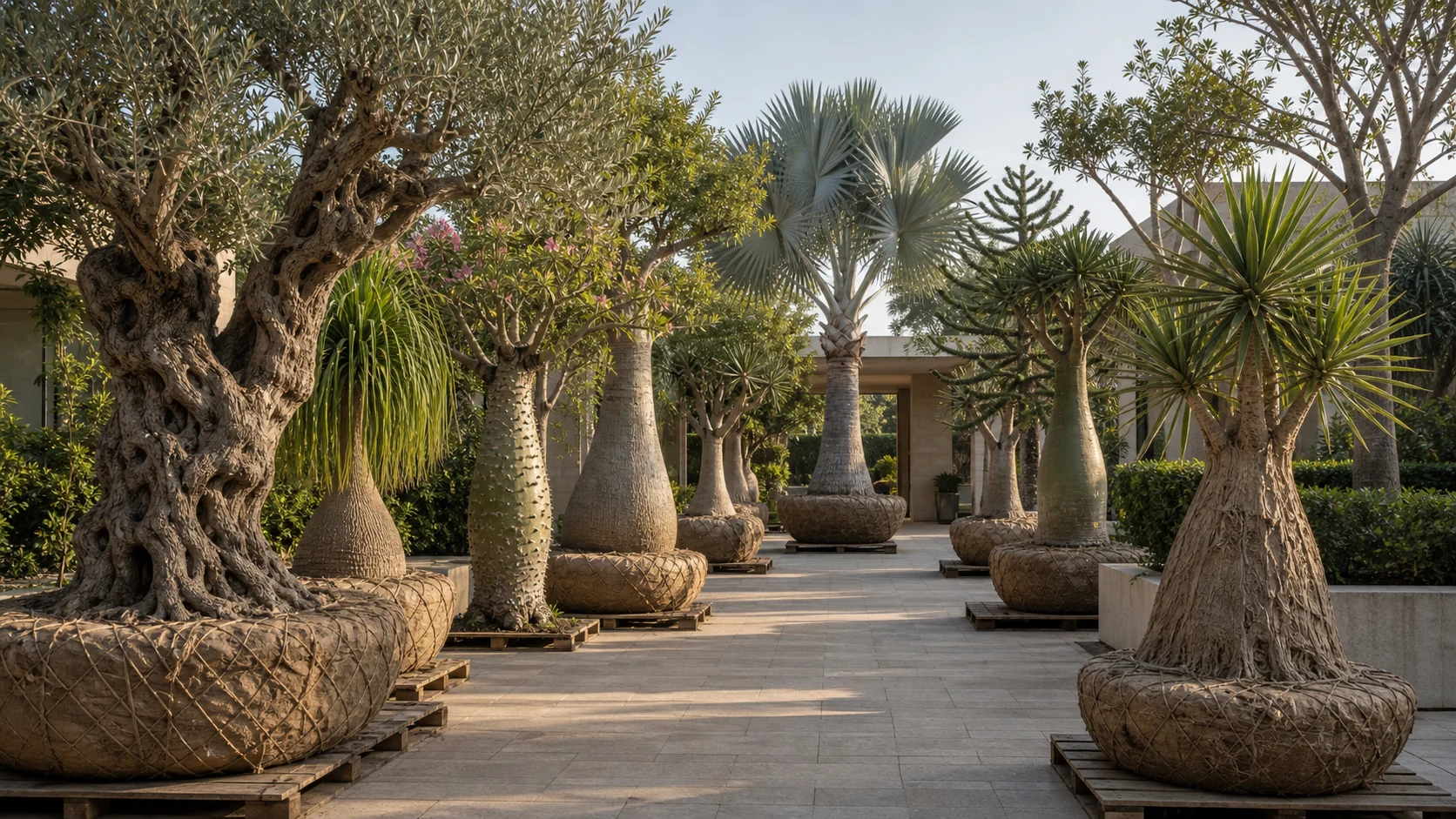
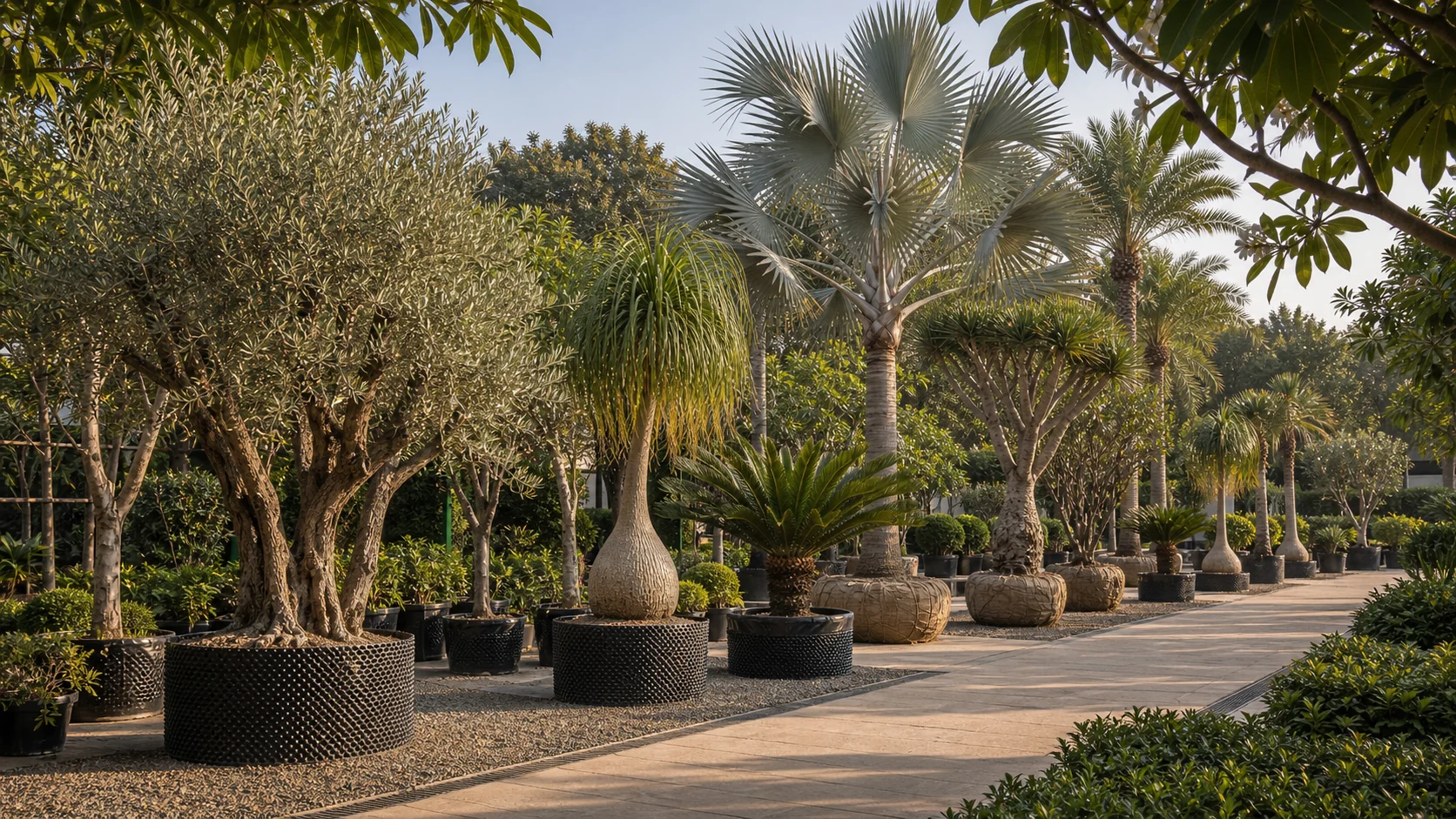
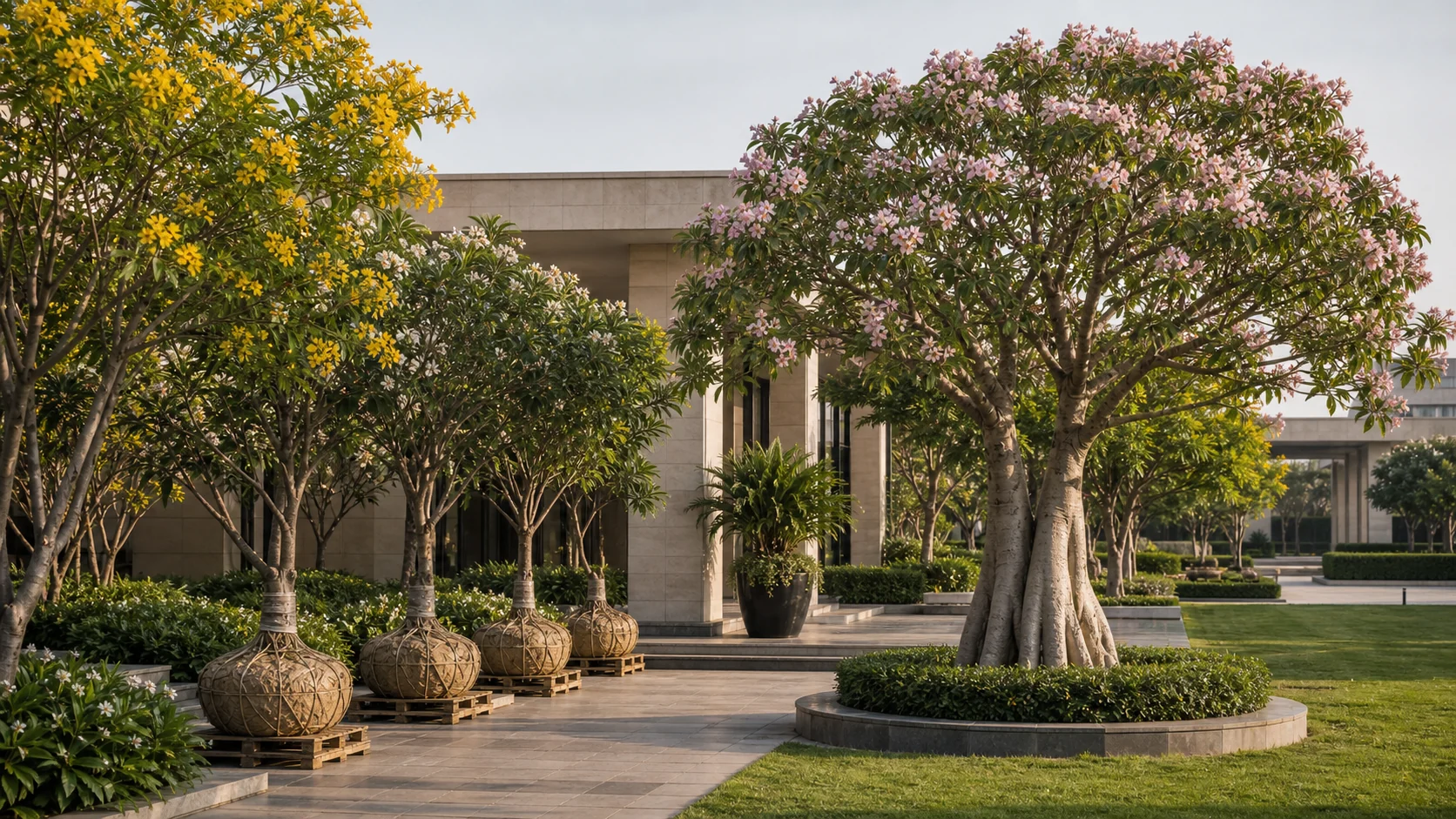
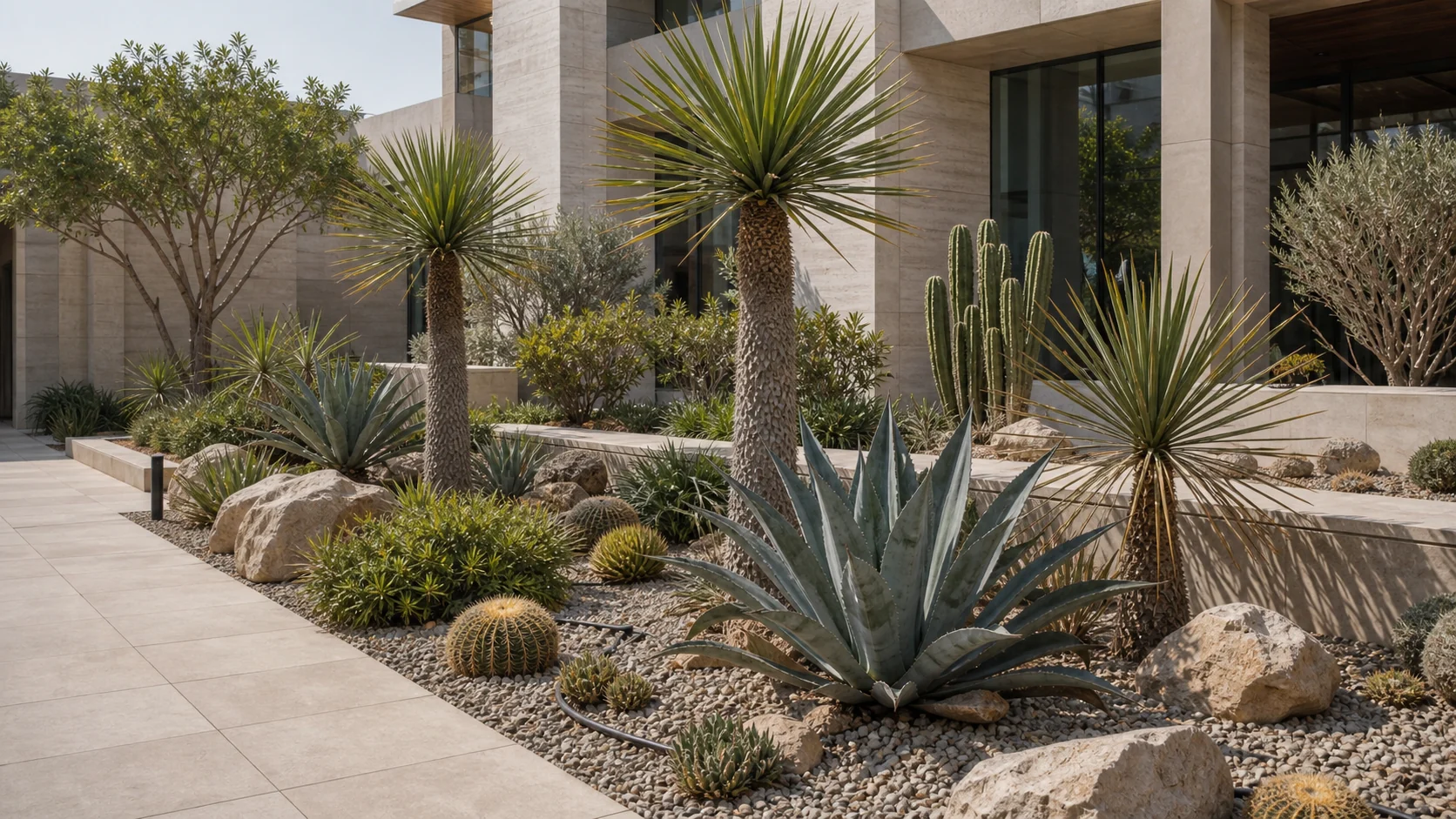
Visual context for placement, scale, handling, and landscape integration.
Section
Where it's used in premium projects
Leopard tree lines parking courts, boutique hotel forecourts, and formal avenues where mottled bark reads at pedestrian speed and fine foliage filters glare without a heavy banyan dome. Yellow flower seasons add accent but trunk pattern is the year-round premium signal. Specify single-leader versus multi-trunk because bark display area changes.
Section
Climate & site suitability in India
Warm metros and dry-season climates suit it — Bangalore open courts, Hyderabad campuses, and Pune forecourts with irrigation establishment. Strong cyclone corridors need spacing and structural review because branches can be brittle. Plan surface-root setbacks from thin paving and drain covers.
Section
Sourcing & acclimatisation
Buy on visible bark mottling — juvenile smooth stems may not yet leopard. Avenue whips are cheaper but years from bark payoff; branched specimens show pattern immediately. [Unverified: India nursery ferrea holding versus Latin American import.] Acclimatise in full sun for mottling contrast.
Section
Installation (pit, soil, drainage, bracing)
Generous pit width reduces paving heave from surface roots — still expect some lift on light stone. Stake only until root plate stabilises; permanent guying scars bark pattern. Drainage standard for urban trees — not caudiciform extremes but avoid saucer pits.
Section
Establishment & AMC
AMC sweeps fine leaf litter from parking bays and inspects bark for mower damage at trunk base. Light structural prune for wind — do not strip leopard bark with flush cuts. Semi-deciduous drop is brief in warm India but plan sweep on white paving.
Section
Cost drivers
Explore
Related
Related
Related links
Services, segments, cost, and proof.
- Softscape & horticulture
- Irrigation & water management
- Landscape maintenance (AMC)
- Hotel & resort landscaping
- Luxury resort & spa landscaping
- Mall & retail landscaping
- Corporate campus landscaping
- Projects
- Commercial landscaping cost guide
- Pricing drivers (imported trees)
- Import compliance workflow
- Request a site assessment
- What is leopard-spotted bark?
- Smooth trunk skin mottled grey-green and cream — the pattern intensifies on older stems in full sun; specify branched stock if instant pattern is required.
- Is filtered shade enough for parking courts?
- Yes — fine bipinnate foliage gives light shade without a heavy dome; pair with species count for coverage targets on BOQ.
- How fast does Caesalpinia ferrea grow?
- Moderate to fast in warm irrigated establishment — bark mottling lags behind height on young whips.
- What wind and root cautions apply?
- Brittle limbs in strong wind; surface roots lift thin paving — engineer setbacks and root-zone width.
- Does semi-deciduous drop affect guest areas?
- Brief leaf fall in stress or cool snaps — fine litter on parking bays needs sweep cycles in AMC.
- What phytosanitary steps apply to imported leopard tree stock?
- Live Fabaceae trees entering India require standard plant quarantine clearance — align PO dates with inspection capacity (informational, not legal advice).
- How should avenue BOQs compare suppliers?
- Match bark maturity, leader form, paving protection scope, and wind-prune AMC — not per-tree height alone.