
Gumbo-limbo
Gumbo-limbo / Tourist tree (Bursera simaruba)
Bursera simaruba is the 'tourist tree' — smooth coppery-red bark that peels in papery sheets like sunburnt skin, plus aromatic resin and extreme drought tolerance. Unusually among trunk-feature trees, it roots from large truncheons for instant living specimens, making it a fast tropical-coastal bark statement when brittle soft wood and storm management are planned honestly.
Spec
At a glance
- Botanical name
- Bursera simaruba
- Family
- Burseraceae
- Common names
- Gumbo-limbo, tourist tree, West Indian birch
- Origin
- Tropical Americas and Caribbean
- Plant type
- Fast semi-deciduous tree
- Mature height
- Often 10–20 m
- Trunk / form
- Smooth coppery-red peeling bark; open irregular crown
- Crown spread
- Moderate to wide — coarse if unpruned
- Growth rate
- Fast — truncheons give instant height
- Light
- Full sun
- Water needs
- Very drought-tolerant; tolerates coastal salt air
- India climate suitability
- Tropical coastal and warm humid India (Goa, Chennai coast, Kerala lowlands) with storm planning
- Cold/heat & salt/wind tolerance
- Coastal salt and drought tolerant; soft wood breaks in cyclonic wind
- Typical supply size
- Truncheons or container 3–6 m [Unverified]
- Lead time (sourcing)
- [Unverified] truncheon-grown instant lines versus container stock
- Install considerations
- Truncheon rooting needs stabilisation; brittle limbs — plan setbacks and pruning
- Maintenance level
- Moderate — storm tidy, bark peel sweep, coarse crown reduction
- Cautions
- Soft brittle wood; dry-season leaf drop; coarse crown without management
Gallery
Specimen visual guide
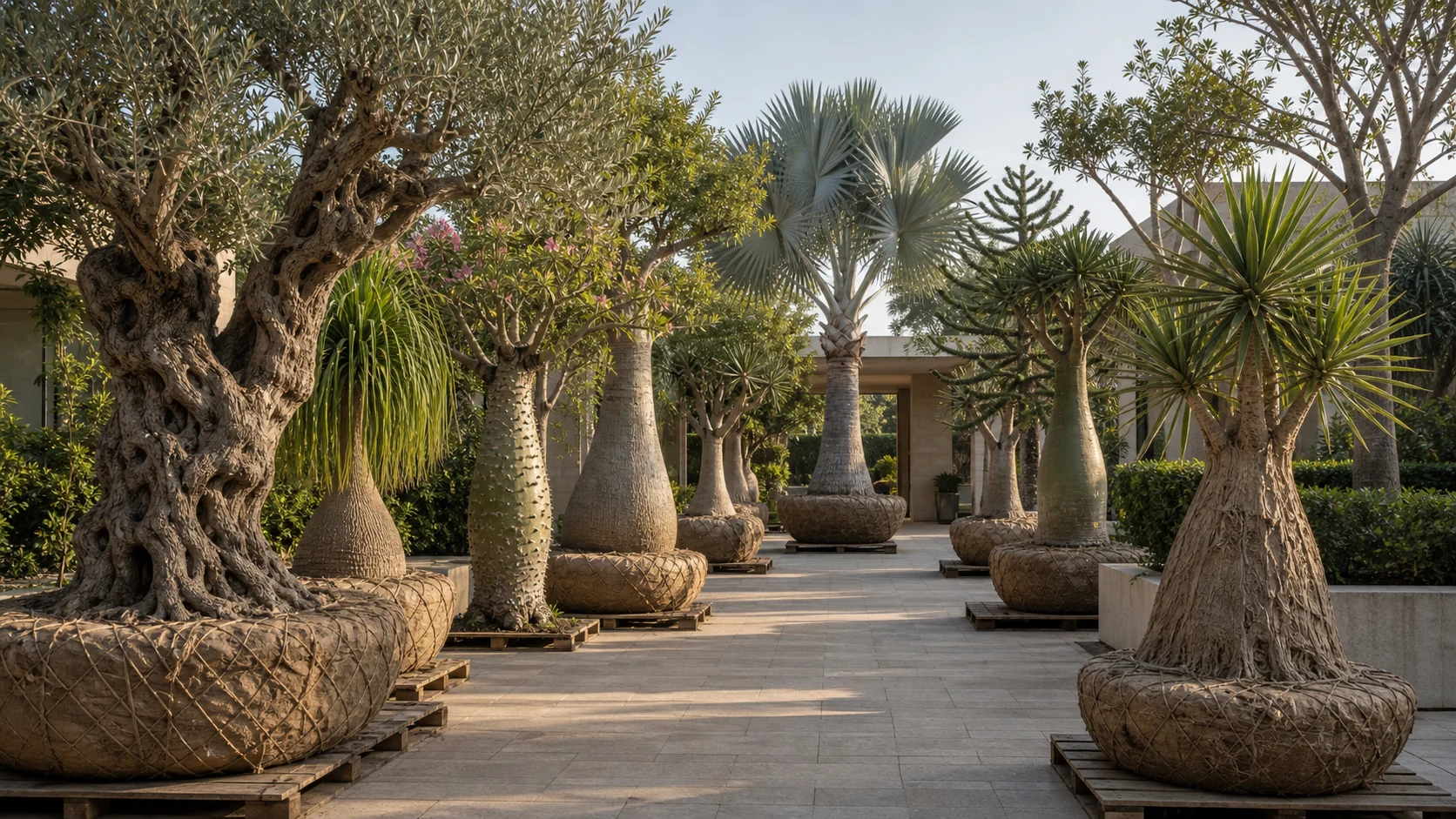
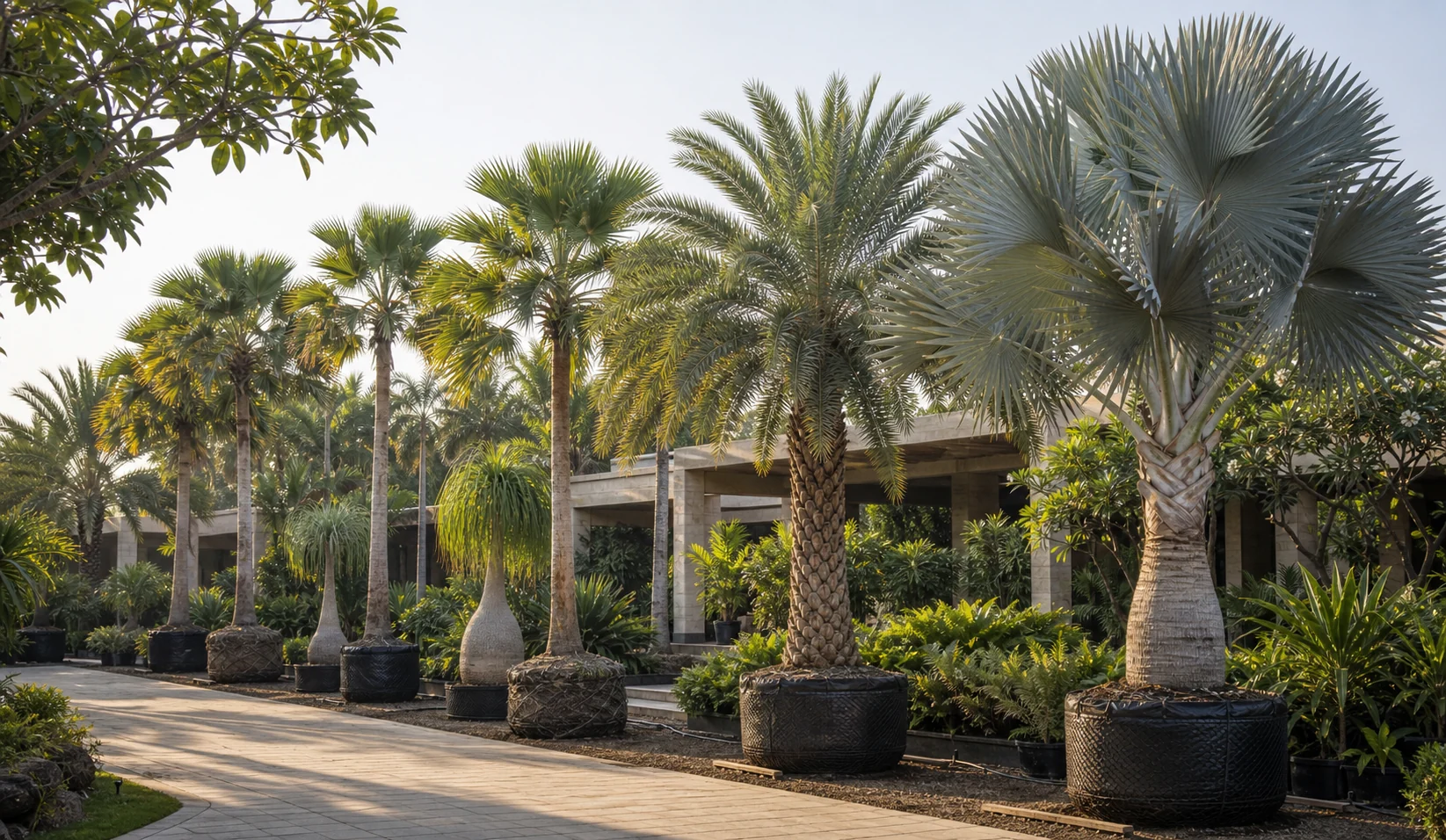
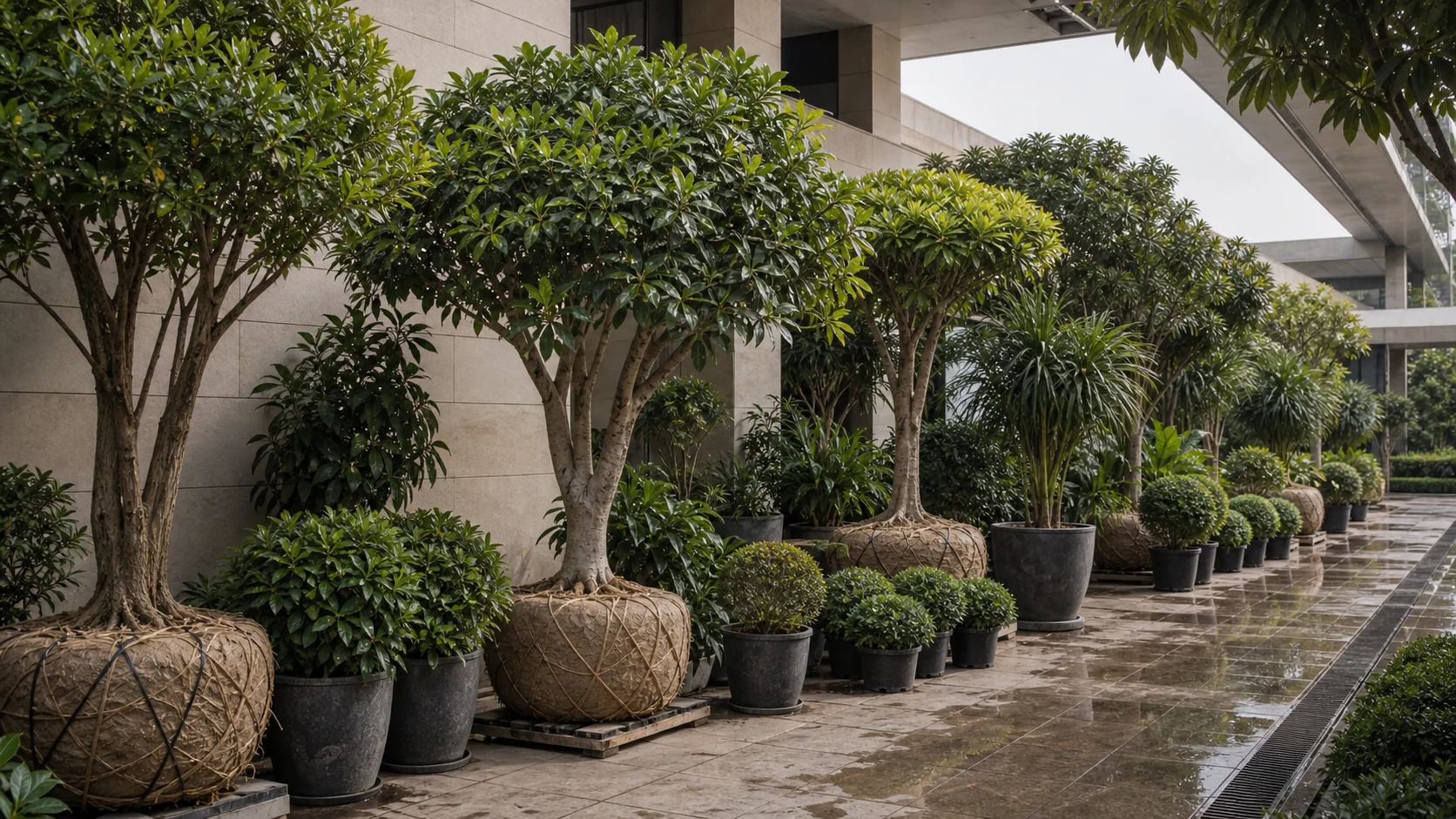
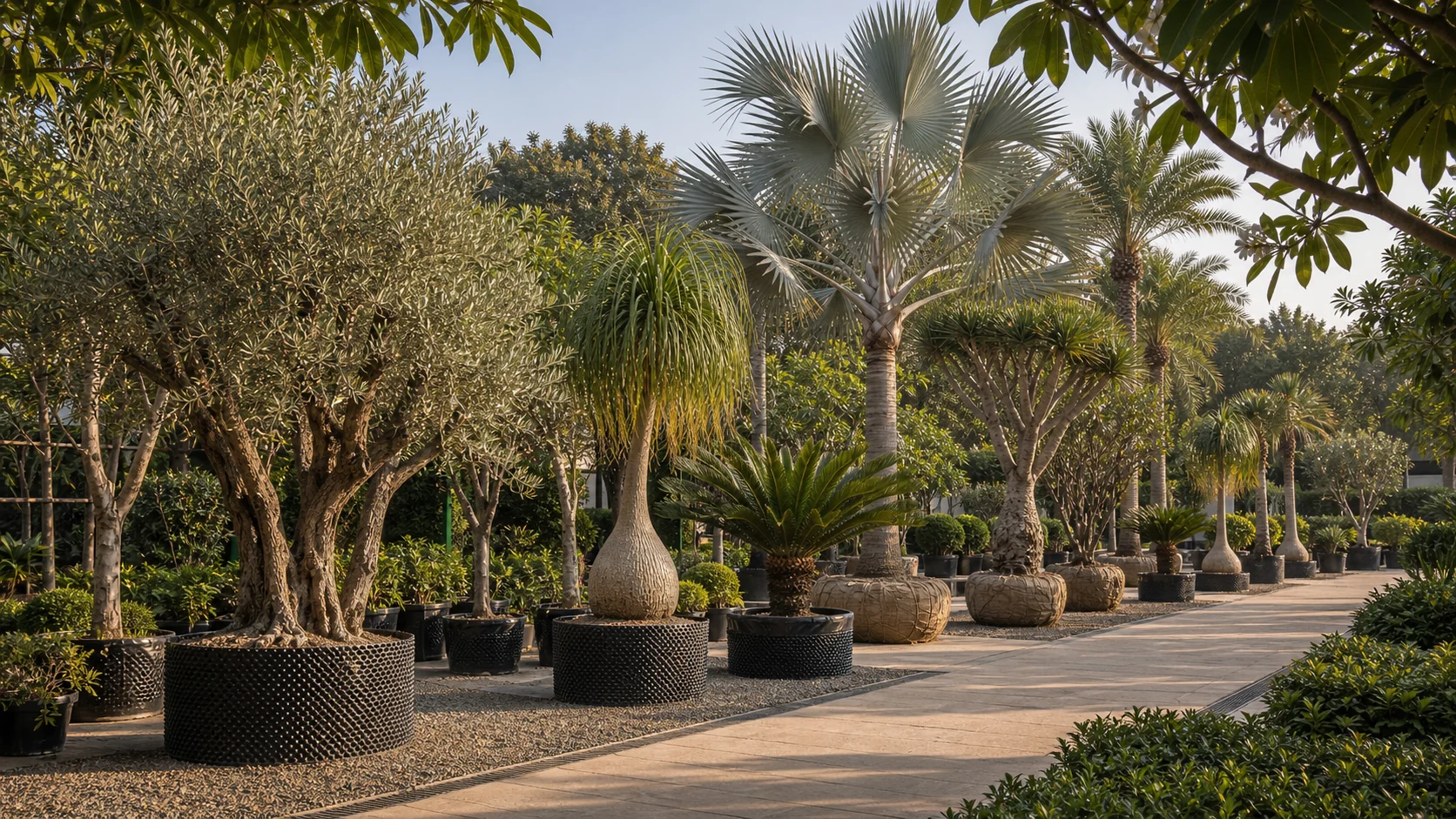
Visual context for placement, scale, handling, and landscape integration.
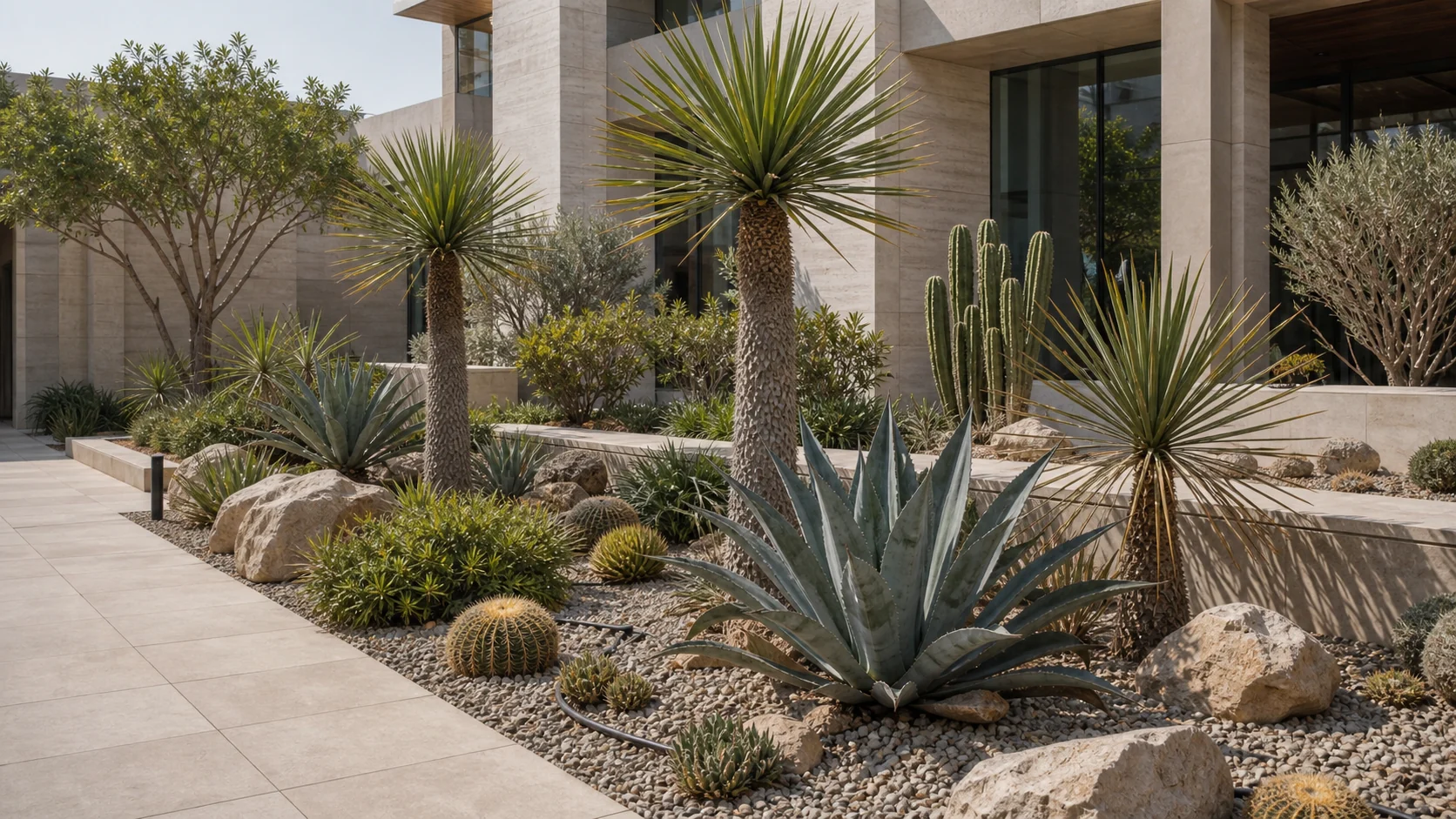
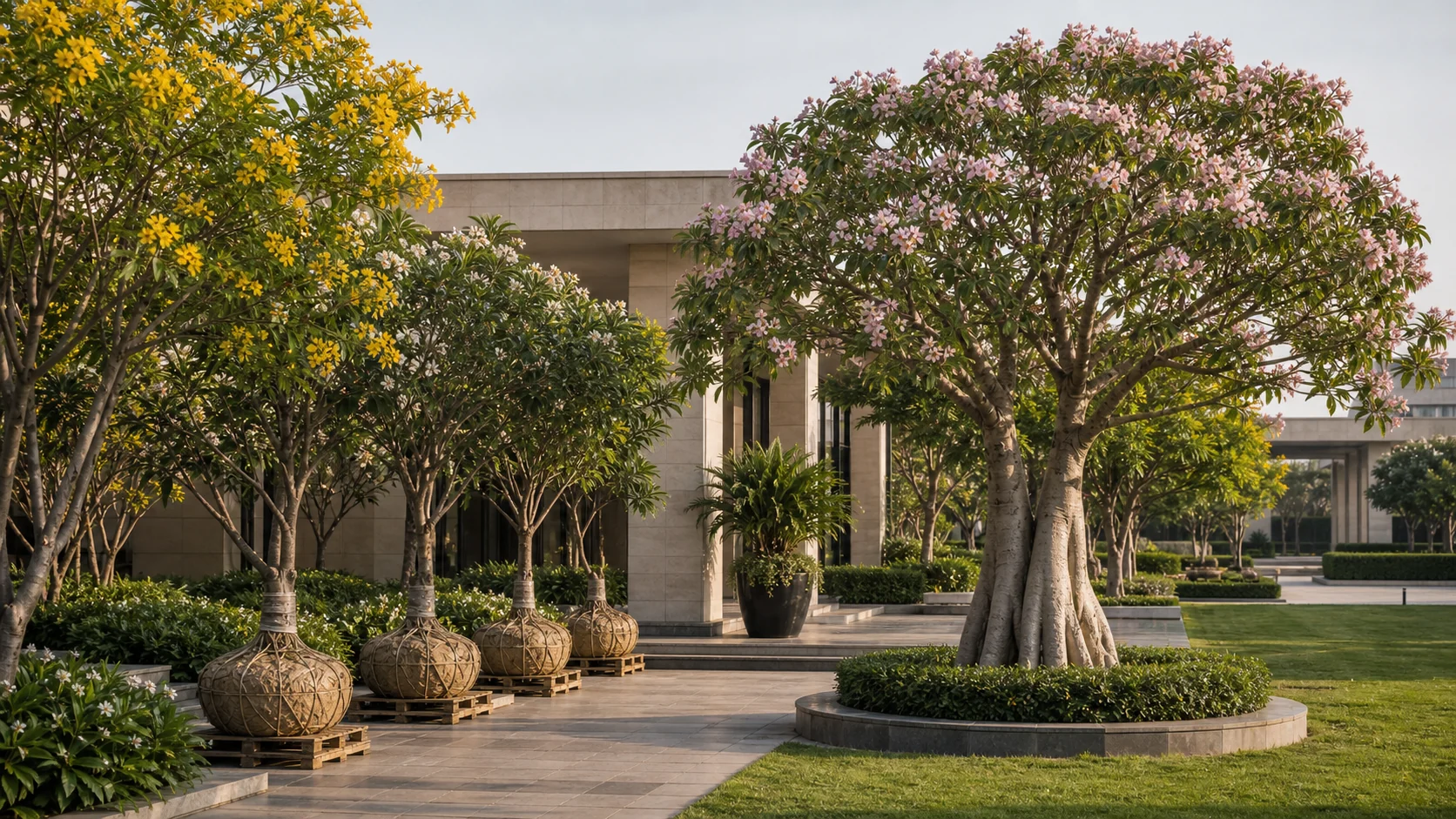
Section
Where it's used in premium projects
Gumbo-limbo sells the coppery peeling trunk on tropical-coastal arrivals — beach resorts, marina clubs, and Caribbean-inspired landscapes where bark colour reads against white render and turquoise water views. Truncheon-grown instant trees are a legitimate procurement path — specify truncheon versus container origin on BOQ because establishment protocols differ.
Section
Climate & site suitability in India
Warm coastal tropics suit it — salt spray and drought are strengths. Cyclone coasts need honest storm plans: soft wood breaks. Inland dry heat works; cool hills do not. Dry-season deciduous leaf drop is brief but peels and litter accumulate on pool decks — route paths accordingly.
Section
Sourcing & acclimatisation
Truncheon material delivers instant trunk height but requires stabilisation and root development monitoring. Container stock is slower but structurally simpler. [Unverified: India nursery truncheon culture for simaruba.] Hold in full sun so copper bark tone is evident — shaded yard storage dulls the selling feature.
Section
Installation (pit, soil, drainage, bracing)
Truncheons need firm staking and root-initiation checks — do not remove supports early. Even container plants have brittle limbs; crane paths must avoid snapping leaders. Drainage still matters despite drought marketing — monsoon saucers rot truncheon bases.
Section
Establishment & AMC
AMC includes post-storm limb removal, peel sweep on guest paving, and crown reduction to keep coarse growth readable at resort scale. Aromatic resin weeps from wounds — normal for the species, not always a failure signal. Re-stake truncheons if monsoon wind rocks young roots.
Section
Cost drivers
Explore
Related
Related
Related links
Services, segments, cost, and proof.
- Softscape & horticulture
- Irrigation & water management
- Landscape maintenance (AMC)
- Hotel & resort landscaping
- Luxury resort & spa landscaping
- Mall & retail landscaping
- Corporate campus landscaping
- Projects
- Commercial landscaping cost guide
- Pricing drivers (imported trees)
- Import compliance workflow
- Request a site assessment
- Why is it called the tourist tree?
- Coppery-red bark peels in papery sheets — the trunk looks sunburnt, which is the deliberate landscape feature.
- What are truncheons and why do they matter?
- Large cut stems root directly into living trees — instant trunk height; specify truncheon versus container origin and stabilisation scope on BOQ.
- How drought- and coast-tolerant is gumbo-limbo?
- Very drought- and salt-tolerant for tropical coastal India — pair with storm management because wood is soft and brittle.
- What wind risks should structural engineers know?
- Soft wood snaps in cyclonic gusts — setbacks from glazing, parking, and guest paths; programme post-storm AMC.
- Does peeling bark require maintenance?
- Peel plates drop on paving — sweep cycles on white stone near the trunk; do not varnish or seal bark.
- Are live Bursera imports subject to plant quarantine?
- Yes — coordinate phytosanitary paperwork and inspection windows with your import compliance process (informational, not legal advice).
- How should truncheon versus container quotes differ?
- Truncheon lines include staking duration, root-initiation monitoring, and storm AMC — not the same unit economics as container stock.