
Ponytail palm
Ponytail palm (Beaucarnea recurvata)
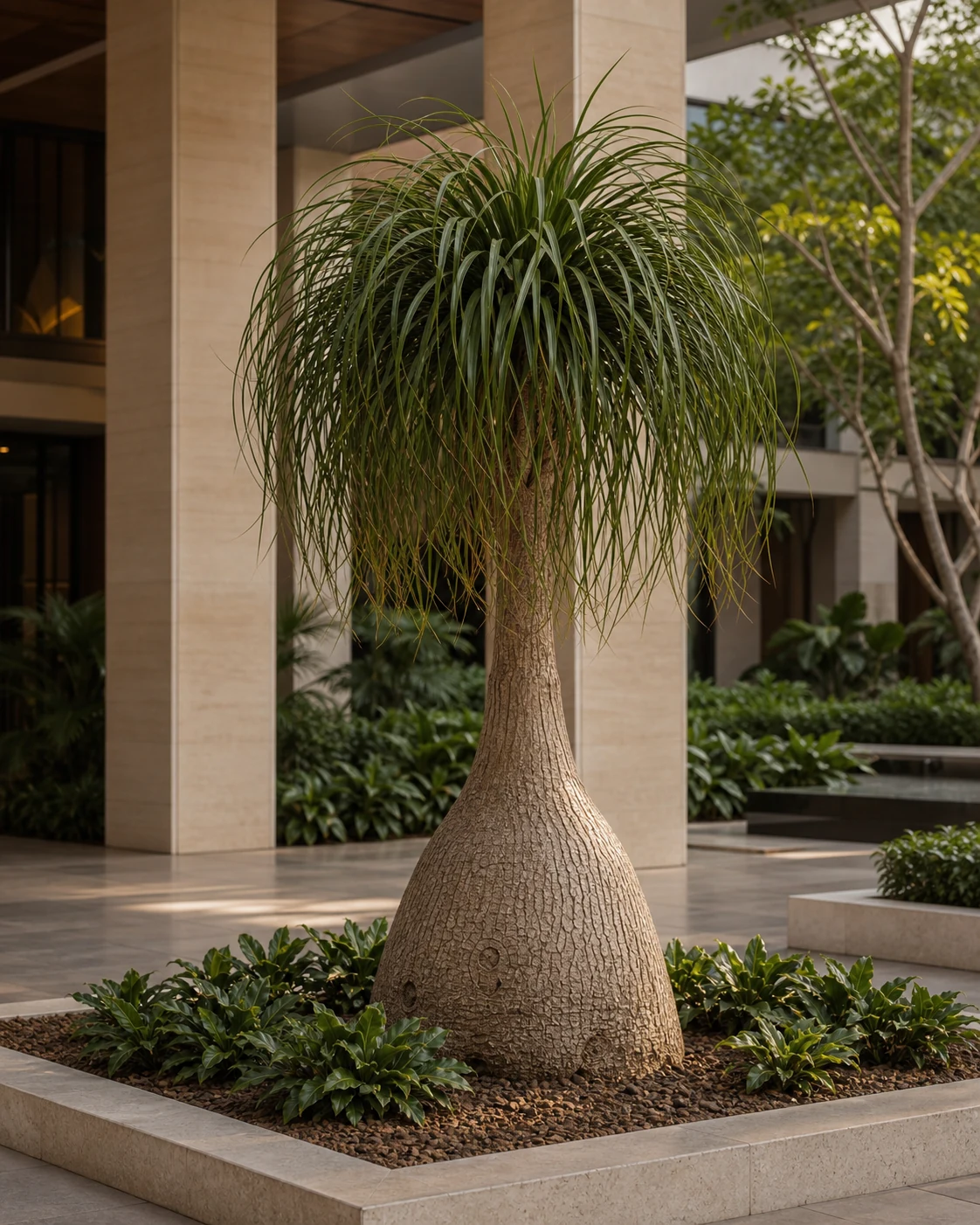
Beaucarnea recurvata is the ponytail palm — a Mexican succulent with a swollen elephant-foot caudex and fountain of recurved leaves; it is not a palm, and the caudex rots when teams water it like one.
Spec
At a glance
- Botanical name
- Beaucarnea recurvata
- Family
- Asparagaceae (Ruscaceae)
- Common names
- Ponytail palm, elephant-foot tree, nolina
- Origin
- Mexico (semi-desert)
- Plant type
- Caudiciform succulent (not a palm)
- Mature height
- Often 4–5 m indoors/outdoor; caudex dominates visual mass
- Trunk / form
- Massively swollen water-storing caudex; slender stem; ponytail leaf fountain
- Crown spread
- Arching recurved strap leaves from rosette apex
- Growth rate
- Slow caudex expansion — buy caudex girth for impact
- Light
- Bright light to full sun
- Water needs
- Very low; caudex rot if overwatered
- India climate suitability
- Atriums, pots, dry courts; cold-sensitive young; drainage in monsoon
- Cold/heat & salt/wind tolerance
- Heat-tolerant; protect young from frost; caudex rots when wet+cold
- Typical supply size
- Caudex girth classes for pots and beds [Unverified]
- Lead time (sourcing)
- [Unverified] Mexico/India nursery ponytail stock
- Install considerations
- Never bury caudex; gritty mix; pot drainage mandatory
- Maintenance level
- Low dry AMC — resist irrigation sympathy
- Cautions
- Overwatering rots caudex; not a palm; slow; protect young from cold
Supply
Latest import activity
- Imported on
- 28 Jun 2026
- Source
- Flemings Nurseries (sample)
- Availability
- Available
- Lot
- Beaucarnea recurvata — 2.5 m caudex
Gallery
Specimen visual guide
Visual context for placement, scale, handling, and landscape integration.
Section
Where it's used in premium projects
Ponytail palm sells the swollen caudex plus leaf fountain — mall atriums with controlled irrigation, estate pots, and xeric feature beds where a sculptural base reads at eye level. Brief teams that it is Beaucarnea, not *Washingtonia*.
Section
Climate & site suitability in India
Works in bright atriums and dry outdoor courts; fails when caudex sits in wet saucers through monsoon or when landscape irrigation treats it like a feather palm. Young plants need frost protection in North India winters.
Section
Sourcing & acclimatisation
BOQ by caudex diameter and leaf health — smooth swollen base is the grade driver. [Unverified: typical India container stock vs Mexican field caudex imports.] Reject specimens with soft basal tissue.
Section
Installation (pit, soil, drainage, bracing)
Plant with caudex proud of grade — burying the elephant foot causes rot. Use porous mixes in pots or gravel beds outdoors; separate drip from turf zones. Atrium installs need floor drainage, not saucer stagnation.
Section
Establishment & AMC
Overwatering is the number-one killer — AMC must schedule dry weeks, especially where housekeeping waters 'wilting' leaves that are simply adapting. Caudex softness is an emergency stop-irrigation event. Indoor specimens need light intensity, not more water.
Section
Cost drivers
Explore
Related
Related
Related links
Services, segments, cost, and proof.
- Softscape & horticulture
- Irrigation & water management
- Landscape maintenance (AMC)
- Hotel & resort landscaping
- Luxury resort & spa landscaping
- Mall & retail landscaping
- Corporate campus landscaping
- Projects
- Commercial landscaping cost guide
- Pricing drivers (imported trees)
- Import compliance workflow
- Request a site assessment
- Is ponytail palm a real palm?
- No — *Beaucarnea recurvata* is an asparagus-family succulent with a swollen caudex; rigging, irrigation, and BOQ lines should not follow palm defaults.
- Why does the base look swollen?
- The caudex stores water — it is the design feature; overwatering rots that tissue faster than drought stresses the leaves.
- Can it live indoors in India?
- Yes in bright atriums with disciplined dry-down — weak light plus wet soil causes etiolation and rot.
- What kills ponytail palm in year one?
- Sympathy irrigation on the caudex — especially post-monsoon when teams resume landscape watering schedules.
- Does it need full sun outdoors?
- Bright to full sun builds tight leaf fountains; shade holding produces loose, weak rosettes.
- What import rules apply to Beaucarnea?
- Caudiciform succulent consignments need accurate genus on phytosanitary paperwork for Indian quarantine — 'palm' labels on docs are a red flag (informational, not legal advice).
- How should ponytail quotations compare?
- Match caudex girth photos, pot/berm drainage scope, and dry AMC — not palm-height pricing.