
Queensland kauri
Queensland kauri (Agathis robusta)
Agathis robusta is the Queensland kauri — tall straight trunk with glossy broad needles forming a majestic broad column, not a pencil-fastigiate spruce. Subtropical India can grow it where space and moisture exist; honesty about ultimate size and habit prevents undersized pits and false narrow-column expectations.
Spec
At a glance
- Botanical name
- Agathis robusta
- Family
- Araucariaceae
- Origin
- Eastern Australia / Queensland
- Form
- Broad columnar architectural conifer — straight trunk, symmetrical crown (not strict fastigiate)
- Foliage
- Glossy broad evergreen needles — unlike pinaceous needles
- Mature size
- Large tree 30 m+ in habitat; wide crown eventually
- Growth rate
- Moderate — buy height for arrival presence
- Light
- Full sun when established
- Water
- Moderate to high — prefers moisture; tolerates short dry when established
- India climate suitability
- Subtropical humid and irrigated plains; needs space — not small courtyards
- Hardiness
- Frost-free lowlands; young plants need wind protection
- Typical supply
- Container and field trees by height class [Unverified]
- Maintenance
- Lower branch lift for clearance; monitor scale and root space
- Cautions
- Large eventually; needs space/moisture; broad column, not strict fastigiate
Gallery
Specimen visual guide
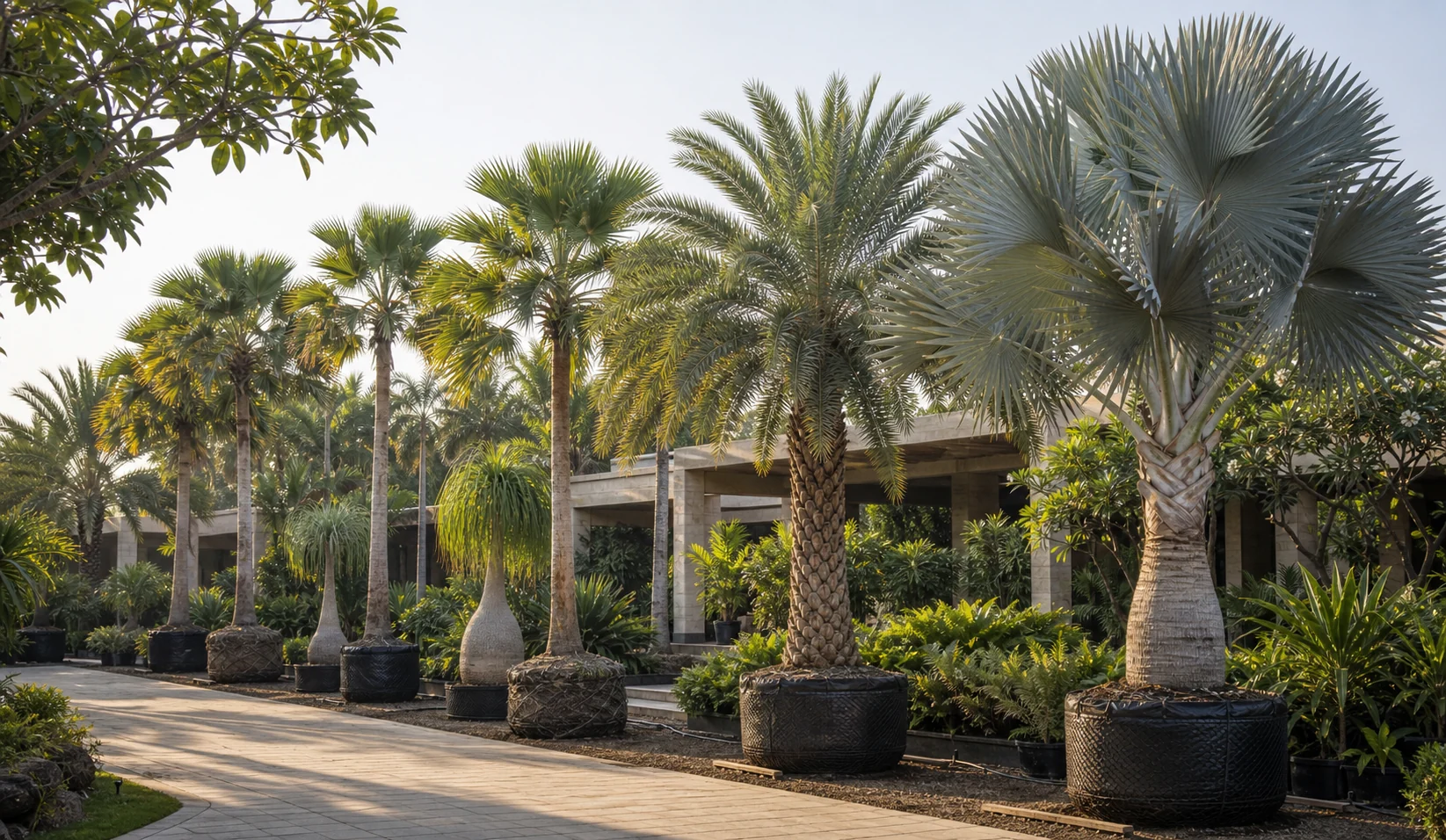
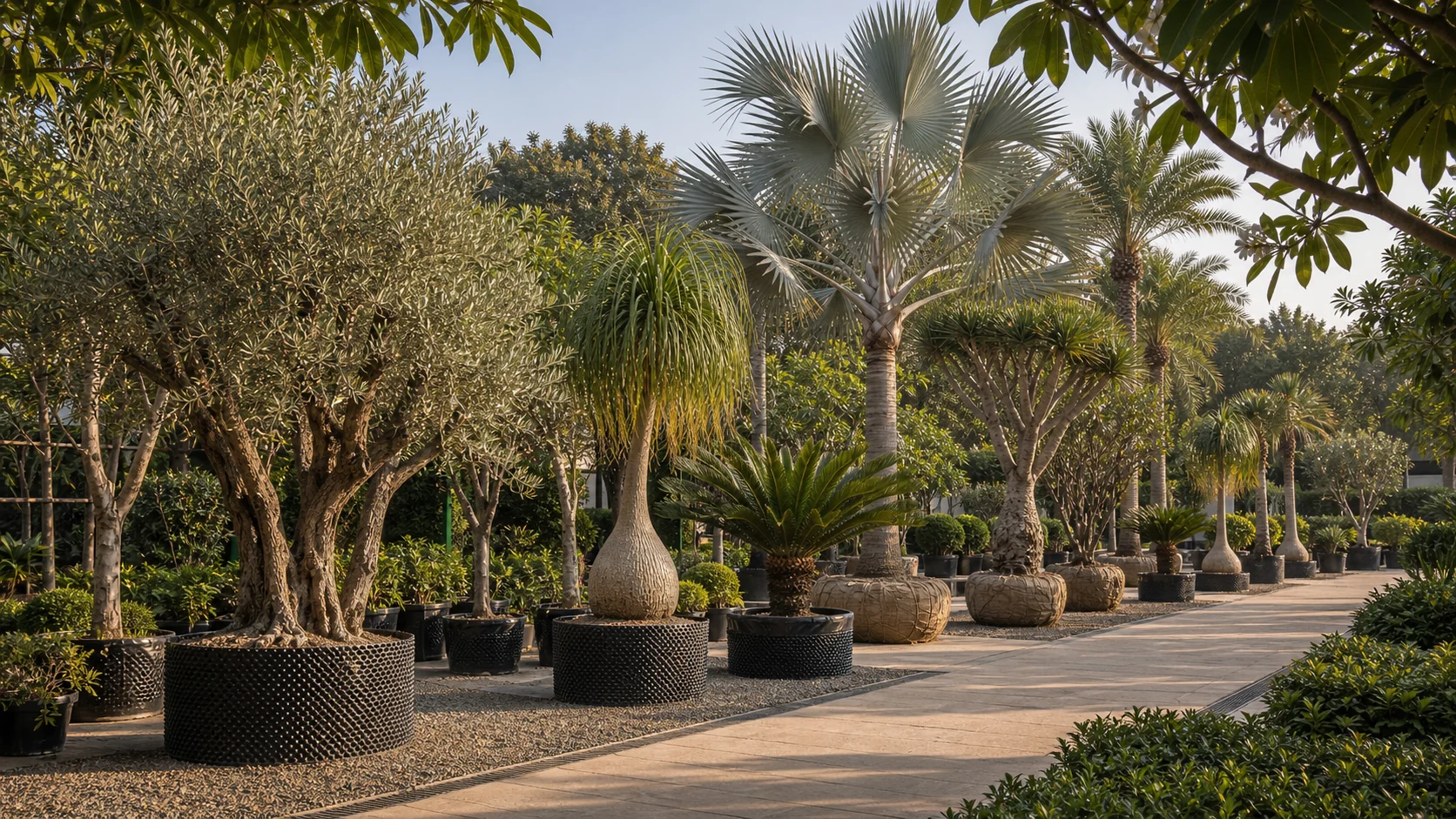
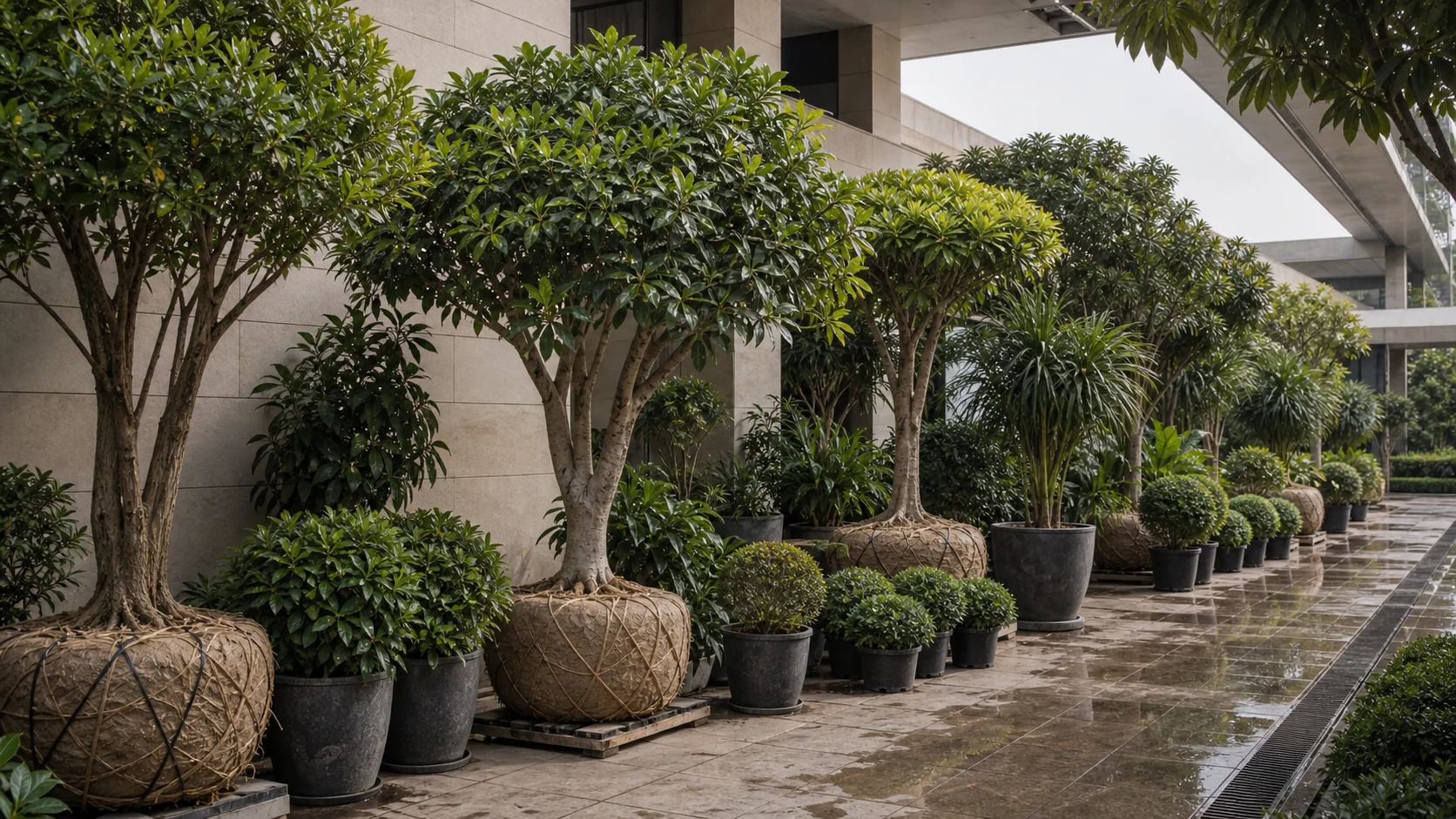
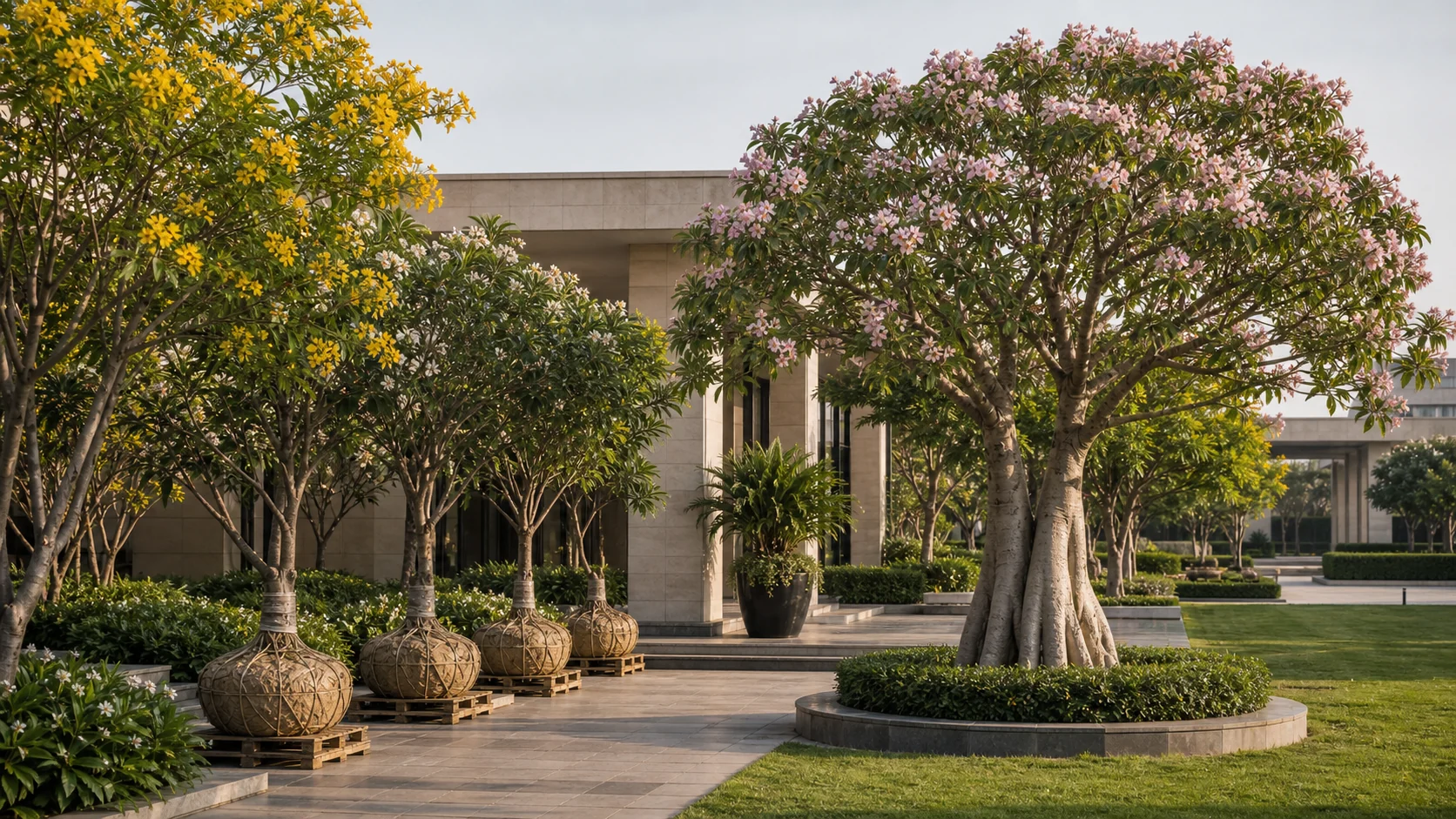
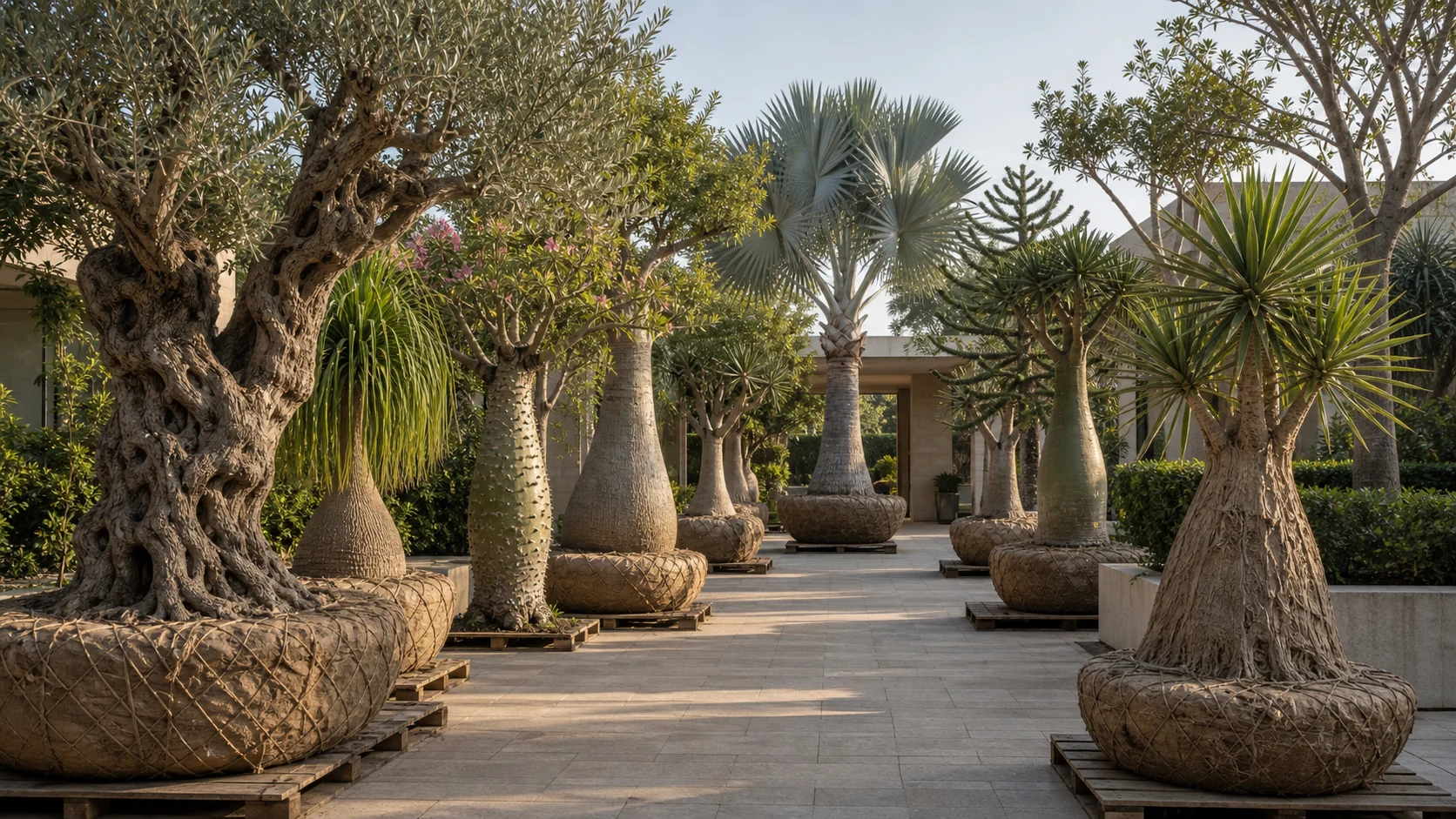
Visual context for placement, scale, handling, and landscape integration.
Section
Where it's used in premium projects
Robusta lines grand drives and golf fairway corners where a single broad column conifer must read like a living monument — pair with generous root zones, not 1 m pavement pits. Architectural conifer mood without monkey-puzzle spines.
Section
Climate & site suitability in India
Humid subtropical coasts and irrigated Bangalore-style sites succeed with space; dry Rajasthan needs exceptional irrigation long-term. Not a narrow 2 m alley tree — crown broadens. Heat OK with water discipline.
Section
Sourcing & acclimatisation
Specify height class and trunk form — not confused with Agathis australis. [Unverified: India nursery stock vs import.]
Section
Installation (planting, space, drainage)
Large deep pits with organic backfill and drainage; stake tall specimens first monsoon. Root zone planning decades ahead — kauri broadens. Moisture retention without waterlogging.
Section
Establishment & AMC
Establishment irrigation honest first three years — then moderate. Lower branch removal for vehicular clearance only — do not top. AMC watches root heave on paving if zone was undersized.
Section
Cost drivers
Explore
Related
Related
Related links
Services, segments, cost, and proof.
- Softscape & horticulture
- Irrigation & water management
- Landscape maintenance (AMC)
- Hotel & resort landscaping
- Luxury resort & spa landscaping
- Mall & retail landscaping
- Corporate campus landscaping
- Projects
- Commercial landscaping cost guide
- Pricing drivers (imported trees)
- Import compliance workflow
- Request a site assessment
- Is Agathis robusta strictly fastigiate?
- No — a broad columnar kauri with glossy needles, not a pencil-thin fastigiate spruce; plan width as well as height.
- How large does Queensland kauri become?
- Large tree over decades — specify root and crown space in masterplan, not only opening-year camera angle.
- Does robusta suit subtropical India?
- Yes with moisture and space — humid irrigated sites outperform dry small courtyards without long-term water.
- How is robusta different from monkey puzzle?
- Robusta is broad-column kauri with glossy needles; Araucaria araucana is spiky temperate monkey puzzle with hill-station-only India fit.
- What spacing from paving is required?
- Generous root zone — undersized pits cause heave and decline; engineer like a large shade tree, not a columnar shrub.
- What import paperwork applies?
- Conifer imports need phytosanitary and quarantine inspection (informational, not legal advice).
- How should kauri BOQs be priced?
- Match height class, pit volume, irrigation, and decades-long space planning — not narrow Italian cypress pricing.