
Fony baobab
Fony baobab (Adansonia rubrostipa)
Adansonia rubrostipa is the smallest baobab — a deciduous drought-adapted tree with a distinctive ginger-jar or waisted bottle trunk that narrows at the middle before flaring again. It suits collector courtyards and boutique resort features where full-scale digitata is too massive but the design still demands authentic baobab trunk character.
Spec
At a glance
- Botanical name
- Adansonia rubrostipa (syn. A. fony)
- Family
- Malvaceae (Baobabaceae)
- Common names
- Fony baobab, ginger-jar baobab
- Origin
- South-western Madagascar
- Plant type
- Deciduous small baobab / collector tree
- Mature height
- Often 5–12 m — smallest Adansonia species
- Trunk / form
- Distinctive waisted 'ginger-jar' bottle trunk; sparse branching
- Crown spread
- Compact relative to other baobabs
- Growth rate
- Slow — waist profile develops over years
- Light
- Full sun
- Water needs
- Drought-adapted; sensitive to wet caudex
- India climate suitability
- Dry tropical collector sites with engineered drainage
- Cold/heat & salt/wind tolerance
- Heat-hardy; frost-sensitive; small scale suits sheltered courtyards
- Typical supply size
- Small waisted specimens — specialist nursery grades [Unverified]
- Lead time (sourcing)
- [Unverified] collector hold — rarely bulk stocked
- Install considerations
- Protect waisted bark; drainage; crane only on larger field pieces
- Maintenance level
- Low — inspect waist flare for rot after wet seasons
- Cautions
- Rare; slow; long deciduous bare period; verify species ID versus other baobabs
Gallery
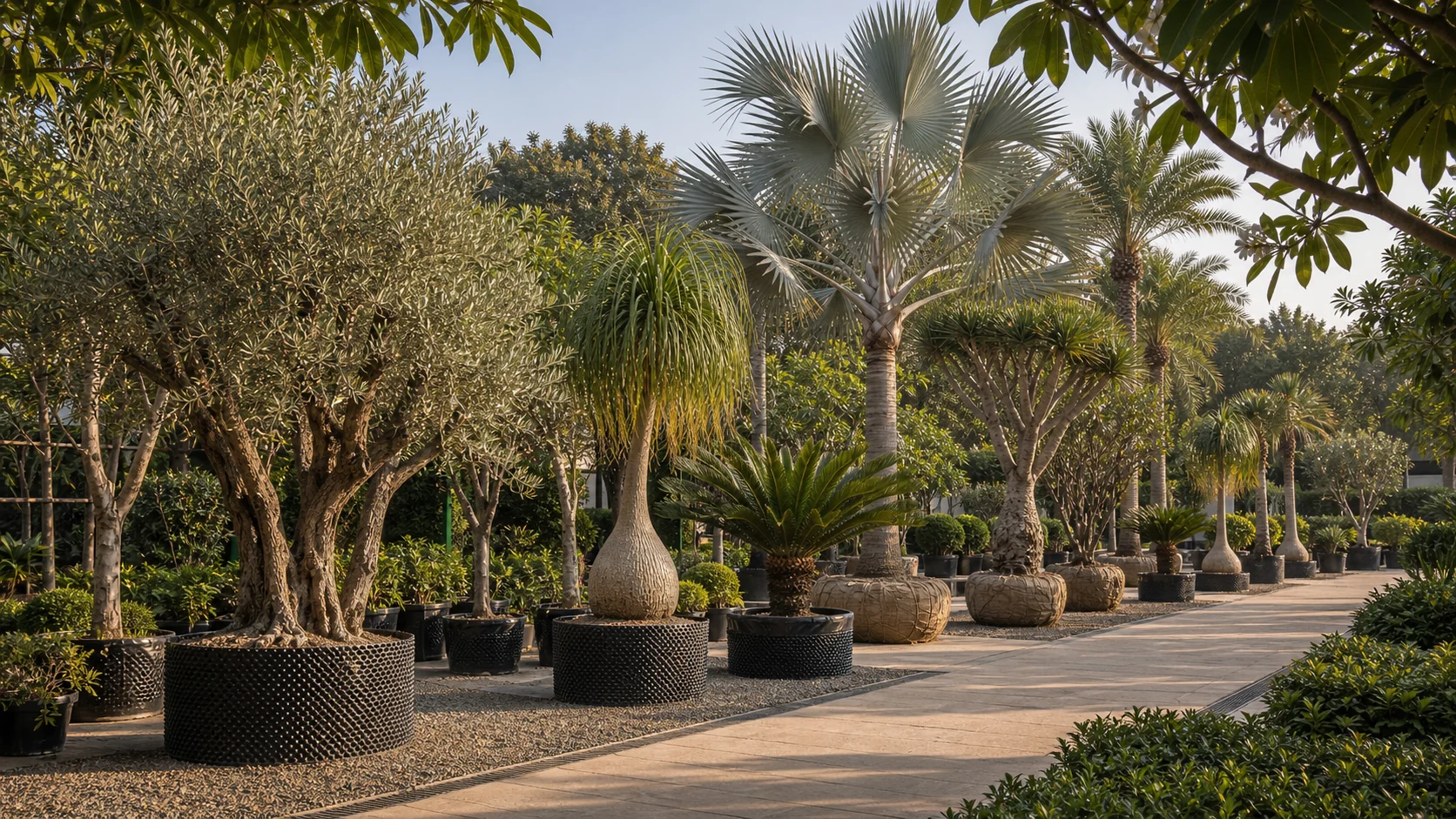
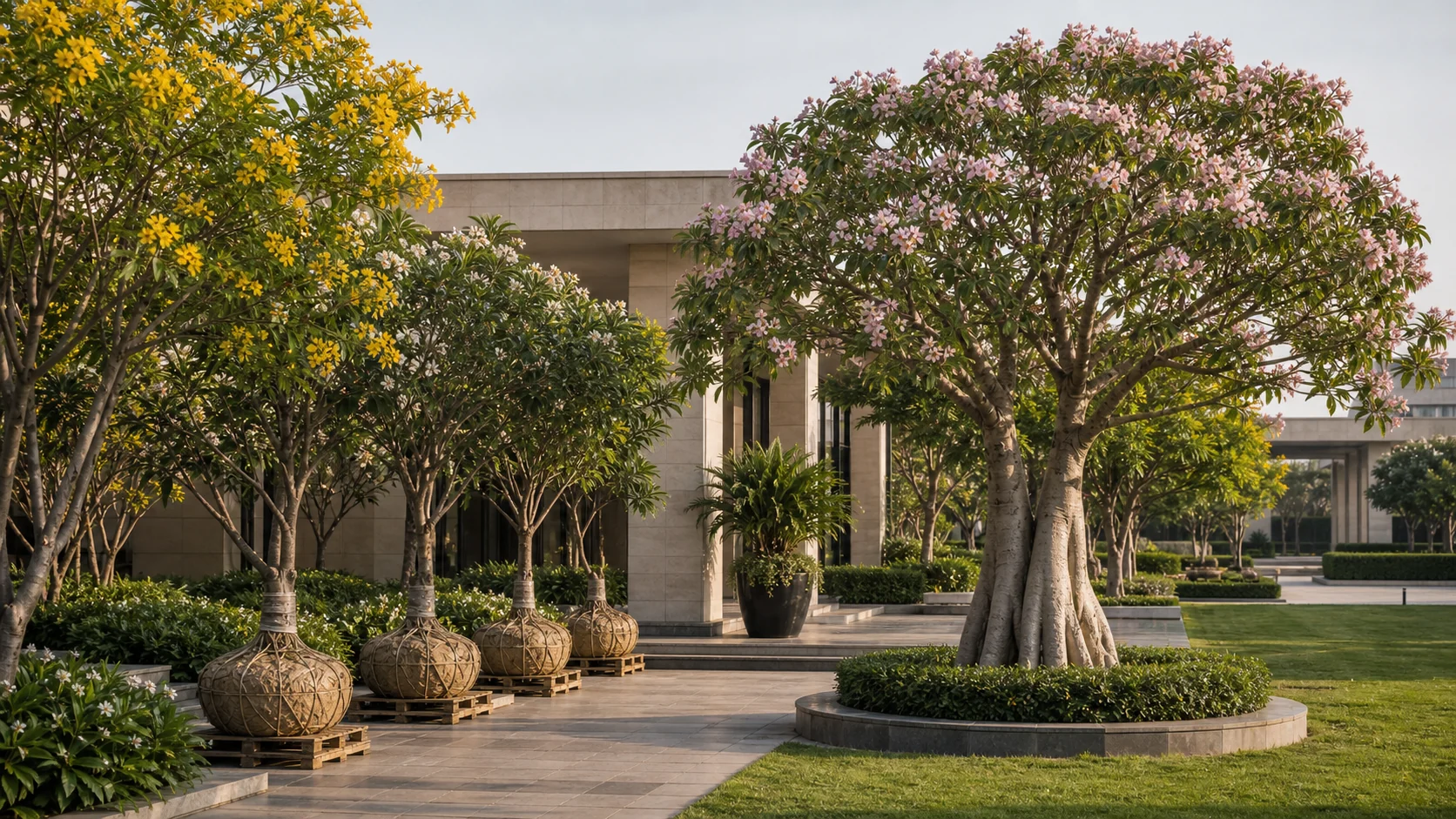
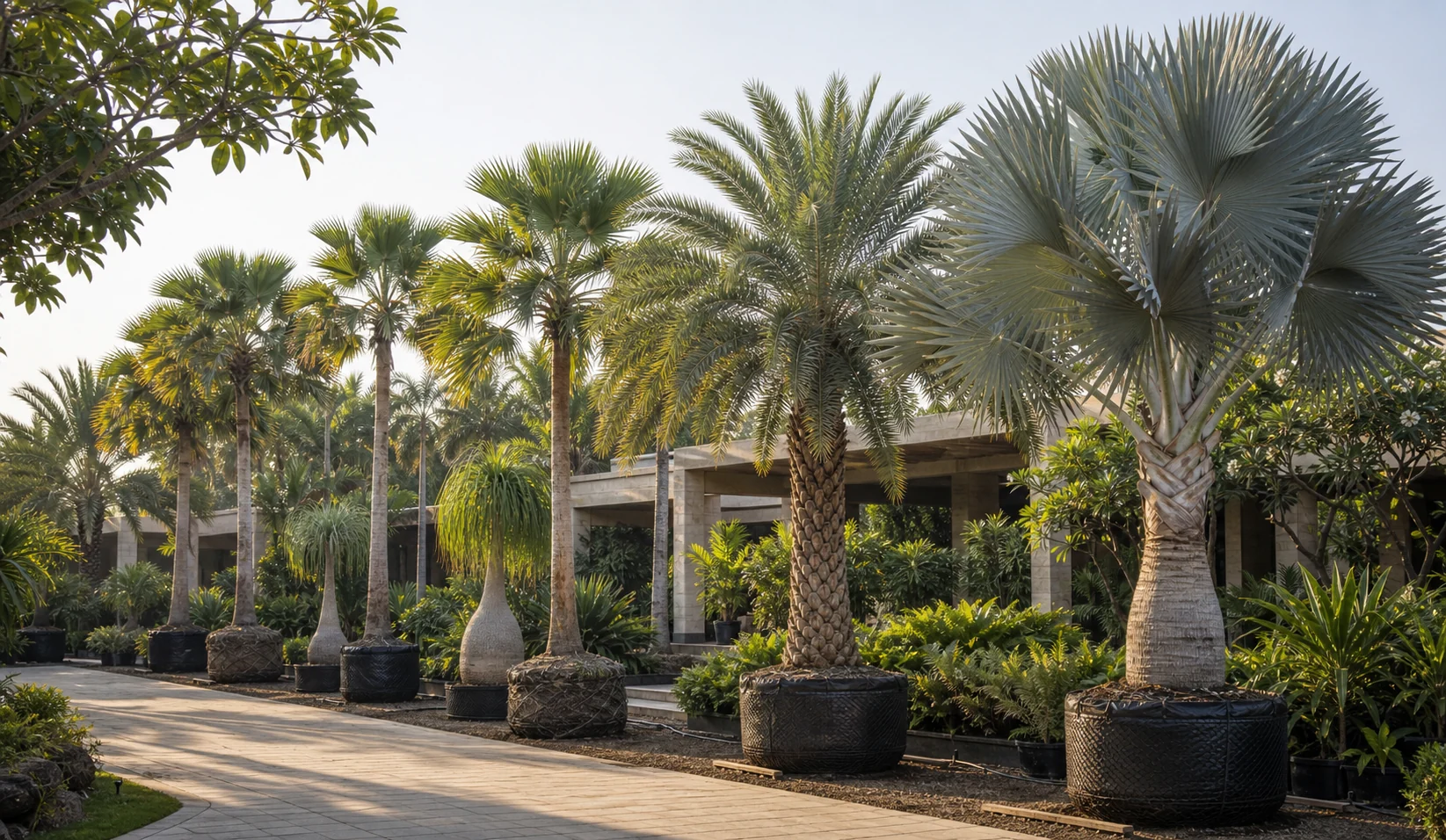
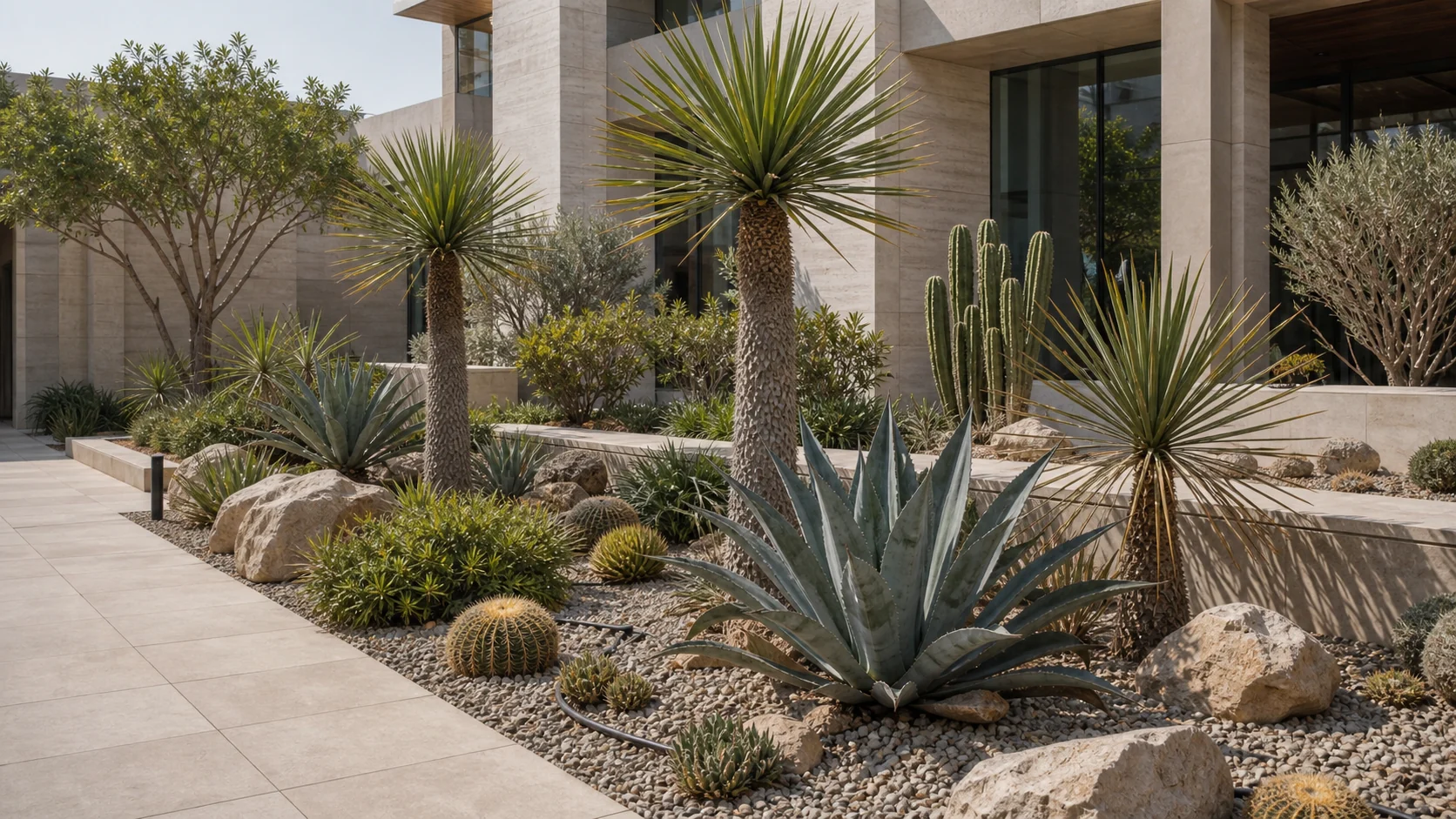
Specimen visual guide
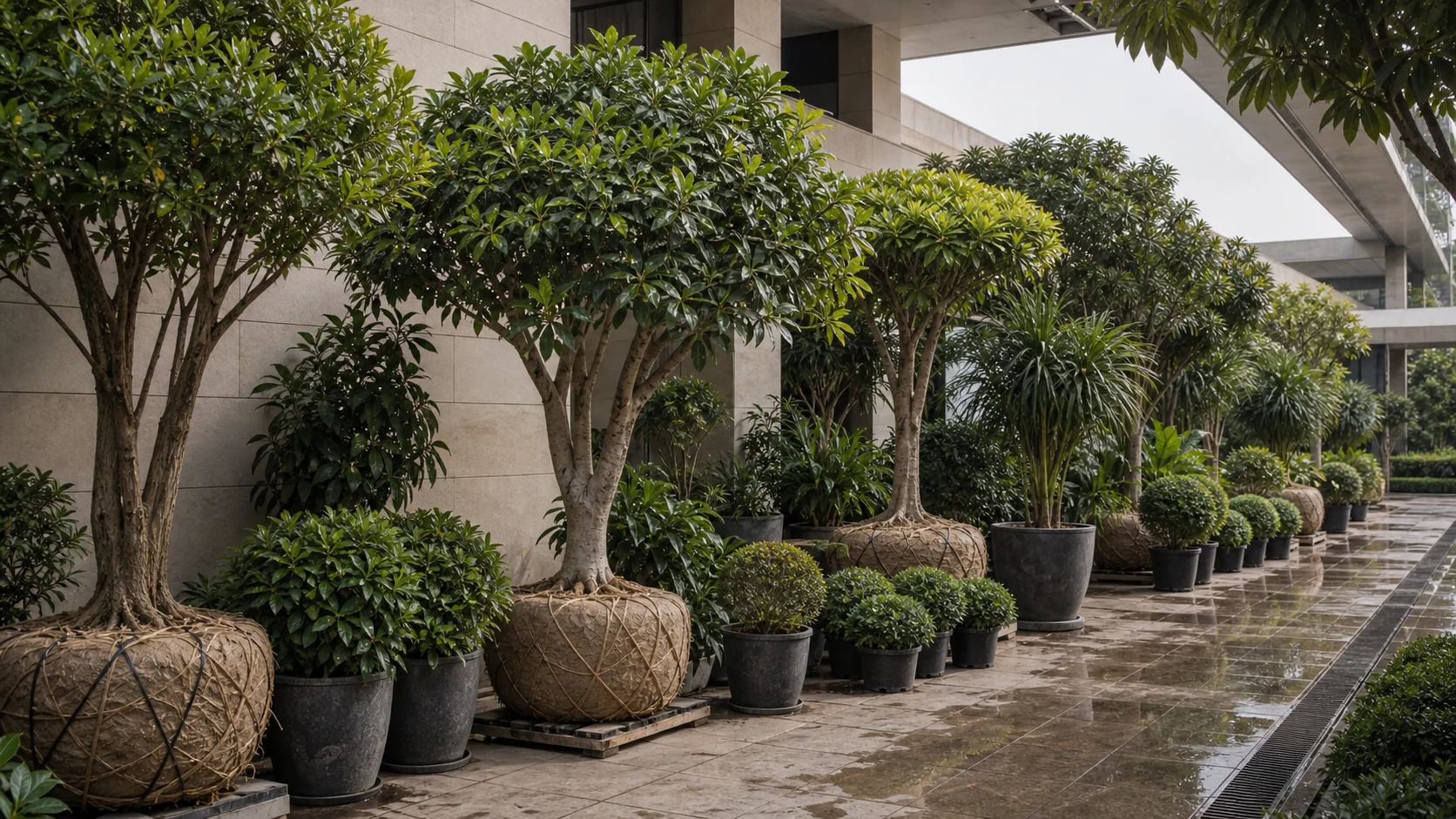
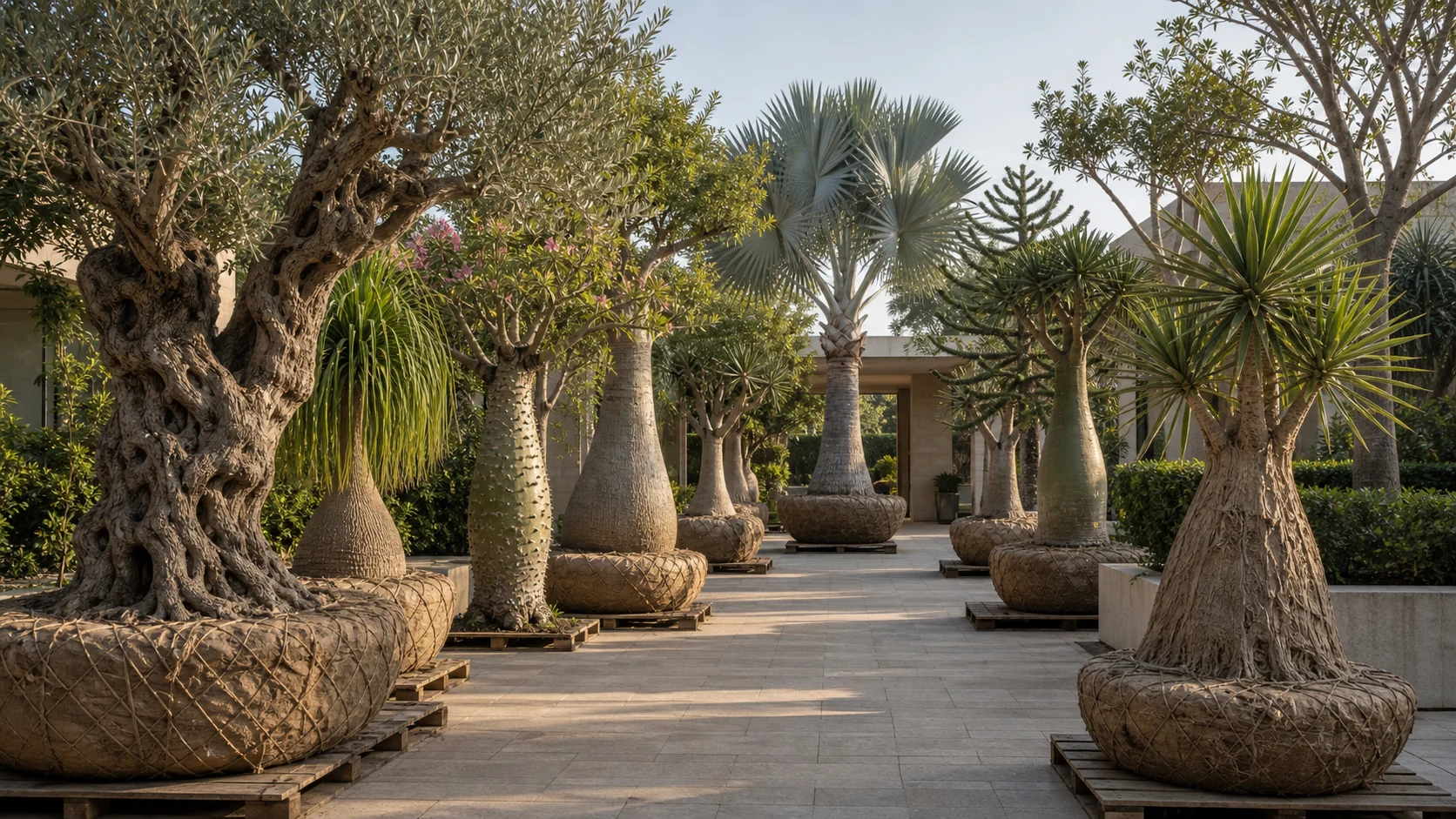
Visual context for placement, scale, handling, and landscape integration.
Section
Where it's used in premium projects
Fony baobab fits collector-scale masterplans — private villa courts, boutique desert lodges, and botanical collections where the ginger-jar waist must read at close range. It is the baobab for designers who want the genus without digitata's acre-scale footprint. Specify waist profile photos on submittals — generic 'small baobab' labels often hide the wrong Adansonia.
Section
Climate & site suitability in India
Same drainage religion as larger baobabs, at smaller scale — raised planters on terrace pods, sandy resort pads, and arid campus courts. The waisted trunk is photogenic but still rots if irrigators soak the narrow waist zone daily. Avoid humid coastal bowls unless the planter is genuinely free-draining year-round.
Section
Sourcing & acclimatisation
Rubrostipa is a specialist line — expect collector nursery channels, not mass landscape stockists. [Unverified: India-accessible fony baobab holding periods.] Confirm the waist silhouette in person or on dated nursery photography; juvenile plants may not yet show ginger-jar form.
Section
Installation (pit, soil, drainage, bracing)
Smaller scale simplifies crane logistics but waist bark is still soft — hand-carry where possible, pad slings on curved surfaces. Compact pits still need gravel drainage; do not sink waisted trunks into saucers that hold monsoon water. Staking is occasional on windy rooftop plantings.
Section
Establishment & AMC
Dry establishment again — the waist zone is the rot checkpoint. AMC includes seasonal litter sweep and photography for owner reports because collectors track trunk waist development year on year. No heavy crown pruning — preserve the ginger-jar proportion.
Section
Cost drivers
Explore
Related
Related
Related links
Services, segments, cost, and proof.
- Softscape & horticulture
- Irrigation & water management
- Landscape maintenance (AMC)
- Hotel & resort landscaping
- Luxury resort & spa landscaping
- Mall & retail landscaping
- Corporate campus landscaping
- Projects
- Commercial landscaping cost guide
- Pricing drivers (imported trees)
- Import compliance workflow
- Request a site assessment
- What is the ginger-jar or waisted trunk?
- The trunk bulges at base and top with a narrower waist mid-trunk — the defining fony baobab silhouette among Adansonia species.
- How does rubrostipa scale compare to other baobabs?
- It is the smallest baobab species — suited to courtyards where digitata or grandidieri would overwhelm the pad.
- Is fony baobab easier to source than Grandidier's?
- Both are specialist collector lines — expect long holds; verify waist form on nursery photos, not trade-name labels.
- Can the waist trunk rot like larger baobabs?
- Yes — the narrow waist is a moisture trap if sprinklers or saucer planters keep bark wet; drainage at the waist height matters.
- Does it share the long bare deciduous period?
- Yes — plan lighting and guest messaging for leafless months in dry-season climates.
- What permits apply to Madagascar-origin collector trees?
- Import may require phytosanitary and CITES-aware review depending on origin and form — check your compliance workflow early (informational, not legal advice).
- How should fony baobab BOQs be scoped?
- Include waist-profile verification, rarity premium, drainage detail, and dry-season AMC — not a generic small-tree install rate.