
Grandidier's baobab
Grandidier's baobab (Adansonia grandidieri)
Adansonia grandidieri is the Avenue-of-the-Baobabs silhouette — a tall, smooth, reddish-grey cylindrical trunk with a flat-topped crown, chosen when designers want vertical monumentality rather than digitata's bulbous mass. It is endangered in the wild, so procurement must treat ethical, documented sourcing as part of the brief, alongside extreme slow growth and drainage-critical siting.
Spec
At a glance
- Botanical name
- Adansonia grandidieri
- Family
- Malvaceae (Baobabaceae)
- Common names
- Grandidier's baobab, Madagascar baobab
- Origin
- Madagascar (endangered in the wild)
- Plant type
- Deciduous columnar landmark tree
- Mature height
- Often 20–30 m — tallest baobab profile
- Trunk / form
- Tall cylindrical smooth reddish-grey trunk; flat-topped sparse crown
- Crown spread
- Relatively narrow crown for height — vertical emphasis
- Growth rate
- Very slow — multi-decade column development
- Light
- Full sun; open horizon
- Water needs
- Drought-adapted; intolerant of wet caudex conditions
- India climate suitability
- Dry tropical India with excellent drainage; unsuitable for humid waterlogged coasts
- Cold/heat & salt/wind tolerance
- Heat-hardy; frost-sensitive; column trunk still soft — secure young specimens in wind corridors
- Typical supply size
- Rare nursery grades — often smaller column starters versus field monuments [Unverified]
- Lead time (sourcing)
- [Unverified] ethical nursery documentation and long hold for columnar specimens
- Install considerations
- Verify legal/ethical origin paperwork; drainage engineering; vertical rigging for tall trunks
- Maintenance level
- Low — seasonal inspection of trunk skin and crown wounds
- Cautions
- Endangered wild populations — insist on documented cultivation-origin stock; costly and slow
Supply
Latest import activity
- Imported on
- 21 Jun 2026
- Source
- Tall Tree Nursery EU (sample)
- Availability
- Incoming
- Lot
- Adansonia grandidieri — young field specimen
Gallery
Specimen visual guide
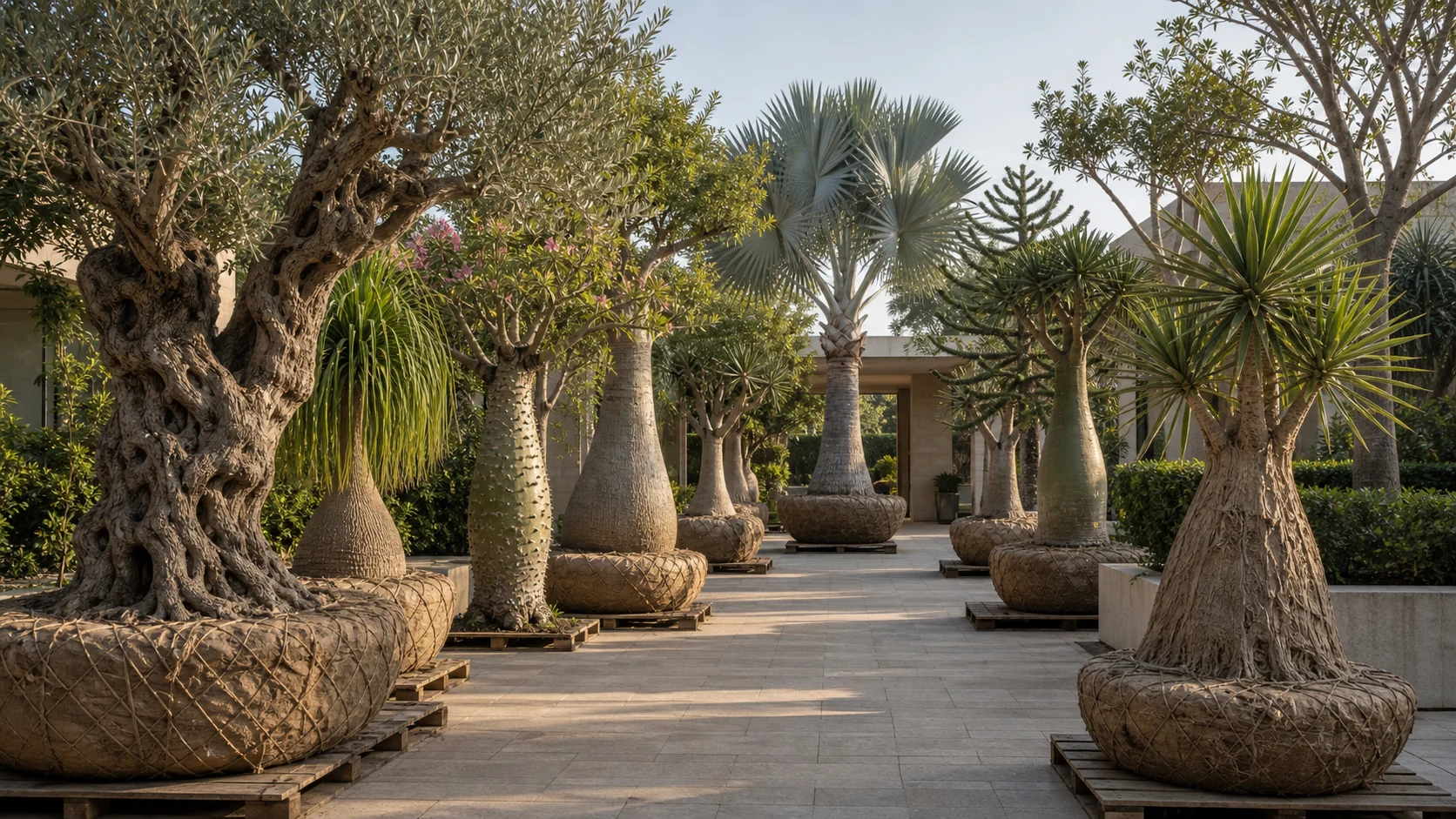
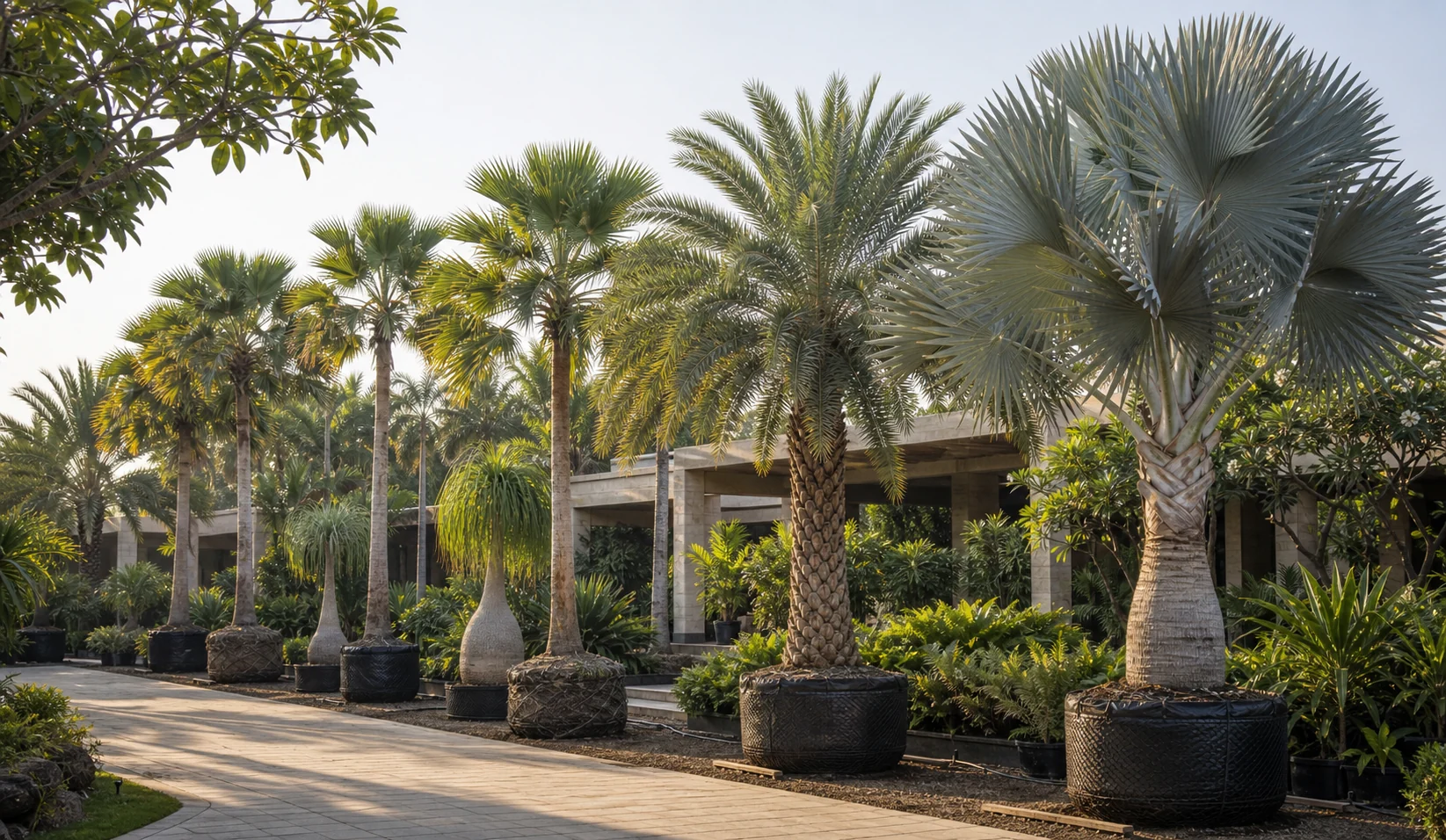
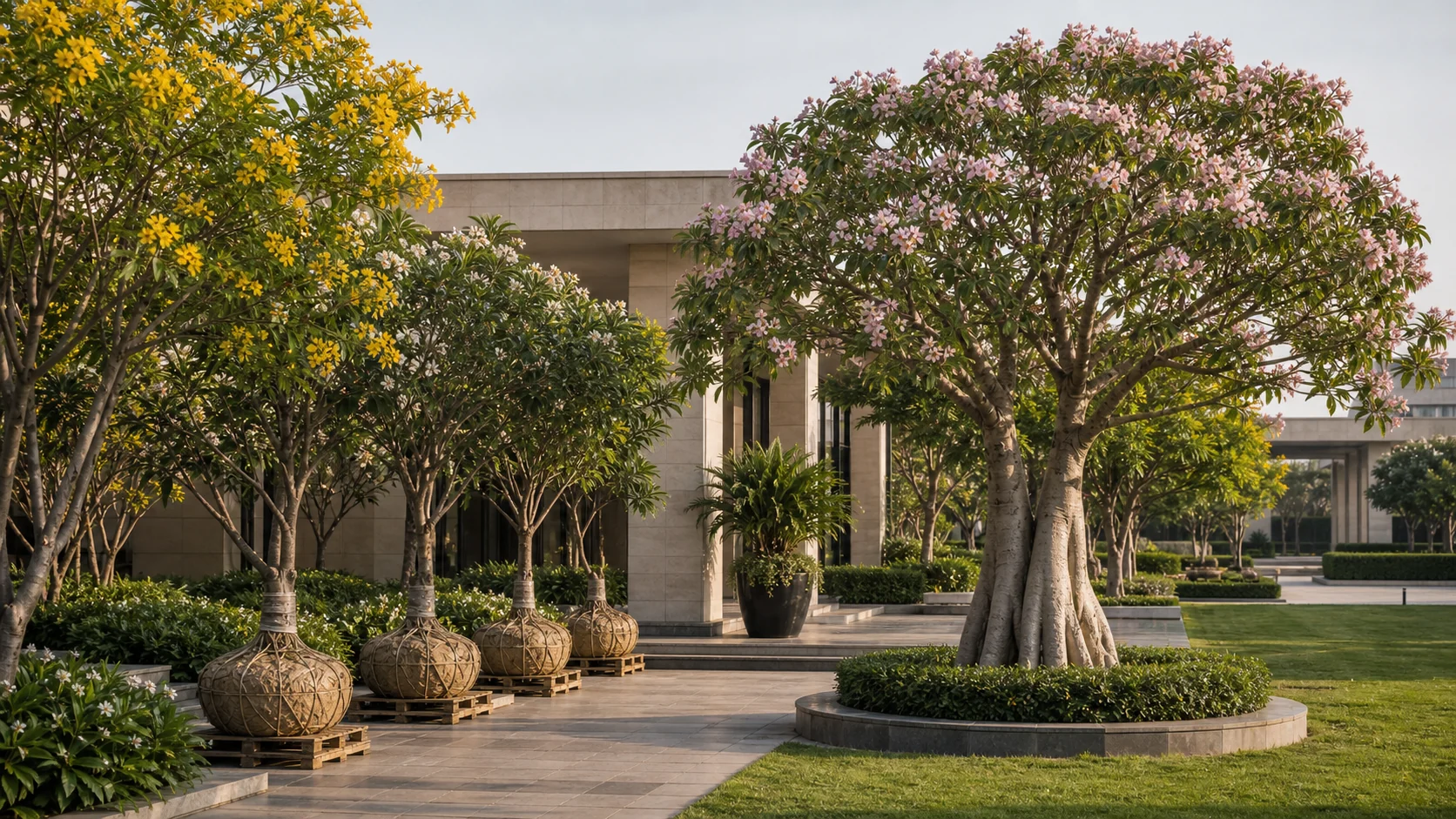
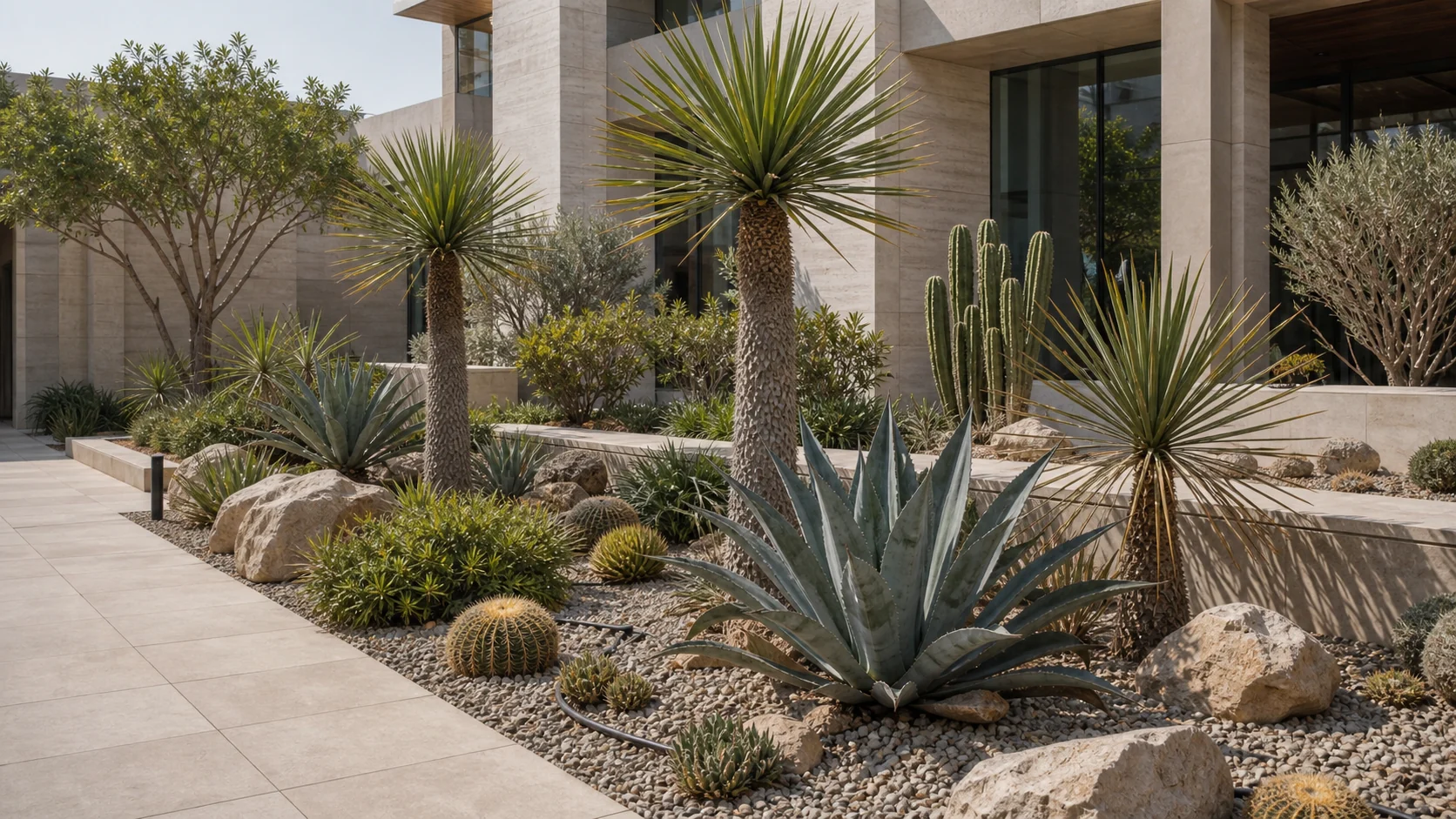
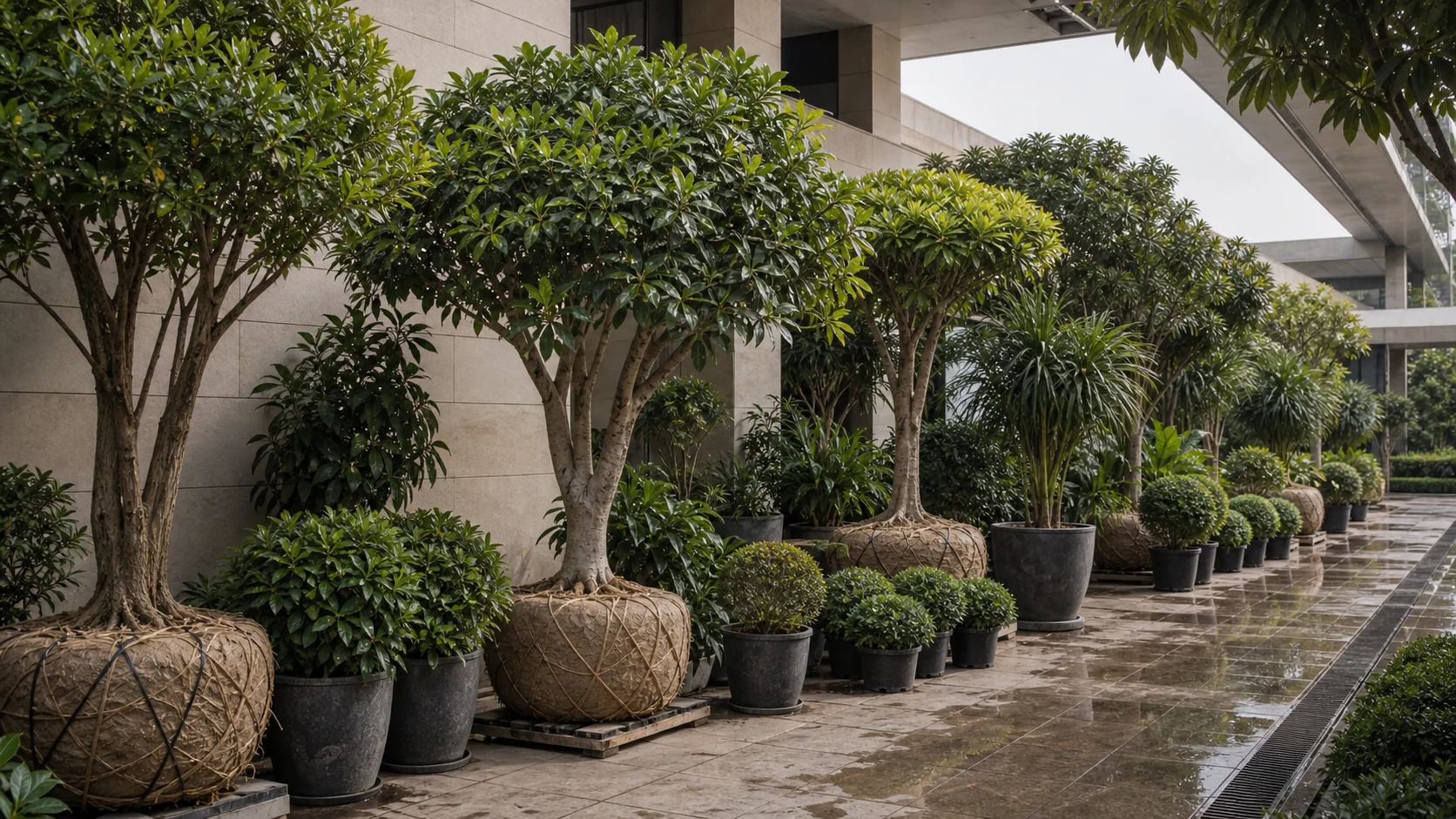
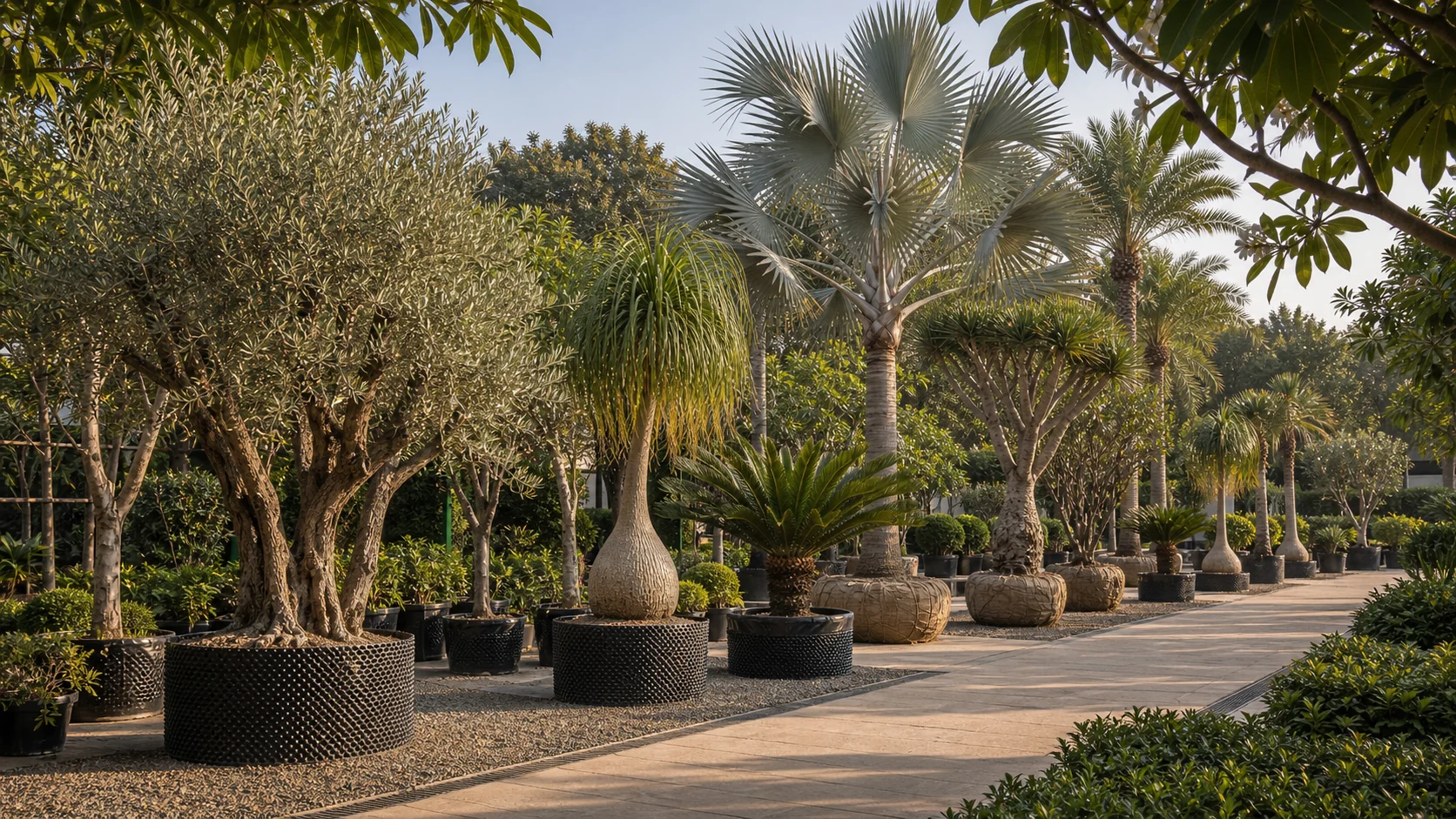
Visual context for placement, scale, handling, and landscape integration.
Section
Where it's used in premier projects
Grandidier's baobab suits masterplans that need a tall column trunk — resort arrival axes, botanical-garden statements, and collector estates where digitata's bulb reads too squat. The smooth reddish-grey cylinder is the hero; flat-topped branching finishes the Madagascar Avenue silhouette. Brief teams early that this is a conservation-sensitive species: the story on submittals must include ethical sourcing, not just height.
Section
Climate & site suitability in India
Site it like other baobabs — free-draining warm dry tropics, not monsoon bowls or cool hills. Columnar trunks still rot if irrigation oversprays the base or clay holds winter moisture. Western India dry belts and well-engineered resort pads can work; Kerala backwater clay and Pune basin fog are poor defaults without major soil redesign.
Section
Sourcing & acclimatisation
Wild-collected material is unacceptable for reputable projects — request nursery propagation records and CITES-aware documentation where applicable. [Unverified: India-accessible ethical nursery channels for grandidieri.] Column grades are rarer than digitata bulbs; acclimatise under full sun so reddish trunk tone and crown habit are visible before install.
Section
Installation (pit, soil, drainage, bracing)
Tall cylinders need vertical stability during establishment — rootball depth and anchor roots matter more than crown spread. Drainage detail at the trunk flare is non-negotiable. Rigging must protect smooth bark — scars on grandidieri trunks are permanent aesthetic defects on a species sold for pristine column skin.
Section
Establishment & AMC
Dry-season irrigation discipline again — column baobabs fail from kindness via sprinklers. AMC should log trunk circumference and any soft spots at the base quarterly in early years. Deciduous bare seasons mirror digitata but the vertical read remains; lighting design should uplight the cylinder separately from canopy.
Section
Cost drivers
Explore
Related
Related
Related links
Services, segments, cost, and proof.
- Softscape & horticulture
- Irrigation & water management
- Landscape maintenance (AMC)
- Hotel & resort landscaping
- Luxury resort & spa landscaping
- Mall & retail landscaping
- Corporate campus landscaping
- Projects
- Commercial landscaping cost guide
- Pricing drivers (imported trees)
- Import compliance workflow
- Request a site assessment
- How does Grandidier's baobab differ from African baobab?
- Grandidieri is a tall smooth reddish-grey column with a flat crown; digitata is the classic massively swollen bottle — specify which silhouette the masterplan needs.
- Why does endangered status matter on BOQs?
- Wild populations are protected — reputable projects require documented cultivation-origin stock and traceability; treat ethical sourcing as a deliverable, not an afterthought.
- How fast does the column trunk develop?
- Very slowly — designers should plan decades for Avenue-scale vertical presence; buying larger documented nursery stock is the usual shortcut.
- Can Grandidier's baobab replace digitata on the same pad?
- Only if the brief shifts from bulbous mass to vertical column — root space and drainage rules are similar but the visual proportion is entirely different.
- What drainage detail prevents trunk rot?
- Raised planting, free-draining media, no spray irrigation on the flare, and monsoon overflow routing — same caudex rules as other baobabs.
- What import documentation should procurement expect?
- Madagascar-origin nursery stock may trigger CITES and phytosanitary review — coordinate with your import compliance workflow before purchase orders (informational, not legal advice).
- How do we evaluate supplier ethics claims?
- Ask for propagation records, nursery location, and chain-of-custody — avoid vague 'Madagascar seed' language without cultivation proof.