
Black bamboo
Black bamboo (Phyllostachys nigra)
Phyllostachys nigra is the running black bamboo with elegant dark culms — NOT clumping. Rhizome barrier or fully contained beds are mandatory on every Indian install; without containment, rhizomes cross paving and lawns within seasons.
Spec
At a glance
- Botanical name
- Phyllostachys nigra
- Family
- Poaceae
- Origin
- China — temperate running bamboo
- Clumping vs running
- Running (monopodial rhizomes) — HDPE root barrier or contained bed required
- Culm colour
- Green young culms mature to jet black with sun
- Mature height
- Often 6–10 m in favourable sites
- Growth rate
- Fast running spread — aggressive without barrier
- Light
- Full sun for black culm colour
- Water
- Moderate; tolerates drier than tropical bamboos once established
- India climate suitability
- Best in subtropical hills and irrigated plains; running risk universal
- Hardiness
- More cold-tolerant than Bambusa; heat OK with water
- Screening use
- Tall architectural screen when contained
- Typical supply
- Rhizome sections and contained nursery beds [Unverified]
- Maintenance
- Rhizome scout beyond barrier; thin culms; cut running escapees immediately
- Cautions
- Running — honest containment requirement; never call clumping
Gallery
Specimen visual guide
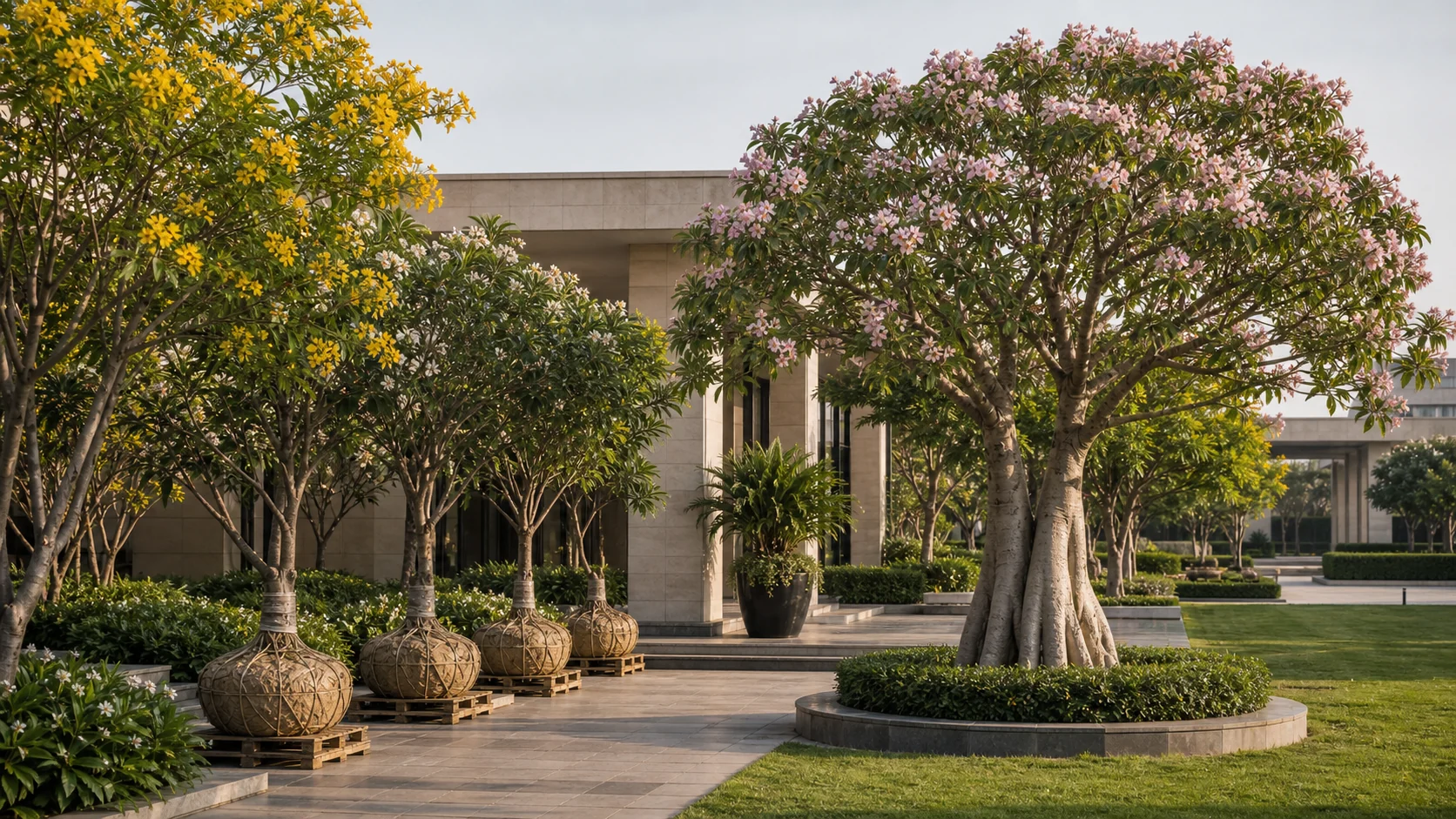
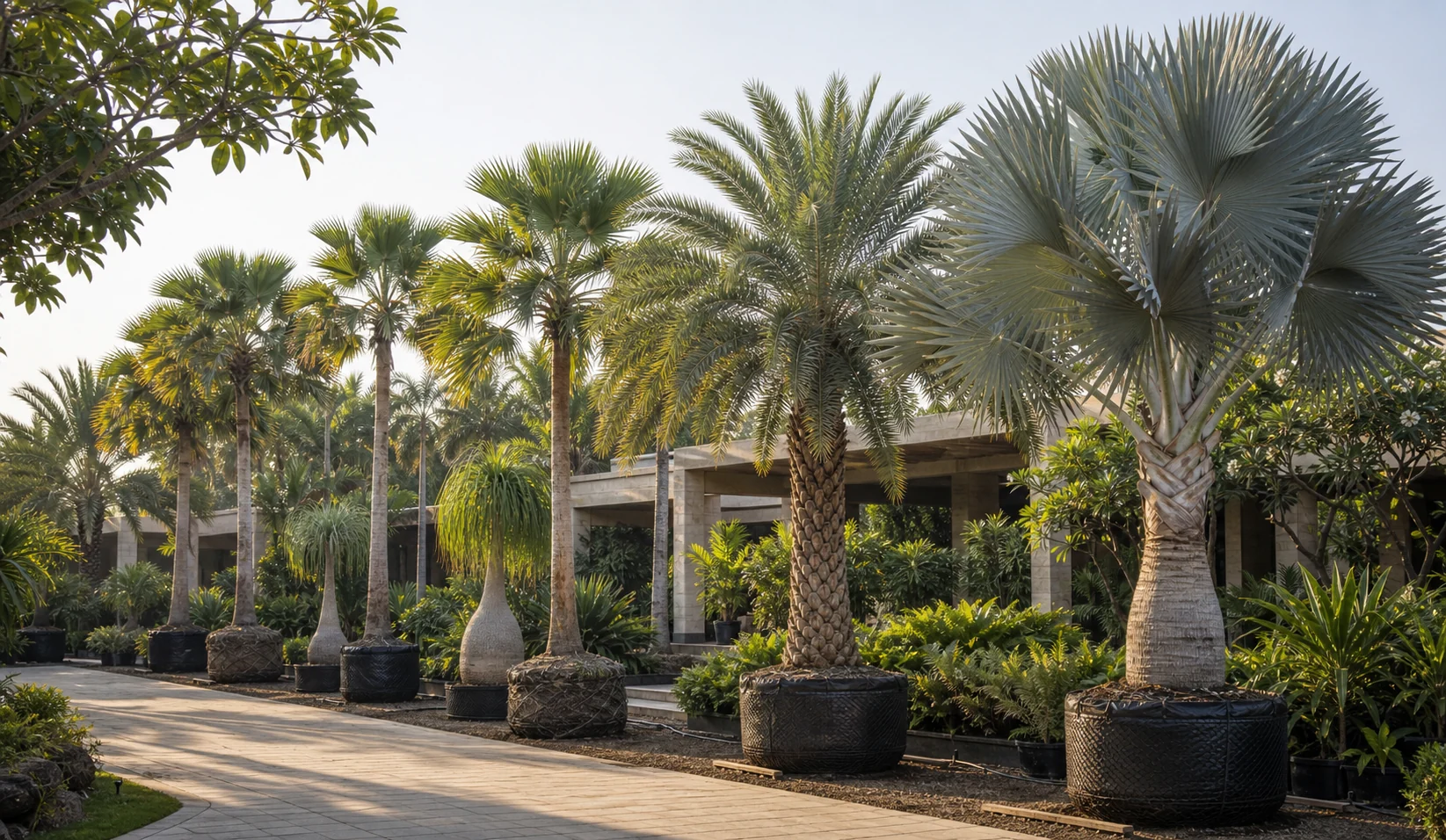
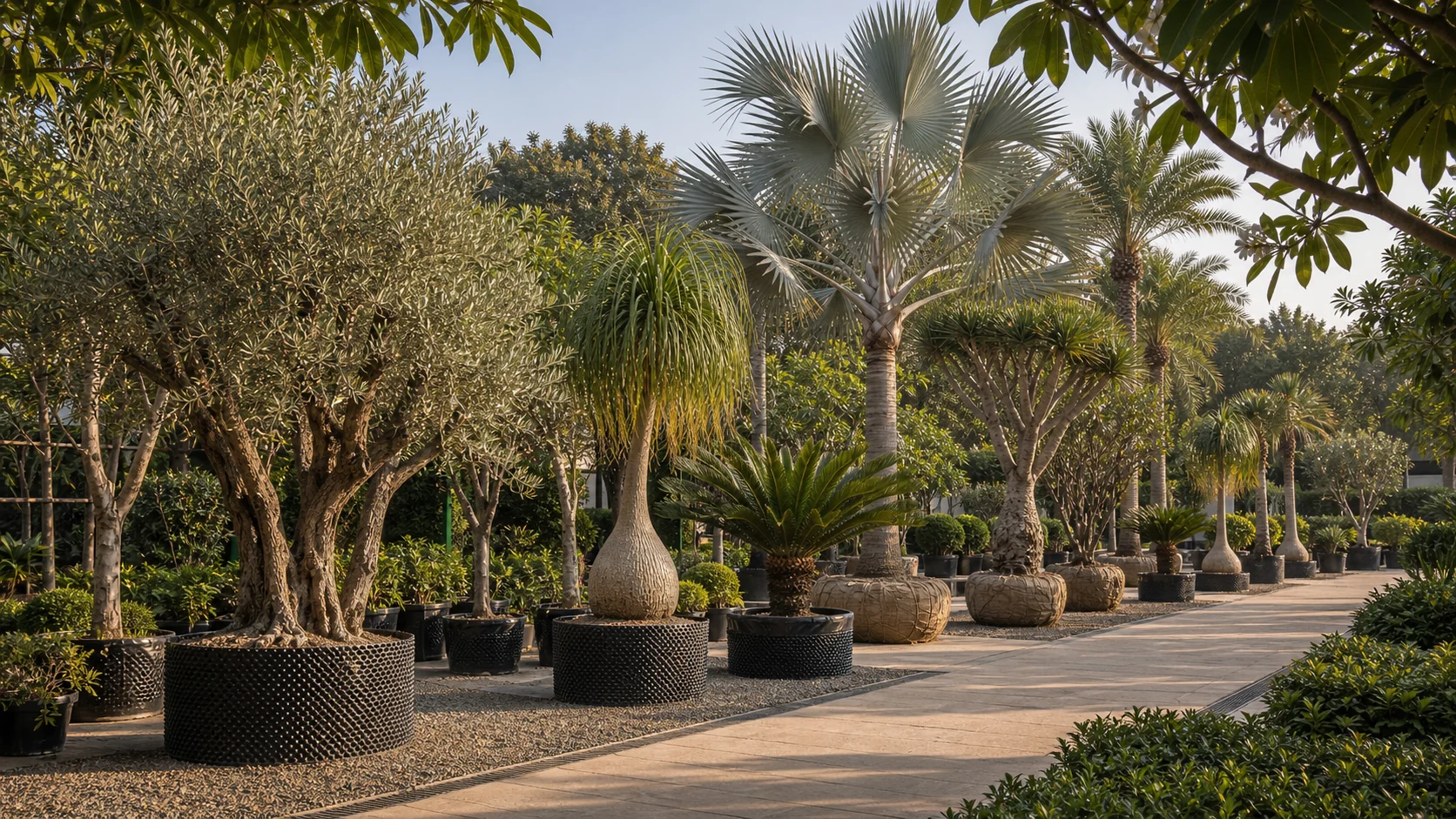
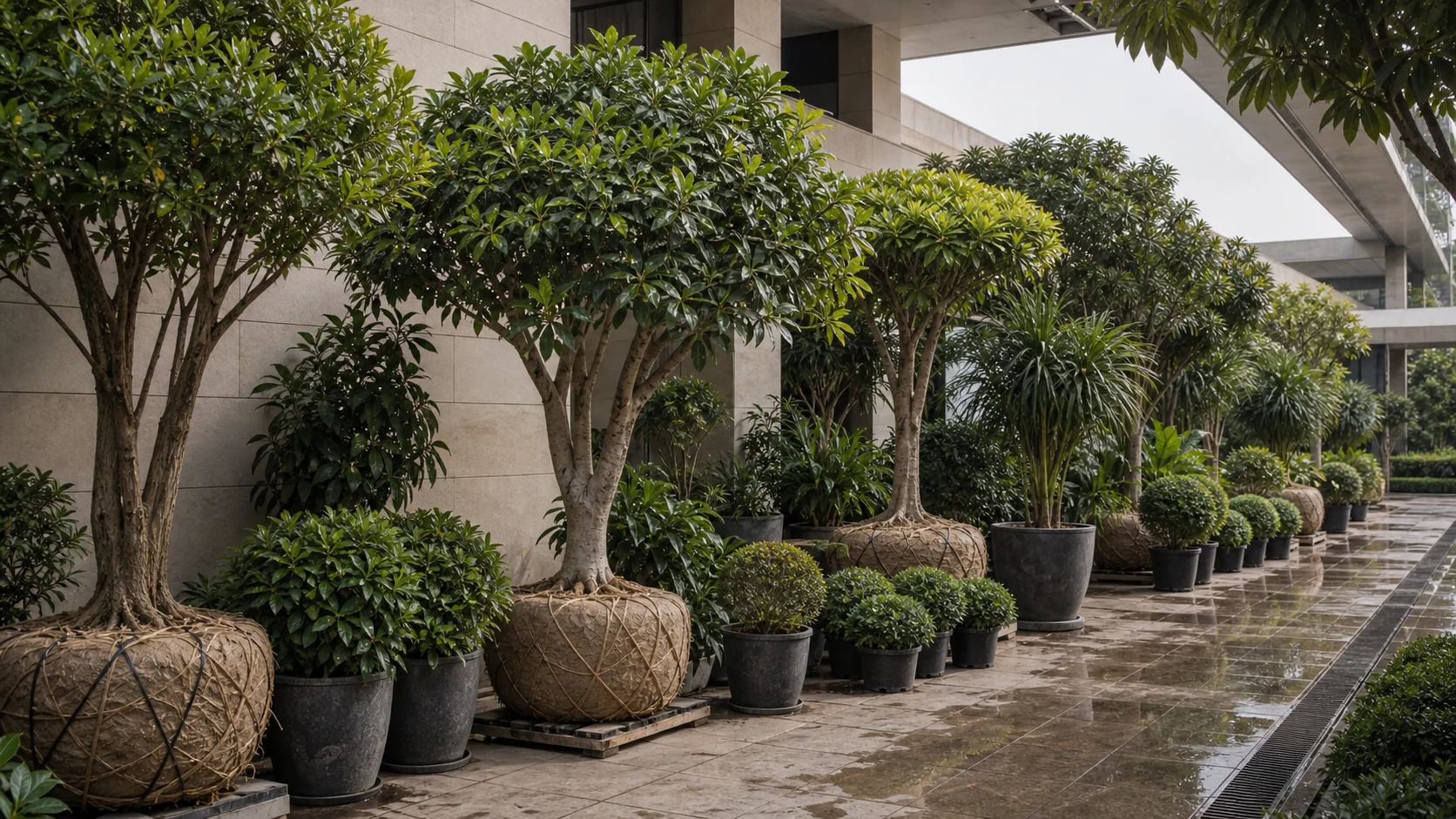
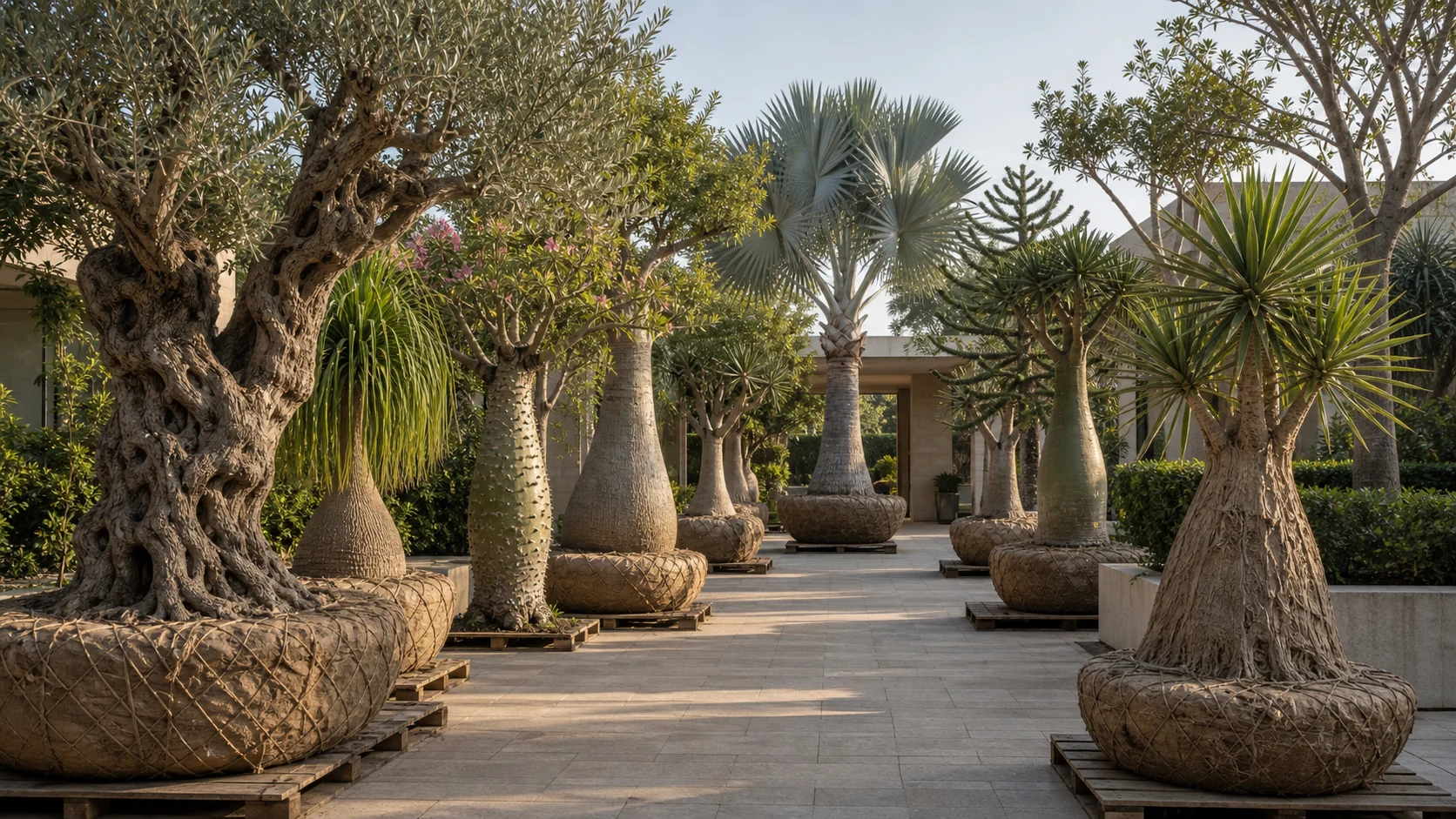
Visual context for placement, scale, handling, and landscape integration.
Section
Where it's used in premium projects
Nigra screens estates where designers want temperate black culm elegance — only with engineered containment drawings. Mislabelled 'black bamboo' without genus has caused paving lift failures on Indian sites.
Section
Climate & site suitability in India
Hill stations and irrigated plains grow strong culms; lowland heat OK with water. Blackening needs sun. Running rhizomes ignore property lines — barrier depth and overlap are civil scope, not optional horticulture.
Section
Sourcing & acclimatisation
Require Phyllostachys nigra on labels — distinguish from clumping Bambusa lako. [Unverified: India barrier depth practice vs 60 cm HDPE specs.]
Section
Installation (planting, barriers, drainage)
Install 60 cm minimum HDPE root barrier around perimeter with overlap seams welded — or plant only in concrete-contained beds with no exit points. Never plant in open shrub borders. Document running species on compliance submittals.
Section
Establishment & AMC
Monthly rhizome scout outside barrier first two years — cut escapes immediately. Thin interior for airflow. AMC must include barrier integrity checks after civil works — one trench through barrier resets invasion clock.
Section
Cost drivers
Explore
Related
Related
Related links
Services, segments, cost, and proof.
- Softscape & horticulture
- Irrigation & water management
- Landscape maintenance (AMC)
- Hotel & resort landscaping
- Luxury resort & spa landscaping
- Mall & retail landscaping
- Corporate campus landscaping
- Projects
- Commercial landscaping cost guide
- Pricing drivers (imported trees)
- Import compliance workflow
- Request a site assessment
- Is Phyllostachys nigra clumping?
- No — running monopodial rhizomes; root barrier or fully contained bed is mandatory.
- What barrier depth is typical?
- Often 60 cm HDPE with welded seams — engineer for site soil and maintenance access; depth is civil scope on drawings.
- How is nigra different from Bambusa lako?
- Nigra runs and needs barriers; lako clumps slowly — never interchange on BOQ without redesigning containment.
- When do culms turn black?
- Second-year culms blacken in sun — young shoots start green; specify mature colour expectations to clients.
- Can running bamboo live on a terrace?
- Only in fully contained planters with no drainage exit for rhizomes — open beds are high risk.
- What import paperwork applies?
- Running bamboo imports need species-accurate phytosanitary docs and quarantine inspection (informational, not legal advice).
- How should running black bamboo be quoted?
- Include barrier supply/install, scout AMC, and culm height — omitting barrier scope is a specification failure.